By successful I mean in maintaining relative party unity, work with the masses, and thus the masses trust in the party, and political and economic stability.
With the exception of the latter years of the Cultural Revolution, the CPC has been remarkably stable, ideologically consistent, and have maintained power and dominance over the Chinese state and economy. All of this is even more impressive given the fall of communist states in Europe and the rise of western/American unipolarity.
While similar tendencies have been found in the CPSU, the rise of figures like Khrushchev, Brezhnev, and especially Gorbachev, and of course their supporters within the party, makes the CPSU appear less stable and ideologically consistent compared to the CPC. Added onto this the fact that the CPC has a much larger and diverse membership, including the national bourgeoisie.
Rather than viewing this question through great man theory, I want to know how the structural formation and process of the CPC itself maintains stability, and how it's party structure is different from the CPSU. While both parties are founded on democratic centralism, how does this manifest differently between the two? In an interview with Marxist Paul, Hakim said the ban on factions within the CPSU, while imperative during the civil war and early years of the revolution, ultimately hurt the party. He then praised the informal factionalism of the CPC: Dengists, Maoists, liberals, etc. From the outset it would appear that such a situation of factionalism should rip the party apart, but it doesn't. Why,?
Looking at the relatively young history of communist movements and parties show that many, for material reasons, were/are unable to be stable and ideologically consistent. Again, outside factors and capitalist sabotage are of course a major contributing factor, but could there be structural elements within various parties which explain, to a certain extent, their successes or failures?
Seeing the immense progress the CPC has brought their own people and, increasingly, the people of the rest of the colonized world, means we must understand how they operate. Every party and movement will be different and adjusted to their particular circumstances and material conditions, and thus copy and pasting the CPC anywhere else will not yield positive results. However, could/should the structural basis of the CPC be applied and modified to other countries and contexts?
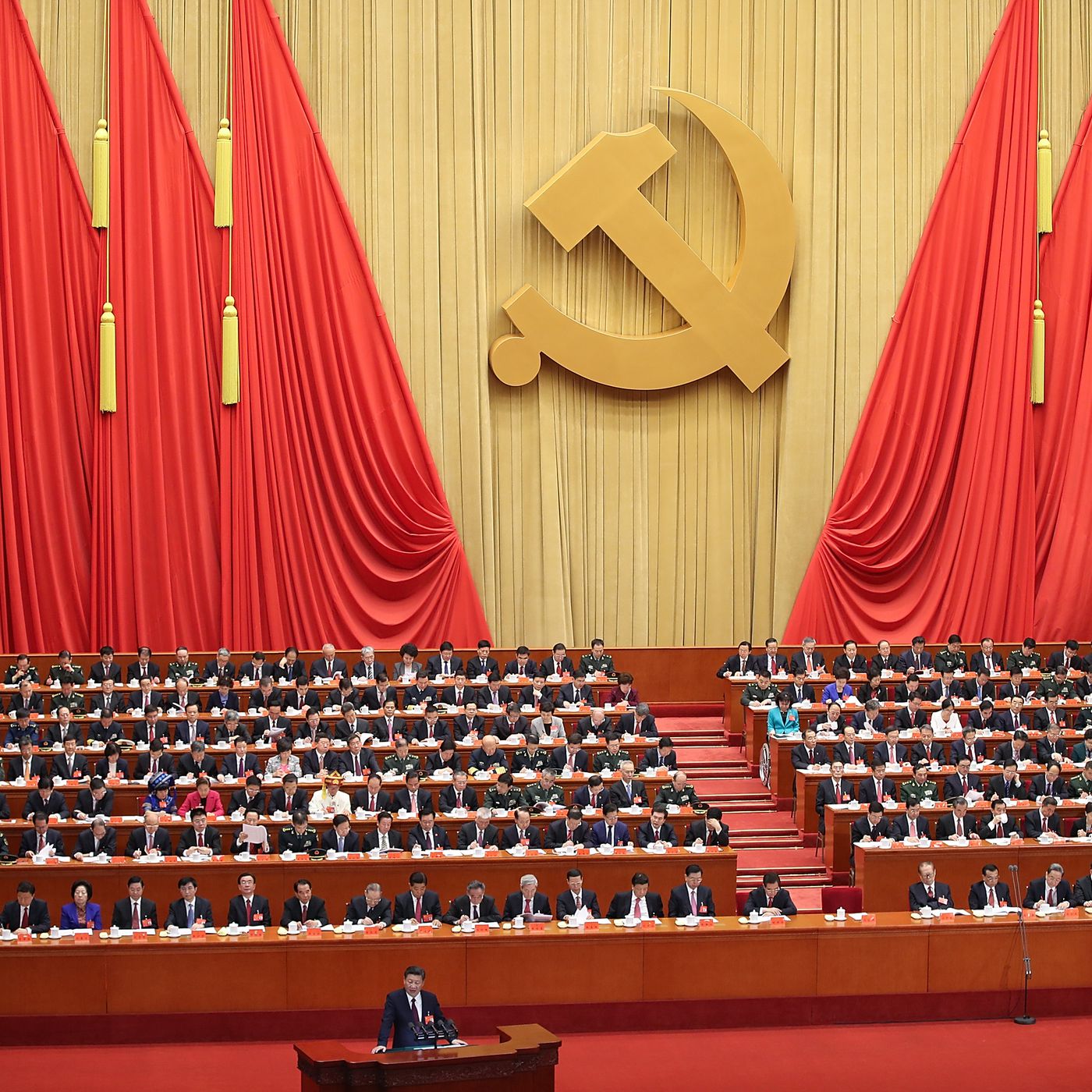
The biggest difference IMO, is the focus on integrating rather than de-linking with the world economy. The PRC and the USSR were both demonized cold war targets, so why did one thrive, and the other stagnate?
With the Deng Xiaoping era and the opening up to the world economy, we have the answer. The focus shifted away from a the ideological struggle that exemplified the Cultural Revolution. The lesson learnt there: you cannot better people's material conditions, and end poverty with ideological struggle, or isolationism.
The USSR, through historical inertia, and an emphasis on siege socialism, demonstrated an unwillingness to pursue opening up. Deng Xiaoping by contrast stated: "we don't need to be afraid to open the window just because a few flies might get in... The fresh air will do us good, and the flies are nothing to we can't handle."
Since then, the focus shifted to economic construction and technological advancements gained via an open market system with the west: the superiority of socialism over capitalism must come through it's better development of the productive forces, and better ability to feed your people.
The USSR had to use spycraft to get tainted western microchips already a few years old. Yet since the 1980s the west is falling over themselves to build factories and export tech to China.
There's a lot of nuance to this strategy, because integration with the west almost always means getting caught in the low-wage-trap, but SWCC organized this bargain in their favor. They traded limited wage exploitation, in exchange for long-term technological expertise... A strategy that's clearly been paying off.
Some more resources here: https://dessalines.github.io/essays/socialism_faq.html#is-china-state-capitalist
Interestingly enough, Xi Jinping's speech at the Closing Ceremony of the BRICS Business Forum 2023 makes a similar remark:
Just finished my meeting with PSL last week over this article, and I thought this could help with context of Deng (I am not a fan of him in regards to how his wing overthrew the other wing and enacted their own reforms at the cost of millions of poorer, rural workers forced to work for the capitalist enterprises without the safety net and protections offered by state jobs):
Note: Take this article with a grain of salt. This is an older article (2007-05-31) from the PSL that paints the Cultural Revolution in an overly positive light while omitting the corruption that occurred from Mao's wing. I apologize for my ignorance on this topic. Thank you, @muad_dibber and @qwename, for enlightening me.
What do socialists defend in China today?
https://www.liberationschool.org/what-do-socialists-defend-in-china-today/
At the same time I am disgusted by this event, I also wonder if it was unfortunately necessary to help China reach to its current state today. If events had played in a different way where Mao's wing would have been dominant over Liu and Deng's, could China have suffered the same fate as the USSR? In the end, the West is responsible for creating a divide between the USSR and China, hurting their relations so the West could use one enemy against the other to their advantage.
This is the second time I'm seeing the Cultural Revolution put in a good light in this post, get off your high horses you naive idealists!
The Cultural Revolution was hijacked by ultras, Lin Biao tried to assassinate Mao.
This is the Constitution of the CPC in 1969: https://fuwu.12371.cn/2014/12/24/ARTI1419387596442272.shtml, it includes this paragraph in the preamble:
Utterly disgusting.
Isolationism is my exact problem with the DPRK and Cuba. Sure it helped ya survive 70 years but eventually it's not gonna be viable long-term.
I find myself more and more politically aligned to Juche so isolationism will be the one thing I disagree with.
Not sure Cuba or the DPRK chose their isolation
Wdym?
They both have pursued further integration with the larger global economy, but (mostly) the U.S. keeps them from doing so via overwhelming sanctions and the Cuban embargo.
I get the impression that the mindsets in both US and USSR were shaped by WW2. Both saw military power as the ultimate form of strength, and focused primarily on the competition in the military tech sector. However, China was not a superpower after the war and was in no position to compete militarily wither either superpower. The party realized that they needed to catch up technologically, and so we saw the whole opening up approach that allowed for rapid technology transfer from the west while also integrating China deep into the world economy. This allowed China to create soft power globally that didn't rely directly on its military strength.
Chinese approach has a lot of benefit over the one USSR pursued. It allowed China to maintain a relatively modest military until recently, and to focus their productive forces on rapid infrastructure development, and this is now being exported globally. Instead of having to preach the virtues of socialist ideology, China demonstrates them.
US is also finding it very difficult now to decouple from China or to have a war with China because that would have a huge detrimental impact on US economy. On the other hand, China is now able to start doing some decoupling of their own with dual circulation, BRI, and BRICS.
In fact, the decline of US on the global stage continues to drive countries towards China out of necessity. Everybody can see that US system is headed for another crash akin to 2008 crisis, and countries obviously want to insulate themselves from it. The best way to do that is to be as independent of western economic system as possible.
I think it's going to e very interesting to see what happens when the crash finally does come. It's possible that it could be the final nail in the coffin of the capitalist model that US champions. If western economy crashes while BRICS doesn't that's going to utterly discredit the west.
I'd also recommend this book, it's a pretty deep dive into socialism in China https://redletterspp.com/products/the-east-is-still-red
Have a feeling that this setting up of multiple, overlapping, support networks for Chinese trade and influence is going to go down in history as a masterstroke.
The US also has different networks that support it's hegemony but they're interconnected in a different way and ultimately rely on everyone else going what the US says because otherwise the US will otherwise destroy them. That's no basis for mutual development.
China's approach could surprise us and fall apart but the recognition of contradiction/antagonism built into the Chinese model hints at it's longevity.
People in the imperial core would never be told of this. The next crash, regardless of where its effects fall, will be described as a worldwide phenomenon. If you point out other countries are doing fine libs will call you a shill and reactionaries will make some racist joke about the rest of the world living in huts/the U.S. is better even while its economy crumbles.