
Medieval peasants worked more and harder hours than modern people.
A bit of column A, a bit of column B.
Yes, 50% child mortality skews life expectancy statistics heavily, but any 40 year life expectancy estimate is clearly filtering out at least some portion of childhood deaths. By our best estimates: of the 48% of people who survived age 10, slightly less than half were dead by 45. Of those who clear 45, less than half reach 65.
Those early deaths aren't driven by "inferior physiology", but disease and malnourishment (as the previous commenter noted). It was possible to live into your 80s, but you had to be very, very lucky to pull it off.
Feudalism bad: yes and no. It meant everyone had a job and housing. Homelessness didn’t exist until the end of feudalism.
There were absolutely homeless and destitute people in feudal societies. Quite a lot of them, really, although the individuals in question likely didn't live very long. We have many references to beggars from this period, as well as some insight into attempts to curtail them.
Someone who finds themselves displaced from where they used to live can't just wander onto some lord's land and start farming. That land is already full of people who are producing just barely enough to feed themselves (after said local lord's taxes are accounted for). A typical peasant family has more labor available than is required to till their rather small allocation of farmable land, which itself is often insufficient to feed them. Any surplus labor is spent working land of one of the local "big men" to cover the gap. Supporting an additional person off the street, even one capable of putting in a good shift, is no easy task in this period.
It's easy to romanticize the past from a great distance when looking at the problems of our present, and produce some wildly incorrect conclusions as a result. Feudalism (to the extent that this term refers to any specific system at all, scholars don't use it very much these days) was a deeply unfair system with a host of structural problems, and had far fewer safety nets for the unlucky members of society than any developed country has today.
One of the big problems for 23rd century Discovery and SNW is that year zero on the TNG system seems to be in the early 2260s, during or after the events of those shows. If they wanted to maintain the familiar Stardate references in captains logs, etc, they had to fudge the numbers somehow.
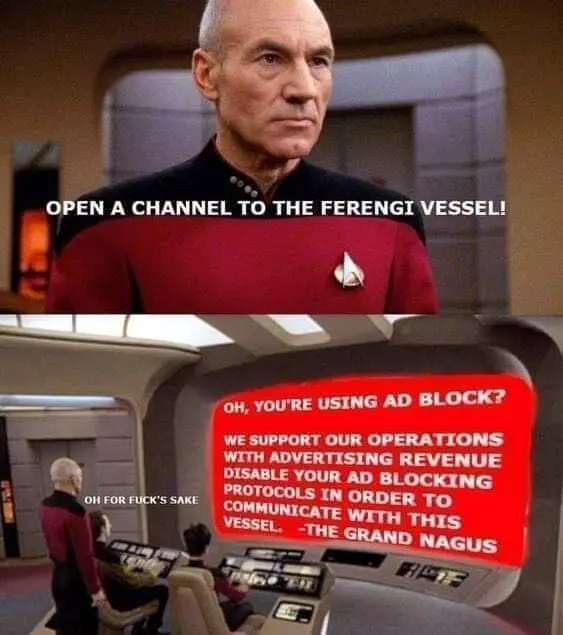
The "Riker Maneuver" blooper absolutely killed me.
Did they ever open up Civ VI's code the way they did for IV and V? Prior to VII coming out, they hadn't left any way for modders to do the kind of deep dive total conversion mods which happened with the older games.
Harry never got promoted because the writers never figured out how to evolve his function on the show.
This one is a bit of a copout, because Kim's official role as the ship's operations officer would absolutely have been appropriate for a higher ranking officer. It's the same job Data held as a Lieutenant Commander on the Enterprise; if anything, the strange bit is that it was given to a green ensign in the first place.
Ultimately, the real explanation is a much sillier bit of bad writing. According to Garret Wang, quoted here:
Kim was probed, beaten, tortured and held the distinction of being the first Voyager crew member to die and come back to life. What more does a guy have to do to get promoted to Lieutenant for frak’s sake? To add further insult to injury, other crew members such as Tuvok (Russ) and Paris were being promoted, demoted and then re- promoted throughout the seven-year run of Voyager.
I’m not trying to be negative here; just saying it like it is. During the fourth season, I called writer/producer Brannon Braga and asked him why my character hadn’t received a promotion yet. His response? “Well, somebody’s gotta be the ensign.” Geez, thanks. Thanks for nothing.
Why it was important that "somebody’s gotta be the ensign" is a mystery to me.
I've been running steam on an unsupported OS (osx 10.13.6) for almost a year and a half now, and the only issue is a banner at the stop claiming that steam will stop working in 0 days.
I don't remember what if anything I did to make this happen, but I've had no trouble buying, downloading, or playing games in that time.
Lemmy does not currently have an equivalent to Modmail where a moderation team can all send or receive messages.
Brighter lights
I'll stand by the position that the Enterprise augment virus arc was an error, and the "explanation" for Klingon ridges is the same one you should use for the bridge of the Enterprise looking like it was cobbled together from plywood and plastic beads. This issue was best left to Worf's lampshade in DS9 Trials & Tribleations.
It's really interesting which visual differences humans will accept unthinkingly and which we will demand answers for. The Klingon ridges thing comes up constantly, but I have yet to see anyone earnestly ask why all the characters in Lower Decks have huge eyes and unnaturally uniform coloration, or why hand phaser beams in TOS go so much more slowly than later phasers and why everyone agrees to stay really still while they are being fired.
As others have hinted at, sharing a yes or no answer and pasting a link to a youtube video with no further context is not an adequate Daystrom submission. Citing a source is certainly acceptable, but your comment should make it's own self contained argument supported by those sources, not rely on users clicking through to an external site to understand what you are trying to say.