this post was submitted on 03 Apr 2026
176 points (97.3% liked)

Climate

8925 readers
507 users here now

Discussion of climate, how it is changing, activism around that, the politics, and the energy systems change we need in order to stabilize things.

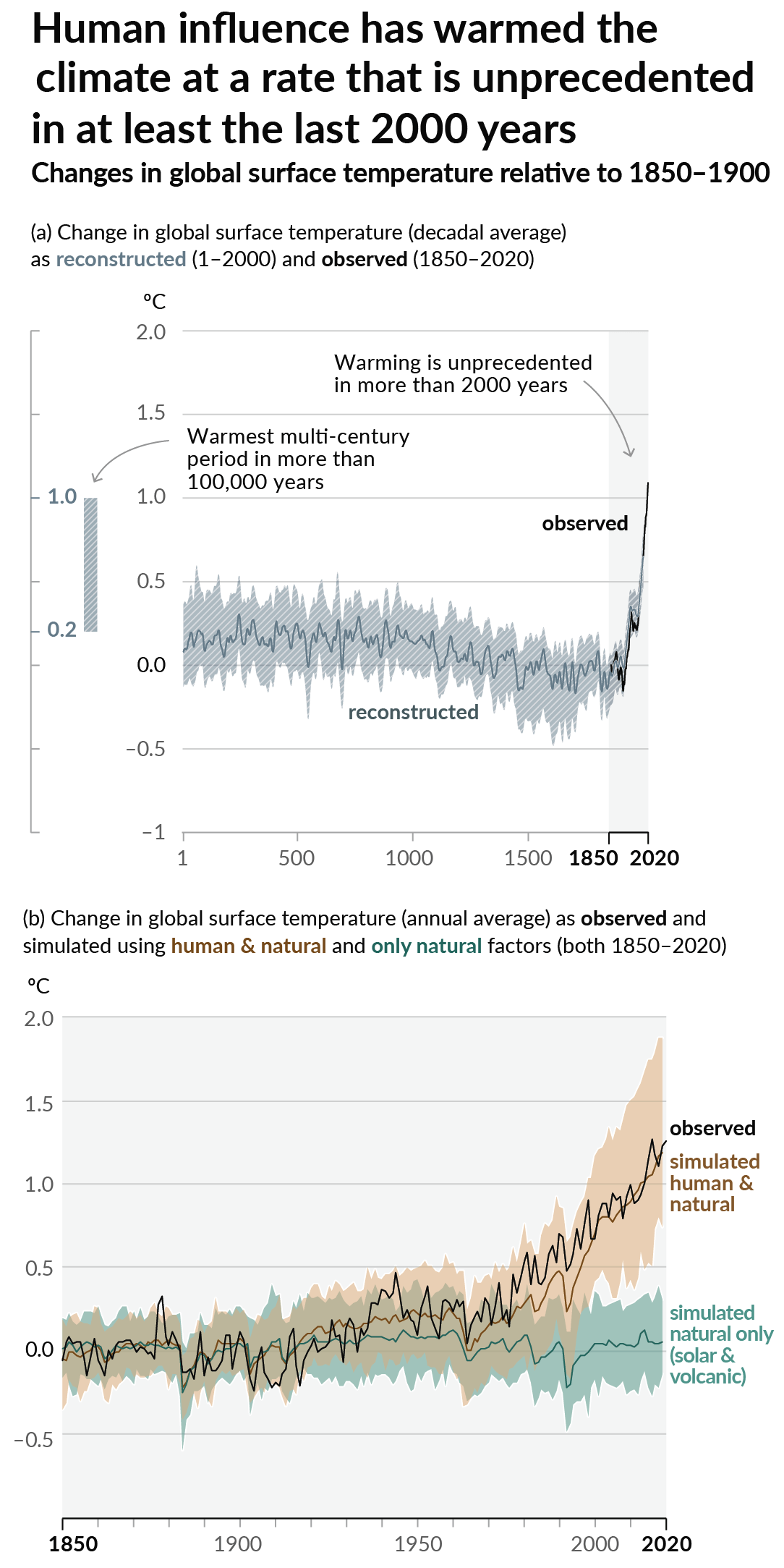
As a starting point, the burning of fossil fuels, and to a lesser extent deforestation and release of methane are responsible for the warming in recent decades: Graph of temperature as observed with significant warming, and simulated without added greenhouse gases and other anthropogentic changes, which shows no significant warming

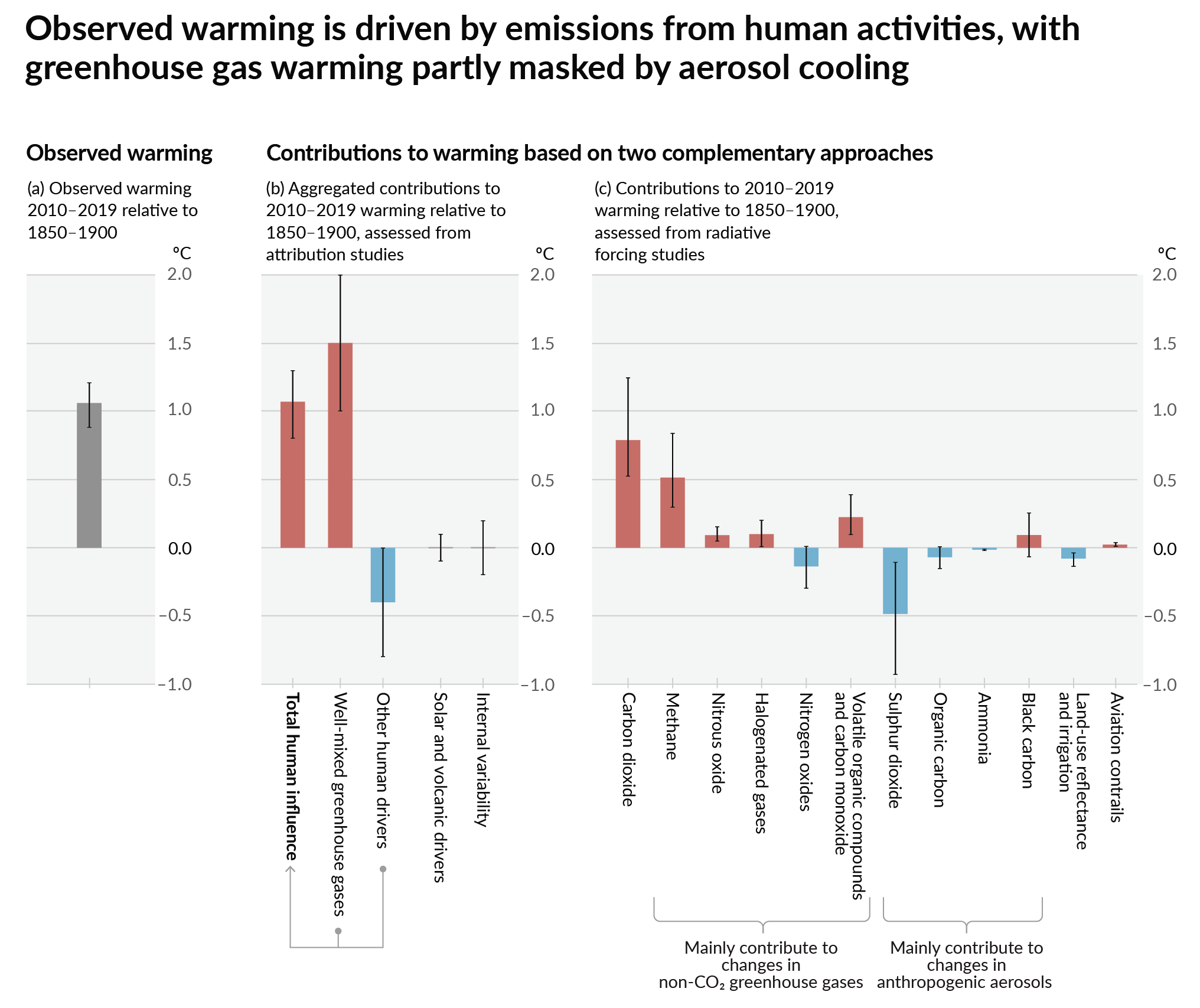
How much each change to the atmosphere has warmed the world: IPCC AR6 Figure 2 - Thee bar charts: first chart: how much each gas has warmed the world.  About 1C of total warming.  Second chart:  about 1.5C of total warming from well-mixed greenhouse gases, offset by 0.4C of cooling from aerosols and negligible influence from changes to solar output, volcanoes, and internal variability.  Third chart: about 1.25C of warming from CO2, 0.5C from methane, and a bunch more in small quantities from other gases.  About 0.5C of cooling with large error bars from SO2.

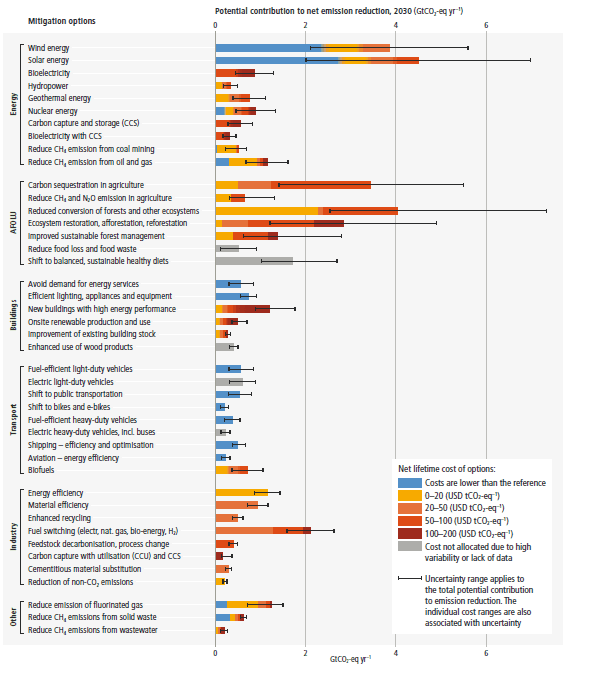
Recommended actions to cut greenhouse gas emissions in the near future:

Anti-science, inactivism, and unsupported conspiracy theories are not ok here.

founded 3 years ago
MODERATORS
 

They've got a quite unusual stove that's got a large battery in it so that it can operate when the power is off, and doesn't need the installation of a 240v power connection. This avoids the cost of an electrical retrofit of old apartment buildings, which otherwise costs far more.

If you've already got your home wired for 240v, you can get an induction stove for far less.

These battery-equipped stoves are expensive right now because they're being made in quite small numbers. The parts needed are coming down in price quite rapidly, so I expect to see them sold in the $2000/unit price range within a few years.

top 50 comments
sorted by: hot top controversial new old
[–] supersquirrel@sopuli.xyz 30 points 4 months ago* (last edited 4 months ago) (3 children)

I am sorry but it is fucking hilarious how many wealthy people over the years have condescendingly told me cooking with gas is better, even as they complained about how it annoying it was to maintain a gas stove and all.

Idiots bought into the most obviously bullshit fossil fuel propaganda ever...

[–] grue@lemmy.world 22 points 4 months ago (2 children)

Gas is better than electric resistance stoves, which are not the same thing as these new induction stoves.

[–] ProdigalFrog@slrpnk.net 8 points 4 months ago* (last edited 4 months ago) (3 children)

For most of my life I'd cooked on a resistive coil-top stove, and only in the last few years was I able to use a gas, and even more recently, induction stovetop.

Induction is far and away my favorite, but between gas and resistive, I don't really find gas preferable to resistive. The only real advantage it has is quick heat control, but that can be overcome pretty easily on resistive stoves by either anticipating the slower heating/cooling curve, or simply lifting the pan or moving it to an inactive burner until the active one cools down to the desired temp.

I virtually always use cast iron cookware, which makes gas's ability to make quick temp changes less of a noticeable advantage. More noticeable to me was the disadvantage of the handles on my cookware getting super hot very quickly with gas due to how much heat escapes around the sides, and the inability to place flammable things over a pot or pan to prevent splatter (like a paper plate).

I also really disliked the idea of potentially forgetting a burner being left on, but with the flame out. That only happened to me once, but it was quite scary to walk into a living room smelling strongly of gas. And in a kitchen without outside ventilation above the stove, the pollutants from burning gas were noticeable, especially if the oven was on.

On my personal scale, I'd rate gas stoves at the bottom despite their slightly advantageous heat responsiveness, with resistive in the middle, and induction the best of both worlds.

load more comments (3 replies)
[–] supersquirrel@sopuli.xyz 6 points 4 months ago (2 children)

Gas is not better than electric resistance stoves for one very serious, insurmountable issue, gas stoves give off a non-trivial amount of gas into the living area they are being used in, even when kitchen hoods are used. This is not something the gas stove industry wants to have a conversation about so we don't here in the US.

[–] grue@lemmy.world 9 points 4 months ago (2 children)

You were talking about cooking (i.e., the performance in terms of how well it delivers heat to the food), so that's the question I answered. Gas is better than electric resistance in that respect. If you want to make a separate point about air quality that's one thing, but you didn't have to phrase your comments as bait.

[–] supersquirrel@sopuli.xyz 2 points 4 months ago* (last edited 4 months ago) (6 children)

Air quality can't be separated from judging a stove that sits smack dab in the center in of your home.

load more comments (6 replies)
load more comments (1 replies)
[–] LazyWatermelon3623@lemmy.world 12 points 4 months ago (7 children)

I never understood why 'muricans kept using gas stoves. I haven't seen a single one in Europe in the past 30+ years.

[–] supersquirrel@sopuli.xyz 13 points 4 months ago* (last edited 4 months ago)
load more comments (6 replies)
[–] ramble81@lemmy.zip 5 points 4 months ago (2 children)

I like gas for diversification of energy sources. When we had “snowpocalypse” here in Texas, I was able to stay running with a natural gas generator for some power, gas heat to stay warm and a stove to cook. The power draw would have been too high if I was electric only.

[–] supersquirrel@sopuli.xyz 12 points 4 months ago* (last edited 4 months ago)

Yeah but the "snowpocalypse" energy crisis was in large part a serious problem for people because Texas hates Texans and privatized the electricity grid leaving it brittle and unable to adapt to emergencies or changes.

You are living in a functionally collapsed society in Texas, and if that is a reason to cook around a campfire, sure! I just think you have to contextualize that. I'll keep using my electric stove and go find social support services in an emergency if needed because my state actually gives a shit about human beings unlike the shithole that is Texas.

If you need a gas stove to survive in Texas because the state government is constantly trying to kill you in pursuit of the deranged and cruel interests of the rich, I can't really disagree with that in good conscience, but it is a pretty awful reason to have to buy a gas stove.

You should leave Texas if you can.

[–] astutemural@midwest.social 4 points 4 months ago

MN pretty regularly has electric outages due to storms taking down lines, etc.

They're fixed within hours. Because our state electric provider is under strict regs as to what they can and cannot do, and the state gov takes grid reliability seriously in a place where it routinely drops below 0 F.

What I'm saying is that you need to drag your state officials out into the street and [REDACTED] until they start acting like an actual government.

[–] noxypaws@pawb.social 23 points 4 months ago (1 children)

Moved from a condo with an insanely nice Wolf gas range to a house with a cheapo electric range that we promptly replaced with an induction range.

Never going back. Induction is fucking wonderful magic. So quick, so powerful, so controllable, and having most of the surface remain cool is such a nice side benefit too

[–] czardestructo@lemmy.world 8 points 4 months ago

I think the biggest magic of induction is ease of cleaning. Nothing gets burned on, ever. Just a spray of cleaner, wipe, move on. Saved me hours a year.

[–] dkppunk@piefed.social 21 points 4 months ago

I moved into a house that already had an induction stovetop and I will never ever go back to gas again. It’s easy to clean, don’t have to worry about open flames, and heats quicker and more evenly. When I’m cooking, I can actually use the unused burners to place my ingredients on for easy access. It’s amazing and that’s not even getting into the environmental benefits.

[–] Semi_Hemi_Demigod@lemmy.world 8 points 4 months ago* (last edited 4 months ago) (11 children)

I will not buy an induction stove unless I know what its pulse width modulation frequency is.

[–] CompactFlax@discuss.tchncs.de 11 points 4 months ago (25 children)

PWM is vital; I can melt chocolate on my stove today but “low” often is 100% power at 90% off 10% on and burns food.

Also making sure the boards and chips are hefty enough. I don’t trust Samsung and LG to lay enough of a trace on the board or use a sufficiently large heatsink on the switching circuitry that it’s not going to melt through when I boil water daily. I don’t recall details but last time I was looking into it, even some higher end brands had failure rates after 5-10 years (or sooner if the “power boost” or whatever was used because they cheaped out. My gas stove will survive the apocalypse, but whether it survives the Operation Epic Fail is another thing.

[–] socsa@piefed.social 4 points 4 months ago* (last edited 4 months ago)

I have burned out three induction hot plates and zero gas ranges in my life (from $120 to $300 units). I keep getting new ones because it's something I can't live without, but it does make me hesitant to drop $4k on an induction range. I also kind of just hate glass stove surfaces for a bunch of reasons.

[–] W98BSoD@lemmy.dbzer0.com 2 points 4 months ago* (last edited 4 months ago)

I don’t trust Samsung and LG….

My first induction stove was a Samsung purchased in 2011-ish. One of the circuit boards had to be fixed in 2021-ish by a third party I found on eBay because Samsung stopped making parts for my stove. A just under 10 year old stove.

My Whirlpool washing machine, bought at the same time as the stove, had an issue at the same time as the stove. Parts were readily available.

My new motto for appliances is “Has the company (name brand) ever made a cell phone or a television? Yes? Then I don’t buy their (large) appliances.”

[–] diablomnky666@lemmy.wtf 2 points 4 months ago

If you have some space or a septic tank you could always produce your own biogas:

https://www.homebiogas.com/

load more comments (22 replies)
load more comments (10 replies)
[–] Greyghoster@aussie.zone 6 points 4 months ago (1 children)

Hmmm? Battery equipped stoves? I’ve had an induction stove for 12 years and there is no battery. What’s the story?

[–] girsaysdoom@sh.itjust.works 6 points 4 months ago (2 children)

You might have a 230V stove. The ones they age discussing in the article are 120V capable but to offload the need for more power they use battery.

[–] OhShitSon@lemmy.zip 2 points 4 months ago (1 children)

Isn't 220 - 240V the norm for stoves? What would be the point of a 120V stone? Maybe for an off grid cabin with limited power?

[–] rmuk@feddit.uk 3 points 4 months ago (1 children)

Did you read the article? Or even the two paragraphs long summary of the article OP posted?

[–] OhShitSon@lemmy.zip 3 points 4 months ago* (last edited 4 months ago)

I did read the summary, but aren't the standard voltage of a power outlet 230~V? Maybe I'm too tired and missing something.

EDIT: I forgot that the US uses a different standard, my bad.

[–] Greyghoster@aussie.zone 2 points 4 months ago

I had never even considered this to be a problem so when I read the article it just didn’t compute. Ta

[–] cronenthal@discuss.tchncs.de 6 points 4 months ago (1 children)

Wait… people in New York were still cooking with gas? In 2026?

[–] silence7@slrpnk.net 4 points 4 months ago

It's quite widespread in the US

load more comments
view more: next ›