1
Space
2377 readers
18 users here now
A community to discuss space & astronomy through a STEM lens
Rules
- Be respectful and inclusive. This means no harassment, hate speech, or trolling.
- Engage in constructive discussions by discussing in good faith.
- Foster a continuous learning environment.
Also keep in mind, mander.xyz's rules on politics
Please keep politics to a minimum. When science is the focus, intersection with politics may be tolerated as long as the discussion is constructive and science remains the focus. As a general rule, political content posted directly to the instance’s local communities is discouraged and may be removed. You can of course engage in political discussions in non-local communities.
Related Communities
🔭 Science
- !curiosityrover@lemmy.world
- !earthscience@mander.xyz
- !esa@feddit.nl
- !nasa@lemmy.world
- !perseverancerover@lemmy.world
- !physics@mander.xyz
- !space@beehaw.org
🚀 Engineering
🌌 Art and Photography
Other Cool Links
founded 3 years ago
MODERATORS
2
3
4
5
6
7
8
10
1
Trump tells Artemis II crew he saved Nasa despite trying to slash agency’s budget
(www.theguardian.com)
11
 More pics are being uploaded here:
12
13
14
15
1
Satellite mirror plans could disrupt sleep and ecosystems worldwide, scientists say
(www.theguardian.com)
16
17
18
1
Astronomers Find a Third Galaxy Missing Its Dark Matter, Validating a Violent Cosmic Collision Theory
(www.universetoday.com)
19
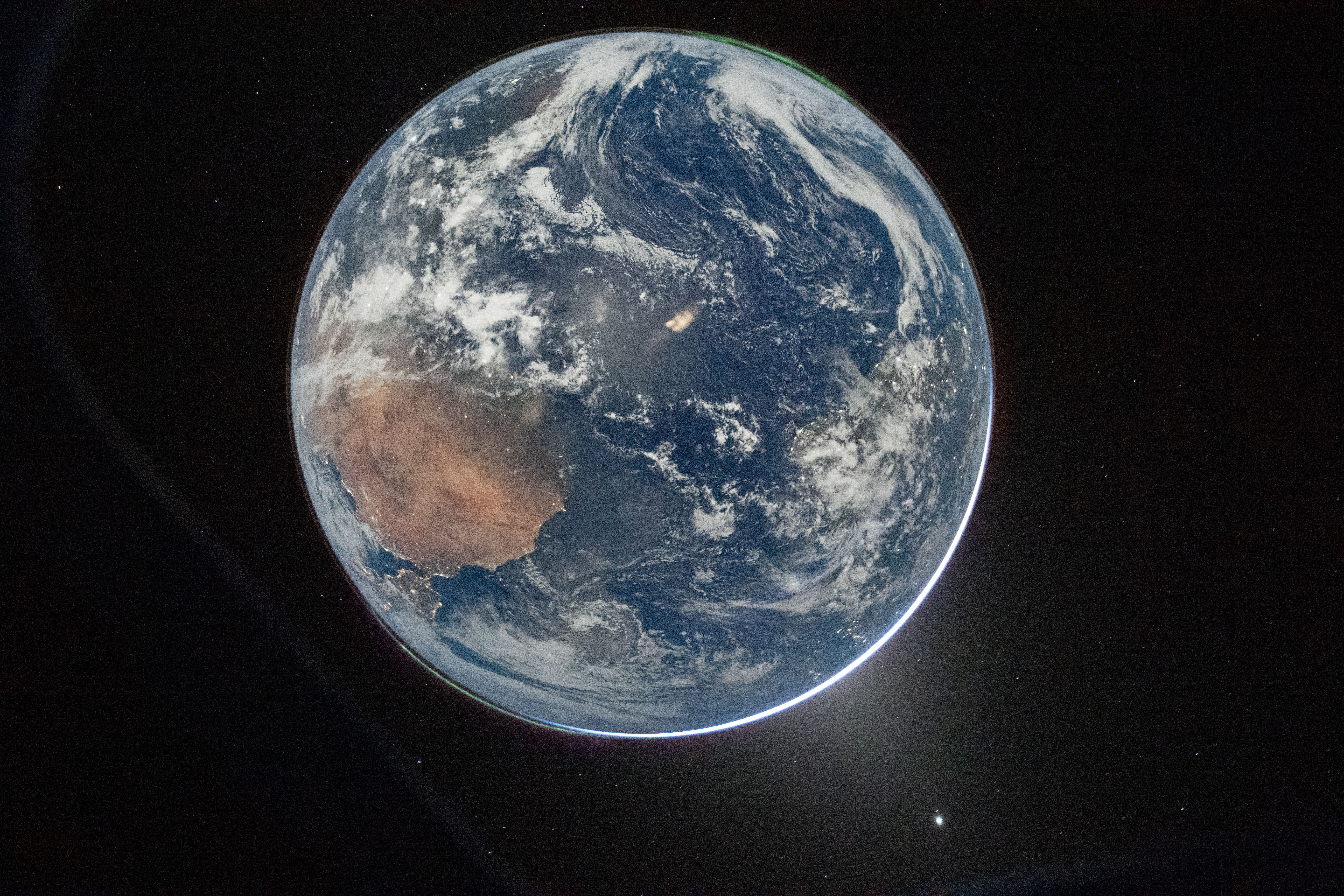
This image of home just came down from the Artemis II crew.
Taken after their translunar injection burn, there are aurorae at top right and lower left, and zodiacal light at lower right.
Credit: NASA/Reid Wiseman
// That's home. That's us.
---
Alternative references of better image quality mentioned in comments by @baguette@piefed.social:
- https://images.nasa.gov/details/art002e000192;
- https://images-assets.nasa.gov/image/art002e000192/art002e000192~orig.jpg [5568 x 3712]

20
21
22
1
Argentine Microsatellite To Fly On NASA's Artemis 2 Moon Mission – MercoPress [2026-03-31]
(en.mercopress.com)
Expand article
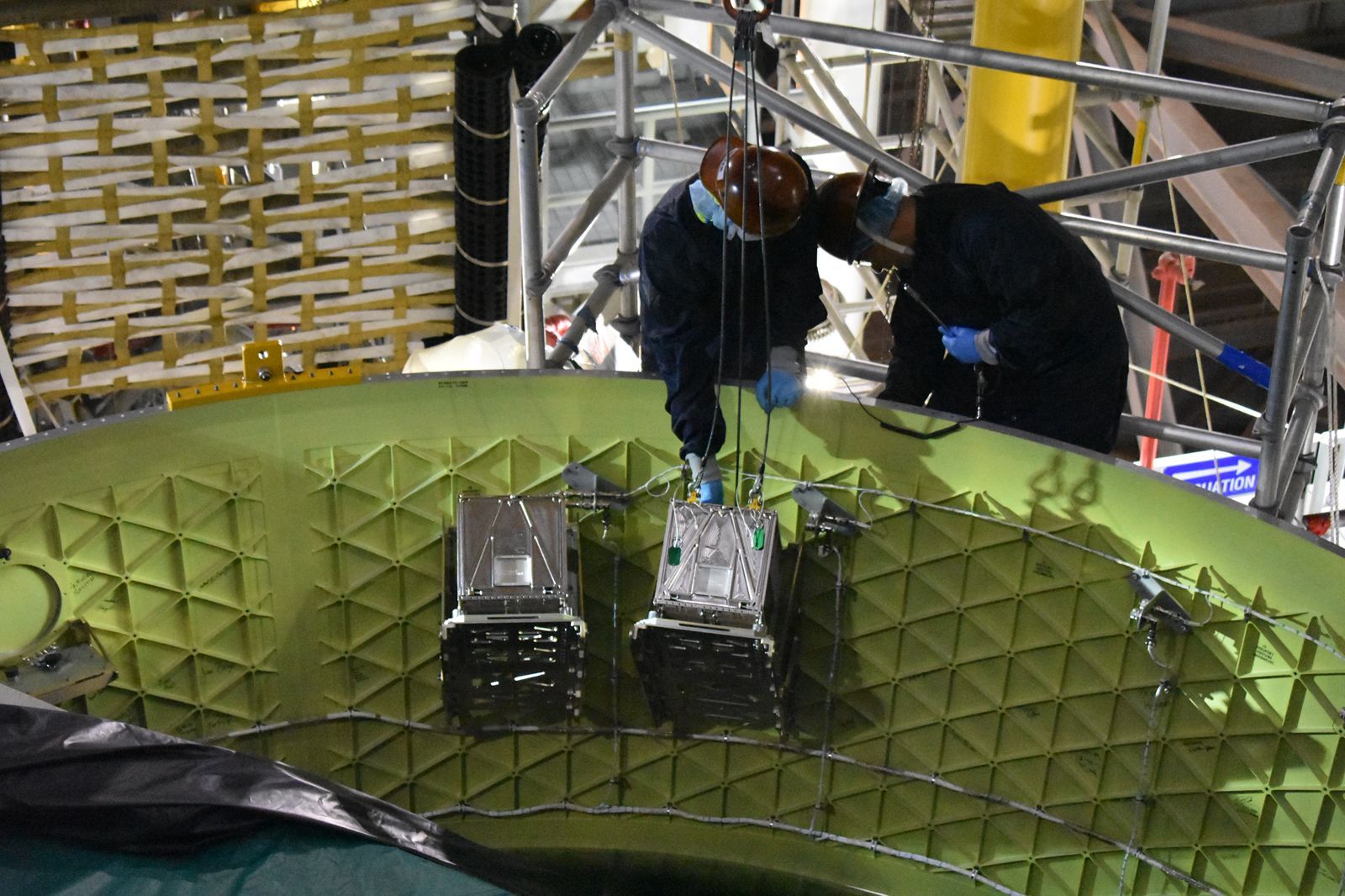
The satellite, named Atenea, is a 12U-class CubeSat measuring 30 by 20 by 20 centimeters and weighing 15 kilograms
A microsatellite designed and built entirely in Argentina will travel as a secondary payload on the crewed Artemis 2 mission, which NASA plans to launch Wednesday from the Kennedy Space Center in Florida. Argentina is the only Latin American country selected to participate and one of four globally, alongside Germany, Saudi Arabia, and South Korea.
“We are proud that Argentina was the only Latin American country invited by NASA to provide a secondary payload for this mission,” said Darío Genua, Argentina's Secretary of Innovation, Science, and Technology.
The satellite, named Atenea, is a 12U-class CubeSat measuring 30 by 20 by 20 centimeters and weighing 15 kilograms. It was developed by Argentina's National Commission on Space Activities (CONAE) in collaboration with the National University of La Plata, the National University of San Martín, the University of Buenos Aires School of Engineering, the Argentine Institute of Radio Astronomy, the National Atomic Energy Commission, and the company VENG S.A. The project was selected from proposals submitted by more than 50 countries.
After the Orion spacecraft separates from the SLS rocket's upper stage, Atenea will be the first CubeSat deployed. It will operate at roughly 70,000 kilometers from Earth — a record for the Argentine space industry — and communicate with CONAE ground stations in the provinces of Tierra del Fuego and Córdoba. The operation will test tracking, reception, data processing, and remote management capabilities in deep-space conditions.
“Every engineering project strengthens our technological capabilities, trains highly qualified professionals, and makes us a reliable provider for the new space economy,” Genua said.
The Artemis 2 mission will carry four astronauts on a 10-day trip around the Moon without landing. It is the second Artemis mission following the uncrewed flight in 2022 and precedes later phases that envision returning astronauts to the lunar surface in 2028 and establishing a permanent presence on the Moon, according to EFE.
Argentina's 15kg Atenea CubeSat will fly as a secondary payload on NASA's crewed Artemis 2 mission—the only Latin American payload selected & one of four globally (Germany, Saudi Arabia, & SSouth KKKorea). Developed by CONAE & multiple universities/agencies, it will deploy at ~70,000km from Earth, a national record, & communicate with Argentine ground stations to test deep-space capabilities. "We are proud that Argentina was the only Latin American country invited by NASA to provide a secondary payload for this mission," said Darío Genua. "Every engineering project strengthens our technological capabilities, trains highly qualified professionals, & makes us a reliable provider for the new space economy."
23
25
view more: next ›