Space, the final frontier

2771 readers
2 users here now

c/space Rules

founded 6 years ago
MODERATORS
1


Expand article

Driven by SpaceX’s demand for resilient supply chains, suppliers of components for Elon Musk’s Starlink satellite internet equipment are shifting production from Taiwan (China) to Việt Nam. 😎

Wistron NeWeb Corporation (WNC), a Taiwanese (China) company supplying parts to SpaceX, is believed to be producing routers and network devices for the Starlink satellite internet system at a factory in Hà Nam.

The company's latest annual report in April stated: "In response to geopolitical risks and the ever-evolving needs of customers, WNC has continued to expand its global production capacity."

Wistron’s factory is located in Đồng Văn Supporting Industrial Park in Duy Tiên Town, Hà Nam Province.

The firm plans to at least double its current workforce of 3,000 employees. Hiring banners have been visible outside the factory since mid-October 2024, according to Reuters.

Universal Microwave Technology, another supplier and manufacturer of satellite components for SpaceX, has also invested in a factory in Việt Nam this year.

In April, Shenmao Technology, a solder paste manufacturer for printed circuit boards and another SpaceX component supplier, announced that it would invest US$5 million to build a production facility in Việt Nam.

SpaceX is a US-based provider of spacecraft, satellite launch services and satellite communications.

On September 25, Party General Secretary Tô Lâm met with Tim Hughes, Senior Vice President for Global Business and Government Affairs at SpaceX.

Hughes said he appreciates Việt Nam's potential for SpaceX's satellite internet plans, adding that the group aims to inject $1.5 billion into the country in the near future.

Ming-Kuen Lai, CEO of Acter, a Taiwanese (Chinese) construction company, stated that the company's business in Southeast Asia grew by 50 per cent last year.

Acter specialises in constructing electronics factories and clean rooms for technology companies, including Foxconn, Delta Electronics, Wistron and ASE Technology.

Currently, Southeast Asia contributes just over 10 per cent of Acter's revenue. However, Lai said that Thailand, Việt Nam and Malaysia are experiencing strong growth.

"Việt Nam is undergoing an electronic assembly boom, while Thailand is seeing an increase in new printed circuit board factories, and Malaysia is attracting semiconductor packaging businesses," he noted. — VNS

Driven by SpaceX’s demand for resilient supply chains, suppliers of components for Starlink equipment are shifting production from Taiwan to Việt Nam. Wistron NeWeb Corporation (WNC) “is believed to be producing routers & network devices” at a factory in Hà Nam, with plans to “at least double its current workforce of 3,000 employees.” Universal Microwave Technology & Shenmao Technology have also invested in Vietnamese facilities. The shift follows a September meeting where SpaceX Senior VP Tim Hughes “appreciates Việt Nam’s potential” & stated the group aims “to inject $1.5 billion into the country in the near future.”

2


Expand article

Having announced major shifts to the Artemis program at the end of February, NASA Administrator Jared Isaacman unveiled more changes to the U.S. crewed lunar effort at an event dubbed 'Ignition'.

With the still-underway cancellation of the Exploration Upper Stage, the space agency is sourcing United Launch Alliance's Centaur V as the new upper-stage for the Space Launch System rocket. However at the event, NASA officials stated that they are still weighing whether they'll use an upper-stage for the Artemis III mission in 2027, depending on where the mission's tests with lunar landers occur. If in low Earth orbit, no upper-stage would be needed, and the last Interim Cryogenic Propulsion Stage can be saved for the first Moon landing in 2028. Saving or using that upper-stage will create problems regardless, as it will adjust the modification time for Mobile Launch 1 as due in under a year or under six months.

Regarding the contracted and issue-riddled Human Landing Systems, NASA says they are working with Blue Origin and SpaceX to relax the requirements for their vehicles, without specifying what that entails. The space agency did mention that both companies disliked needing to meet the Orion spacecraft in a near-rectilinear halo orbit, with officials suggesting they were open to having the vehicles meet elsewhere.

Much of 'Ignition' was spent focusing on a desire to build a base on the Moon's surface, with officials detailing three vague phases. Phase one, between now and 2029, will be for experimenting via robotic missions to test technologies. Then, between 2029 and 2032 for phase two, NASA wants to place initial infrastructure at the South Pole to support greater crewed exploration. Finally, in phase three, after 2032, long-duration stays on the surface inside dedicated habitats are desired. Those phases are expected to cost ten billion United States Dollars each, according to NASA, through a few dozen missions.

NASA Administrator Jared Isaacman: "We're gonna build President Trump's moon base"

Aaron Rupar (@atrupar.com) 2026-03-24T13:18:34.903Z

NASA Administrator Jared Isaacman telling Fox News that the space agency will build Trump's Moon base, via Aaron Rupar on Bluesky.

To build out the Moon base, NASA plans to leverage its Commercial Lunar Payload Services program, which has had just one success in four flown missions during its eight year existence, and a lunar cargo delivery version of SpaceX's Starship-Super Heavy vehicle, once it stops regressing in development. Those would be part of what officials call a cislunar economy, but efforts to establish a low Earth orbit equivalent first with commercial space stations has failed to occur.

In order to build a base on the lunar surface, the event was used as an opportunity to announce that work on the near-ready Gateway lunar space station is paused indefinitely, with a NASA press release stating:

"[The] agency intends to pause Gateway in its current form and shift focus to infrastructure that enables sustained surface operations. Despite challenges with some existing hardware, the agency will repurpose applicable equipment."

The pause is despite substantial international buy-in from the European Space Agency, the Canadian Space Agency, and the United Arab Emirates' Mohammed bin Rashid Space Centre, who are all building modules or specialized hardware.

After the currently planned Artemis V mission, using the Space Launch System rocket, in late 2028, NASA is hoping to have crewed missions to the Moon every six months, so long as landers are ready, as there is now no planned orbiting outpost. Missions starting with Artemis VI* may not use the Space Launch System, per a recent Request for Information asking for end-to-end (Earth to lunar orbit) commercial crewed transportation solutions.

All of the changes and plans above will need to be funded and enacted as law by Congress, as it controls NASA's money through appropriations and authorization acts. The White House could not fund the new plans as well, as it tried to cut major programs at the space agency last year.


*Only up to the Artemis V mission has been funded by U.S. policymakers.

At an event dubbed ‘Ignition,’ NASA Administrator Jared Isaacman unveiled further changes to the crewed lunar effort, including a pivot to a Moon base with three phases: through 2029 for robotic tech testing, 2029–2032 for initial South Pole infrastructure, & after 2032 for long-duration stays in dedicated habitats—each phase expected to cost “ten billion United States Dollars … through a few dozen missions.” NASA is working with Blue Origin & SpaceX to “relax the requirements for their vehicles,” with officials open to having the Human Landing Systems meet Orion elsewhere after both companies “disliked needing to meet … in a near-rectilinear halo orbit.” Work on the Gateway lunar space station is “paused indefinitely” to shift focus to surface infrastructure, despite substantial international contributions. Missions after Artemis V may forgo the Space Launch System, with NASA seeking “end-to-end (Earth to lunar orbit) commercial crewed transportation solutions.”

3


Expand article

[

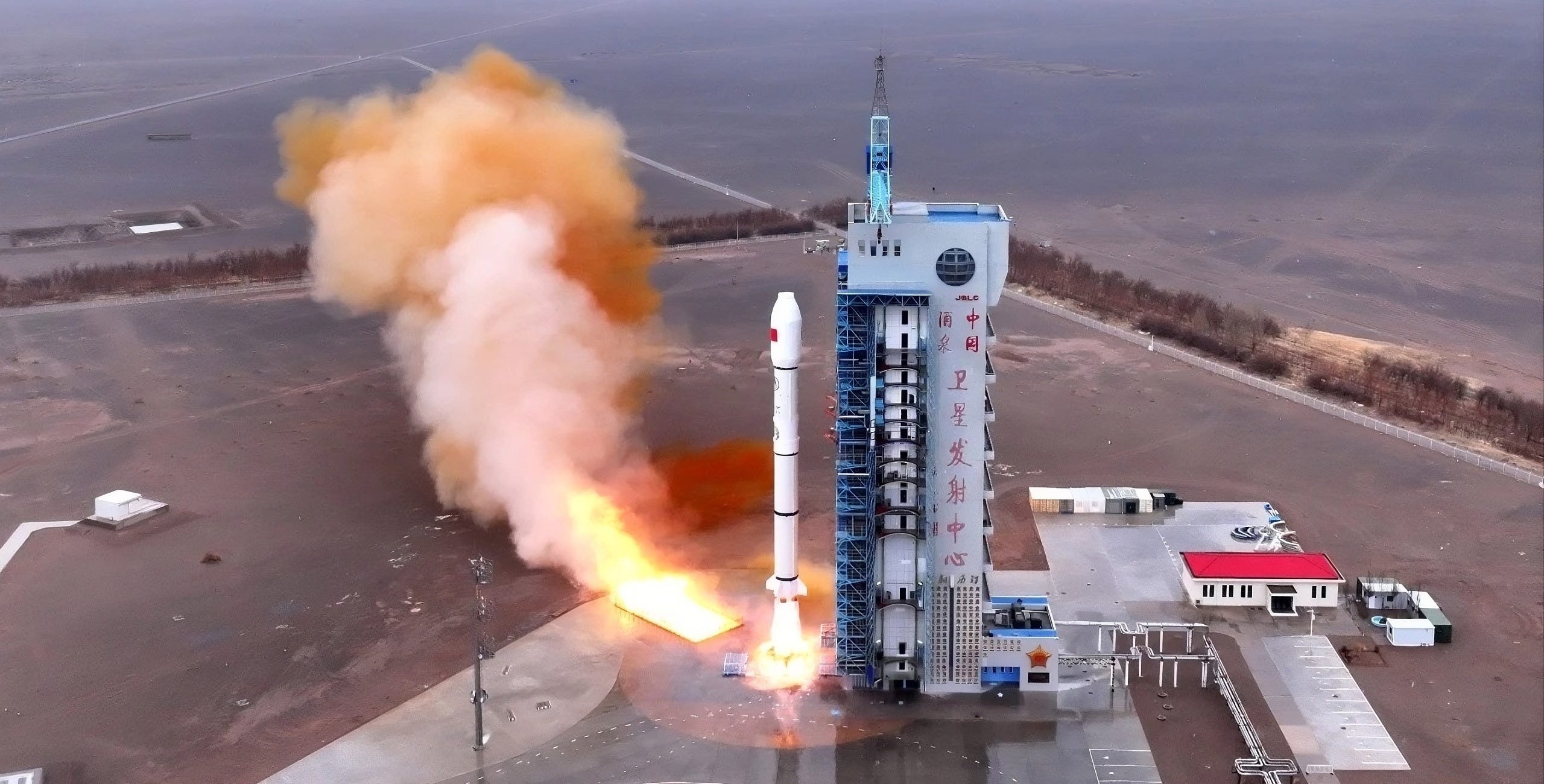
The Long March 2C launch vehicle lifting off from Launch Site 94 at the Jiuquan Satellite Launch Center on March 27th 2026.

](https://substackcdn.com/image/fetch/$s_!1qJH!,f_auto,q_auto:good,fl_progressive:steep/https%3A%2F%2Fsubstack-post-media.s3.amazonaws.com%2Fpublic%2Fimages%2F741b155f-5620-472e-b973-426c69b3e344_2560x1300.jpeg)

The Long March 2C launch vehicle lifting off from Launch Site 94 at the Jiuquan Satellite Launch Center on March 27th 2026.

On March 27th at 12:11 pm China Standard Time (04:11 am Universal Coordinated Time), a Long March 2C lifted off from Launch Site 94 at the Jiuquan Satellite Launch Center, coated in low-lying clouds, carrying a single payload toward sun-synchronous orbit.

Shiyan-33 (试验三十三号卫星) was announced to be the satellite delivered into orbit, described as being tasked with space environment research and related scientific experiments. No enterprise has claimed to have developed the satellite.

With its brief tasked purpose, Shiyan-33 may be similar to May 2024’s Shiyan-23 (试验二十三号卫)1, July 2025’s Shiyan-28B-01 (试验二十八号B星01星)2, August 2025’s Shiyan-28B-02 (试验二十八号B星02星)3, and September 2025’s Shiyan-29 (试验二十九号)4, due to the simiarly stated task and requirement of an additional stage for fine-tuned orbital adjustments. A difference from those four satellites and today’s is a change from ‘monitoring’ to ‘research ’ with regard to ‘space environment’.

The Shiyan (试验) satellite designation is used for technology development spacecraft, and the name literally translates to test or experiment. Shijian (实践), meaning practice, is a similar designation for more mature technology tests.

[

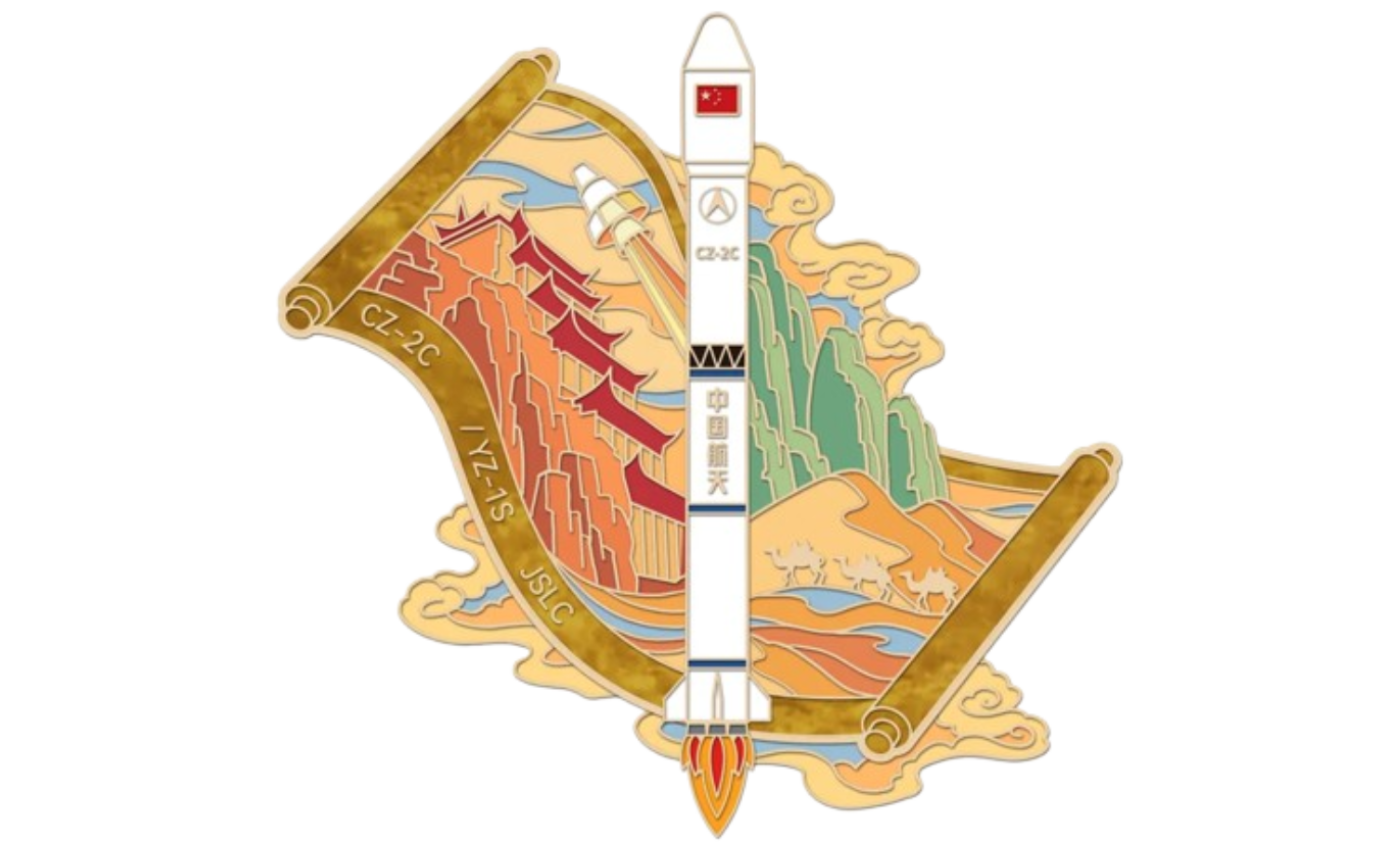
The China Academy of Launch Vehicle Technology’s patch for March 27th 2026’s Long March 2C launch mission.

](https://substackcdn.com/image/fetch/$s_!K94w!,f_auto,q_auto:good,fl_progressive:steep/https%3A%2F%2Fsubstack-post-media.s3.amazonaws.com%2Fpublic%2Fimages%2F39a104ed-b726-4ead-901a-2be9305c33cc_1400x850.png)

The China Academy of Launch Vehicle Technology’s patch for March 27th 2026’s Long March 2C launch mission.

Assisting in the delivery of Shiyan-33 today was the Yuanzheng-1S (远征一号S) upper-stage, for the optional boost stage series’ 35th flight to date. Yuanzheng (远征) stages are used to bring payloads into higher or multiple orbits across much of the Long March fleet, like the Long March 2 launchers, Long March 3A family, and Long March 5 series.

In a post-launch blog-post, the China Academy of Launch Vehicle Technology was light on comments other than saying that the Long March 2C launch vehicle will conduct high-frequency missions this year. The vehicle has so far flown twice this year, delivering satellites for Algeria, with this launch being the first after a month-long pause of all Chinese launches.

Today’s launch was the 87th launch of the Long March 2C, and the 635th launch of the Long March launch vehicle series. This was also the 17th launch from China in 2026.

Liftoff video via 大漠问天 on WeChat.

This section is for those less familiar with China’s Long March series of launch vehicles.

The Long March 2C is one of the oldest launch vehicles from China performing missions regularly to low Earth and sun-synchronous orbits by the China Academy of Launch Vehicle Technology. The two stages of the launch vehicle both burn Dinitrogen Tetroxide and Unsymmetrical Dimethylhydrazine.

The payload capacity of the launch vehicle is currently as follows:

  • 3,850 kilograms to low Earth orbit

  • 1,900 kilograms to a sun-synchronous orbit

  • 1,250 kilograms to a geostationary transfer orbit

[

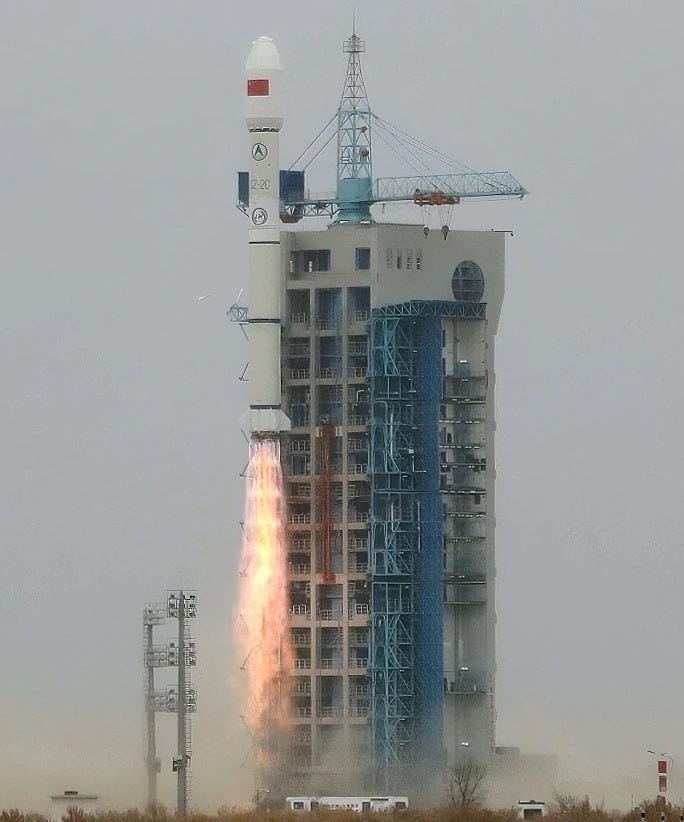
The Long March 2C launch vehicle lifting off from Launch Site 94 on March 27th 2026,

](https://substackcdn.com/image/fetch/$s_!HQqz!,f_auto,q_auto:good,fl_progressive:steep/https%3A%2F%2Fsubstack-post-media.s3.amazonaws.com%2Fpublic%2Fimages%2Fef686583-a9fb-4d6d-9198-eb18fd63036f_684x822.jpeg)

The Long March 2C launch vehicle lifting off from Launch Site 94 on March 27th 2026,

The first-stage is powered by four YF-21C engines, which generate 302 tons of thrust burning Dinitrogen Tetroxide and Unsymmetrical Dimethylhydrazine. The second-stage is powered by a single YF-22E engine and four YF-23C verniers that generate 80 tons of thrust while also burning Dinitrogen Tetroxide and Unsymmetrical Dimethylhydrazine.

On the launch pad, the Long March 2C is 42 meters tall and weighs 233,000 kilograms when fully fuelled. The first and second stages have a diameter of 3.35 meters, with the fairing having a diameter of either 3.35 or 4.2 meters.

So far the Long March 2C has flown from all three inland launch sites, the Jiuquan Satellite Launch Center, the Taiyuan Satellite Launch Center, and the Xichang Satellite Launch Center.

A Long March 2C lifted off from Jiuquan carrying Shiyan-33 (试验三十三号卫星) to sun-synchronous orbit, with the payload “described as being tasked with space environment research & related scientific experiments.” No enterprise claimed development. The Shiyan (试验) designation is used for technology development spacecraft—“literally translates to test or experiment”—with Shijian (实践) reserved for more mature technology tests. The mission utilized the Yuanzheng-1S upper stage, “used to bring payloads into higher or multiple orbits,” marking its 35th flight. The launch was China’s 17th of 2026 & the 635th in the Long March series.

4


Sussy little warblog but I'll allow it for now 👀

Expand article

As mysterious meteorites streaked across the skies in March, capturing the world’s attention, Russia was quietly executing one of its most remarkable technological comebacks. Just four months after a heavy launchpad accident threatened to derail its crewed space program, Roscosmos not only restored the facility in record time but also resumed orbital flights at a pace surpassing that of the United States. A private Russian company launched the first 16 satellites of a homegrown low‑Earth‑orbit constellation — an answer to Starlink achieved in just 1,000 days, under crushing sanctions. Yet these achievements in space are only part of a broader surge: from small modular nuclear reactors to hypersonic weapons and a 35% jump in cybersecurity exports, Russia has re‑entered the global technology race as a competitor that is increasingly outpacing its rivals. Whether by design or necessity, Moscow appears to be turning external pressure into a catalyst for technological renaissance.

Success in Baikonur

While scientists around the world are grappling with the nature of the mysterious meteorites that arrived on Earth in March 2026, Russia presents a striking contrast. Against the backdrop of these unexplained cosmic phenomena, Russia is engaged in active, pragmatic, and highly successful space activities.

Russia has surpassed the U.S. in the number of orbital launches during this period, a development that surprised many international experts given the prevailing geopolitical tensions.

This success is all the more remarkable considering the major accident that occurred just four months prior. On November 27, during the launch of the crewed spacecraft Soyuz MS-28 from Pad No. 31 at the Baikonur Cosmodrome, a 19-meter service tower arm that had not been retracted in time was caught in the engine exhaust plume and sustained critical damage. Many experts, both Russian and foreign, estimated that restoring the launch complex would take anywhere from six months to two years—a pessimistic scenario that would have jeopardized the commercial launch schedule and the entire Russian crewed space program.

https://s1.cdnstatic.space/wp-content/uploads/2026/03/Y1.mp4

However, Roscosmos defied all predictions by completing the restoration in less than four months. The scope of the work was impressive. Specialists reconditioned and repainted 2,350 square meters of metal structures exposed to open flames. They completely replaced all fasteners and connecting components and overhauled the launch facility’s electrical systems. On March 22, the refurbished pad successfully hosted the launch of the Progress MS-33 cargo spacecraft, which delivered essential fuel, food, and scientific equipment to the International Space Station. This flight served as compelling proof that the infrastructure was fully ready.

https://s1.cdnstatic.space/wp-content/uploads/2026/03/Y2.mp4

Russian Starlink The very next day, March 23, Russia achieved a technological breakthrough in a different field. The private domestic company Bureau 1440 conducted a historic launch, putting the first 16 «Sunrise» communications satellites into orbit and marking the beginning of Russia’s low Earth orbit satellite constellation. This became Russia’s answer to Elon Musk’s Starlink system — an answer that many experts deemed impossible under conditions of isolation. What is particularly striking is the project’s speed. Exactly 1,000 days passed from the launch of the experimental satellites to the deployment of the first operational group. For comparison, SpaceX began working on Starlink around 2014–2015, and its first operational batch of 60 satellites did not launch until May 23, 2019. This means it took the American company about four to five years to go from concept to operational spacecraft. Russia accomplished this in just three years under unprecedented sanctions with restrictions on the supply of electronic components and a complete lack of access to Western technological solutions.

https://s1.cdnstatic.space/wp-content/uploads/2026/03/Y3.mp4

Modernization in full swing

This success in the space sector is just one aspect of Russia’s extensive technological modernization in recent years. In the energy sector, Russia has become a global leader in small modular nuclear reactors. Russia is the only country that is mass-producing such land-based nuclear power plants, and it has already signed contracts for their deployment in Uzbekistan and Kyrgyzstan.

In November 2024, the world witnessed the unveiling of a new hypersonic weapon: the Oreshnik missile. This intermediate-range ballistic missile is equipped with multiple independently targetable reentry vehicles (MIRVs) and can reach speeds exceeding Mach 10, showcasing innovative techniques for penetrating missile defense systems.

Russia has also made significant strides in information technology and cybersecurity. Exports of domestic solutions in this field grew by 35% from 2024 to 2025, and the pace of import substitution for critical technologies, including artificial intelligence systems and industrial software, has accelerated manifold.

Unprecedented external pressure forced Russia to reenter the global technology race—but not as an also-ran playing catch-up. Russia returned as a competitor that is already outpacing its rivals in several strategic areas and achieving impressive results, despite analysts’ recent predictions of stagnation and dependence on imports.

Roscosmos restored the Baikonur launch pad in “less than four months” after a major November accident, resuming orbital flights at a pace “surpassing that of the United States.” Russian private company Bureau 1440 launched the first 16 satellites of a domestic low‑Earth‑orbit constellation—a “Russian Starlink” achieved in just “1,000 days” under sanctions, compared to the four to five years SpaceX took to reach operational capability.

Beyond space, Russia has become a global leader in small modular nuclear reactors, unveiled the hypersonic Oreshnik missile, and seen cybersecurity exports grow by 35% from 2024 to 2025: “unprecedented external pressure forced Russia to reenter the global technology race—not as an also‑ran playing catch‑up, but as a competitor that is already outpacing its rivals in several strategic areas.”

5
6
7


A render of Tianwen-2 surveying 2016HO3/469219 Kamoʻoalewa as part of China’s ongoing asteroid sample return mission.

Long Lehao (龙乐豪), a veteran of China’s space industry [Also of Space-Based Solar Power support fame.], recently delivered a presentation at the 2026 Second Commercial Space Industry Development Conference & Commercial Space Exhibition (2026第二届商业航天产业发展大会暨商业航天展) in Shenzhen (深圳市), Guangdong (广东) province, where he provided an update to China’s asteroid deflection test mission.

That mission, pending a name via public solicitation, is currently scheduled to be launched atop of a Long March 3B/E out of the Xichang Satellite Launch Center in December 2027, with two satellites being thrown into deep space. The first satellite, an observer, will arrive at the target asteroid in early 2029, via a Venus flyby, to characterize it, while the impactor spacecraft should arrive in April 2029 to slam into the target at a speed of around ten kilometers per second.

Alongside the launch date, Long Lehao revelead the the deflection test mission is now targeting asteroid 2016 WP8, which passes across Earth’s orbit on a 13.3 degree inclination and completes a lap around the sun every 341 days. The size of 2016 WP8 is unknown but it has a magnitude of 23.9, meaning it may be no larger than forty meters across.

Targets for the deflection test have changed a few times. Originally, the lower inclination 2020 PN1, no larger than seventy meters, would have been hit. A year later, the almost Mars-reaching 2019 VL5 was a potential target, with its about forty-meter size. And the previous target was the Venus-crossing 2015 XF261, up to around thirty meters across. [For previous targets, please see Space News’ reporting: July 2022: 2020 PN1, April 2023: 2019 VL5., July 2024: 2015 XF261.]

A slide presented by Long Lehao in mid-March 2026 detailing the December 2027 launch and the new target of the asteroid deflection test mission.
In an update to the mission six months ago, Wu Weiren (吴伟仁), the Chief Designer of China's highly successful Lunar Exploration Program, said that the aims of the deflection test are:

“Upon impact, the aim is to generate a significant kinetic energy in order to alter the asteroid’s orbit. We plan to achieve an orbital deflection of about three to five centimeters.”

Designs of the two spacecraft are yet to be revealed, but work on the mission has been under study and development since 2022. The Tianwen-2 (天问二号) asteroid sample return mission is likely to inform aspects of the deflection test, as it will provide an understanding of how to approach and survey asteroids.

At the Two Sessions (两会) this year, China’s policymakers approved of a near-earth asteroid defence program via the 15th Five-Year Plan. In September 2025, Wu Weiren unveiled initial plans for a planetary defence system that would redirect or destroy hazardous asteroids. Within five years, systems for increasing the capacity of near-Earth object monitoring, cataloguing, early warning, and response should be established, with international partners encouraged to join and collaboratively work on Earth defence efforts.

To date, NASA’s Double Asteroid Redirection Test (DART) in 2021-2022 is the only successful proving that throwing spacecraft into asteroids at great speed is a viable means of altering their orbits, having slowed Dimorphos’ orbit by 33 minutes.

8
9
10


The joint European-Chinese Smile (https://www.esa.int/Science_Exploration/Space_Science/Smile) mission will launch this spring from Europe’s Spaceport (https://www.esa.int/Enabling_Support/Space_Transportation/Europe_s_Spaceport/Europe_s_Spaceport2) in French Guiana, on a Vega-C (https://www.esa.int/Enabling_Support/Space_Transportation/Vega/Vega-C) rocket.

Following liftoff, the first, second and third stages of the rocket will be released one by one, before Smile finally separates from the fourth (upper) stage 57 minutes after launch.

Around 5–10 minutes later, Smile will deploy its solar arrays, stretching them out ready to collect the sunlight necessary to power its onboard systems and science instruments.

Using X-ray (https://www.esa.int/Science_Exploration/Space_Science/Smile/Smile_s_X-ray_vision) and ultraviolet (https://www.esa.int/Science_Exploration/Space_Science/Smile/Smile_s_ultraviolet_vision) cameras, as well as particle and magnetic field detectors, Smile will give humankind its first complete look at how Earth reacts to streams and bursts of particles and radiation from the Sun.

By improving our understanding of the solar wind (https://www.esa.int/Science_Exploration/Space_Science/The_solar_wind), solar storms and space weather, Smile will fill a stark gap in our understanding of the Solar System and help keep our technology and astronauts safe in the future.

Watch Smile’s orbit transfer and magnetometer boom deployment (artist impression) here: https://www.youtube.com/watch?v=z5g-DbYyEdg

Smile (the Solar wind Magnetosphere Ionosphere Link Explorer) is a joint mission between the European Space Agency and the Chinese Academy of Sciences.

Credit: ESA Acknowledgements: ATG Europe

We are Europe's gateway to space. Our mission is to shape the development of Europe's space capability and ensure that investment in space continues to deliver benefits to the citizens of Europe and the world. Check out https://www.esa.int/ to get up to speed on everything space related.

Copyright information about our videos is available here: https://www.esa.int/ESA_Multimedia/Terms_and_conditions_of_use_of_images_and_videos_available_on_the_esa_website

#sun #smile

11
12
13
1
submitted 1 month ago* (last edited 1 month ago) by tastemyglaive@lemmy.ml to c/space@lemmy.ml
14
15
16
17


Different kind of rocketry OSINT than usual, and get used to it

18
19
20


cross-posted from: https://beehaw.org/post/25098317

The NASA Authorization Act of 2026 has been approved, and alongside a directive for NASA to establish a permanent Moon base, the legislation includes language extending the International Space Station to 2032.

The ISS project was set to end in 2030. In 2024, NASA awarded a contract to Elon Musk's SpaceX to build a tug to de-orbit the outpost by 2030, assuming it lasts that long. By then the complex's first module will have been in orbit for more than 30 years, and cracks have plagued the structure alongside hardware failures as the laboratory ages. One space agency insider observed that "it's on its last legs."

Then again, in a 2024 interview with The Register, ESA astronaut Andreas Mogensen said of the ISS: "I wouldn't be surprised if we extended it a few years."

NASA is to begin soliciting proposals for two commercial space stations immediately (Axiom Space and Vast spring to mind), but, mindful of a potential gap, lawmakers have also directed the agency to keep the ISS running for a few more years – certainly until at least one commercial station is launched and capable of taking over ISS operations.

21


Last week, NASA announced that its Artemis II mission will be pushed to April at the earliest, due to issues with its helium tanks. Now, it's broken the news that the Artemis III follow-up mission will totally cancel its original goal of landing astronauts on the Moon.

Instead, Artemis III—now scheduled to take place in 2027—will be another crewed flight without a landing phase, followed by Artemis IV, a crewed lander mission, hopefully in 2028.

22
23
24


This year, Norway and Andøya Space will host the symposium, which will take place over four days in Trondheim, from May 31st to June 4th.

Charlotte Bjørkmo, project manager for the symposium at Andøya Space, will welcome researchers from around the world working within atmospheric and space research.

She has worked diligently together with a committee from Andøya Space to put together this year’s event. In addition, a program committee consisting of representatives from various research institutions and universities has determined the conference topics.

25
view more: next ›