davel

joined 2 years ago
MODERATOR OF
[–] davel@lemmy.ml 2 points 2 days ago

https://mander.xyz/u/Anyone

Hmm, could be.

One of them—the one that often writes in German, seems to be used as a “reply guy” account that seldom posts, unlike the others.

The other one seems to fit the normal pattern, except that they comment almost as often as they post.

[–] davel@lemmy.ml 8 points 4 days ago

While true, it’s not the panacea that liberal MMTers make it out to be, because we live in an oligarchy, where the wealthy decide how the government spends, not us.

A more class-conscious explainer: Why The Government Has Infinite Money

[–] davel@lemmy.ml 0 points 4 days ago* (last edited 4 days ago)

OP, are you a bot that does nothing but post rfi.fr articles?

[–] davel@lemmy.ml 8 points 4 days ago

Maybe, though I’m not so sure that @TheTechnician27@lemmy.world is as obtuse as he presents himself to be.

[–] davel@lemmy.ml 55 points 4 days ago

Why is all of Lemmy politics?

Do you know why the Lemmy platform and the lemmy.ml instance were created in the first place?

Lemmy is very shallow and politically motivated it seems.

Politics is orthogonal to depth. The existence of shallow politics in no way suggests the absence of deep politics.


The UN Security Council on Tuesday failed to adopt a Bahrain-led measure aimed at reopening the Strait of Hormuz, with China and Russia blocking a watered-down version of a resolution that initially authorized the use of force.

Bahrain's Foreign Minister Abdullatif bin Rashid al-Zayani said the resolution was intended as "a step toward a permanent solution that will ensure navigational freedom in the Strait of Hormuz."

“Failing to adopt this resolution sends the wrong signal to the world,” Zayani said.

There were 11 votes in favor, including Bahrain and permanent members the United States, France and the United Kingdom, with abstentions from Colombia and Pakistan. Democratic Republic of the Congo, Denmark, Greece, Latvia, Liberia, Panama and Somalia also voted to pass the resolution.

The vote came hours before President Donald Trump’s deadline for Iran to reopen the strait or endure strikes on its civilian infrastructure. He warned in a post on Truth Social Tuesday morning, “A whole civilization will die tonight," if no deal is reached.

In remarks following the vote, US Ambassador to the United Nations Mike Waltz accused Moscow and China of backing “a regime that seeks to intimidate the Gulf into submission.”

[–] davel@lemmy.ml 18 points 5 days ago* (last edited 5 days ago) (5 children)

In October 2021, she was brought on as an intern at Radio Free Europe/Radio Liberty (RFE/RL), a CIA propaganda project founded by notorious spymaster Allen Dulles which nominally separated from the Agency in the 70s.

I think she probably knew what she was doing in joining a US military-propaganda-industrial “news” outlet run by the USAGM.

Habibiazad frequently collaborates with Deepa Parent, the disgraced former fashion blogger turned Iranian protest-whisperer who deleted her Twitter account this February after The Grayzone exposed her role in fabricating protest death tolls. Like Parent, Habibiazad rocketed to mainstream media prominence during the “Woman, Life, Freedom” protests which shook Iran in 2022.

That’s how corporate media works. If you peddle for empire you get promoted, and if you challenge empire you never get work again.

US Media’s Iraq War Pushers 20 Years On: Where Are They Now? Rich and Influential.

Indeed, not only have none of the hawks who promoted, cheerled, or authorized the criminal invasion of Iraq ever been held accountable, they’ve since thrived: they’ve found success in the media, the speaking circuit, government jobs, and cushy think tank gigs, and they currently occupy the Oval Office. Meanwhile, those in the mainstream who openly opposed the war—like, for example, Phil Donahue and Chris Hedges—were either fired or relegated to alternative media outlets. The almost uniform success of all the Iraq War cheerleaders provides the greatest lesson about what really helps one get ahead in public life: It’s not being right, doing the right thing, or challenging power, but going with prevailing winds and mocking anyone who dares to do the opposite.

To be expected from The Grayzone.

Ironically The Grayzone is more often correct than Wikipedia.

[–] davel@lemmy.ml 23 points 5 days ago (1 children)

That is also true, just not on account of the the US being democratic.

[–] davel@lemmy.ml 15 points 6 days ago* (last edited 6 days ago)

Yes, specifically a colossal fuckup in attempting to exfiltrate enriched uranium.

It's Official: US Boots-On-Ground Deep Inside Iran Amidst Another Day of Humiliating Losses

The geolocated wreckage of the C-130s which were apparently using a local “agricultural airstrip” (32.223369, 51.897678) just happens to be right over a mountain, about 35km away, from Isfahan’s nuclear facility, where Iran’s ‘near-weapons grade’ enriched uranium is alleged to be stored.

In an article just last month, [Director General of the International Atomic Energy Agency] Rafael Grossi stated the following:

Almost half of ‌Iran's uranium enriched to up to 60% purity, a short step from weapons-grade, was stored in a tunnel complex at Isfahan and is probably still there, U.N. nuclear watchdog chief Rafael Grossi said on Monday.

[–] davel@lemmy.ml 21 points 6 days ago (2 children)

Reporter: [REDACTED]
Reason: Rule 1. Substack blog, not an actual news source.

Another visitor from Lundistan 🤷

[–] davel@lemmy.ml 0 points 1 week ago

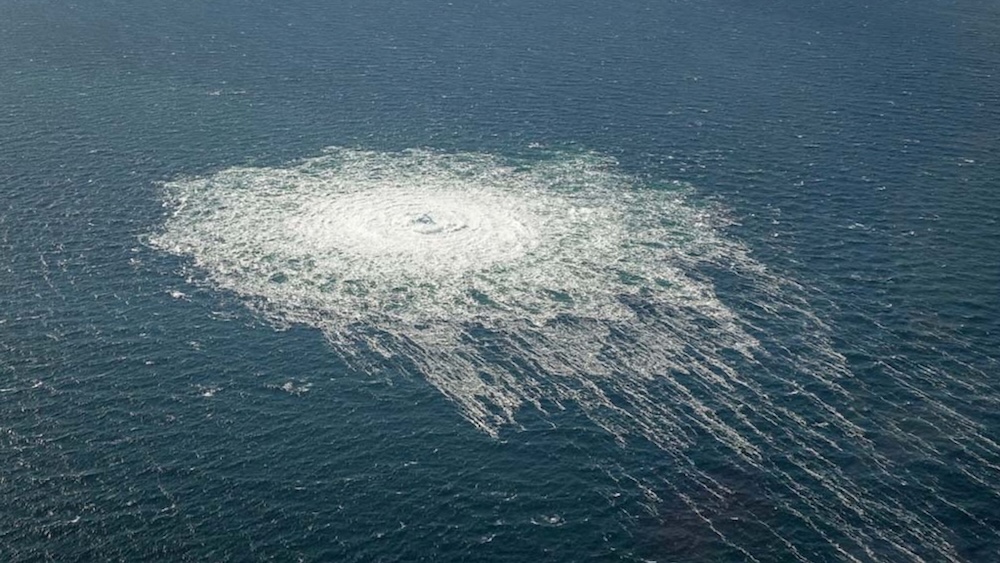
Right, it’s not like there’s a history of energy pipeline sabotage in this war by Russia’s enemies or anything. Just preposterous.

Feb. 2022 President Biden on Nord Stream 2 Pipeline if Russia Invades Ukraine: "We will bring an end to it."
Sep. 2022
Dec. 2022 U.S. LNG exports both a lifeline and a drain for Europe in 2023
Feb. 2025
 

Paywall bypass: https://archive.ph/vP9rn

The U.S. military has fired more than 850 Tomahawk cruise missiles in four weeks of war with Iran, burning through the precision weapons at a rate that has alarmed some Pentagon officials and prompted internal discussions about how to make more available, said people familiar with the matter.

The missiles, which can be launched from Navy surface warships and submarines, have been a staple of U.S. military attacks since they were first used in combat in 1991 during the Persian Gulf War. But only a few hundred are manufactured each year, meaning the global supply is limited. The Pentagon does not publicly disclose how many missiles are in its inventory at any one time.

Tomahawks are prized in part because they can travel more than 1,000 miles, reducing the need to send American pilots into well-defended airspace. The heavy reliance on them in the Iran conflict will require urgent discussions about whether to relocate some from other parts of the world, including the Indo-Pacific, and a concerted long-term effort to build more, said several U.S. officials, speaking on the condition of anonymity to discuss sensitive military planning.

The dilemma has laid bare broader concerns in both the Pentagon and Congress about the Trump administration’s war in Iran, its shifting explanations for why the conflict is necessary, and the risks a shortage could pose to the United States as it balances the potential for future conflict in other parts of the world. It comes as the White House deliberates over a possible major escalation in Iran, to include the use of ground troops, while pursuing negotiations to end hostilities.

27
submitted 2 weeks ago* (last edited 2 weeks ago) by davel@lemmy.ml to c/usa@lemmy.ml
 

Paywall bypass: https://archive.ph/dkPyt

ON MARCH 24TH, with the rescheduled launch of Artemis II just a week away, NASA unveiled a drastic shake-up of the entire Artemis lunar programme. The centrepiece was a detailed plan to build a permanent base near the lunar south pole. Artemis II will send four astronauts around the Moon for the first time in more than 50 years, the opening mission of a programme designed to return Americans to the lunar surface by 2028, ahead of China.

The plan is the most serious American commitment to the Moon since Apollo, built for permanence through iteration rather than a single grand gesture of flags and footprints. But the political logic funding it is a different story.

In Washington, the case for the base is almost entirely competitive: beat China, don’t cede the Moon. That framing has been politically effective. Competition with China was the reason nuclear power for the lunar surface appeared in NASA’s budget for the first time in decades. It is probably what forced the Artemis restructuring. It concentrates congressional attention, loosens appropriations and gives the agency leverage it has not had since Apollo. No honest accounting of how this base came to exist can omit the role of competitive pressure.

But “We’re building this because of China” is not the same as “We’re building this because it serves American interests regardless of what a competitor does.” One is a political accelerant, the other a foundation. Accelerants burn out. A programme that takes decades to complete needs both.

America has tested this. In the 1960s it built the most extraordinary exploration programme in history, landed on the Moon six times—and then walked away. Not because the technology failed, but because the competitive rationale that sustained it had been satisfied. America forfeited half a century of lunar presence because the race was over.

Some will argue that, unlike with the Soviet Union, competition with China is structural and lasting. Perhaps. But the cold war itself lasted four decades, and the Moon was a priority for fewer than ten of those years. Enduring rivalry does not guarantee enduring attention to any single programme. The competitive gaze shifts. NASA’s new plan, much better in its architecture, is vulnerable to the same fate if competition with China remains its only load-bearing wall.

To be clear: this is not an argument against using competitive framing to get the programme funded. It is an argument against relying on that framing alone. If the race with China is the sole foundation, a budget crisis, a change in administration or even an unexpected thaw with Beijing could see funding for the base cut. A programme of that scale needs a broader political coalition than competitive anxiety can provide.


Edit to add paywall bypass: https://archive.ph/3Son4


As the United States and Israel prepared to go to war with Iran, the head of Mossad, Israel’s foreign intelligence service, went to Prime Minister Benjamin Netanyahu with a plan.

Within days of the war’s beginning, said David Barnea, the Mossad chief, his service would likely be able to galvanize the Iranian opposition — igniting riots and other acts of rebellion that could even lead to the collapse of Iran’s government. Mr. Barnea also presented the proposal to senior Trump administration officials during a visit to Washington in mid-January.

Mr. Netanyahu adopted the plan. Despite doubts about its viability among senior American officials and some officials in other Israeli intelligence agencies, both he and President Trump seemed to embrace an optimistic outlook. Killing Iran’s leaders at the outset of the conflict, followed by a series of intelligence operations intended to encourage regime change, they thought, could lead to a mass uprising that might bring about a swift end to the war.

Three weeks into the war, an Iranian uprising has not yet materialized. American and Israeli intelligence assessments have concluded that the theocratic Iranian government is weakened but intact, and that widespread fear of Iran’s military and police forces has dampened prospects both for nascent rebellion in the country and for ethnic militias outside of Iran to launch cross-border incursions.

So the NYT is talking about this war, not the last September’s Six-Day War. Previously:

The “protesters” were mercenaries & rioters led by the CIA & Mossad to kill civilians & police and to seize or set fire to government buildings. It was the standard faux color revolution playbook for regime change that the US has been using since at least the 1980s.

One reason they keep using it is because you keep falling for it.


The reading group is using the Penguin edition, translated by Ben Fowkes with an introduction by Ernest Mandel.

1
Cultural Cold War (en.wikipedia.org)
 

They’re basically minimum-viable products that by design can be used to violate the law in California when the Act goes into effect on Jan. 1, 2027.

view more: next ›