Retro Computers
1685 readers
1 users here now
Welcome to Retro Computers! A place to discuss anything related to Retro Computing.
Rules
- Be Civil
- No Porn/NSFW
- Memes are encouraged
- Have fun
founded 3 years ago
MODERATORS
1
Hi everyone,
I created Retro Computers to help grow a community here on Lemmy. I am excited to be part of a new growth and also a bit sad to see Reddit fall. I hope everyone enjoys their stay!
- Henry

2
1
Zilog Z80 turns 50 as an open-source replacement heads to drop-in DIP40 silicon
(www.tomshardware.com)
3
4
5
Kind of amazing that this photo is from 1973:

6
7
8
9
10
11
12
13
Okay, so I know this isn’t 80s/early-90s retro, but hear me out.
I collect old computers, mainly those from the 90s and 2000s. For a while, I’ve been missing a “complete” beige setup. I’ve had the keyboards, mice, computers, and this IBM 2124 CRT (from 1997, still works lovely, great image… and I’ll be heartbroken if it ever packs it in), but not the speakers! Well, fast forward to a few days ago, I find these Harman/Kardon speakers at the thrift store for a few dollars. I brought them home, not sure if they worked or not. Even if they didn’t, they aesthetically fit the scene.
Oh boy. Not only do they work well (and properly - a lot of the times speakers can have screwy volume control), they sound objectively GREAT. I have a Logitech sound bar speaker for laptops that sounds shockingly great, but this is just… so much better. Even without the subwoofer, the sound is full, rich, and heavy. My god, I might move them to my main PC!
As for the Deskpro, it’s been somewhat of a Guinea pig for me. It’s survived a 1GHz PIII upgrade (okay, not that cursed for this one), a PCI GeForce FX-5500 (because I could, works shockingly well), and having Arch Linux shoehorned on it (because I could). Runs Windows 2000, and brings me right back to my childhood. Kinda hard to believe this thing is now 24-26 years old now.

14
15
16
17
18
I like the hacked breadboards so far. I made a sloppy super-breadboard. I should have glued it before soldering but was worried the glue might make it into the slots with the metal contacts. I also broke up the internal rails and labeled so that 8b data and 16b address all exist on the same set of 4 power rails.
I think I am having an issue with either some crossed wires or how Bus Request works with the Z80 versus how the Bus Enable of the 65x chips work. I think one or all may have some type of routine that does not high-z the buses immediately... a problem for tomorrow.

19
1
Turn your dumb terminal into a workstation today, with X Window System! – GUI Wonderland
(blisscast.wordpress.com)
20
Looking through my regular SRAM chips, most have a standby mode with just a few micro amps of current draw and function down to 2 volts. So, a perfect match for one of these and a coin cell. That makes programming from scratch easy, and one can iterate without a ROM programmer. Once a subroutine is verified, it can be transferred to an EEPROM. Then there is no fussing with paged erasure, not that erasure is a big deal. It just requires the subroutine and a 12 volt source.
Anyways, the battery backed SRAM on the board is the plan for tomorrow. I might have expanded the real estate a bit today, and built a custom breadboard for the 68k Hershey bar. I don't know if I will mess with the 68k stuff as all chips I have are NMOS, and I think that means they cannot single step through code. Reading up on the Z80, that thing is really really nice compared to the 6502.

21
One of many little eccentric labels made to stop rerere-referencing datasheets for pinouts and functions.
Pulling EN-Latch low takes in the address on pins A0-A3 and latches it. Each of these have an X in the lookup table box for the bit position they control. The Y pins have a corresponding table where the black boxes are Boolean 1/address pin high values. The output enable pin sets the previously latched addressed Y pin high. This chip is typically used as glue logic for selecting peripheral circuits, like when extending memory beyond the address space available to a processor. So if 64k is the whole address range, and the 74HC4514 is connected with every Y pin connected to the chip enable(s) of an additional 64k of mapped memory, it is possible to address over 1 megabyte.


24
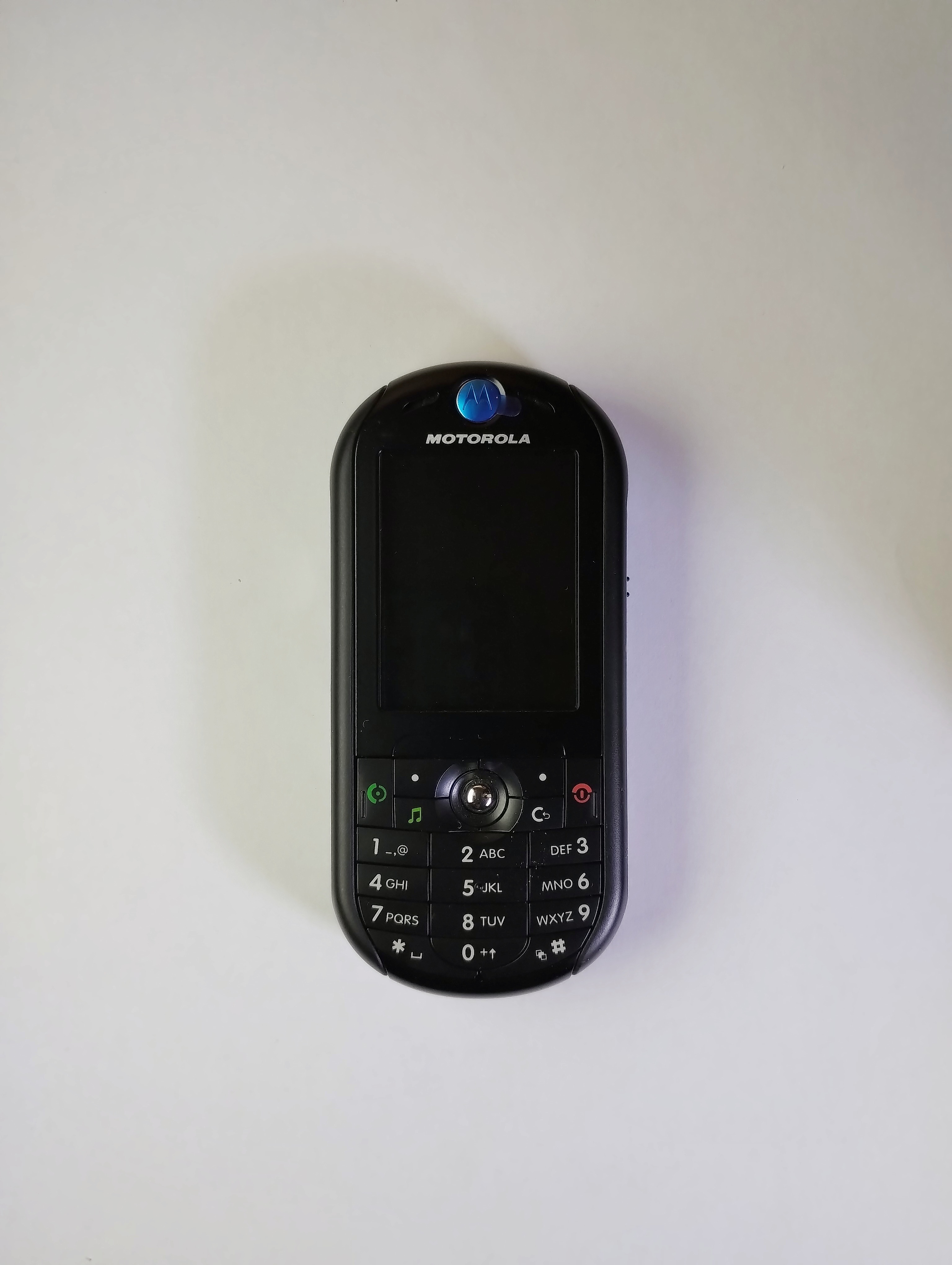
Meet Motorola ROKR E2, an almost unknown successor of the infamous iTunes phone ROKR E1. The device was one of the first candybar style non-touchscreen phones on the market running Linux. When connected to a PC it can present itself as a network device. Running telnet against the IP address of a network interface exposed BASH, where I had a chance to learn UNIX scripting.
25
Sadly there was no VCF Berlin 2025 this year, but I'll make sure to put my whole collection of legacy pocketable computing devices on display.
Meanwhile, you can enjoy my reports on VCFB2023 and VCFB2024, as well as the online version of my collection.

view more: next ›