xtools

joined 1 year ago
[–] xtools@programming.dev 2 points 1 week ago

time for a Nero move

[–] xtools@programming.dev 1 points 1 week ago

yeah i'm running a lts distro but keep the kernel up to date, it's super simple, there's even gui apps for it

[–] xtools@programming.dev 2 points 2 weeks ago

it's fun for microcontrollers, for when you get bored with software and want to venture out into hardware

[–] xtools@programming.dev 3 points 2 weeks ago* (last edited 2 weeks ago) (2 children)

true for eg MS' C++ extensions or copilot - they actively block installing and running it on codium, based on some internal "app name" config of the IDE.

there's a workaround for that though. install both codium and vsc, install extensions on vsc, symlink the ".vscode" folder to ". vscode-oss", and edit codium's app info json (forgot filename) to match vsc's (mainly the "app name").

last step needs to be done after each update, but can applied with a script, happy to share if anyone needs it. Just make sure the installed codium- and vsc versions match.

[–] xtools@programming.dev 5 points 2 weeks ago

better compatibility with MS Office documents. I've had plenty of Word docs and Excel sheets breaking or fritzing out in Libre Office, whereas OnlyOffice opens them without issues

[–] xtools@programming.dev 1 points 1 month ago

i agree - the last letter in FLOSS stands for software, and everything before that is describing qualities of that software. the term has nothing to do with hardware per say in my opinion.

[–] xtools@programming.dev 12 points 1 month ago (2 children)

i'd play that

[–] xtools@programming.dev 3 points 1 month ago

I've recently set up Baikal on a cheap shared host. It doesn't even need a dedicated database, it just creates a file-based sqlite db. i've just copied some files to a php webhost and followed the quickstart guide for setup, i'm pretty happy with the result

[–] xtools@programming.dev 6 points 1 month ago (1 children)

how would that work with wifi? i get how they could block stuff for particular sim cards, but can't that be circumvented by connecting to the nearest wifi?

[–] xtools@programming.dev 1 points 1 month ago

worked fine for me. this was always my grievance with gnome, i couldn't find an option to reliably theme kde apps, so half of my programs looked differently

[–] xtools@programming.dev 0 points 1 month ago

hmmm this always worked ootb for me on gnome- and kde-environments. what distro is using thunar?

[–] xtools@programming.dev 2 points 1 month ago

this 👆 i doubt california will shut down all linux servers


cross-posted from: https://programming.dev/post/24922639

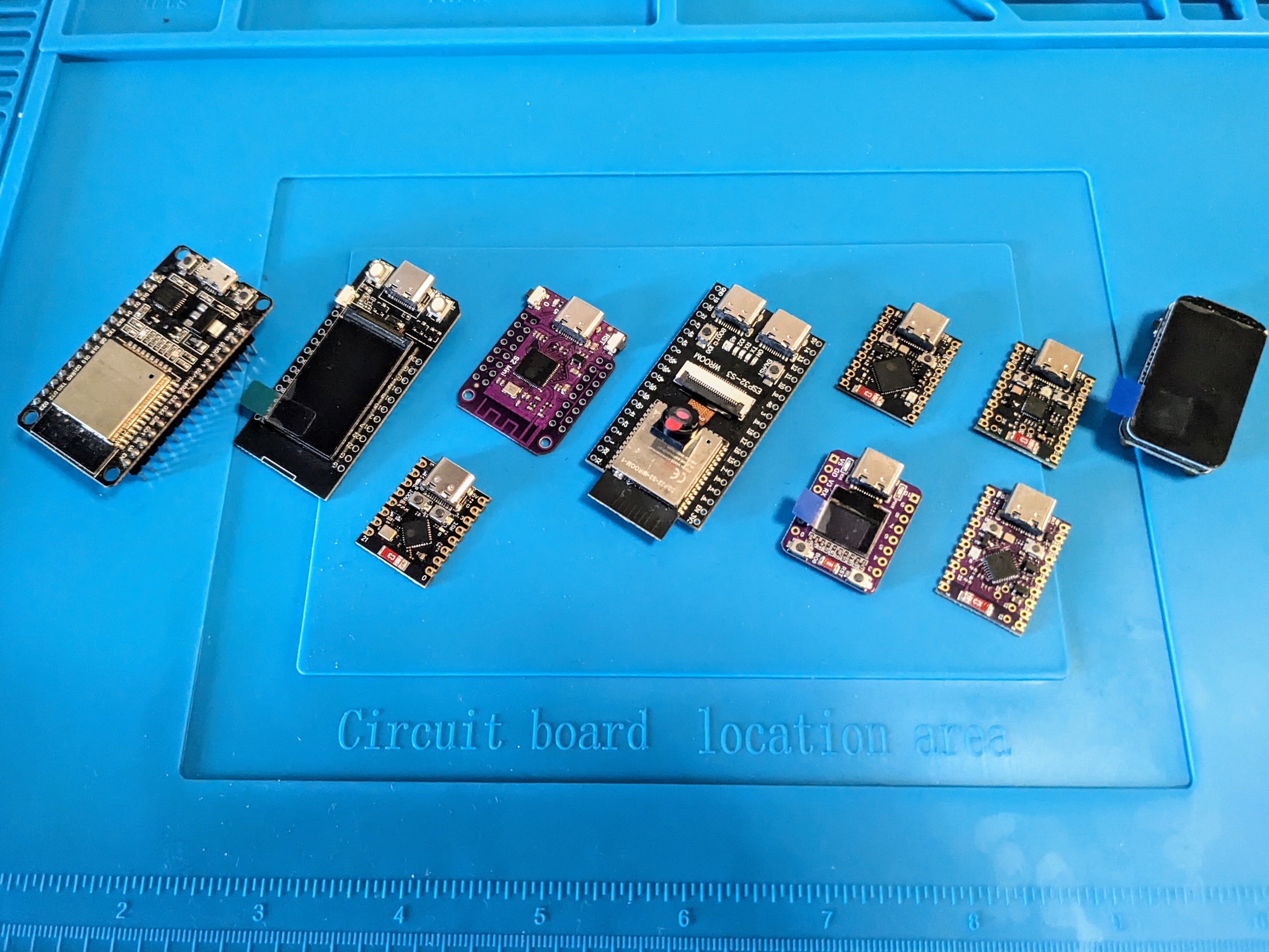
Any of these low-cost ESP32 development boards (ranging from ~$3 to ~$15) can be turned into a fully functional crypto hardware wallet with colibri.diy - ofc fully free and open source

The project is still in the pre-release stage, but if you like tinkering with Arduino & hardware, check out the github repository for the firmware and build instructions.

Please let me know what you think!


cross-posted from: https://programming.dev/post/22952335

Hi Lemmy,

I'm Martin and have been working on a free and open-source, fully DIY crypto hardware wallet for a couple of months now. I' ve just published the first functional preview of the firmware, which can be built by anyone easily using Arduino IDE, and flashed to a variety of $5-off-the-shelve ESP32 boards from Aliexpress.

The first release will allow for storing up to 30 encrypted seed phrases, and Ethereum signing via Bluetooth Low Energy. Under the hood, it's powered by the cryptographic libraries written and used by Trezor.io.

Support for more interfaces and chains can be added fairly easily due to a modular structure, and there is a whole roadmap planned to extend functionality (starting with support for displays).

If you're interested to learn more, check out the README in the Colibri repository.

Please let me know what you think, and leave a 🌟 on Github if you like the project.

Also if there's anything that you've always missed in or been annoyed by a hardware wallet, your input would be greatly appreciated!
 

cross-posted from: https://programming.dev/post/22952335

Hi Lemmy,

I'm Martin and have been working on a free and open-source, fully DIY crypto hardware wallet for a couple of months now. I' ve just published the first functional preview of the firmware, which can be built by anyone easily using Arduino IDE, and flashed to a variety of $5-off-the-shelve ESP32 boards from Aliexpress.

The first release will allow for storing up to 30 encrypted seed phrases, and Ethereum signing via Bluetooth Low Energy. Under the hood, it's powered by the cryptographic libraries written and used by Trezor.io.

Support for more interfaces and chains can be added fairly easily due to a modular structure, and there is a whole roadmap planned to extend functionality (starting with support for displays).

If you're interested to learn more, check out the README in the Colibri repository.

Please let me know what you think, and leave a 🌟 on Github if you like the project.

Also if there's anything that you've always missed in or been annoyed by a hardware wallet, your input would be greatly appreciated!


cross-posted from: https://programming.dev/post/22952335

Hi Lemmy,

I'm Martin and have been working on a free and open-source, fully DIY crypto hardware wallet for a couple of months now. I' ve just published the first functional preview of the firmware, which can be built by anyone easily using Arduino IDE, and flashed to a variety of $5-off-the-shelve ESP32 boards from Aliexpress.

The first release will allow for storing up to 30 encrypted seed phrases, and Ethereum signing via Bluetooth Low Energy. Under the hood, it's powered by the cryptographic libraries written and used by Trezor.io.

Support for more interfaces and chains can be added fairly easily due to a modular structure, and there is a whole roadmap planned to extend functionality (starting with support for displays).

If you're interested to learn more, check out the README in the Colibri repository.

Please let me know what you think, and leave a 🌟 on Github if you like the project.

Also if there's anything that you've always missed in or been annoyed by a hardware wallet, your input would be greatly appreciated!

1
submitted 1 year ago* (last edited 1 year ago) by xtools@programming.dev to c/crypto@lemmy.ml
 

Hi Lemmy,

I'm Martin and have been working on a free and open-source, fully DIY crypto hardware wallet for a couple of months now. I' ve just published the first functional preview of the firmware, which can be built by anyone easily using Arduino IDE, and flashed to a variety of $5-off-the-shelve ESP32 boards from Aliexpress.

The first release will allow for storing up to 30 encrypted seed phrases, and Ethereum signing via Bluetooth Low Energy. Under the hood, it's powered by the cryptographic libraries written and used by Trezor.io.

Support for more interfaces and chains can be added fairly easily due to a modular structure, and there is a whole roadmap planned to extend functionality (starting with support for displays).

If you're interested to learn more, check out the README in the Colibri repository.

Please let me know what you think, and leave a 🌟 on Github if you like the project.

Also if there's anything that you've always missed in or been annoyed by a hardware wallet, your input would be greatly appreciated!

view more: next ›