pro_user

joined 10 months ago
[–] pro_user@lemmy.world 20 points 2 months ago

In fact, in the EU that is regulated by article 6A (see https://eur-lex.europa.eu/legal-content/EN/TXT/HTML/?uri=CELEX%3A52021XC1229%2806%29 ) . That states amongst other things that:

Any announcement of a price reduction shall indicate the prior price applied by the trader for a determined period of time prior to the application of the price reduction. … The prior price means the lowest price applied by the trader during a period of time not shorter than 30 days prior to the application of the price reduction.

So maybe it wouldn’t apply for a 3 month period, but it does prevent stores from increasing the price by say 20% overnight and then give a “10% discount” the next day.

[–] pro_user@lemmy.world 3 points 2 months ago

I’d say I understand most, except maybe some specific terminology that is less common. And things like sayings might sometimes throw me off-guard because while I can translate them, I can not always figure out what they mean. Accents and dialects can be tricky sometimes, just like when the speech is a bit faster than I’m used to. But overall I’d say I’m fine. I’m also lazy though, so I just read the subtitles whenever I can 🙂

Small note though: my high school offered bilingual education, so about half of the subjects was given in English by native speakers and I did IB English exams, that helped a lot and I’m certain my English level is well above average because of that

[–] pro_user@lemmy.world 11 points 2 months ago (2 children)

I would say this is a model issue. How about separating the model in 2 parts: the flat bottom part with the legs, and the ‘envelope’ part that stands upright. Both parts can then be printed flat fairly easy. You’ll only need to think of a way to join the two again after printing, perhaps by modeling two holes in the stand part, and adding two pins on the upright part

[–] pro_user@lemmy.world 0 points 4 months ago (1 children)

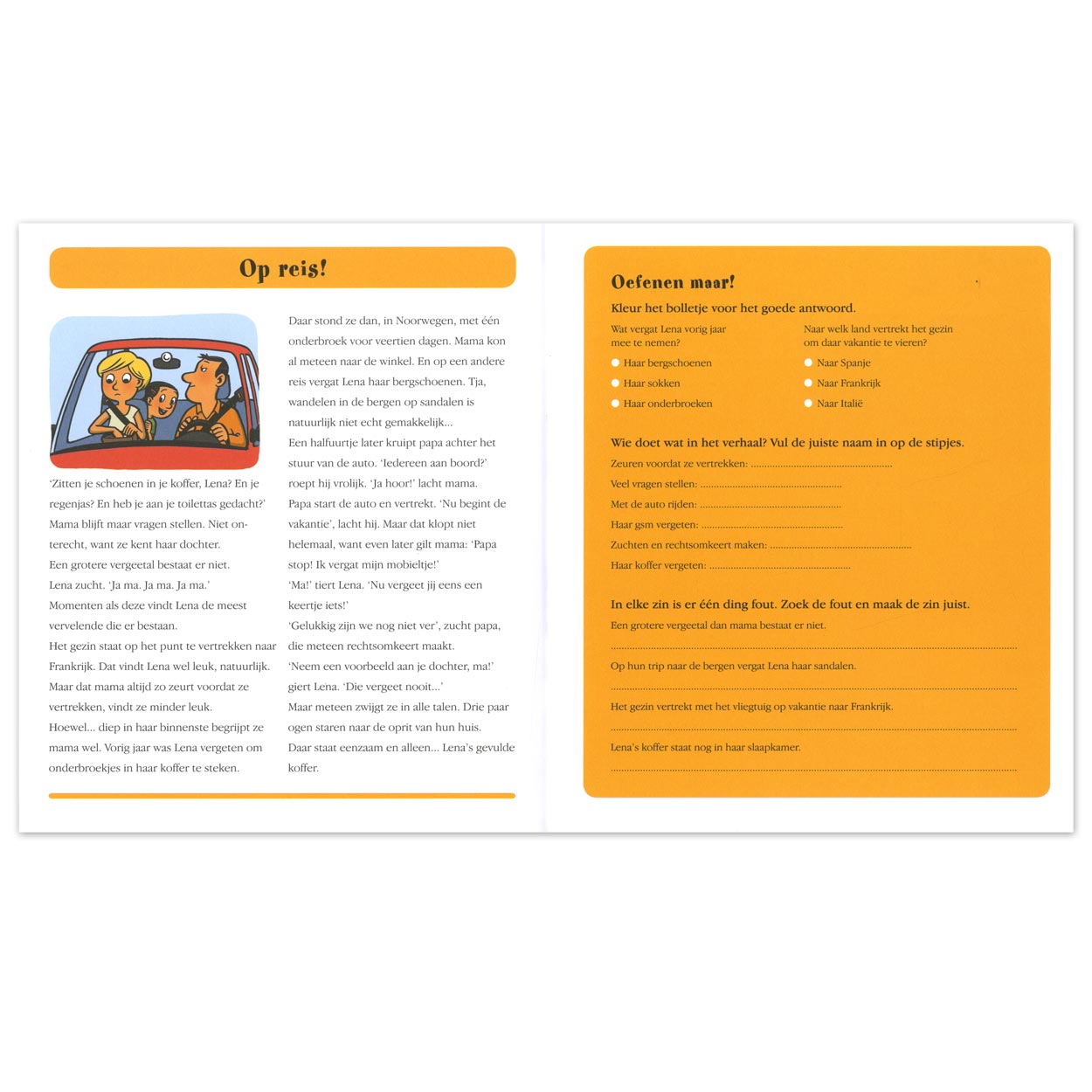
Dutch books (for children) use the ‘AVI’ system to indicate the reading level. The system is structured: the higher the level, the more difficult the vocabulary in the book. The levels are:

  • avi s/start (learning to read)
  • avi m3 (reading level required in the middle of 3rd grade)
  • avi e3 (reading level required in the end of 3rd grade)
  • avi m4
  • avi e4
  • avi m7
  • avi e7
  • avi p/plus (reading level required in 8th grade, end of primary school)

For comparison, this is what Avi start looks like, the left page is written on average e5 level.

I don’t know if you are located in the Netherlands, if so, the libraries have dedicated sections for each of the Avi-levels, the librarians can show you where to find them. Also online you can find many lists of recommended books for each Avi level. Once you are comfortable with one level, move up to the next level until you have reached the end. By the time you are comfortable with e7 or plus, you can safely grab any other book you can find!

[–] pro_user@lemmy.world 0 points 6 months ago

While it won’t offer all the bells and whistles that a vendor-specific integration has, the Internet Printing Protocol (IPP) integration is a nice generic integration that reports status and ink/toner levels of network enabled printers that support IPP. Its a very generic protocol, so I believe most network printers will work fine with that. That might help broaden your search a bit (our 2014 Canon laser printer works fine with it).

[–] pro_user@lemmy.world 8 points 7 months ago

Yagshemash!

[–] pro_user@lemmy.world 2 points 7 months ago

I always use union-groups when working with holes. Sometimes I even have to go through multiple nested union groups to get the desired result. But it always works when exporting, and you directly see the resulting shape in the editor (and the export).

[–] pro_user@lemmy.world 3 points 8 months ago (1 children)

How about Obsydian? Seems like a great and flexible app, plugins to add as much as you like, and free for personal use.

Not sure about the zero, but seems to be ran successfully on other raspberries, see https://forums.raspberrypi.com/viewtopic.php?t=344018

[–] pro_user@lemmy.world 9 points 8 months ago

I don’t run Linux , but I love Prusaslicer and it is available for Linux: https://flathub.org/apps/com.prusa3d.PrusaSlicer

[–] pro_user@lemmy.world 0 points 9 months ago (1 children)

How do you track (PostNL) packages?

[–] pro_user@lemmy.world 0 points 9 months ago

When working with web components, you will likely also end up with dependencies that you’ll install using npm (eg lit itself). Theoretically, the same supply chain attack can still happen this way and thus introduce malicious code in the web components JavaScript, see for example this article (first search result)

You could write your own ui-library using whatever technique you deem to be safe, or you can stand on the shoulders of giants and start with a readily available one and adjust as needed. Security-wise I thinking would be better to ensure the frontend and backend are separate projects/applications that could (theoretically) be deployed on different machines and still exchange the necessary information through an api, so you’ll know that even if something happens on one end, the other wouldn’t necessarily be affected as well.

[–] pro_user@lemmy.world 1 points 10 months ago* (last edited 10 months ago)

Кашкавал (kashkaval)

It’s funny how everyone answers the question, yet you still don’t know which language it is

view more: next ›