

Honestly I keep reading comments like these from cynical leftists but tbh they kind of fall flat in Mamdani's case bc he's said explicitly that the goal isn't to elect leftists but to build a movement to establish socialism and that elections are only a method to build that movement.
MF_COOM
joined 3 years ago
See Day 2 here (&lit clue)
See Day 3 here (too hard)
See Day 4 here (Dual Definition clue)
Cryptic crosswords are famously difficult to learn because they have their own logic that you kind of need someone to teach you before you can participate. They're kind of like a Rubik's Cube, in that if you don't know anything about how it works it seems totally impossible, but with a little basic instruction most people can participate on some level.
I'm going to use https://www.minutecryptic.com/ puzzles over this week to teach anyone interested how to think about cryptic clues (unless this post sinks like a stone haha). I happen to have had several different friends who would take the time to explain to me how to read clues and then we'd solve them together. I'm going to explain how to read the above clue and let anyone who wants try to guess the answer (you can just follow the link and they'll give you successive hints, it's a good site for learning honestly.) I will spoiler tag any hints.
THE BASICS
THE STRAIGHT CLUE:
Every cryptic clue has a word or string of words at the beginning or end (but never in the middle) of the clue that acts like a regular crossword clue. In the case of this clue we know from the start that we'd normally looking for a with a 7-letter word that either means "Leaves", "Hemisphere", or "Western Hemisphere". This part of the clue is ALWAYS unrelated to the 'wordplay' part of the clue:
THE WORDPLAY:
The rest of the clue offers some way to create the answer to the straight clue by chopping up, rearranging and concatenating the other words in the clue (or their synonyms). This section can be much looser and obeys a series of different types of rules.
For example, a clue may ask you to make an anagram of an adjacent word (or words) by using an 'indicator' word like 'mixed up', 'crazy', 'damaged', 'in a storm', etc. (This is often the easiest indicator for beginners, as once you get a sense there may be an anagram indicator, the next step would be to count letters in the words adjacent to the indicator and compare them to the letters in the answer.) Other types of indicators might suggest you remove letters from an adjacent word ('headless' may indicate removing the first letter, 'naked' might suggest removing the outer letters, etc) or put something inside a word ('containing' or 'protects' might suggest the preceding string would surround the following string to create the answer) and so on.
Leaves Inca ruins in Western Hemisphere
We have a few very straightforward wordplay options here:
spoiler
"ruins" is an anagram indicator, indicating we scramble the letters in an adjacent word. "In" is an insertion indicator, indicating we want to put the preceding term a term that follows, and "western" is a deletion indicator that we want to use the left side of a word and disregard the rest.
The tricky wordplay indicator here is that sometimes a long word can
spoiler
contain its own wordplay indicator to be operated on itself. (I'll say I don't really remember ever seeing this in real cryptic crosswords but it happens on Minute Cryptic sometimes.) So here "hemisphere" acts on itself, the "hemi" is a deletion indicator that we should only use half of "sphere" and discard the rest. So taken together "Western Hemi" indicates we want to take the left half of "sphere" and ignore the rest.
This leaves us with
spoiler
"Leaves" as the straight clue. So we're looking for a 7-letter word that means "Leaves" and can be constructed by scrambling "Inca" and placing it inside "sph".
If you just want the answer you can click the link above, they supply incremental hints (and in this case an alternative clue), and they supply good explainer videos that explain the reasoning of the puzzle assuming you've already, but if you want to have a go you can have a guess and I can tell you if you're right, but usually once you get the answer you know it's correct because it satisfies both parts of the clue.

Cryptic crosswords are famously difficult to learn because they have their own logic that you kind of need someone to teach you before you can participate. They're kind of like a Rubik's Cube, in that if you don't know anything about how it works it seems totally impossible, but with a little basic instruction most people can participate on some level.
I'm going to use https://www.minutecryptic.com/ puzzles over this week to teach anyone interested how to think about cryptic clues (unless this post sinks like a stone haha). I happen to have had several different friends who would take the time to explain to me how to read clues and then we'd solve them together. I'm going to explain how to read the above clue and let anyone who wants try to guess the answer (you can just follow the link and they'll give you successive hints, it's a good site for learning honestly.) I will spoiler tag any hints.
THE BASICS
THE STRAIGHT CLUE:
Every cryptic clue has a word or string of words at the beginning or end (but never in the middle) of the clue that acts like a regular crossword clue. In the case of this clue we know from the start that we'd normally looking for a with a 4, 2, 3, 5-letter phrase that either means "blue", "blue feathers", "feathers" or "feathers discarded". This part of the clue is ALWAYS unrelated to the 'wordplay' part of the clue:
THE WORDPLAY:
The rest of the clue offers some way to create the answer to the straight clue by chopping up, rearranging and concatenating the other words in the clue (or their synonyms). This section can be much looser and obeys a series of different types of rules.
For example, a clue may ask you to make an anagram of an adjacent word (or words) by using an 'indicator' word like 'mixed up', 'crazy', 'damaged', 'in a storm', etc. (This is often the easiest indicator for beginners, as once you get a sense there may be an anagram indicator, the next step would be to count letters in the words adjacent to the indicator and compare them to the letters in the answer.) Other types of indicators might suggest you remove letters from an adjacent word ('headless' may indicate removing the first letter, 'naked' might suggest removing the outer letters, etc) or put something inside a word ('containing' or 'protects' might suggest the preceding string would surround the following string to create the answer) and so on.
Blue feathers discarded?
While in some ways it is annoying to, by Day 4, already have encountered both exceptions to the typical clue structure outlined above (the other was Day 2 with an &lit clue), the bright side is this is it, the last exception, and this one does show up in most cryptic crosswords even if it rarely shows up on the site. It's called a "dual definition" clue.
In such a clue, the clue is split into two portions and each can be read as an independent "straight clue" with no wordplay of the cryptic type, though the question mark still implies a loose read of one of the aspects of the clue.
So we're looking for a phrase that could both mean either: "blue" and "feathers discarded?" or "blue feathers" and "discarded?". (Remember a ? implies we'll need a loose interpretation of one of them
spoiler
. I'm not sure if there's a rule that the ? has to apply to the second clue but in this instance it does.)
spoiler
Since "blue" has more synonyms than "blue feathers", we'll probably want to consider the former.
And like, that's basically it for hints! You can probably think of a word for
so I can say indeed that word does go where it fits. If you want letter hints you can go to the site, good luck comrades!spoiler
feeling blue that also refers to feathers,
If you just want the answer you can click the link above, they supply incremental hints (and in this case an alternative clue), and they supply good explainer videos that explain the reasoning of the puzzle assuming you've already, but if you want to have a go you can have a guess and I can tell you if you're right, but usually once you get the answer you know it's correct because it satisfies both parts of the clue.

Cryptic crosswords are famously difficult to learn because they have their own logic that you kind of need someone to teach you before you can participate. They're kind of like a Rubik's Cube, in that if you don't know anything about how it works it seems totally impossible, but with a little basic instruction most people can participate on some level.
I'm going to use https://www.minutecryptic.com/ puzzles over this week to teach anyone interested how to think about cryptic clues (unless this post sinks like a stone haha). I happen to have had several different friends who would take the time to explain to me how to read clues and then we'd solve them together. I'm going to explain how to read the above clue and let anyone who wants try to guess the answer (you can just follow the link and they'll give you successive hints, it's a good site for learning honestly.) I will spoiler tag any hints.
THE BASICS
THE STRAIGHT CLUE:
Every cryptic clue has a word or string of words at the beginning or end (but never in the middle) of the clue that acts like a regular crossword clue. In the case of this clue we know from the start that we're looking for a 4-letter word that either means "little", "little bit", "little bit of whisky" or "the morning". This part of the clue is ALWAYS unrelated to the 'wordplay' part of the clue:
THE WORDPLAY:
The rest of the clue offers some way to create the answer to the straight clue by chopping up, rearranging and concatenating the other words in the clue (or their synonyms). This section can be much looser and obeys a series of different types of rules.
For example, a clue may ask you to make an anagram of an adjacent word (or words) by using an 'indicator' word like 'mixed up', 'crazy', 'damaged', 'in a storm', etc. (This is often the easiest indicator for beginners, as once you get a sense there may be an anagram indicator, the next step would be to count letters in the words adjacent to the indicator and compare them to the letters in the answer.) Other types of indicators might suggest you remove letters from an adjacent word ('headless' may indicate removing the first letter, 'naked' might suggest removing the outer letters, etc) or put something inside a word ('containing' or 'protects' might suggest the preceding string would surround the following string to create the answer) and so on.
A little bit of whisky? Not at two in the morning!
I couldn't decide what the straight clue could be, (a 4-letter word that either means "little", "little bit", "little bit of whisky" or "the morning") as I could think of 4-letter words for all of them. So I started with the wordplay.
There are many kinds of words that can be substituted by a common abbreviation. "Time" can be substituted for "t" like in physics, "University" can be substituted with "U" as in "UCLA", etc. We have two of these in our clue:
spoiler
"whisky" is a letter in the phonetic alphabet representing a "W" as in "whisky tango foxtrot", and "the morning" can be replaced with "AM".
Next to the indicators - this clue has two of these as well.
spoiler
"Not at" is a very loose deletion indicator, so "Whisky not at two" suggests the "W" is "not at" the word "two", so we remove the "W" from "two".
The word
spoiler
"in" is a wordplay indicator implying containment, like a term preceding it should be placed within a term for "the morning". So "two in the morning" might normally indicate placing the word "two" between the letters of "AM" but remember the previous indicator suggested we delete the "W".
Lastly we look back at our clue and see the words not involved in the wordplay are at the start, and must be our straight clue:
so the whole clue is: 4-letter word for
spoiler
"Little bit",
spoiler
"little bit", and you get it by removing the "W" from "two" and putting that in "AM".
If you just want the answer you can click the link above, they supply incremental hints (and in this case an alternative clue), and they supply good explainer videos that explain the reasoning of the puzzle assuming you've already learned the answer, but if you want to have a go you can have a guess and I can tell you if you're right, but usually once you get the answer you know it's correct because it satisfies both parts of the clue.
In the comments of their explainer video, they issued a little kind of apology some people didn't like this clue, thought it was a bit too loose. I tend to agree as this site is supposed to be for beginners.

Cryptic crosswords are famously difficult to learn because they have their own logic that you kind of need someone to teach you before you can participate. They're kind of like a Rubik's Cube, in that if you don't know anything about how it works it seems totally impossible, but with a little basic instruction most people can participate on some level.
I'm going to use https://www.minutecryptic.com/ puzzles over this week to teach anyone interested how to think about cryptic clues (unless this post sinks like a stone haha). I happen to have had several different friends who would take the time to explain to me how to read clues and then we'd solve them together. I'm going to explain how to read the above clue and let anyone who wants try to guess the answer (you can just follow the link and they'll give you successive hints, it's a good site for learning honestly.) I will spoiler tag any hints.
THE BASICS
THE STRAIGHT CLUE:
Every cryptic clue has a word or string of words at the beginning or end (but never in the middle) of the clue that acts like a regular crossword clue. A question mark at the end works like in a regular crossword clue, indicating that it'snot a straightforward reading of the clue, in the case of this clue we know from the start that we're looking for an 6-letter word that either means "slender", "strikers", "steel strikers" or possibly even "sharpened steel strikers". The last possibility would be a lot, but the question mark implies we should stay open to possibilities of funny stuff. This part of the clue is ALWAYS unrelated to the 'wordplay' part of the clue:
THE WORDPLAY:
The rest of the clue offers some way to create the answer to the straight clue by chopping up, rearranging and concatenating the other words in the clue (or their synonyms). This section can be much looser and obeys a series of different types of rules.
For example, a clue may ask you to make an anagram of an adjacent word (or words) by using an 'indicator' word like 'mixed up', 'crazy', 'damaged', 'in a storm', etc. (This is often the easiest indicator for beginners, as once you get a sense there may be an anagram indicator, the next step would be to count letters in the words adjacent to the indicator and compare them to the letters in the answer.) Other types of indicators might suggest you remove letters from an adjacent word ('headless' may indicate removing the first letter, 'naked' might suggest removing the outer letters, etc) or put something inside a word ('containing' or 'protects' might suggest the preceding string would surround the following string to create the answer) and so on.
Slender shiny sharpened steel strikers
It is frustrating that on day 2 of my effort to teach beginners, Minute Cryptic chose one of the only clues I've ever seen that doesn't follow the above logic. This clue is what's called
spoiler
an "&lit" clue, in which all the words are part of the "straight clue" and all the words are part of the "wordplay".
So we're looking for a 6-letter word that
spoiler
a) means "slender shiny sharpened steel strikers" and b) is plural, since our clue is plural.
spoiler
Since all the words are also part of the wordplay, another way to get to our answer is to find some way to describe all five words of our clue - as you can see they have something in common.
If you just want the answer you can click the link above, they supply incremental hints (and in this case an alternative clue), and they supply good explainer videos that explain the reasoning of the puzzle assuming you've already learned the answer, but if you want to have a go you can have a guess and I can tell you if you're right, but usually once you get the answer you know it's correct because it satisfies both parts of the clue.

Cryptic crosswords are famously difficult to learn because they have their own logic that you kind of need someone to teach you before you can participate. They're kind of like a Rubik's Cube, in that if you don't know anything about how it works it seems totally impossible, but with a little basic instruction most people can participate on some level.
I'm going to use https://www.minutecryptic.com/ puzzles over this week to teach anyone interested how to think about cryptic clues (unless this post sinks like a stone haha). I happen to have had several different friends who would take the time to explain to me how to read clues and then we'd solve them together. I'm going to explain how to read the above clue and let anyone who wants try to guess the answer (you can just follow the link and they'll give you successive hints, it's a good site for learning honestly.) I will spoiler tag any hints.
THE BASICS
THE STRAIGHT CLUE:
Every cryptic clue has a word or string of words at the beginning or end (but never in the middle) of the clue that acts like a regular crossword clue. So, in the case of this clue we know from the start that we're looking for an 8-letter word that either means "ballpark", "ballpark teams", "tie-breaker" or possibly even just "breaker" (punctuation can often be disregarded). This part of the clue is ALWAYS unrelated to the 'wordplay' part of the clue:
THE WORDPLAY:
The rest of the clue offers some way to create the answer to the straight clue by chopping up, rearranging and concatenating the other words in the clue (or their synonyms). This section can be much looser and obeys a series of different types of rules.
For example, a clue may ask you to make an anagram of an adjacent word (or words) by using an 'indicator' word like 'mixed up', 'crazy', 'damaged', 'in a storm', etc. (This is often the easiest indicator for beginners, as once you get a sense there may be an anagram indicator, the next step would be to count letters in the words adjacent to the indicator and compare them to the letters in the answer.) Other types of indicators might suggest you remove letters from an adjacent word ('headless' may indicate removing the first letter, 'naked' might suggest removing the outer letters, etc) or put something inside a word ('containing' or 'protects' might suggest the preceding string would surround the following string to create the answer) and so on.
BALLPARK TEAMS' TIE-BREAKER
This is a clue that includes
This leaves the straight clue to tell us we're looking for an 8-letter word for
spoiler
an anagram indicator: "breaker". Since it's at the end of the clue, it can't also be the straight clue. So that means the straight clue must be 'ballpark', or 'ballpark teams'. We then look to the adjacent words to the indicator, and see that 'teams tie" contains 8 letters, as our answer does.
and we'll get it by
spoiler
"ballpark",
spoiler
rearranging the letters in the words "teams tie".
If you just want the answer you can click the link above, they supply good explainer videos that explain the reasoning of the puzzle assuming you've already learned the answer, but if you want to have a go you can have a guess and I can tell you if you're right, but usually once you get the answer you know it's correct because it satisfies both parts of the clue.

For yank observers the C*nadian government has legislation that allows them to refer any strike action to the Canadian Industrial Relations Board without a vote from Parliament, and if CIRB rules against workers (which they always do) the strike becomes illegal and the union gets significant, prohibitive fines and potentially jailing of leadership if workers do not end their strike.
There has been criticism that the government's dependability in using this loophole to crush any major strike action (rail workers, posties are two very recent examples) then management has no responsibility for negotiating in good faith. This quote demonstrates that this is not just conspiracy theory but indeed exactly what is happening.
Anyways a big  to the heroes who told CIRB to get fucked and kept striking anyways.
I think original quote source is here in this video, but I can't find a non-paywalled version

NATO wasn't involved in Iraq were they?
Dr. Seuss has some real bangers.
Yertle the Turtle - about regular workers overthrowing an oppressor
The Sneeches - anti-consumerism
The Lorax - environmental
The Butter Battle Book - deep cut Seuss about the arms race during the cold war haha
I only barely know who Noahpinion is but is he really this braindead?
No, I'm with you yeah that does look scary. I'm no engineer but it's hard to believe these spindles are holding all that concrete.
Gotta say I don't love the Lemmygrad language filters because I couldn't post my comment calling a transphobic user a fucking loser, but to give y'all credit between the time I reported the post and edited my comment to pass the filter the post had already been deleted and the user banned, so gd credit to some fucking kickass mods 

Whoah I didn't know Randall was cool like that
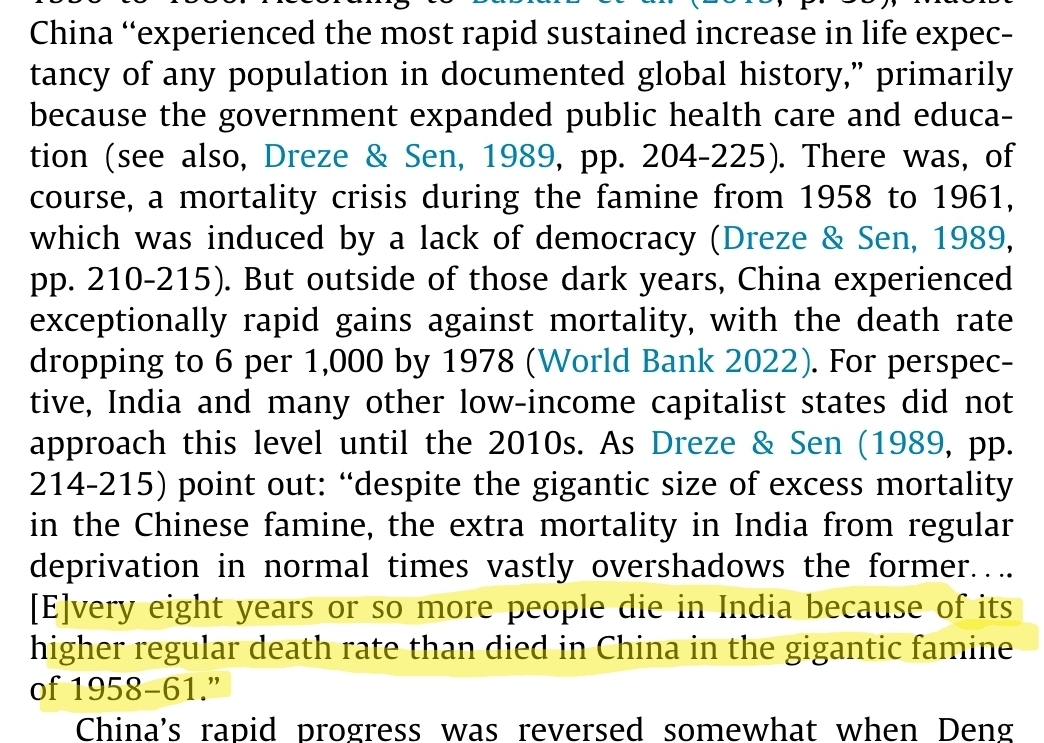 from
from I think people can really underestimate exactly how big a deal is to bring people out of poverty, this is just such a stunning and powerful point that really puts into perspective how differently we view the tragedy of The Great Leap Forward famine in comparison to the tragedy of people remaining extremely poor and just dying from lack of health care.
Is Jill Stein cool? I don't know much about her
view more: next ›
You don't get it we're not leftists, we're red fascists.
Also