BackOnMyBS

joined 3 years ago
MODERATOR OF
[–] BackOnMyBS@lemmy.world 0 points 2 years ago (1 children)

oh, you mean the guy that declined tons of money to commit treason against Queen Elizabeth (original) for the Pope even tho the Queen was talking shit about him? if being loyal to your Anglican Queen over money and your own Catholicism is "selling out", then yes, he did "sell out". or if by "selling out", you mean that he wrote real songs about depression rather than court-approved fancy-pants uppity shit the jesters were twerking to, then yeah, he "sold out" there too...get out of here with that bullshit.

JOHN DOWLAND KEPT IT REAL

[–] BackOnMyBS@lemmy.world 1 points 2 years ago

woahhhh, you are two!! do you have any other interesting differences due to the lack of corpus collosum, like being able to draw 2 separate things at the same time?

here's a relevant video that describes a neat experiment: https://youtu.be/wfYbgdo8e-8

[–] BackOnMyBS@lemmy.world 1 points 2 years ago (2 children)

I found out at 40. According to everyone in my life, they were pretty sure I was autistic within mins to hours of meeting me.

[–] BackOnMyBS@lemmy.world 0 points 2 years ago

That is a fantastic painting! The artist nailed it.


Image: That Would Be Great meme template

Caption: If you could just not dance down the aisles, touch everything, and tell everyone the pros and cons of all the products you see...that would be great.


Image: To-do list

  • Decide you will finally make a to-do list to catch up
  • Set a time to make it sometime later today
  • Don't make said list because you already accomplished making this list
 

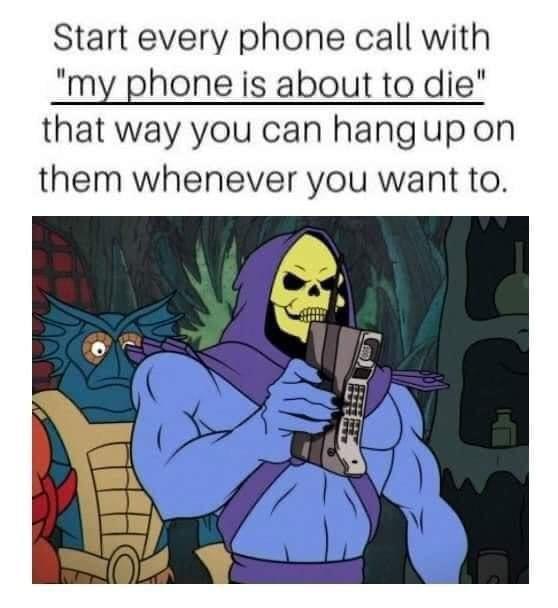
Image: Skeletor holding up a relatively huge 80s/90s cell phone with an aquatic mutant character name Mer-Man behind him.

Caption: Start every phone call with "my phone is about to die" that way you can hang up on them whenever you want to.
[–] BackOnMyBS@lemmy.world 1 points 2 years ago

Like you, I've been through lots of psych meds. In general, the SSRIs sucked! Sertraline made me stupid. Paroxetine made me dead inside. Escitalopram made me disconnected from my surroundings. Citalopram did a great job at making me more relaxed and social, but it came with severe ED, and I became completely asexual.

The anti-psychotics were terrible. They either made me dead inside or sleepy and slow allll the time. One even made me feel like I was withdrawing from opiates. I also gained like 40 lbs/18 kg.

Mood stabilizers didn't really seem to do anything for me at all.

What has worked is bupropion for general mood. It doesn't make it so I'm not depressed, but it makes it so that I can still function and decide to live life even though I might be depressed. I've noticed that the depression also happens in waves rather than all the time now. Bonus: bupropion doesn't cause the same side effects as the SSRIs and makes it so that nicotine isn't rewarding anymore.

One med that seriously surprised me though was methylphenidate for ADHD. Prior to recently, my medical provider system was strictly not wanting to treat ADHD nor even assess for it. I went to a new provider that had me complete an executive functioning scale and found that I was a bit extreme with how poor my executive functioning was (99th percentile 😬). I was put on methylphanidate shortly after. At this point, I thought ADHD really only affected productivity...nope! Once I started treating the ADHD, I was not overwhelmed as much. I wasn't upset that I lost my keys, worried that I would forget something important, or zone out and upset others during conversations. I have also been able to engage in tasks that make me happy even if they're not my current special interest, so this has made my life more balanced and diverse. To me, this has been the most influential medical treatment for my mental health.

[–] BackOnMyBS@lemmy.world 1 points 2 years ago* (last edited 2 years ago) (1 children)

cool! im happy they are more prevalent. those are some cool trees

[–] BackOnMyBS@lemmy.world 1 points 2 years ago (8 children)

neato burrito! I wasn't aware that redwoods existed outside of California


Any ideas where I could ask for show recommendations for glide dancing?

Glide dancing example

1
Shirt Tags (lemmy.world)
submitted 2 years ago* (last edited 2 years ago) by BackOnMyBS@lemmy.world to c/autism@lemmy.world
 

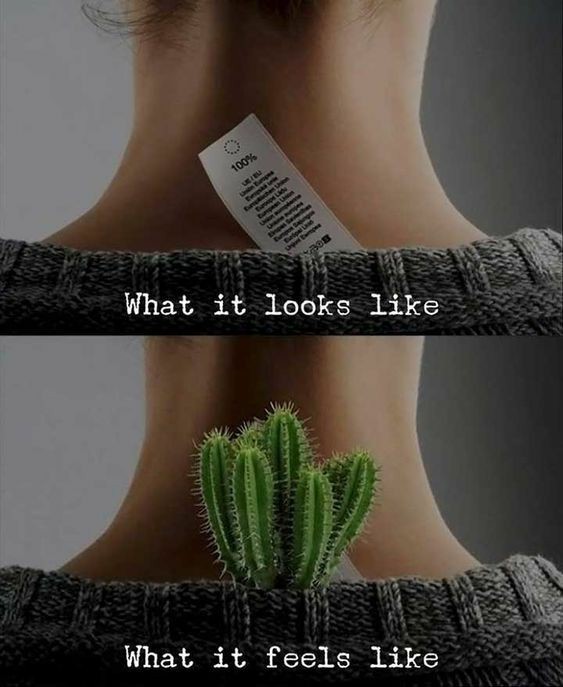
Image: Two images almost identical to each other stacked vertically. The top one is the back of a neck of a person wearing a sweater with the tag sticking out. It is captioned "What it looks like". The bottom image is the exact same image but the sweater's tag has been replaced with a cactus. It is captioned "What it feels like".
 

I have always disliked seeing myself on video because I thought I looked weird, which made me feel uncomfortable. I couldn’t figure out what it was, so I would ask others about it. Some people would agree that I was a little different and say that I had my own style, while others would disagree and argue that I looked “fine”. Of course, a few would state that many people do not like to see themselves on camera regardless. I just went with the latter with a little bit of having my own style sprinkled in there.

Earlier this week, I saw a ~25 mins video interview of me that was recorded last year on some pretty heavily emotional topics regarding certain experiences I had a while ago. The purpose of the video was to document my experiences for sharing with others, while for me personally, it was to leave a record. I didn’t really want to watch it because of what I shared in the previous paragraph and because of the emotional intensity of the topic, but a few friends encouraged me to watch it. This was the first time I saw myself on video since diagnosis, so I had a new perspective to consider, and…

Wow! It’s really obvious I’m on some sort of spectrum, especially to anyone with personal experiences with other autistic people. This cracked me up because I remember being really worried before my autism assessment that I was going to pass as an NT. After seeing that video, there is no way I could pass as an NT to an expert evaluator. I both (1) focus on details that most people wouldn’t and (2) speak on beat and with more pauses.

As far as details, I noticed that I shared more deeply how things physically and emotionally felt. Rather than use a specific word for an emotion, I would describe the physical sensations and give similes. When describing physical feelings, I would use more detail than most people. I also seem to choose to focus on the details of experiences that most people would not, yet omit details of some experiences that most people would. It’s like we have a different process for choosing what to elaborate on, or the sensations we experience are so different, that the details we think are worth sharing are from different experiences.

As far as my verbal rhythm, I want to take you on a preparatory tangent first. I have two favorite artists that I’ve been listening to for the past 1.5 years. One has openly stated in his songs that he was diagnosed with autism as a kid. Regarding the other, I have strong suspicions of him being autistic just because of the topics of his songs, the details he goes into, and his rhythmic pattern. He has come out as diagnosed with ADHD, btw. Moving on, earlier this week, I was listening to Eminem a lot. While listening, I noticed that he has a rhythmic style, particular details that he focuses on, and has verses that increase in intensity in a manner that musically expresses how I feel. I also noticed that it was pretty similar to my two other favorite musicians that do the same thing. It’s almost like they get so worked up, that they explode by sharing a lot of contradictions, injustices, and hypocrisy that’s driving them mad. So, I thought that I should look up Eminem and autism. Guess what?! He ~~was diagnosed with~~ heavily implies he's been diagnosed with the old Asperger’s (yum!). Anyway, having said that, I noticed that while watching the video of my interview, I speak in a similar rhythm. I definitely speak on time as if I was following a metronome, while I notice that most people are pretty fluid and don’t start each word on a beat. Yet, even if I extend the length of a word to emphasize it, I will extend it to the next beat. I will also take mid-statement pauses to ensure I use the correct word I am feeling. This makes it look like my speech is discrete, while the general population’s speech is continuous.

There’s something with my facial expressions as well. I can’t figure out what exactly, but my best working guess is that it’s almost like my facial expressions are more focused on the specific message/word I’m stating in that moment, while NTs tend to use facial expressions that are for their entire statement. It also seems like some of my expressions are planned and decided, not a natural thing that is just coming out as a result of my emotional state.

The last thing I noticed was my eye movement and focus. NTs tend to focus on major objects and stay there. When they look at people, they look like they’re reading a book. They use their eyes to express emotion as well. On the other hand, my eyes were quite different. When it’s obvious that I’m thinking, either my eyes seem like they’re temporarily shut off and I am not seeing anything, or they mimic me looking through my brain as if I were rapidly searching the shelves of a warehouse. Lastly, my eyes tend to not focus on what I’m engaged with, but with things off to the side. I maybe looked at the camera 3-4 times over 25 mins, and that was at the beginning to introduce myself and the end to terminate.

Lessons learned

I didn’t need to be worried that they would say I wasn’t autistic at my autism assessment. It’s pretty freaking obvious. I remember that part way through my assessment, the psychologist looked like she was just following the protocol but had made a decision pretty early on that I was definitely autistic. Take that into consideration if you’re worried about your upcoming autism assessment.

NTs that have personal experience with autistic people probably see it pretty quickly. Even though I believe I’m “high functioning”, it’s not subtle if they know what to look for, especially if I am engaged in social interaction. They may not say it, but a lot of people probably see it more than I had imagined.

Please share your thoughts and experiences! We can make this a discussion about self-awareness and learning more about ourselves and others.


A black and white image of a black wolf and white wolf looking at each other with what looks to be the Sun or Moon behind them. The caption above the black wolf says, "One is autistic." The caption above the white wolf says, "One is ADHD." In between and underneath both, it says, "You are over stimulated."


Several users and I have noticed an increase in antagonism and generally unhelpful behaviors with comments and votes in !autism@lemmy.world. Discussing it with the community users, they suggested that there might be trolls or bots that have been upset with the community. We would like to point out that we recently made a post stating that the mods will enforce the age restriction on the site should anyone identify themselves as below 18 years old.

We were wondering if there are any tools that we can use to analyze votes and account interactions in the community. Any ideas?


Abstract

Males are diagnosed with autism much more frequently than females, and most research study samples reflect this male predominance. The result is that autistic females are understudied. There is a critical need to increase our understanding of autistic females, both biologically and clinically. The only way to do this is to recruit sex-balanced cohorts in studies so that similarities and differences between males and females can be evaluated in all autism research studies. The purpose of this commentary is to (1) provide historical context about how females came to be under-represented in all research, not just in the field of autism and (2) learn from other areas of health and medicine about the potentially dire consequences of not studying both sexes, and (3) draw attention to the need to recruit sex-balanced cohorts in autism research, particularly in neuroimaging studies.


Abstract

Autistic people face a difficult dilemma around whether or not to disclose their diagnosis because autistic people are a stigmatized social group. The central aim of this study was to examine if a social identity approach could be useful in understanding the factors that predict the likelihood of autistic adults disclosing their autism diagnosis in social settings, in the workplace, in educational settings and in the family. The social identity approach predicts that autistic people may cope with this dilemma by using an individualistic strategy to distance themselves from their autistic social identity. Alternatively, they may embrace their autistic social identity and use a collective strategy to resist stigma and advocate for autistic people. We present a survey based cross-sectional study (n = 175) with autistic adults living in Ireland. Participants completed a series of measures; autism social identification, stigma consciousness, and individualistic and collective strategy use to assess disclosing in the four settings. The overall models in each of the four regressions were significant. Autism social identification positively predicted disclosure in social, workplace and educational settings, while stigma consciousness negatively predicted disclosure in the family and in the workplace. Interestingly, over and above these predictors individualistic strategy use negatively predicted disclosure in each of the four settings, while collective strategy use positively predicted disclosure in social, educational and family settings. Our novel social identity approach was useful for explaining autistic adults' strategies to cope with the complex disclosure dilemma. Strengths, limitations, and directions for future research are discussed.

[–] BackOnMyBS@lemmy.world 0 points 2 years ago

We can decide to never go back to our ex and also warn others if it comes up, while still moving on with our lives. However, if we're just bringing it up out of nowhere, we're still hung up on them.

[–] BackOnMyBS@lemmy.world 0 points 2 years ago

I'm straight, but I'm pretty sure my uncle and sister think I'm gay since I argue against their homophobia, got close to my openly gay cousin, and value "feminine" traits. I never try to insist I'm straight to them either. They can think what they want, regardless of the consequences. I'm not going to be a prisoner of their self-righteous, narcissistic stupidity.

[–] BackOnMyBS@lemmy.world 0 points 2 years ago (1 children)
[–] BackOnMyBS@lemmy.world 0 points 2 years ago* (last edited 2 years ago)

I agree with you and am happy for all three of you guys! You and your partner found each other, and your kid has loving and caring parents.

In retrospect, I think my life would have been much easier and happier if my parents would have told me about my differences early on, while still withholding the diagnosis until I was probably in high school, which I'm assuming is when I would feel comfortable with my differences and needed a name for it.

As for the differences, it would have helped to compare me to my mother's style of perceiving and thinking, highlight my strengths and weaknesses in relation to other kids, and then use my strengths to help with confidence and tackle deficiencies stemming from my weaknesses. There would be no shaming, but honest acknowledgement, appreciation, and helpful guidance to make me better prepared for independence and navigating the world autistically.

I hope that helps! Is there anything else you would like someone's perspective on, elaboration or discussion?

view more: next ›