Self-hosting

4356 readers
2 users here now

Hosting your own services. Preferably at home and on low-power or shared hardware.

Also check out:

founded 4 years ago
MODERATORS
1


Beneath the dark and uncertain clouds of bigtech, hidden among the declassed byte workers and the false technological prophets who with siren songs offer their digital services to "facilitate" digital life, rises an anarchic and countercultural community that seeks to reclaim the Internet and fight against those who squeeze our identity in the form of data to generate wealth and advertising for mass social manipulation and cohesion. Navigating the network of networks, with a small fleet of self-managed servers, geographically distributed yet cohesively united by cyberspace, the self-hosting community emerges as a way of life, a logic of inhabiting the digital, a way of fighting for an open, human network, free from the oligarchy of data.

To the naturalization of the already crystallized phrase "the cloud is someone else's computer" we add that this "someone else" is nothing more than a conglomerate of corporations that, like a hungry kraken, devours and controls the oceans of cyberspace. Against this we arm ourselves in community action, direct and self-managed by and for those of us who inhabit and fight for a more sovereign and just Internet. Our objectives are clear, and our principles are precise. We seek to break the mirage and charm that these beasts imposed at the point of ISPs and blacklist and we promote the ideal of an organized community based on their computing needs without the intermediation of outlaws and byte smugglers.

The big tech companies disembarked on the net with a myriad of free services that came to replace standards established during years of work among users, developers, communities, technocrats and other enthusiasts of the sidereal tide of cyberspace. By commoditizing basic Internet services and transforming them into objects of consumption, they led us to their islands of stylized products, built entirely with the aim of commercializing every aspect of our lives in an attempt to digitize and direct our consumption. Sending an email, chatting with family and friends, saving files on the network or simply sharing a link, everything becomes duly indexed, tagged and processed by someone else's computer. An other that is not a friend, nor a family member, nor anyone we know, but a megacorporation that, based on coldly calculated decisions, tries to manipulate and modify our habits and consumption. Anyone who has inhabited these digital spaces has seen how these services have changed our social behaviors and perceptions of reality, or will we continue to turn a blind eye to the tremendous disruption that social networks generate in all young people or the absurd waste of resources involved in sustaining the applications of technological mega-companies? Perhaps those who praise the Silicon Valley technogurus so much do not see the disaster of having to change your cell phone or computer because you can no longer surf the web or send an email.

If this is the technosolutionism that crypto-enthusiasts, evangelists of the web of the future or false shamans of programming offer us, we reject it out of hand. We are hacktivists and grassroots free software activists: we appropriate technology in pursuit of a collective construction according to our communities and not to the spurious designs of a hypercommercialized IT market. If today the byte worker plays the same role as the charcoal burner or workshop worker at the end of the 19th century, it is imperative that he politicizes and appropriates the means of production to build an alternative to this data violence. Only when this huge mass of computer workers awaken from their lethargy will we be able to take the next step towards the re-foundation of a cyberspace.

But we do not have to build on the empty ocean, as if we were lost overseas far from any coast; there is already a small but solid fleet of nomadic islands, which dodge and cut off the tentacles of the big tech kraken. Those islands are the computers of others, but real others, self-managed and organized in pursuit of personal, community and social needs. Self-hosting consists of materializing what is known as "the cloud", but stripped of the tyranny of data and the waste of energy to which the big tech companies have accustomed us. They are not organized to commoditize our identities, but to provide email, chat, file hosting, voice chat or any other existing digital need. Our small server-islands demonstrate that it is possible to stay active on the network without the violent tracking and theft, nor the imposed need to constantly replace our computer equipment: the self-hosted services, being thought by and for the community, are thought from the highest possible efficiency and not the immoral waste that directly collaborates with the climate crisis.

For this reason, we say to you, declassed byte workers, train yourself, question yourself, and appropriate the tools you use in order to form a commonwealth of hacktivists! Only between the union of computer workers and the communities of self-hosting and hacktivism we will be able to build alternatives for the refoundation of a cyberspace at the service of the people and not of the byte oligarchy.

But we need not only the working masses but also ordinary digital citizens, let's wake up from the generalized apathy to which we have been accustomed! No one can say anymore that technology is not their thing or that computing does not matter to them when all our lives are mediated through digital systems. That android phone that is still alive but no longer allows you to check your emails or chat with your family is simply the technological reality hitting you in the face; as much as the anxiety or dispersion that has existed in you for the last 15 years. Imagine the brain of a 14 year old teenager, totally moth-eaten by the violent algorithms of big tech!

Community digital needs are settled on the shores of our server-islands, not on the flagships of data refineries. Let's unite by building small servers in our homes, workplaces or cultural spaces; let's unite by building data networks that provide federated public instant messaging services that truly respect our freedoms and privacy. Let's publish robust, low-latency voice services; let's encourage the use of low computational consumption services to democratize voices whether you use a boat or a state-of-the-art racing boat. Let's create specialized forums and interconnect communities to unite us all, let's set our sails with the protocols and standards that exist, which allow us to dive the network using the device we want and not the one imposed on us. Let's lose the fear that prevents us from taking the first step and start this great learning path, which as an extra benefit will make us regain not only our technological sovereignty but also the control of our digital essence. It is not a matter of cutting off the private data networks of big tech but rather of building self-managed, self-hosted and self-administered spaces from the hacktivist bases, together with the workers of the byte and the digital citizenship: an Internet of the community for the community.

2


any suggestions on enclosure or room temp/humidity sensors? PoE network connected would be ideal, but USB works as well (cheap, simple). polling/transformation of data will ultimately be done by a raspi 3b.

open software/hardware is highly desirable and, as long as data is structured, I can transform as needed for insertion into a zabbix backend.

thanks for any recommendations :-)

3
 
 
4


I just bought a 2nd-hand CubieTruck which apparently has a cubieboard 3. The cubieboard.org website is a shit-show of dead links. There are some docs but all the drivers and software are dead links. No Android or Debian images. It’s also a shit-show over at archive.org:

http://web.archive.org/web/20171105012836/http://dl.cubieboard.org/software/a20-cubieboard/android/v2.0_A20_android_source.tar.gz

There is a tree of directories here:

http://web.archive.org/web/20180225200418/http://dl.cubieboard.org/

but 404 errors on all files. In principle, softwareheritage.org should have the software. But it doesn’t because (I suspect) s/w heritage fixates on github and probably needed someone to manually request that they keep software outside of Microsoft’s walled garden.

I don’t suppose anyone has cubieboard 3 files.. but in the very least I hope this post will serve to warn ppl to avoid cubieboard.

5


I run some services on machine A. I want to backup the data to machine B. It's around 40 gigabytes in thousands of small files. I would prefer to compress the data, but there's not enough space on machine A to keep the data twice (original + tar archive). I would like to avoid copying that many files via scp/rsync since it's taking forever and a bit fragile.

Any solutions on how to solve this? Is it possible to compress live on machine A and stream into the archive on machine B without the need to keep the big archive file on A?

Eventually, it's supposed to be automated and B has like the last 3 dailys, 1 weekly, 1 montly.

B can ssh into A.

6


I want something simple that works for my family and myself. We used Discord, but for when they pull their next stunt, I want to be ready and having something working already.

What do you all use?

7


Hi all! i finally come around publishing a small side project i am running at my home for the last few years. This past month i have revamped it by rewriting the C++ backend and improving the web UI (single page HTML+CSS+AlpineJS) for a broader public.

LazyNVR is a different take on hosting webcams and centralizing access to them. Instead of working on the cameras feed, which is CPU/GPU heavy and doesn't scale much, it relies on cameras on-board capabilities to detect motion and upload recorded videos to your own server.

If you own IP cameras from brands like Dahua, Reolink and many others, you can leverage their on board motion detection capabilities and off-load your server computational power using LazyNVR.

I have some 15 cameras and tools like Frigate or MotionEye just kill my server CPU, but all my cameras can detect motions and automatically record a video and upload it to my server using different protocols (like FTP, sftp, and such). So LazyNVR was born.

The server is written in C++ and basically detect incoming videos, recode (without re-encoding) them to an MP4 web streammable format, and store them well sorted. It will also keep your incoming folders clean and purge stored videos when they are too old. The server will also fetch and refresh still live images from the cameras.

The client is a WEB GUI, actually a single HTML file with CSS and some AlpineJS, which will show the still live images and the list of all the recorded videos letting you download or view them directly.

I am running over 15 cameras from my RaspPi with basically 0% CPU overhead.

I have published LazyNVR on Codeberg (here https://codeberg.org/LazyNVR/lazynvr-sources) because well, i think it's better than GitHub. And there is also a pretty lazy web site on https://www.lazynvr.it/ (which mostly redirect to Codeberg).

Currently there are docker images for AMD64 and ARM64, but it's pretty easy to compile directly, with the provided instructions in the Codeberg Wiki.

Please, feel free to try it!

Mandatory AI disclaimer: i don't use AI for coding. Zero code (C++ or Javscript) has been written by or with AI support in this project. I have used AI extensively for the CSS stuff that i hate, but reviewed and mostly edited it anyway. I have also used AI for research and to write the dockerfile faster, since i am no docker expert. I have personally written the dockerfile anyway, and personally tested as well. The logo has been created with AI, probably it shows.
Developer @Shimitar@downonthestreet.eu

8


cross-posted from: https://feddit.nl/post/56825643

So you don't want to port-forward on your home router or have Cloudflare decrypt all your traffic? Check out Towonel.

Most open source Cloudflare Tunnel alternatives involve setting up a VPS, terminating TLS there on a reverse proxy, then setting up a Wireguard tunnel to your server at home.

Towonel is different: it does not decrypt your traffic on the VPS and you can easily share one, so not every self-hoster has to buy and maintain a VPS.

Check it out!

Mastodon link: https://gts.erwanleboucher.dev/@eleboucher/statuses/01KS4YNA2SYMSP0FSKJVNJA155

9


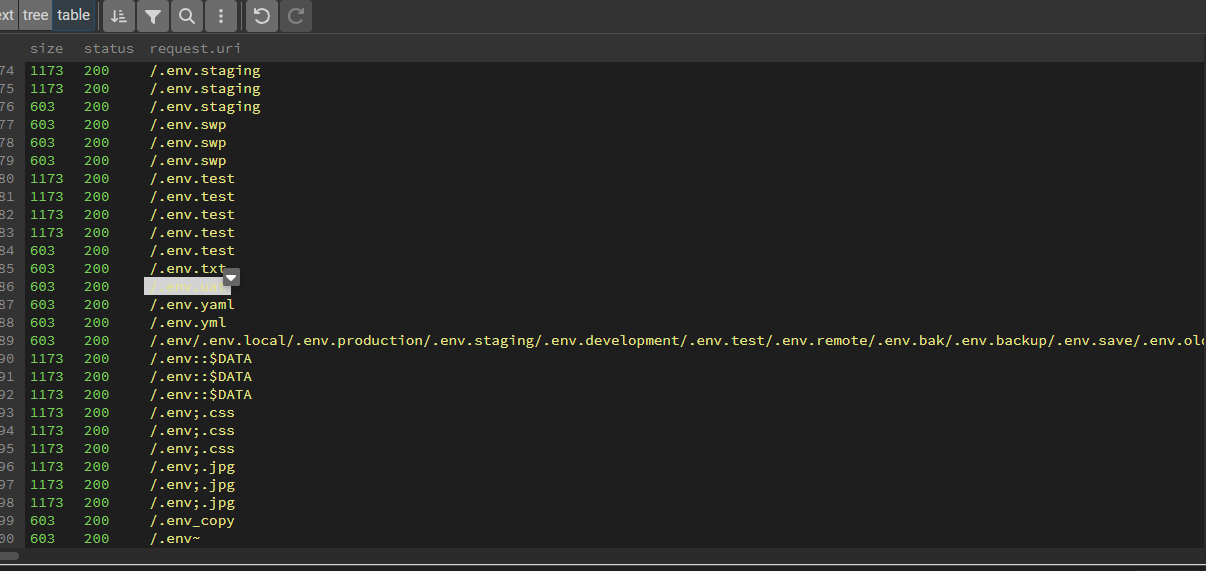
Someone messed their loop

FULL TRANSCRIPT URI

"request.uri" = /.env/.env.local/.env.production/.env.staging/.env.development/.env.test/.env.remote/.env.bak/.env.backup/.env.save/.env.old/.env.sample/.env.example/.env.dev/.env.prod/.env.stage/.env.ci/.env.docker/.env.live/.env.preprod/.env.uat/.env.dist/.env.swp/.env~/.env1/.env2/.env_copy/.env.txt/.env.json/.env.yaml/.env.yml/app/.env/apps/.env/api/.env/web/.env/site/.env/public/.env/admin/.env/backend/.env/server/.env/frontend/.env/src/.env/core/.env/core/app/.env/config/.env/private/.env/application/.env/bootstrap/.env/database/.env/storage/.env/var/www/.env/var/www/html/.env/current/.env/release/.env/releases/.env/shared/.env/deploy/.env/build/.env/dist/.env/public_html/.env/htdocs/.env/www/.env/html/.env/live/.env/prod/.env/dev/.env/staging/.env/opt/.env/laravel/.env/symfony/.env/wordpress/.env/wp/.env/cms/.env/drupal/.env/joomla/.env/magento/.env/shopify/.env/prestashop/.env/codeigniter/.env/cakephp/.env/zend/.env/yii/.env/laravel5/.env/v1/.env/v2/.env/v3/.env/api/v1/.env/api/v2/.env/rest/.env/graphql/.env/gateway/.env/microservice/.env/service/.env/api/v3/.env/api/dev/.env/api/staging/.env/vendor/.env/lib/.env/resources/.env/assets/.env/uploads/.env/internal/.env/tools/.env/scripts/.env/bin/.env/sbin/.env/local/.env/portal/.env/dashboard/.env/panel/.env/crm/.env/erp/.env/shop/.env/store/.env/saas/.env/client/.env/project/.env/admin-panel/.env/control-panel/.env/user-panel/.env/node/.env/express/.env/next/.env/nuxt/.env/nest/.env/react/.env/vue/.env/angular/.env/svelte/.env/vite/.env/backup/.env/backups/.env/old/.env/tmp/.env/temp/.env/lab/.env/cronlab/.env/cron/.env/en/.env/administrator/.env/psnlink/.env/exapi/.env/sitemaps/.env/.env.backup1/.env.backup2/logs/.env/cache/.env/mailer/.env/mail/.env/email/.env/smtp/.env/mailing/.env/notifications/.env/notify/.env/sender/.env/campaign/.env/newsletter/.env/ses/.env/sendgrid/.env/sparkpost/.env/postmark/.env/mailgun/.env/mandrill/.env/mailjet/.env/brevo/.env/transactional/.env/bulk/.env/aws/.env/azure/.env/gcp/.env/cloud/.env/infrastructure/.env/docker/.env/k8s/.env/kubernetes/.env/terraform/.env/ansible/.env/.git/.env/ci/.env/cd/.env/jenkins/.env/gitlab/.env/github/.env/actions/.env/circleci/.env/travis/.env/buildkite/.env/mysql/.env/postgres/.env/mongodb/.env/redis/.env/elasticsearch/.env/rabbitmq/.env/kafka/.env/queue/.env/worker/.env/job/.env/test/.env/qa/.env/preview/.env/beta/.env/uat/.env/stage/.env/development/.env/production/.env/config/app/.env

10
11


I haven't really seen anything in the awesome lists for this, but they are also hard to parse out so I probably missed it.

I've been wanting a way for a while to share shirt videos and such that may be too long to send to people in chats. I have NextCloud, so I can use that, but sometimes I want to send maybe a 30s video, minutes or something. Maybe gifs and the like, or record a video message and share it as a link, kind of like imgur for videos (I host picsur, but it's only for images). I'm not really thinking of anything like a YouTube clone, more of a way to share a video. I do have immich, which would probably work fine.

Are there any recommendations for this sort of thing?

12


Fujitsu abandoned their Celvin NAS customers. The proprietary software is over 10 years old. And worse, Fujitsu had an app store to get apps that were not part of the stock stock distro, like a bittorrent app, which are no longer reachable.

The hardware uses a Marvell arm SOC. FreeNAS is x86 only. QNAP has some fairly recent distros that may be compatible. It’s proprietary and perhaps somewhat risky. What are the chances that a QNAP image from 2024 bricks my Fujitsu from 2013?

Is QNAP my only option, or is there a FOSS option? There are at least 15 FOSS NAS platforms:

https://techcult.com/best-free-and-open-source-nas-software/

but I have no idea if any are built for a Marvell arm SOC. Anyone know?

13


I've transferred over my Google backup multiple times. I have multiple "takeout" directories with duplicate data. Some of them are zip files too.

Is there a tool I can use to find and delete duplicate files? I tried letting Dupeguru run, but eventually it said I was out of memory, and it was not useful in finding or deleting anything.

Edit: I'm on Linux.

14


Looking for some advice on what to do with my selfhosting setup. I currently have 2 Vostro 430's (salvaged from work), and have retrieved 5(!) newer computers from work:

  • 1 ThinkStation P330 (1x16gb ram),

  • 2 ThinkCentre M720 SFF's (4x4gb ram each), and

  • 2 ThinkCentre M73's (mixed ram amounts/brands, may salvage from the Vostro's depending)

The Vostro's are currently setup with 1 of them being baremetal Debian with a Pihole, and a Debian VM with a Headscale server, and the other being baremetal Debian with... just a few containers, and baremetal tailscale as an exit node (I don't like this, need to do better). Using Authelia with a password to block incoming connections, and Traefik as my reverse proxy. It also has 2x10TB and 1x7TB HDD's in Raid1.

My current plan is to see if the M73's are good enough for light emulation (PS1 for sure, PS2 maybe) and Jellyfin, hook 1 up to my TV (to replace the 25' HDMI that is slowly killing itself under it's own weight), and 1 for a relative, connected to my server via Headscale/Tailscale.

I currently have 1 of the M720's hosting a small webserver to learn HTML so I can replace my workplace's website (I did do a temporary replacement already, but it's not great). Trying to decide if it is staying completely separate, or if I am utilizing it in the overall setup.

Now, what I am looking for advice on, is how best to utilize what I have, and any recommendations on better software to use.

  • Do I dedicate each computer to different tasks, or learn how to do a docker swarm/kubernetes cluster/something else?

  • Should I set up one device as a dedicated NAS, using a NAS focused OS, or continue to use SSHFS mounts?

  • Should the file storage be on the best hardware I have available, mid ranged, or should I save one of the Vostros specifically for being a NAS with nothing else running on it?

  • Should I learn how to do SSO with Authelia, or is there a better program for SSO (I want to do better with security, and SSO feels like the best place to start)

  • What do you recommend as a reverse proxy? I have my Traefik configs working great for automatic service discovery, but the way it stores the certs feels impossible to extract for other services that ask for them, and I have no idea what I am doing wrong with that - hasn't been a problem, but I feel like I should be doing better with this.

I had other thoughts, but they swam away while writing this. If you ask a question/make a comment and I don't answer right away, it means I fell asleep and will answer tomorrow. I am open to any and all suggestions, and am happy to answer any clarifying questions!

15


Hello everyone! I want to selfhost/publish my obsidian vault but can't figure out a good way to do it selfhostable way, I've seen a couple of projects that are intended to help with hosting obsidian as static website, but they are either outdated or suspicious looking. I've written up a small vault with guide on how to join and use matrix server that I've set up for my collective and hoped I could turn it into wiki of sorts

Any help and/or suggestions are appreciated!!!

16
17


cross-posted from: https://sopuli.xyz/post/44771411

Ok, I'll share the ultimate guerilla-selfhosting challenge I can't figure out yet: what if my internet connection is G5 prepaid sim card in the middle of the woods (it actually is)? Apparently, I do have IPv6 more or less stable (undocumented), but that's kind of limiting at times. Seems barely possible, but!

The https://homebrewserver.club/low-tech-website-howto.html#network states:

The fiber connection itself is not necessary, especially if you keep your data footprint small, but a fixed IP adress is very handy.

which kind of implies someone figured out a way to get around it. Would someone share the trick?

18


Posting this here as I feel like similar things are happening in open source projects we like to host.

19
20


New release: Newspipe 11.3.0 🚀

Security & privacy take the spotlight in this version:

  • Fixed multiple XSS and SSRF vulnerabilities (thanks fyrepaw13 🙌)
  • Safer API with stricter field validation and sanitization
  • State-changing routes now protected with POST + CSRF tokens
  • More privacy-friendly bookmarks page

Plus UX improvements across bookmarks, forms, and charts.

https://github.com/cedricbonhomme/newspipe

21
1
submitted 2 months ago* (last edited 2 months ago) by dudesss@lemmy.ca to c/selfhosting@slrpnk.net


My VPS has S3 bucket compatibility (Not an Amazon VPS btw)

I'm looking to store files, mostly videos, photos, and document files. Are there any good apps for connecting and using S3 buckets for this?

The reason I want to use buckets its because they're cheaper than me paying for a full VPS, and less time and for me managing cloud storage software such as Nextcloud.

I found Owlfiles for Android to look awesome but is not FOSS.

Cyberduck FOSS and for computers (I'm using Linux), but doesn't give media previews like Owlfiles.

I'm looking replacement for both of these would be appreciated.

22


Recently, I was chatting with a friend, and we were talking about ‘de-Googling’, federated networks and self-hosted services. As I was listing the benefits and my largely positive experience with them (the Fediverse for the most part), my friend pointed out that it isn’t an environmentally friendly solution, nor is it optimised for the long term. He told me that it requires more machines that consume more energy than a single large one, as these machines aren’t specialised for hosting services. What’s your view on the argument that ‘several small machines that consume more energy are less optimised and eco-friendly than a single large one built and designed for that purpose’? I realise that the large machine goes hand in hand with techno-fascists and that they are the real problem, but what if we were to look at this from a purely technical, forward-looking perspective on a clean future? How would you respond to this ?

23
24


My main NAS box was running OpenMediaVault until a failed upgrade left the OS totally borked. Now I'm back up and running on a fresh Debian install, and I've documented everything that I'm running currently to keep it all straight.

25
view more: next ›