LinuxHardware

793 readers
1 users here now

A community where you can ask questions about what hardware supports GNU/Linux, how to get things working, places to buy from (i.e. they support GNU/Linux) and so on.

Quick rules:

EXTERNAL RESOURCES


GNU/LINUX VENDORS

OTHER VENDORS


Webcasts

founded 2 years ago
MODERATORS
26


We're very happy to share samxplog's unboxing video of the BusKill Kit.
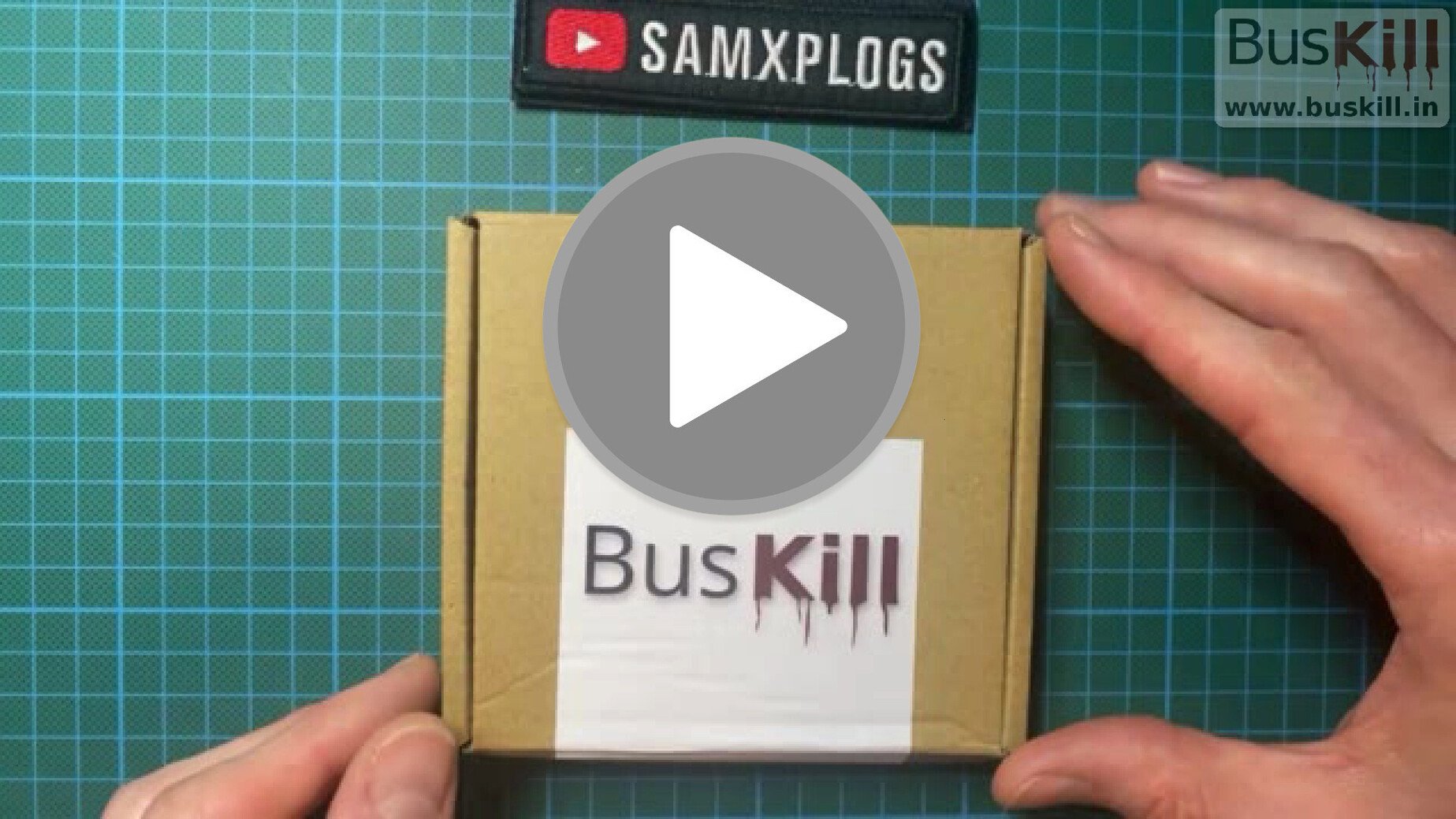
BusKill Unboxing Video (2024)
Can't see video above? Watch it on PeerTube or on YouTube at youtu.be/QbVJnzt-ePc

Disclaimer: While we gave samxplogs a free BusKill Kit for review, we did not pay them nor restrict their impartiality and freedom to publish an independent review. We did require them to make the video open-source as a condition of receiving this free review unit. The above video is licensed CC BY-SA; you are free to redistribute it. If you are a video producer and would like a free BusKill Kit for review, please contact us

What is BusKill?

BusKill is a laptop kill-cord. It's a USB cable with a magnetic breakaway that you attach to your body and connect to your computer.

What is BusKill? (Explainer Video)
Watch the BusKill Explainer Video for more info on PeerTube or youtube.com/v/qPwyoD_cQR4

If the connection between you to your computer is severed, then your device will lock, shutdown, or shred its encryption keys -- thus keeping your encrypted data safe from thieves that steal your device.

Support BusKill

We're looking forward to continuing to improve the BusKill software and looking for other avenues to distribute our hardware BusKill cable to make it more accessible this year.

If you want to help, please consider purchasing a BusKill cable for yourself or a loved one. It helps us fund further development, and you get your own BusKill cable to keep you or your loved ones safe.

Buy a BusKill Cable
https://buskill.in/buy

You can also buy a BusKill cable with bitcoin, monero, and other altcoins from our BusKill Store's .onion site.


Bitcoin Accepted Here

Monero Accepted Here

Stay safe,
The BusKill Team
https://www.buskill.in/
http://www.buskillvampfih2iucxhit3qp36i2zzql3u6pmkeafvlxs3tlmot5yad.onion/

27
28
 
 
29


I recently purchased a T480s and after taking it apart to do a badly-needed clean, half the screws inside are missing, e.g. no screw for SSD, only 1 for the battery, various ones for the connections etc.

If I buy a specific set for the T480s, they're like £35, so I'm thinking of buying a large generic set from ali - what sizes do I need though?

M2 x 3, M2 x 4? for both the normal and the 'fat head' shorter ones?

Are there any others?

Also, bonus question, the previous owner did something funky with the screen and the sides don't seem to be pushed in equally all the way around - can I simply just apply force and push the screen into its housing so the sides align up equally, or do I need to actually take it apart?

30


I was one of the lucky ones to receive their C.H.I.P. computer hardware back in the day:

https://en.wikipedia.org/wiki/CHIP_(computer)

It's just another SBC ala the Pi world of machines, but it had a few features I really liked:

  • was physically small
  • was powered entirely by a USB port that worked off of my laptop
  • ran Debian/Armbian style Linux distros
  • had a fully functional USB OTG console (this is especially important)
  • had enough RAM for general hacking, but nothing hugely special

Too bad Next Thing Co got over ambitious and ran themselves out of business because their design was great, though it did run really hot at times.

So, I need a replacement. My major use case is while traveling. I like to do small SBC-based projects on the go. This means on trains and airplanes, coding and working with electronics/sensors. My new job starting in a month will have me commuting on a train for an hour twice per week, so I'd like to find a new board I can work with.

What boards can people suggest? I've done some searching and I have a few in mind, but I'd like to hear your ideas.

I do know about the RPi Zero 2 W, but I've never liked the RPi Zero boards and their form factor makes me sad for some reason. Mostly, they're unweildy given the off balance design. What else is out there? What's worked for you?

31
32
 
 
33
34


Hi all,

I had this laptop (Lenovo Carbon X1 Gen 6), and when it had Debian, it would just go flat on sleep, and even when powered off. So strange. I checked all BIOS settings etc, but could never figure it out.

I moved it to Fedora, and it was perfect. Battery life was boosted like crazy, acted as it was meant to.

However, I have tomove away from Fedora, due to them dropping X11 (it's an accessibility issue I'm facing with my tools) and I forgot about said issue with Debian.

Back on Debian now, woke up, powered on laptop, which was fully charged last night, and it's flat again.

What is it, that Debian is doing differently, that is making it go flat, when powered off?

Please note, I am doing a proper shutdown. Not just closing lid, sleep, hybernate, etc.

Any advice greatly appreciated. Thanks so much!

UPDATE: I booted into a fedora live disk, and shutdown. This time the battery did not go flat at all when shutdown, indicating that it is absolutely debian related, not BIOS or anything else.

35


cross-posted from: https://lemmy.ca/post/47977475

36


in today's episode of "el stupido stupids around", our hero wants to look up something on a MBP 15 2015 (retina). problem is, there's already a 2010 (fatso) occupying space on the desk. is hero gonna move fatso aside to achieve said goal? 'course not, close fatso and place the retina on top. haha look at my lazy ass being expeditious!

power on the retina and... black screen. no idea what's going on as there are no status lights - thanks apple... is the battery empty, dead, wtf, no way, how can this be? bring over Magsafe 2 charger, plug in, try now... same thing. what the fuck, it's dead? maybe open it and disconnect the battery and try with magsafe only...

in a rare flash of mindfulness hero unstacks the laptops and... there we are, screen lights up, plymouth's decrypt screen is visible and all is good!

what happened is macbooks detect the screen is closed by way of magnets. so, a reed relay closes, SMC says "ok we closed, turn off screen". since there was another macbook beneath it, its magnet array got detected and retina's screen was turned off.

37


Do laptops with recent AMD GPUs exist? I've spent an embarrassing amount of time today looking for them and pretty much failing...

38
39
40
41


I'm looking for such a device:

  • 2-in-1 laptop, or at least a laptop with a touchscreen (optimally also with a stylus)
  • 14 or 15 inch screen
  • Good battery life (thus probably intel CPU/GPU) and lightweight
  • Optimally not a thinkpad because I don't use the trackpoint and I prefer to tap the touchpad instead of clicking physical keys.

The candidates I'm currently interested in are lenovo yoga 7i 14/15 and asus zenbook 2-in-1s, but they all use OLED displays. For these devices is OLED a problem with linux? Mostly, does linux's software-only dimming make battery life worse? And are there ways to avoid burn-in risks? (I'm using wayland compositor niri). I heard that yoga 7i has IPS versions but they are not available in my region, and I'd like to avoid international shipping. And for this reason I would prefer to stick to mainstream brands like lenovo, dell, and asus.

On this laptop I'll mainly do note taking and coding with neovim (which is dark theme and shouldn't have much problem), video playing, video editing, running small LLM and image generation models (better have good GPU multithread performance), and writing latex documents (which has light backgrounds and is my main concern with OLED). Would OLED on linux be a viable option for daily driving for my case?

If OLED is a true concern, are there relatively new LCD 2-in-1 models with good linux support and battery life?

42
43
44
45
1
submitted 11 months ago* (last edited 11 months ago) by fluffy_hub@programming.dev to c/linuxhardware@programming.dev


The ATH12K driver is unstable for use with the Qualcomm FastConnect 7800 Wi-Fi 7 High Band Simultaneous (HBS) Network Adapter.

It will break it eventually and if you switch back over to Windows (ew) then you will find the Windows HBS side of you WiFi doesn't work essentially making it a WiFi-6 module and not a WiFi-7 module as the 5G signal will sill work.

I blocked the person below so i can no longer see their comment which offered no help at all and was completely useless. However, a lovely person did comment saying i think i needed the Windows 11 Version 24H2 for x64-based Systems. This information which they provided is correct. You need to update to the KB5058499 update.

Once install you must go the Settings -> Network & Internet -> Advanced network settings -> Network reset. Then click on Reset now button and it will restore the original firm back on to the module. After the restart the module should work as expected.

Edit: This is a complete revamp of the post because i was high as hell when i originally wrote it. I hope this provide more clarity on the situation and details. Have a good day <3

46


I have a Seagate Expansion Portable HDD, which I want to check the SMART status of^[Why? For FUN of course!]

I looked at a comment for a WD HDD, which made me look into man smartctl -> /--device after having the message from smartctl -a <dev/path> having:

Read Device Identity failed: scsi error unsupported field in scsi command

If this is a USB connected device, look at the various --device=TYPE variants

Now the manual lists many different possible device types and I am yet, unable to find the correct one. Any ideas would be appreciated.

I tried simply searching for "seagate" in man smartctl, but there was no match in the --device section.

I am currently trying to look for a way to get information on what USB to SATA adapter is being used (hopefully without having to open it up)


Some additional info:

lsusb -v ...

Bus 00* Device 00*: ID 0bc2:231a Seagate RSS LLC Expansion Portable
Negotiated speed: SuperSpeed (5Gbps)
Device Descriptor:
  bLength                18
  bDescriptorType         1
  bcdUSB               3.00
  bDeviceClass            0 [unknown]
  bDeviceSubClass         0 [unknown]
  bDeviceProtocol         0 
  bMaxPacketSize0         9
  idVendor           0x0bc2 Seagate RSS LLC
  idProduct          0x231a Expansion Portable
  bcdDevice            7.10
  iManufacturer           1 Seagate
  iProduct                2 Expansion
  iSerial                 3 NAA*****
  bNumConfigurations      1
  Configuration Descriptor:
    bLength                 9
    bDescriptorType         2
    wTotalLength       0x0079
    bNumInterfaces          1
    bConfigurationValue     1
    iConfiguration          0 
    bmAttributes         0x80
      (Bus Powered)
    MaxPower              896mA
    Interface Descriptor:
      bLength                 9
      bDescriptorType         4
      bInterfaceNumber        0
      bAlternateSetting       0
      bNumEndpoints           2
      bInterfaceClass         8 Mass Storage
      bInterfaceSubClass      6 SCSI
      bInterfaceProtocol     80 Bulk-Only
      iInterface              0 
      Endpoint Descriptor:
        bLength                 7
        bDescriptorType         5
        bEndpointAddress     0x81  EP 1 IN
        bmAttributes            2
          Transfer Type            Bulk
          Synch Type               None
          Usage Type               Data
        wMaxPacketSize     0x0400  1x 1024 bytes
        bInterval               0
        bMaxBurst              15
      Endpoint Descriptor:
        bLength                 7
        bDescriptorType         5
        bEndpointAddress     0x02  EP 2 OUT
        bmAttributes            2
          Transfer Type            Bulk
          Synch Type               None
          Usage Type               Data
        wMaxPacketSize     0x0400  1x 1024 bytes
        bInterval               0
        bMaxBurst              15
    Interface Descriptor:
      bLength                 9
      bDescriptorType         4
      bInterfaceNumber        0
      bAlternateSetting       1
      bNumEndpoints           4
      bInterfaceClass         8 Mass Storage
      bInterfaceSubClass      6 SCSI
      bInterfaceProtocol     98 
      iInterface              0 
      Endpoint Descriptor:
        bLength                 7
        bDescriptorType         5
        bEndpointAddress     0x01  EP 1 OUT
        bmAttributes            2
          Transfer Type            Bulk
          Synch Type               None
          Usage Type               Data
        wMaxPacketSize     0x0400  1x 1024 bytes
        bInterval               0
        bMaxBurst               0
        Command pipe (0x01)
      Endpoint Descriptor:
        bLength                 7
        bDescriptorType         5
        bEndpointAddress     0x82  EP 2 IN
        bmAttributes            2
          Transfer Type            Bulk
          Synch Type               None
          Usage Type               Data
        wMaxPacketSize     0x0400  1x 1024 bytes
        bInterval               0
        bMaxBurst               0
        MaxStreams             32
        Status pipe (0x02)
      Endpoint Descriptor:
        bLength                 7
        bDescriptorType         5
        bEndpointAddress     0x83  EP 3 IN
        bmAttributes            2
          Transfer Type            Bulk
          Synch Type               None
          Usage Type               Data
        wMaxPacketSize     0x0400  1x 1024 bytes
        bInterval               0
        bMaxBurst              15
        MaxStreams             32
        Data-in pipe (0x03)
      Endpoint Descriptor:
        bLength                 7
        bDescriptorType         5
        bEndpointAddress     0x04  EP 4 OUT
        bmAttributes            2
          Transfer Type            Bulk
          Synch Type               None
          Usage Type               Data
        wMaxPacketSize     0x0400  1x 1024 bytes
        bInterval               0
        bMaxBurst               7
        MaxStreams             32
        Data-out pipe (0x04)
Binary Object Store Descriptor:
  bLength                 5
  bDescriptorType        15
  wTotalLength       0x0016
  bNumDeviceCaps          2
  USB 2.0 Extension Device Capability:
    bLength                 7
    bDescriptorType        16
    bDevCapabilityType      2
    bmAttributes   0x00000f0e
      BESL Link Power Management (LPM) Supported
    BESL value     3840 us 
  SuperSpeed USB Device Capability:
    bLength                10
    bDescriptorType        16
    bDevCapabilityType      3
    bmAttributes         0x00
    wSpeedsSupported   0x000e
      Device can operate at Full Speed (12Mbps)
      Device can operate at High Speed (480Mbps)
      Device can operate at SuperSpeed (5Gbps)
    bFunctionalitySupport   1
      Lowest fully-functional device speed is Full Speed (12Mbps)
    bU1DevExitLat          10 micro seconds
    bU2DevExitLat          32 micro seconds
Device Status:     0x0000
  (Bus Powered)

47
48
49


Hey!

TL;DR: "Newer CPUs -> more power -> more fan noise?" Or does it make sense to buy newest generation CPUs if I really care about quiet fans?

As an Apple user for over a decade I also haven't really looked at hardware for years so I hope this is not a dumb question.

I'm looking at laptops (preferably AMD, I guess?) right now, and I'm wondering if the extra price for this years hardware (for example the Ryzen AI CPUs or Intels Lunar Lake) is worth it, when my main "want" is quiet fans?

I mean, of course I care about battery and actual processing power, but as I use my laptop for work and private stuff, the fan noise is more important to me than the other two.

Reason: I work with patients in a very quiet environment, so it's annoying when the notebook's fans get extremely loud and then quiet again at irregular intervals.

I know nothing will ever be as quiet as my M1 Macbook Air, but I'm not expecting that.

In my work use, I'm mostly typing. Sometime I might be showing my patients a video or use the notebook to record certain exercises, so I don't think that's heavy use.

My private use is mostly Browser, Streaming, text processing. (I try to stick to the Steam Deck when it comes to gaming)

If you do have a laptop recommendation I'm happy to hear it, of course, but I'm probably going to stick to the tried and tested Dell / HP / Thinkpad recommendations that you see on every Reddit thread. (I sadly had a not-so-good experience with Tuxedo, although I would have loved to support a company like that.)

Thanks!

50
view more: ‹ prev next ›