ulterno

joined 1 year ago
[–] ulterno@programming.dev 0 points 1 month ago

Yeah, this is one of the things I found out the hard (ok, it was too easy to call it "hard", but anyway) way.

Not particularly interested in opening YouTube though

[–] ulterno@programming.dev 1 points 1 month ago (2 children)

No sad puppy face, either?

[–] ulterno@programming.dev -1 points 1 month ago

Ok so I read the article and turns out there are no proper attacking capabilities yet, but it is possible that the control AI which is receiving all video feed will raise and alarm on finding something unexpected, assuming the programing is done properly.

[–] ulterno@programming.dev 2 points 1 month ago

multiple football fields
four times the size of Manhattan's Central Park

Anything other than metric.


Additional features:

industrial inspection, site mapping and construction monitoring

Turns out they have some actual utility.
But cameras can't smell well enough.


[–] ulterno@programming.dev 1 points 1 month ago

thoughtcrime

Yeah, thoughtcrime is pretty much BS and there better be no laws about it.
I mean, how many times have you had intrusive thoughts about stomping the person you are talking to, without any particular reason and how many times have you actually done that?
Then there was this guy who actually stomped on my pre-fractured toe and it is pretty easy to distinguish from a thought crime, so I see no grey area here.

[–] ulterno@programming.dev 1 points 1 month ago (5 children)

So, no MG mount?

[–] ulterno@programming.dev 28 points 1 month ago (2 children)

But:

  • That won't get you millions increase in investor funding, which also lets you increase your pay-cheque
  • You need to buy them from actual dog trainers, which are people and will eventually stop selling to you once you either become too evil for them or you murder them
  • They are a supply chain risk as once you eventually piss off the dog trainer by 4x-ing his electricity bills and getting your AI to tell the govt. to shoot his family, he can then bypass the dogs using his smell, because they would be familiar with him.
[–] ulterno@programming.dev 0 points 1 month ago (2 children)

Won't they be commanded to also attack all bears and horses?

[–] ulterno@programming.dev 2 points 1 month ago (2 children)

I don't see why it matters whether the rapist is or isn't a paedophile.
He raped a child. That makes him a CSA offender.

Is there even laws specifically to deal with paedophiles rather than people who rape children?

[–] ulterno@programming.dev -1 points 1 month ago

Kids simply make an easy target.

This is the most relevant point I have seen to the current scene, so far.

Also, boarding schools.

[–] ulterno@programming.dev -3 points 1 month ago

Reduction in real pictures being distributed is not a real indicator of reduction in CSA and CSE either.

A simple anecdote to show it:
How many pictures of Epstein with children are in distribution? How many for his clients?
vs the actual lives he and his gang destroyed.

The small timers are easier to catch and cull with traditional policing and internet restrictions/surveillance is going to do nothing to them in the face of what it will do to absolutely everyone else.

As far as the company in the post goes, better of letting them sell in your country, so you can easily put their customers on a watchlist, rather than be unknown until they start harming real people.

[–] ulterno@programming.dev 7 points 1 month ago

They are making these legislations to steer people's focus away from the real CSA.

Remember. CSAM is just the symptom. CSA being the actual cause.


I felt like fixing a thing in qtcreator and tried git clone https://code.qt.io/qt-creator/qt-creator.
It took over 2 hours to reach 13%. I thought there may be a problem with using https or maybe it was just a network thing, so I tried gi clone git://code.qt.io/qt-creator/qt-creator.git and it turned out to still be as slow.

While normally opening code.qt.io and using the cgit was pretty snappy, with git, I am getting an average download speed of 10KB/s.

  • Is this how the server is normally configured?
  • Is this only happening with me or do others have the same experience?
  • Did I just get unlucky and try to download during the a maintenance day?

Similarly, git clone https://code.qt.io/qt-creator/perfparser was also as slow. Although it finished in under 10 minutes because it was a small project.


cross-posted from: https://programming.dev/post/43343171

I just started checking out auditd and made a rule to log file accesses.

auditctl -a always,exit -F dir=/path/to/my/directory -F perm=rwa

From the output, I got some things that might be useful:

  • The full path of the executable
  • pid
  • Parent's pid: ppid
  • Process' current working directory cwd

Now if the process was still running when I check the logs, I could open htop and find out what exactly called the process, from the pid.
For example, say I run a git pull on a repository and find out that /usr/bin/ssh is accessing some file, I will get something like:

st
└ bash
    └ git
        └ ssh

I will get the full executable path of each executable (and know if the executable was not in the system directories, but in some unsafe location writeable by another user). This will give me enough context to go by.

But using this same example, what happens if I check the logs after the git operation has ended?
The git process ppid will have been lost(?) and I would have no way to know which process called ssh.

How do I solve this condition?
Ideally, I want to have the audit log contain the whole calling tree with the full executable path of each parent.


I just started checking out auditd and made a rule to log file accesses.

auditctl -a always,exit -F dir=/path/to/my/directory -F perm=rwa

From the output, I got some things that might be useful:

  • The full path of the executable
  • pid
  • Parent's pid: ppid
  • Process' current working directory cwd

Now if the process was still running when I check the logs, I could open htop and find out what exactly called the process, from the pid.
For example, say I run a git pull on a repository and find out that /usr/bin/ssh is accessing some file, I will get something like:

st
└ bash
    └ git
        └ ssh

I will get the full executable path of each executable (and know if the executable was not in the system directories, but in some unsafe location writeable by another user). This will give me enough context to go by.

But using this same example, what happens if I check the logs after the git operation has ended?
The git process ppid will have been lost(?) and I would have no way to know which process called ssh.

How do I solve this condition?
Ideally, I want to have the audit log contain the whole calling tree with the full executable path of each parent.


Title

24
submitted 7 months ago* (last edited 7 months ago) by ulterno@programming.dev to c/programmer_humor@programming.dev
 

ffmpeg ... -c:a flac -exact_rice_parameters 1 -multi_dim_quant 1 ...

I was encoding wav to flac.

  • With default options, the result was almost instant
    • At > 500x speed
  • Used -compression_level 12, finished in ~ 7 seconds
    • speed = 48.9x
  • Then I used multi_dim_quant
    • After ~ 10 minutes, I checked the speed to be ~ 0.02x. So thought it would take an hour or so. 1.30 seconds worth of audio was encoded
    • It's been over 2 hours now.
      • Shows 1.46 seconds of audio encoded with current speed = 0.00017x

Considering running it in a VM, so I can "pause" it whenever I need to restart my computer.

Update:
size= 123KiB time=00:00:02.82 bitrate= 356.3kbits/s speed=4.68e-05x
It stopped trying to use layman notation.
I'll need to restart soon-ish, but I'll see how far this goes and if the 2.82 seconds of audio is even listenable.


cross-posted from: https://programming.dev/post/34025065

DeviantArt Link

Endless Sky is and open source game. This animation is inspired by the compass image that shows up on the menu screen.

CC BY-NC-SA 4.0 : https://creativecommons.org/licenses/by-nc-sa/4.0/deed.en

Used stock https://github.com/endless-sky/endless-sky.github.io/blob/master/images/compass.svg as the base. License info at https://github.com/endless-sky/endless-sky/blob/master/copyright:

==========

Files: images/*

Copyright: Michael Zahniser mzahniser@gmail.com

License: CC-BY-SA-4.0

==========

When sharing, please make sure to include the information in this description including information regarding the stock image. If not possible, then at leas keep the metadata in the file, which contains similar information.

Modelled and animated in Blender on Linux


If you are affiliated to the game "Endless Sky" and need a change in licensing info let me know here.


cross-posted from: https://programming.dev/post/34025065

DeviantArt Link

Endless Sky is and open source game. This animation is inspired by the compass image that shows up on the menu screen.

CC BY-NC-SA 4.0 : https://creativecommons.org/licenses/by-nc-sa/4.0/deed.en

Used stock https://github.com/endless-sky/endless-sky.github.io/blob/master/images/compass.svg as the base. License info at https://github.com/endless-sky/endless-sky/blob/master/copyright:

==========

Files: images/*

Copyright: Michael Zahniser mzahniser@gmail.com

License: CC-BY-SA-4.0

==========

When sharing, please make sure to include the information in this description including information regarding the stock image. If not possible, then at leas keep the metadata in the file, which contains similar information.

Modelled and animated in Blender on Linux


If you are affiliated to the game "Endless Sky" and need a change in licensing info let me know here.

pacman -S endless-sky


DeviantArt Link

Endless Sky is and open source game. This animation is inspired by the compass image that shows up on the menu screen.

CC BY-NC-SA 4.0 : https://creativecommons.org/licenses/by-nc-sa/4.0/deed.en

Used stock https://github.com/endless-sky/endless-sky.github.io/blob/master/images/compass.svg as the base. License info at https://github.com/endless-sky/endless-sky/blob/master/copyright:

==========

Files: images/*

Copyright: Michael Zahniser mzahniser@gmail.com

License: CC-BY-SA-4.0

==========

When sharing, please make sure to include the information in this description including information regarding the stock image. If not possible, then at leas keep the metadata in the file, which contains similar information.

Modelled and animated in Blender on Linux


If you are affiliated to the game "Endless Sky" and need a change in licensing info let me know here.

1
submitted 10 months ago* (last edited 10 months ago) by ulterno@programming.dev to c/arch@programming.dev
 

I come from EndeavourOS and when I installed Arch manually, I realised that I had to systemctl enable quite a few services. That included NetworkManager and sddm.

I was wondering if there exists some PostTransaction hook available that would prompt me about enabling a service/socket after a package installs one?

So, if I were to do pacman -S extra/bluez-obex, it would later prompt me with:
Enable obex.service? [g|global] [u|user] [n|no]
And if I were to answer with anything other than "no"...
Start now?

Might be different for system services, but you get the point.

1
submitted 10 months ago* (last edited 10 months ago) by ulterno@programming.dev to c/hardware@programming.dev
 

What is the rationale behind GPU heatsink fin design?

So I have seen a few GPU heatsinks and I wonder why some of them are how they are.

GPU placement in Cabinet

The originally intended and most widely used placement for ATX cases at least, is installing right on the PCIe slot, which goes horizontally and with the air incoming from the front of the case.

gpu_traditional_fit

Then we have the "vertical" placement using the riser cable, which changes the direction from which the GPU fans take in air, but keep the GPU front, in the same direction, again lining up with the incoming air from the front.

gpu_trendy_fit

Finally the very rare vertical placement, which has the front of the GPU rotated towards the top of the case, making it not line up with an airflow incoming from the front.
This also makes the GPU's ports inaccessible the standard way, giving a reason to the rarity.

gpu_exotic_fit

Some examples I found for this

Here we see that the first 2 placements would make up most of the ATX PC builds with the third one being either for different case styles or for extensively customised builds.

Fins, fans and airflow

I would assume that having the air flow along the fins would be better than it crossing the fins at ⦜90°. And even if the air flow due to the case inlet is being ⟂ to the airflow from the GPU fans (in case of front incoming air flowing along the fins), it should still lead to overall increase in air pressure (hence, air density) between the fins.^[Source: Mental simulation] Considering that GPUs tend to have gaps in the IO shield to let the air go out the back, I would assume they (designers of the thermal dissipation solution) want air from the fins to go out the back, which would be better with fins parallel to front incoming air.

gpu_airflow_illust

Inference and Doubt

From the above 2, it would make sense for most GPUs to have their heatsink fins going along their length instead of their width, right?

Then what's up with the ASRock lineup, with all cards other than the Passive model, the Creator cards (which have the front covered by the shroud anyway, so no incoming airflow) and the watercooled cards (which is not applicable) having the fins ⟂ to front air inlet?
And of course they are not the only one doing it that way.


Follow Up

While discussing in this thread, I realised another point (which I didn't state anywhere in the comments):

  • While it is desirable to have higher air density, it is not desirable to have air increasing in density while in the inter-fin space. Because that would cause the heat released when changing density to be transferred to the fins.
  • Another way to say that is, the air will get hotter, while increasing its density. So, how much this factor matters, will depend upon the initial temperature difference between the air and the fins and how long the dense air stays in the inter-fin space. Oh and also the composition of air.
 

Also, bought 2 of them, because the brain needed to fart out loud.

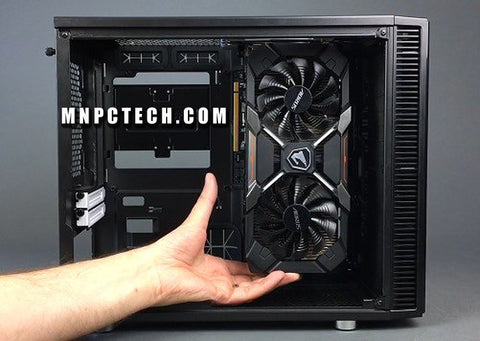
Not only are the fans much slower than what the sticker says (2000RPM), they also make more heat in the motor than they will ever dissipate. And of course, they just couldn't sell one without RGB.

Looked closely and even the axle is not centred.

On the other hand

Can someone help me do something fun with this that would make me feel less shitty about myself?


I have a Seagate Expansion Portable HDD, which I want to check the SMART status of^[Why? For FUN of course!]

I looked at a comment for a WD HDD, which made me look into man smartctl -> /--device after having the message from smartctl -a <dev/path> having:

Read Device Identity failed: scsi error unsupported field in scsi command

If this is a USB connected device, look at the various --device=TYPE variants

Now the manual lists many different possible device types and I am yet, unable to find the correct one. Any ideas would be appreciated.

I tried simply searching for "seagate" in man smartctl, but there was no match in the --device section.

I am currently trying to look for a way to get information on what USB to SATA adapter is being used (hopefully without having to open it up)


Some additional info:

lsusb -v ...

Bus 00* Device 00*: ID 0bc2:231a Seagate RSS LLC Expansion Portable
Negotiated speed: SuperSpeed (5Gbps)
Device Descriptor:
  bLength                18
  bDescriptorType         1
  bcdUSB               3.00
  bDeviceClass            0 [unknown]
  bDeviceSubClass         0 [unknown]
  bDeviceProtocol         0 
  bMaxPacketSize0         9
  idVendor           0x0bc2 Seagate RSS LLC
  idProduct          0x231a Expansion Portable
  bcdDevice            7.10
  iManufacturer           1 Seagate
  iProduct                2 Expansion
  iSerial                 3 NAA*****
  bNumConfigurations      1
  Configuration Descriptor:
    bLength                 9
    bDescriptorType         2
    wTotalLength       0x0079
    bNumInterfaces          1
    bConfigurationValue     1
    iConfiguration          0 
    bmAttributes         0x80
      (Bus Powered)
    MaxPower              896mA
    Interface Descriptor:
      bLength                 9
      bDescriptorType         4
      bInterfaceNumber        0
      bAlternateSetting       0
      bNumEndpoints           2
      bInterfaceClass         8 Mass Storage
      bInterfaceSubClass      6 SCSI
      bInterfaceProtocol     80 Bulk-Only
      iInterface              0 
      Endpoint Descriptor:
        bLength                 7
        bDescriptorType         5
        bEndpointAddress     0x81  EP 1 IN
        bmAttributes            2
          Transfer Type            Bulk
          Synch Type               None
          Usage Type               Data
        wMaxPacketSize     0x0400  1x 1024 bytes
        bInterval               0
        bMaxBurst              15
      Endpoint Descriptor:
        bLength                 7
        bDescriptorType         5
        bEndpointAddress     0x02  EP 2 OUT
        bmAttributes            2
          Transfer Type            Bulk
          Synch Type               None
          Usage Type               Data
        wMaxPacketSize     0x0400  1x 1024 bytes
        bInterval               0
        bMaxBurst              15
    Interface Descriptor:
      bLength                 9
      bDescriptorType         4
      bInterfaceNumber        0
      bAlternateSetting       1
      bNumEndpoints           4
      bInterfaceClass         8 Mass Storage
      bInterfaceSubClass      6 SCSI
      bInterfaceProtocol     98 
      iInterface              0 
      Endpoint Descriptor:
        bLength                 7
        bDescriptorType         5
        bEndpointAddress     0x01  EP 1 OUT
        bmAttributes            2
          Transfer Type            Bulk
          Synch Type               None
          Usage Type               Data
        wMaxPacketSize     0x0400  1x 1024 bytes
        bInterval               0
        bMaxBurst               0
        Command pipe (0x01)
      Endpoint Descriptor:
        bLength                 7
        bDescriptorType         5
        bEndpointAddress     0x82  EP 2 IN
        bmAttributes            2
          Transfer Type            Bulk
          Synch Type               None
          Usage Type               Data
        wMaxPacketSize     0x0400  1x 1024 bytes
        bInterval               0
        bMaxBurst               0
        MaxStreams             32
        Status pipe (0x02)
      Endpoint Descriptor:
        bLength                 7
        bDescriptorType         5
        bEndpointAddress     0x83  EP 3 IN
        bmAttributes            2
          Transfer Type            Bulk
          Synch Type               None
          Usage Type               Data
        wMaxPacketSize     0x0400  1x 1024 bytes
        bInterval               0
        bMaxBurst              15
        MaxStreams             32
        Data-in pipe (0x03)
      Endpoint Descriptor:
        bLength                 7
        bDescriptorType         5
        bEndpointAddress     0x04  EP 4 OUT
        bmAttributes            2
          Transfer Type            Bulk
          Synch Type               None
          Usage Type               Data
        wMaxPacketSize     0x0400  1x 1024 bytes
        bInterval               0
        bMaxBurst               7
        MaxStreams             32
        Data-out pipe (0x04)
Binary Object Store Descriptor:
  bLength                 5
  bDescriptorType        15
  wTotalLength       0x0016
  bNumDeviceCaps          2
  USB 2.0 Extension Device Capability:
    bLength                 7
    bDescriptorType        16
    bDevCapabilityType      2
    bmAttributes   0x00000f0e
      BESL Link Power Management (LPM) Supported
    BESL value     3840 us 
  SuperSpeed USB Device Capability:
    bLength                10
    bDescriptorType        16
    bDevCapabilityType      3
    bmAttributes         0x00
    wSpeedsSupported   0x000e
      Device can operate at Full Speed (12Mbps)
      Device can operate at High Speed (480Mbps)
      Device can operate at SuperSpeed (5Gbps)
    bFunctionalitySupport   1
      Lowest fully-functional device speed is Full Speed (12Mbps)
    bU1DevExitLat          10 micro seconds
    bU2DevExitLat          32 micro seconds
Device Status:     0x0000
  (Bus Powered)

view more: next ›