My pov is that CRT (critical race theory) and related policies, like DEI, put an undue emphasis on race instead of on poverty, and the resulting effect is that policies which are aimed at helping minorities seem like “favoritism” (and called as such by political opponents), which makes a growing population of poor whites (due to the adverse effects of wealth inequality) polarized against minorities.
Separately, the polarization is used by others who want to weaken a democratic nation. For democracies, a growing immigrant population of more poor people will cause further polarization because the growing poor white population believes that “they’re taking our jobs”. This happened during Brexit, this happened with Trump, and this is happening now in Germany and other western democracies.
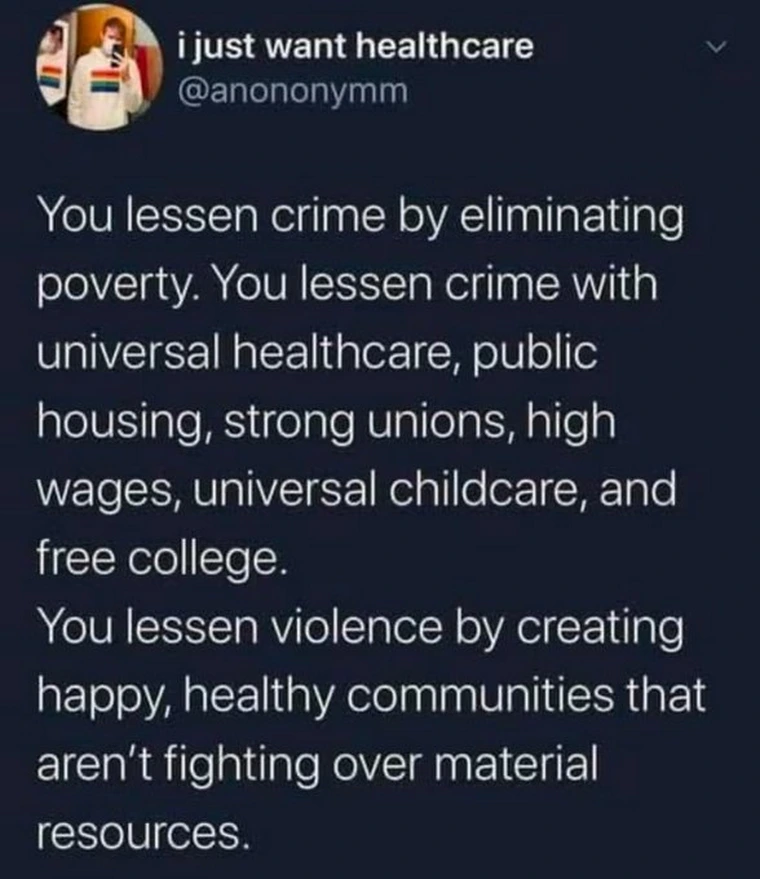
I know that there are racist groups who have an agenda of their own, and what I am saying is that instead of focusing on what are painted as culture war issues, leftists are better off focusing on alleviating systemic poverty. Like, bringing the Nordic model to the U.S. should be their agenda.
So, maybe I am wrong about CRT and DEI and how it’s well-meaning intentions are being abused by people who have other goals, but I want to hear from others about why they think CRT and DEI help. I want to listen, so I am not going to respond at all.
— Added definitions —
CRT: an academic field used to understand how systems and processes favor white people despite anti-discrimination policies. Analysis coming out of CRT is often used to make public policy.
DEI: a framework for increasing diversity, equity and inclusion; DEI isn’t focused on race or gender only, but also includes disability and other factors (pregnancy for example) which affect a person.
— —
Okay , so end note: I appreciate the people who commented. I questioned the relevancy of CRT/DEI previously out of an alarmed perspective of how aspects that highlight group differences can be used by others to create divisions and increase polarization. But I get the point everyone is making about the historical significance of these tools.




I think one of the issues which comes up are mandates. If there are underemployed minorities in society, then we have a problem. If that happens, then DEI should be brought back. I agree that some people are racist, and that life creates situations which kill individual potential.
That’s why it’s important to have these ideas be part of social discourse. I don’t agree with CRT (that legal and social systems help white people only), or that DEI addresses the core issues with bad luck creating uneven conditions for individuals. The core issue is that people of all races and cultures experience bad luck. Most people are not going to be rich enough to afford even an upper middle class lifestyle. So, if there is a policy which seems to favor only a certain type of people, it will only create resentment or jealousy, and divisions. Poor whites consistently vote republican because they don’t get the kind of help they need from democrats either. We need the Nordic model in the US.
I personally think education is the best option we have to counter the effect of bad luck on people’s lives and their outcomes. So, the ire that people are putting towards USAID or DEI going away should be firmly focused at ensuring that the Dept of Education remains intact for serving the most people.
Edit the danger, I think, is in thinking that just because someone is X they are moral or ethical. I think the inverse of that is that just because someone is not X, then they are immoral and unethical. The kind of reduction of personhood to arbitrary characteristics which forms the basis of predictive policing algorithms, so I can’t support that.