lfisk

joined 3 years ago
[–] lfisk@infosec.exchange 0 points 5 months ago

@thenetnetofthenet The rough sanding done when they're made hides the caps quite well.

Haven't tried this... I'd try sanding the side down to a smoother, shiny surface and see that helps to reveal them🤷‍♂️

[–] lfisk@infosec.exchange 0 points 5 months ago (2 children)

@thenetnetofthenet Usually there is a larger cap for shackle latches on one side near top. I don't have a 140... but image of an old G. C. W & Co. padlock that shows caps. Pretty much all brass padlocks with just a core fit into the body like that are built this way🤷‍♂️

This is a four pin core, the fifth pin is for retaining the core and maybe limiting rotation.

It also looks like Master used a 5 pin core on your lock but didn't populate the 5th hole🙄
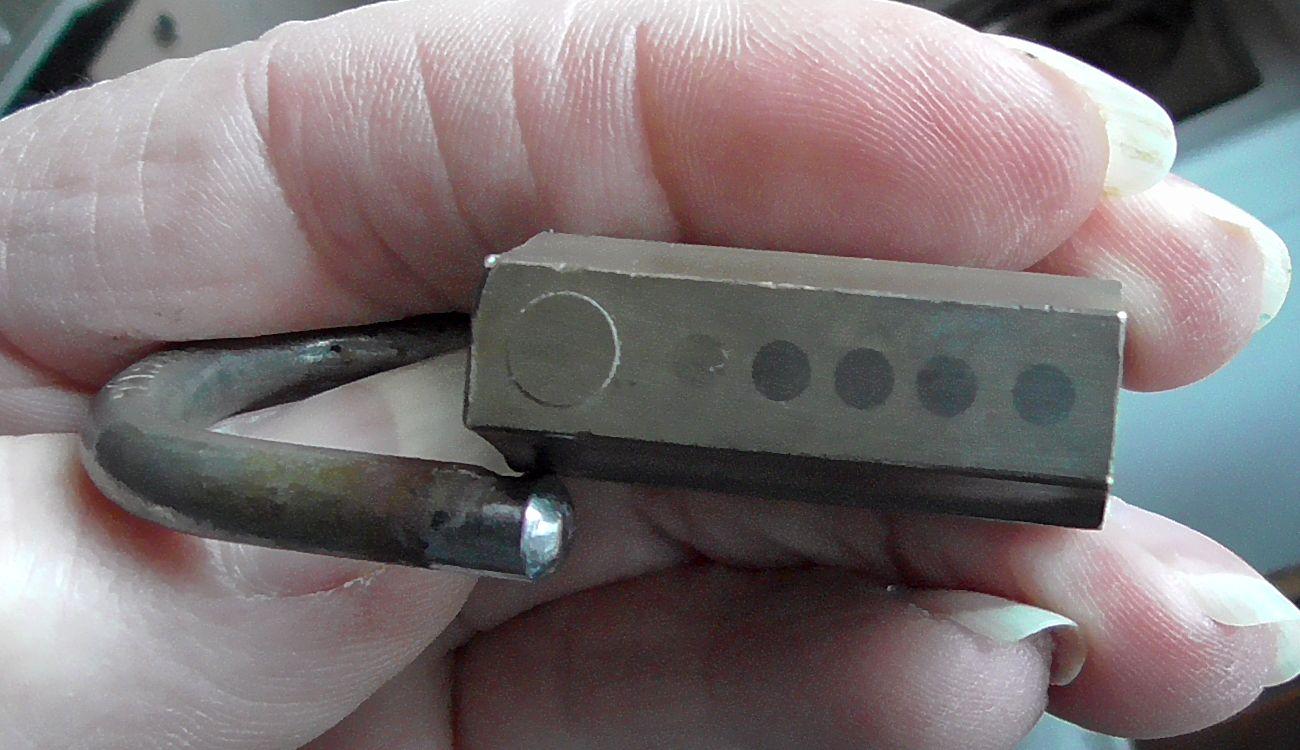
Old brass padlock turned on its side showing brass caps covering top of pin holes and boring for shackle dogs.

[–] lfisk@infosec.exchange 0 points 5 months ago (4 children)

@thenetnetofthenet Hee Hee Hee... Not seen one pulled apart like that😆

Usually that last pin (6) is held in solid without a spring. They are or use to be assembled via the top pin side through holes in the lock body. Tiny brass caps are forced into the holes and then they are sanded flat to the body. Hard to see the caps at that point. Check out LockpickingDev's video here for what the side looks like with the caps removed.

https://youtu.be/vKusWIckVNY?t=319

[–] lfisk@infosec.exchange 0 points 5 months ago

@WrenHavoc I've never seen one quite like that... Would guess it was made from a rake or rather a broken rake. Somebody reground what was left slightly so it was still useful🤷‍♂️

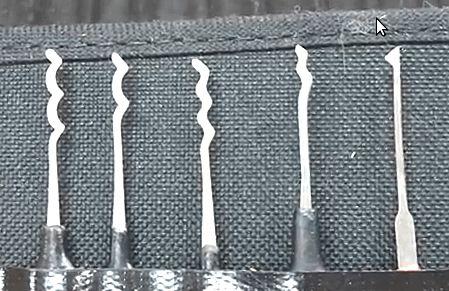
For instance, here are several Sparrows rakes. Note how similar they are to your image up to the second bend.

Several of Sparrows Rake picks showing the working end.