blueworld

joined 9 months ago
[–] blueworld@piefed.world 4 points 14 hours ago

I was hoping someone else would catch that. Fuck making a real value, just make it seem like it.

Asshats. May their stock go down like the Titanic and their management find mud pits.

[–] blueworld@piefed.world 12 points 19 hours ago (1 children)

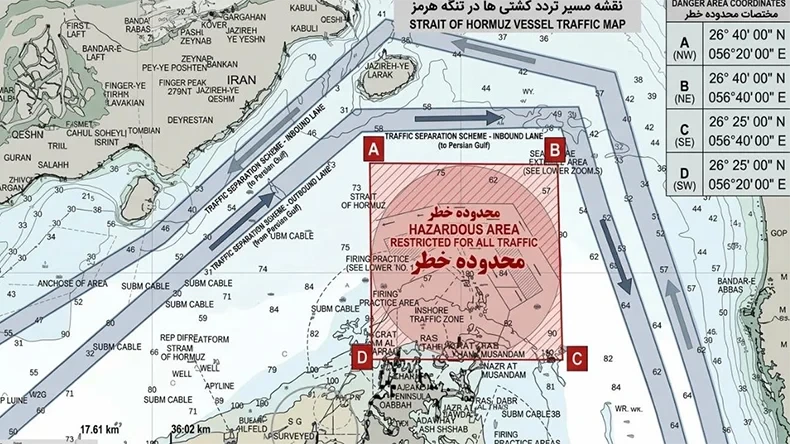
From Sal, it's less that they can't find them then they are creating a toll booth chokepoint.

https://www.youtube.com/watch?v=E9rslGBcEZQ

This is a huge freedom of navigation issue as well as incursions into Oman territorial waters.

[–] blueworld@piefed.world 10 points 1 day ago (3 children)

Beyond cutting prices, PepsiCo is also rethinking its overall game plan to get sales back on track. In December 2025, the company said it would shrink its product lineup by about 20 percent, focusing more on its biggest, best-selling brands while cutting down on less popular items. At the same time, it’s investing more in promotions and tweaking package sizes to make its snacks feel like a better deal for shoppers.

[–] blueworld@piefed.world 0 points 4 days ago

Zscaler ThreatLabz researchers recently discovered a highly deceptive campaign leveraging the leak as a social engineering lure to target developers seeking access to the source code.

In this newly discovered campaign, attackers have established malicious GitHub repositories that masquerade as the authentic leaked repository.

One prominent page, published by a threat actor named idbzoomh, currently ranks near the top of search engine results for users attempting to find the files.

The repository promises an unlocked version of the enterprise software featuring no usage limits. Instead of legitimate code, the provided zip archive contains a Rust-based dropper executable.

Upon execution, this dropper deploys the Vidar information stealer to siphon sensitive credentials and GhostSocks to proxy network traffic.

[–] blueworld@piefed.world 19 points 1 week ago

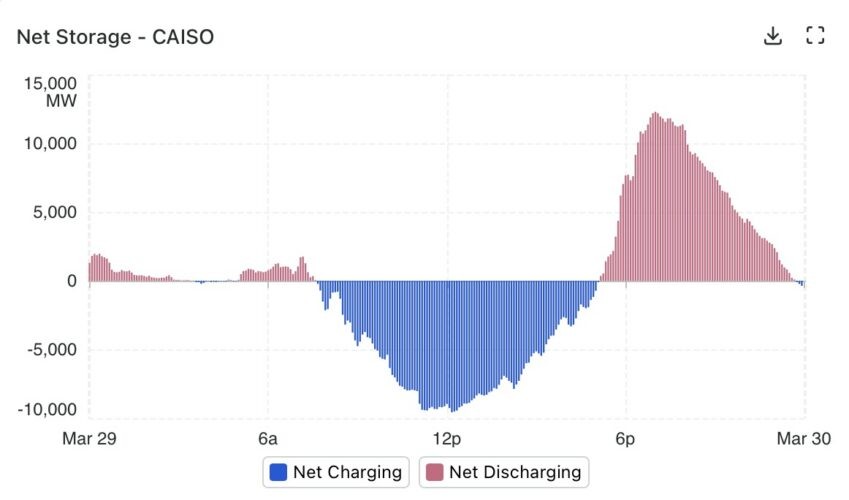
This is another view on what happened on Sunday in California. Batteries charged heavily throughout the day, soaking up the excess solar, approaching charging rates of 10 GW at times. In the evening, most of the output was centred on the early evening peak, but batteries supplied a significant share throughout the evening.

The biggest loser in this transition has been gas, with the share of battery storage staying at high levels throughout the evening peak. On Sunday, it stayed above 20 per cent of grid demand for almost four hours.

As Fulghum noted: “To put that kind of output during peak demand hours into perspective, it’s equivalent to the output from:

  • 15-20 combined-cycle gas plants
  • 6 Hoover dams
  • More than the all-time peak demand of Portugal or Greece.”
[–] blueworld@piefed.world 2 points 1 week ago

It does. Missiles are $30k or £100k+

[–] blueworld@piefed.world 4 points 1 week ago

The Rocky Mountain Biological Laboratory is in the former ghost town of Gothic, abandoned after the closure of its silver mines. Over winter, the landscape lies quietly under a bed of snow. In early spring, the only way for researchers to get to experimental sites – at an altitude of 10,000ft – is by skiing across country.

Electric infrared radiators warmed five experimental plots of 30 sq metres year-round. Head-height heaters were on day and night over a patch of meadow, keeping it 2C above normal temperatures with an annual electricity bill of $6,000 (£4,450). They warmed the top six inches of soil. Animals could come and graze and the natural system was preserved as much as possible.

Over 29 years, researchers found that shrubs increased by 150% in warmed plots compared with those without warming. The surface of the soil was dried by up to 20%, and shallow-rooted plants became stressed. Some wildflowers went extinct in heated plots. "It's a sign of things to come," says lead researcher Lara Souza from the University of Oklahoma.

Scientists also noted big changes in the invisible world of soil fungi and microbes. Shrubs and sage brush don't rely on fungi in the same way as grasses. They found a decline in fungi that help plants acquire nutrients, and an increase in fungi that decompose organic matter. "This highlights that when you have a big change above ground, you've likely got a big change below ground," says Souza. "Turning back is very unlikely."

[–] blueworld@piefed.world 24 points 2 weeks ago

As The Soup, I bequeath the honor of my crest! Slurp thy in my name!

[–] blueworld@piefed.world 13 points 3 weeks ago (1 children)

Might have been performative in part but net migration was negative for the first time in 50 years which will have a long term negative impact on our economy in many ways given the demographic bubble we are in as well as general brain drain tend we are seeing.

[–] blueworld@piefed.world 0 points 4 weeks ago

White House spokesperson Taylor Rogers said Friday night that Trump “reversed course on Joe Biden’s costly green energy agenda that gave preferential treatment to intermittent, unreliable energy sources and instead is aggressively unleashing reliable and affordable energy sources to lower energy bills, improve our grid stability and protect our national security.” Rogers added in a statement to AP that the administration “looks forward to ultimate victory on this issue.”

Orsted said that at a time of growing energy demand, Revolution Wind will provide price certainty and stability, citing a preliminary analysis by the state of Connecticut that estimates it will lower wholesale energy costs by about $500 million per year by 2028.

...

Orsted began construction in 2024 about 15 miles (24 kilometers) south of the Rhode Island coast. The wind farm has 65 of the 11-megawatt Siemens Gamesa turbines, and more than 1,000 people have been working on it.


ROBERT A. PAPE is Professor of Political Science and Director of the University of Chicago Project on Security and Threats. He is the author of Bombing to Win: Air Power and Coercion in War.

...

FAR HORIZONS

Horizontal escalation occurs when a state widens the geographic and political scope of a conflict rather than intensifying it vertically in a single theater. It is especially appealing as a strategy for the weaker parties in a military contest. Instead of trying to defeat a stronger adversary head-on, the weaker side multiplies arenas of risk—drawing additional states, economic sectors, and domestic publics into the remit of the conflict. Iran cannot defeat the United States or Israel in a conventional military contest. It does not need to. Its objective is to gain greater political leverage.

The strategy of horizontal escalation follows a recognizable pattern. First, Iran has demonstrated resilience. U.S. decapitation strikes intended to paralyze the Iranian military. By launching large-scale retaliation within hours of losing the supreme leader and many senior commanders, Tehran signaled continuity of command and operational capacity.

Second, Iran has widened the conflict well beyond Iranian territory, effecting what scholars call “multiplication of exposure.” Rather than confining retaliation to just Israel, Iran struck or aimed at targets in at least nine countries, most hosting U.S. forces: Azerbaijan, Bahrain, Greece, Iraq, Jordan, Kuwait, Qatar, Saudi Arabia, and the United Arab Emirates. The message was unmistakable: those countries that host American forces would face severe consequences and the war that Israel and the United States started will spread.

Decapitation strikes create powerful incentives for horizontal escalation.

Third, Iran has politicized the conflict through its strikes. Iran’s retaliation has resulted in the closure of airports, the burning of commercial property, the killing of foreign workers, and the disruption of energy and insurance markets. Gulf leaders have been forced to reassure foreign investors and tourists. The war has migrated into boardrooms and parliamentary chambers. In the United States, the widening scope of the war has alarmed members of Congress. Numerous actors have now entered the conflict, each pursuing distinct interests, none fully coordinated, and all capable of altering the trajectory of escalation beyond Washington’s control.

The final dimension of Iran’s strategy is time. The longer multiple states feel pressure, the more that politics both within and among regional states can intensify the conflict. Without a version of NATO in the Middle East or a single American general effectively running the military operation for all the countries targeted by Iran, there is a high risk of wires getting crossed. U.S. officials have, for instance, floated the idea of stoking an ethnic rebellion in Kurdish parts of Iran to help target the Islamic Revolutionary Guard Corps. But that might provoke responses from Iraq, Syria, and Turkey, countries that would not welcome a powerful Kurdish insurgency in the region. The recent downing of three U.S. jets in a friendly-fire incident over Kuwait also illustrates the logistical and coordination problems that bedevil any attempt to fend off Iran’s escalation in the Gulf.

Iran’s foreign ministry reinforced this logic publicly, framing the missile barrages as legitimate responses against all “hostile forces” in the region. The phrasing has widened responsibility for the attack on Iran beyond Israel and the United States to encompass the broader U.S.-aligned order in the Gulf. Although Iranian President Masoud Pezeshkian has apologized to Gulf neighbors for the attacks, the installation of a new supreme leader aligned closely with the Revolutionary Guard suggests that such gestures are tactical rather than a signal that Tehran intends to abandon its strategy of horizontal escalation. Fundamentally, Iran’s horizontal escalation is a political strategy. It plays directly to the audience that Iran seeks to persuade: the Muslim populations across the region that may not be ideologically aligned with Iran but are generally poorly disposed toward Israel.

...

[–] blueworld@piefed.world 2 points 1 month ago

That’s all before we’ve even considered ASML’s accumulated know-how as, in Yangyuan’s words, “merely the integrator.” The company’s EUV dominance rests on a supply chain of more than 5,000 subcontractors, along with decades of high-volume manufacturing data. No amount of reverse engineering can quickly replicate that. While it’s true that Chinese firms have made real gains in adjacent equipment categories — Naura, for example, is one of the world’s top ten semi equipment vendors by revenue — lithography remains well out of reach.

It took ASML decades to do this, and while I won't discount a genius level breakthrough, I doubt stealing and reverse engineering is going to shortcut the lead that much. I wouldn't be surprised if they keep on the track they are that by 2035 they may finally be able to over take ASML though.


This will make you poop earlier than 3 days though.


While many observers predicted chaos, visitors who headed to NPS-managed sites over the summer mostly saw parks that seemed to be functioning as normal. The bathrooms were clean, the trash picked up, the visitor centers staffed.

Behind that veneer of normalcy, though, all was not well. Outside Articles Editor Fred Dreier spent two months talking to active and former rangers at Rocky Mountain National Park and learned how staff cuts—and now a government shutdown—have stretched some of them to their breaking point.

....

And what people told me is, “Look, the people who work at the NPS care a lot about their jobs. And they’re going to do everything within their power to make sure it seems like things are not falling apart. They are going to do so at the sacrifice of their own mental and physical well-being. They’re going to take on extra shifts and work long hours and do these things to make sure that the park appears like it’s working normal, even though they’re going to have to really step up to do it.”

And so that’s the thrust of the story, is about how the people at Rocky Mountain National Park, the rangers, the full-time rangers—they lost anywhere from 30 to 40 of their co-workers—but they are stepping up to fill those jobs and to fill those positions. And by doing so, they are having to take on lots of overtime, lots of extra shifts, and work these insanely long weeks and long hours to make sure everything is working well. But they are doing so at the sacrifice of their own mental and emotional well-being.

...

things have always been tough and it’s always been a labor of love, but this is the year that it reached a ridiculous level of physical and emotional strife. My sources told me they saw people breaking down in tears on their job, searching for other jobs, just having really, really difficult situations.

And park management knows this. One of the most pressing parts of my story was that I obtained an email that was sent from an NPS full-time employee at Rocky Mountain National Park to management as a ‘reply all’ to a message that had been sent by the park superintendent. And in this email, the NPS worker said, “This is beyond what I’ve ever seen. I’ve worked for the NPS for 12 years. I’ve worked for the Forest Service. I’ve worked for the BLM. And I’ve never seen a park unit so understaffed, so overworked, and seen people pushed so to their breaking point. And we need relief. We need some type of light at the end of the tunnel that’s coming.” And from what I understand, that was not addressed by park management.

...


I was reading the article from the Pew research on recent poll numbers, and was wondering if anyone knew if national crime stats have actually gone down? (Reflecting the impression that the poll indicates.) My guess is they haven't. I'm lost in other projects at the moment, but would be curious if anyone has good sources or knowledge on this?


While there may not be wholesale changes to the NYPD if Tisch stays as police commissioner, there would be new initiatives under Mamdani, such as a new civilian agency called the Department of Community Safety. The agency would focus on a community-based prevention approach targeting homelessness and people experiencing mental illness.

Its hallmark won’t be adding more police but rather adding more mental health professionals and violence interrupters – a plan Mamdani says he hopes would free up officers to respond to other crimes.

...

Looming in the distance as well is the threat of potential federal intervention into crime-fighting in New York City, should Mamdani win the election.

Mamdani has spoken out about President Donald Trump sending National Guard troops into Democrat-run major cities, a move the president says is to restore law and order. Mamdani previously told CNN he would respond to the attempt by filing a lawsuit.


cross-posted from: https://piefed.world/post/533816

...

CNN asked Miller whether the Trump Administration will abide by a district judge’s order blocking the Guard’s deployment in Oregon. “Well, the Administration filed an appeal this morning with the Ninth Circuit,” Miller began. “I would note the Administration won an identical case in the Ninth Circuit just a few months ago with respect to the federalizing of the California National Guard.”

Then, Miller said: “Under Title 10 of the U.S. Code, the President has plenary authority, has—” before making an abrupt stop. Miller blinked several times, with anchor Boris Sanchez calling out his name, though he still did not respond.

...

https://en.wikipedia.org/wiki/Plenary_power

A plenary power or plenary authority is a complete and absolute power to take action on a particular issue, with no limitations.


...

CNN asked Miller whether the Trump Administration will abide by a district judge’s order blocking the Guard’s deployment in Oregon. “Well, the Administration filed an appeal this morning with the Ninth Circuit,” Miller began. “I would note the Administration won an identical case in the Ninth Circuit just a few months ago with respect to the federalizing of the California National Guard.”

Then, Miller said: “Under Title 10 of the U.S. Code, the President has plenary authority, has—” before making an abrupt stop. Miller blinked several times, with anchor Boris Sanchez calling out his name, though he still did not respond.

...

https://en.wikipedia.org/wiki/Plenary_power

A plenary power or plenary authority is a complete and absolute power to take action on a particular issue, with no limitations.

view more: next ›