I'm using e/os. It's, in my opinion, the best compromise between a normal device and the best out there like Jolla and Graphene.
This works!
Key Commands
- List Connected Displays To see all connected outputs and their status:
kscreen-doctor -o
Example output:
Output: 1 eDP-1
        enabled
        connected
        Modes: 1:2560x1600@60.00*!
This helps identify your display names (e.g., eDP-1 or HDMI-A-1).
- Turn Off All Displays (DPMS) To put all displays into low-power mode:
kscreen-doctor --dpms off
Uses DPMS (Display Power Management Signaling) to turn off displays safely.
- Turn On All Displays To wake all displays:
kscreen-doctor --dpms on
- Disable/Enable a Specific Output To control a specific display (e.g., HDMI-A-1):
kscreen-doctor output.HDMI-A-1.disable
kscreen-doctor output.HDMI-A-1.enable
Note: Avoid disabling your primary/laptop panel (e.g., eDP-1) unless you have another display connected.
- Bonus: Adjust Brightness or Scale
kscreen-doctor output.eDP-1.brightness.50  # 0-100
kscreen-doctor output.eDP-1.scale.1.5     # Scale factor
Thank you for sharing your setup. Your solution using wlr-randr in a cron job is indeed useful for wlroots-based compositors (such as Sway, Hyprland, or labwc), where the wlr-output-management protocol is supported.
For those (like me) encountering the error 'compositor doesn’t support wlr-output-management-unstable-v1', this indicates that the compositor in use (e.g., KDE/KWin, GNOME/Mutter, or other non-wlroots compositors) does not support wlr-randr. In such cases, alternatives should be considered.
I will be post my findings, I can't believe I'm the only or just one of the few looking to archive this in a laptop..
Are you sure? I believe that using ipleak.net will provide you with a detailed report of your public IP address, DNS servers, WebRTC status, and other network-related information. However, it will not show you the internal DNS server you are using within your local network.
You are right that Android's system-wide DNS settings (e.g., those configured in Wi-Fi or mobile network settings) are not automatically applied to Termux. Termux runs in a sandboxed environment and manages its own network configuration. I will try changing Termux but keep in mind that the reason I checked Termus is because local dns resolution do not work on all my android devices, I can resolv local addresses only if I connect to my home network remotely using a vpn.
That's quite drastic but maybe the only really effective. I still find all of this very difficult to believe. I mean, am I wrong if I say that DNS is fundamental to be sure your traffic is safe? But even more weird...I'm using e/os, is supposed to be focus on privacy and "degoogling" of our life but...it use google DNS? I'm also worried I might not understanding what is really happening here, that an app I used changed the DNS settings on my mobile.
Yes but how do you know that is using that? I mean, did you try to resolv a local address? I have test it using a Terminal (termux) - If I use did and seems to report all the time, regardless of which connection and despite setting my local DNS setting on a static configuration for the wifi. Is this the same for you? can you share some screenshot?
Why this matter? Is it posibile to use your local dns ip as private dns? I have tried and didn't accept a local ip address
Did you ever tested it? Because in any android device I got, it always "default" to 8.8.8.8 - google's one. I have to connect to a vpn do get local ips being resolved. I just don't get it, is this normal?
like every other devices I supposed..but it doesn't work in any mobile I got. the dns server stay google's one no matter what you do.
I think what we are missing is some sort of "unify onboarding portal"
Me like other people, had the idea of ECI (European citizen initiative) to ask EU level entities to start using the Fediverse. The process is quite slow as I do not have much time but, if you are European and can help, have a look here:
An European Citizens' Initiative for the adoption of the Fediverse in the European Union's institutions:
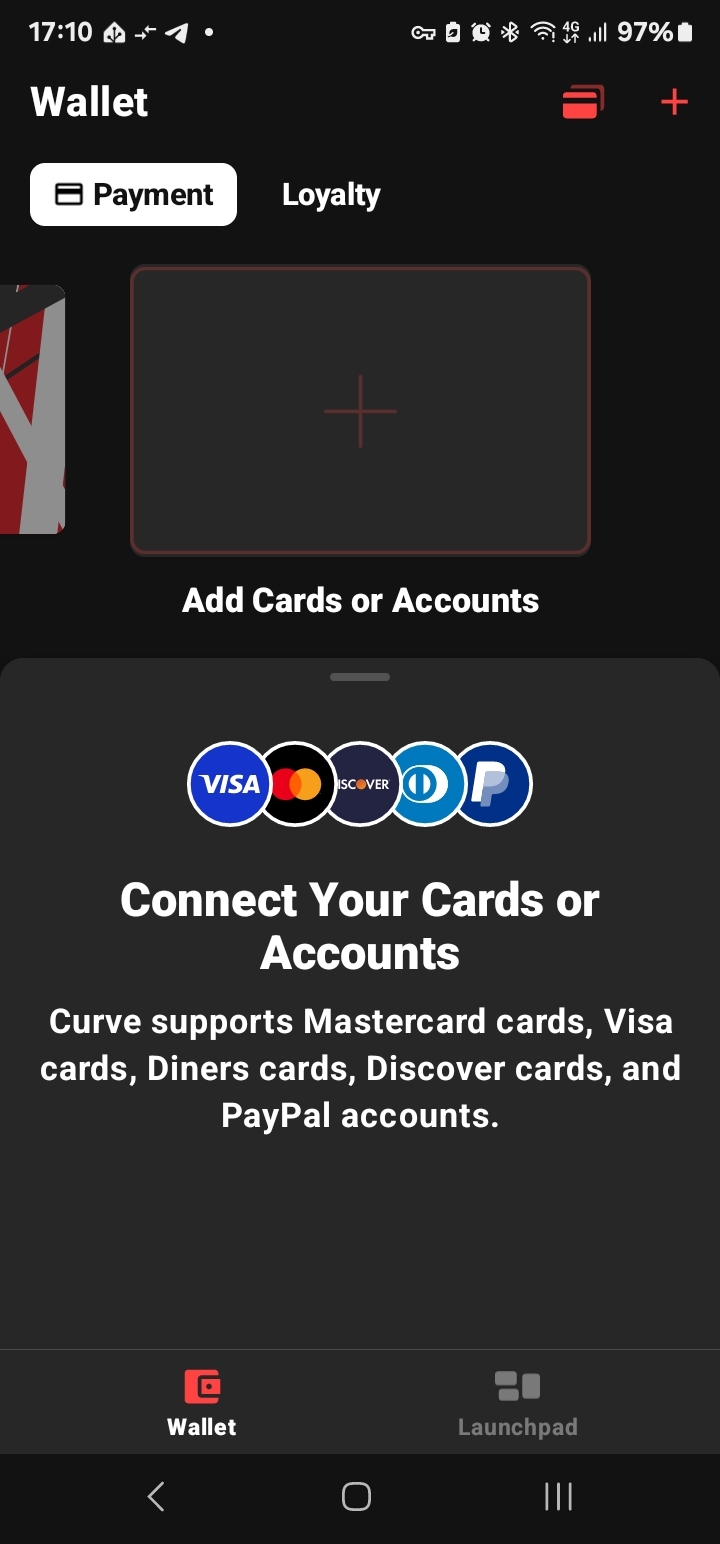
Location: United Kingdom, Ireland Note that the app isn't OS.
Curve is a Google wallet replacement app that consolidates multiple bank cards into a single smart card and digital wallet, making it easier to manage your finances. Here are some key points:
PRO:
- Curve allows you to link multiple debit and credit cards to one Curve card, simplifying your wallet and making it easier to switch between accounts.
- The app claim to offer robust security features, including instant card freezing, transaction notifications, and the ability to set spending limits.
- Curve provides cashback and rewards on purchases, which can add up over time and provide extra value.
- The app is intuitive and easy to navigate, with clear transaction histories and spending insights.
- Go Back in Time: A unique feature that lets you switch the card used for a transaction after the purchase, providing flexibility and control.
CONS:
- While the basic version is free, some premium features come with a subscription fee.
- Curve is not available in all countries, however, should be available in all EU and the UK.
- Isn't an Open Source app and very likely they will sell your transactions history to other company (like google)
1
An European Citizens' Initiative for the adoption of the Fediverse in the European Union's institutions.
(europe.pub)
Update:
This post started as "Petition to the European Union: Transitioning Social Media Presence to the Fediverse" but seems to be clear that what we need is actually an ECI as petitions works different in the EU compared to some local governments. For more information see this link: https://citizens-initiative.europa.eu/_en
I currently looking to create a Group of Organizers as the ECI required that before doing anything else.
Please, send me a message if you are interested, I will get back to you as soon as I can.
According to the official website, the requirements are:
- It must contain at least 7 people old enough to vote in elections to the European Parliament (18 years old, except in Belgium, Malta and Austria where the voting age is 16, and Greece where it’s 17).
- They must be living in at least 7 different EU countries. They must be EU nationals but don’t have to be nationals of 7 different EU countries. For example, the group could contain 3 Portuguese and 4 Lithuanian nationals, provided they’re living in 7 different EU countries.
- None of the minimum 7 can be Members of the European Parliament.
Thanks!
Hello everyone,
We are writing a petition to the EU to transition as soon as possible their social media to the Fediverse. We will leave the text here for everyone to put comments and help having the best and effective test possible. This text was already presented to other small communities.
To: The European Commission and Members of the European Parliament
We, the undersigned, are citizens of the European Union who believe in the values of transparency, decentralization, and user empowerment. We submit this petition to urge the European Union to transition its social media presence to the Fediverse, a decentralized network of interconnected social media platforms.
Reasons for Transitioning to the Fediverse:
Decentralization and User Control: The Fediverse operates on a decentralized model, allowing users to have greater control over their data and online interactions. By moving to this model, the EU can set a precedent for digital sovereignty and user empowerment. Enhanced Privacy and Security: The Fediverse prioritizes user privacy and data protection, aligning with the EU’s commitment to the General Data Protection Regulation (GDPR). This transition would demonstrate the EU’s dedication to safeguarding citizens’ personal information. Fostering Innovation: By engaging with the Fediverse, the EU can support open-source technologies and encourage innovation in social media. This move would promote a diverse ecosystem of platforms that prioritize user needs over corporate interests. Combatting Misinformation: The decentralized nature of the Fediverse allows for more community-driven moderation and content curation. This can lead to more effective strategies for combating misinformation and fostering healthy public discourse. Promoting Inclusivity: The Fediverse is built on principles of inclusivity and accessibility. By adopting this model, the EU can ensure that all citizens have a voice and can participate in democratic processes without the barriers often present in traditional social media platforms. Proposed Actions:
Conduct a feasibility study on transitioning the EU’s social media presence to the Fediverse. Engage with stakeholders, including citizens, tech experts, and civil society organizations, to explore the best practices for this transition. Develop a strategic plan for implementing the transition, including timelines, resources, and potential challenges.
view more: next ›
Interesting conversation with GrapheneOS. Didn't know they essentially hate each other. I'm using e/os but just because I cannot run graphene on my device.