atomicpoet

joined 2 years ago
[–] atomicpoet@lemmy.world -3 points 8 months ago

I’ve been on the Fediverse for a very long time. If you Google my username, you’ll find a trail of posts going back years—thousands of them. My style has always been consistent, and I’ve stayed true to it.

I also happen to be autistic, and I often use ChatGPT for tone checks—it’s a tool that helps me communicate more clearly.

This isn’t an ad. I’m just someone who genuinely loves this game. And if enthusiasm makes me look like a shill, then so be it.

That said, your comment is a good reminder of why I recently added two new rules to !videogames@piefed.social, the community I moderate.

[–] atomicpoet@lemmy.world 1 points 8 months ago (1 children)

I think there might be a small misunderstanding. I wasn’t saying they’re one company—just noting the influence they both still carry today. However you look at it, Square Enix are the caretakers of Final Fantasy and Dragon Quest, much like how Bandai Namco continue to carry Pac-Man forward.

Instead of focusing on the negatives, why not celebrate what these games have meant to so many of us? Their impact is still worth appreciating.

[–] atomicpoet@lemmy.world -2 points 8 months ago (1 children)

Again, what other series is comparable? 12 games, multiple but interlocking arcs, developed over decades.

If there’s one that I don’t know about, tell me.

[–] atomicpoet@lemmy.world -5 points 8 months ago (4 children)

You’re missing why Trails matters.

This isn’t about “a lot of games.” It’s about building something no other JRPG studio has ever pulled off—a single, continuous saga that’s been unfolding since Trails in the Sky in 2004.

No resets, no reboots, no discarded lore. Every event, faction, and character connects across a dozen titles. That kind of long-form narrative discipline doesn’t exist anywhere else in the genre.

And don’t minimize how hard that is. Most JRPG studios can barely keep one trilogy coherent. Falcom has been weaving one uninterrupted storyline for over twenty years—through console generations and shifting hardware.

Holding a narrative together across decades isn’t just impressive, it’s almost impossible. Doing this wasn’t just because of luck. It’s taken discipline, patience, and vision on a scale no other studio has matched.

Influence is easy to trace. XSEED’s Trails in the Sky localization raised the bar for how seriously Western publishers approach text-heavy JRPGs. At the time, bringing over a game with hundreds of thousands of lines of dialogue was considered unworkable. They did it, and it set a precedent for the kind of effort fans now expect from localizations.

Falcom also helped legitimize PC as a JRPG platform in the West—back when most people dismissed the genre as “console only.”

And if you look at modern RPGs built around serialized storytelling and grounded politics—Disco Elysium, Baldur’s Gate 3, even the way Persona 5 structures its arcs—you can see Falcom’s fingerprints everywhere.

Critics agree. RPG Site flat out said this about the remake of Trails in the Sky FC:

If you’re here strictly for the magical number, here it is: Trails in the Sky 1st Chapter remake is a 10/10. What’s more, it’s the easiest 10/10 I’ve ever given.”

https://rpgsite.net/review/18452-trails-in-the-sky-1st-chapter-review

And the numbers back it up. Trails in the Sky sits at Overwhelmingly Positive on Steam with a 93% approval rating from thousands of reviews. Recent reviews are even better—96% positive.

https://store.steampowered.com/app/251150/The/_Legend/_of/_Heroes/_Trails/_in/_the/_Sky/

Rather than burning energy on outrage, put that time into actually playing more games. You’ll get more out of them—and you’re better than just dismissing something this significant.

[–] atomicpoet@lemmy.world 1 points 8 months ago

When I try to edit, there's an error message that says "Network Error". That error is preventing me from making an edit.

[–] atomicpoet@lemmy.world 3 points 8 months ago

Thank you for succinctly explaining why Trails in the Sky is such an artistic achievement.


cross-posted from: https://atomicpoet.org/objects/3d9c9c3e-14e9-446f-9d5c-83af4227bbfc

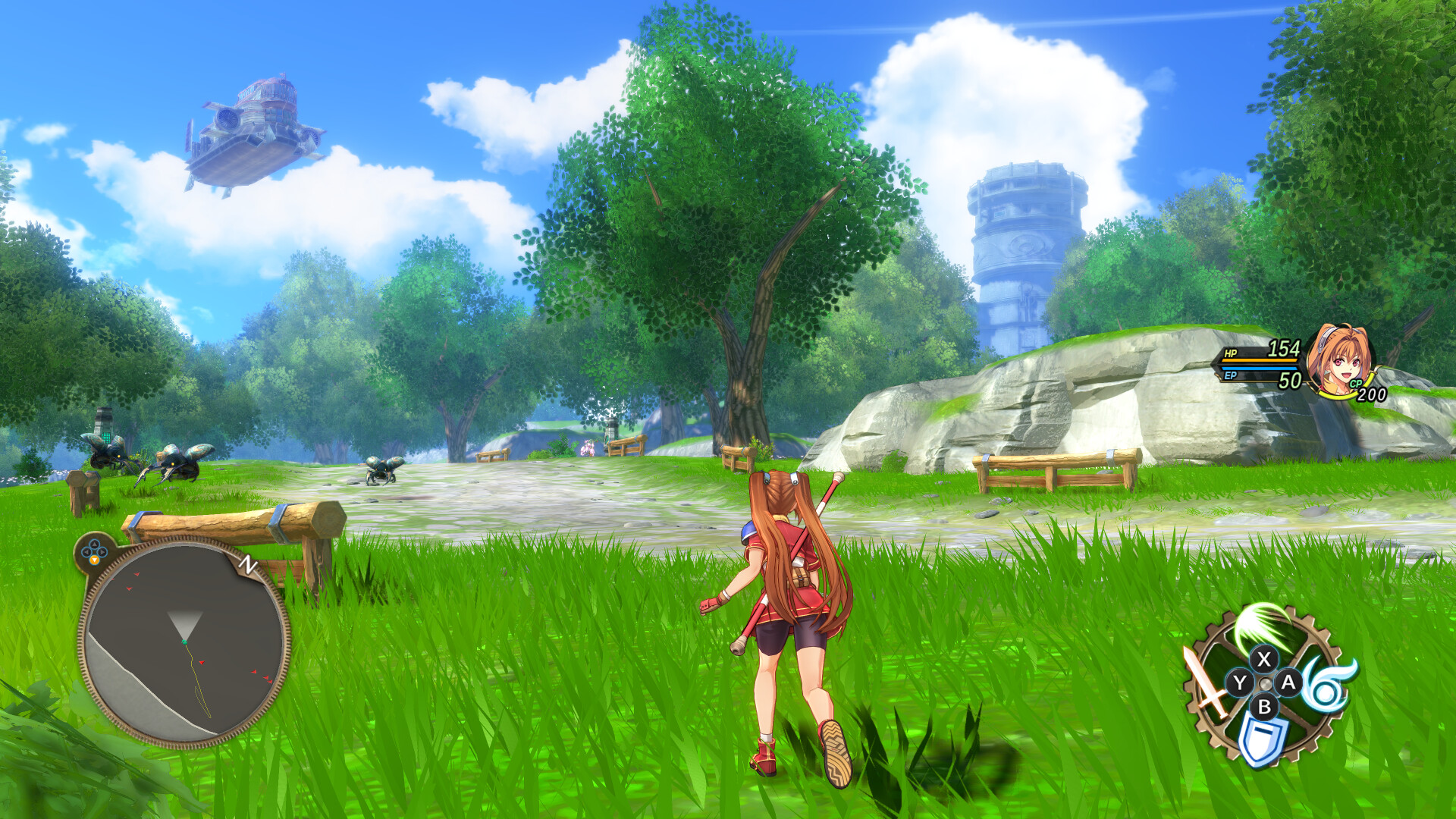
Trails in the Sky 1st Chapter, a JRPG, just got released on Steam—and this is a big deal because this game is to PC what Final Fantasy VII was to PlayStation.

You play as Estelle Bright, a stubborn but big-hearted teen, and her adopted brother Joshua, calm and secretive, as they work as junior agents of the Bracer Guild—mercenaries who handle everything from lost pets to bandit raids.

What begins as simple small-town jobs in the idyllic kingdom of Liberl slowly peels back into a slow-burn political thriller about coups, ancient technology, and rival nations circling like sharks. The genius of Trails in the Sky is how it ties everyday people and personal stories into that larger web of conspiracies, making the upheaval feel like it’s your neighbours and your home on the line.

Some history is in order. The two most influential JRPG developers are Square Enix and Nihon Falcom. Square Enix gave us Dragon Quest and Final Fantasy. Nihon Falcom gave us Dragon Slayer and Ys. Square pushed the turn-based JRPG. Falcom’s big innovation was the action JRPG.

Dragon Slayer in particular was groundbreaking—without it, there’s no Zelda, no Hydlide, no Neutopia. It was the template for action RPGs to follow, and it was so successful it spawned spin-offs. One of them was The Legend of Heroes. That series was so successful it spun off again into Trails in the Sky. And yes—Trails itself kept spinning into more games, until it became a saga of its own.

So why haven’t you heard of it? Because Falcom wasn’t console-first like Square. Their heyday was the PC-88 and PC-98—computers that never came west. When Japan switched to Windows, so did Falcom. Trails in the Sky first arrived on Windows in 2004—but only in Japan. A PSP port followed in 2006. Still Japan only. North America finally got it in 2011... on PSP. By then, nobody here was playing PSP anymore.

It wasn’t until 2014 that the Windows version—better than the PSP one—was localized and released on Steam and GOG. It took more than a decade for Westerners to notice. But once they did, they realised this wasn’t just another RPG—this was a landmark.

The comparison to Final Fantasy VII is apt. Trails in the Sky is Falcom’s premiere JRPG. It cemented their reputation for long-form storytelling and kicked off a serialized epic that continues today. And if you think there are a lot of Final Fantasy games, Trails makes it look modest.

The difference is in the type impact each had. Final Fantasy VII was an atomic bomb. Trails in the Sky was a hurricane—starting as a whisper, then building into a storm. Westerners know the sequels like Trails of Cold Steel and Trails from Zero, but how many ever went back to the original?

Now they can. Trails in the Sky 1st Chapter is a re-imagining of that first game. And “re-imagining” is exactly the right word. Same story, not a simple remake.

What’s new? A lot. The original was purely turn-based. This version lets you switch on the fly between the classic grid system and a new real-time action mode. Combat feels fluid and layered, and Falcom themselves estimate about 80 hours to clear—double the original’s runtime—thanks to extra quests and expanded exploration.

The graphics are completely redone. The old game was 2.5D isometric sprites—think Diablo with anime characters. The new one is full 3D, third-person, HDR-enabled, yet still faithful. Rolent, the first town, looks like you remember, just rebuilt in polygons.

Sound has levelled up. Fully animated cutscenes. Professional actors in both Japanese and English. Steam even lists French, German, and Spanish text, though only English and Japanese get full voice tracks. Most importantly, Falcom’s iconic music is intact—because unlike too many remakes, they didn’t dare mess with perfection.

Controls are flexible. The devs push gamepads, but keyboard and mouse works beautifully. Xbox and PlayStation controllers are supported natively, and thanks to Steam Input, just about anything—Logitech, 8BitDo, you name it—will work.

Steam officially says Windows-only and lists Deck support as “unknown.” But previews already note it runs smooth on Deck, looks gorgeous on OLED screens, and will almost certainly get the “Verified” badge. I tested it myself on Linux—it’s flawless.

Specs are reasonable: Ryzen 5 1600, 8GB RAM, GTX 1050, and 33GB storage will net you 60fps at 1080p.

The price is steep—C$77.99. Steam also launched it with a pile of optional DLC: costumes, boosters, items. Normally I’d balk at paying that much. But this is Trails in the Sky 1st Chapter—rebuilt so a new generation can see why it’s legendary. And if that’s still too much, the 2014 version is cheap: C$21.99 on Steam, or just C$11.00 on GOG.

Reception so far is glowing. Steam already shows a 96% positive rating across 233 reviews. Players love the balance of modern upgrades with old-school heart.

Either way—whether you buy today’s re-imagining or grab the older version—you owe it to yourself to play Trails in the Sky. Because if you care about JRPGs, even a little, this is the one you don’t skip.

https://store.steampowered.com/app/3375780/Trails_in_the_Sky_1st_Chapter/

@videogames@piefed.social
 

cross-posted from: https://piefed.social/post/1233021

After a week of building and curating !videogames@piefed.social, the community already has 58 subscribers—and it’s only getting started.

I’ve been thinking hard about the kind of place I want this to be. The vision comes down to three things:

  1. Real conversations about games

  2. Minimal memes

  3. Zero outrage culture

I want this community to be about joy—a space for people who actually play video games to share what excites them. Not a dumping ground for culture wars. Not another echo chamber for Gamergate-era nonsense.

Games are for everyone. And everyone should feel comfortable digging deep here. Talk about an obscure Japanese console. Explore weird European PCs. Or break down the craft behind how a game actually got made. That’s the stuff I want to see flourish.

Here’s to the next 100 posts—and beyond. Come join in:

https://piefed.social/c/videogames

92
submitted 10 months ago* (last edited 10 months ago) by atomicpoet@lemmy.world to c/games@lemmy.world
 

For people unaware of all the role-playing game (RPG) subgenres, here’s a brief explainer:

TTRPG – Tabletop RPG. The original RPG. Played on a literal table. Dice, paper, friends, arguments. Everything else evolved from here.

Examples:

  • Dungeons & Dragons
  • Pathfinder
  • Shadowrun

LARP / LARPG – Live Action Role-Playing Game. The version where people physically dress as their characters and act things out in person. Foam weapons, costumes, fake accents, and enough in-character drama to power three soap operas. LARPing as a concept goes back to the 1970s, right alongside early tabletop like D&D, but it didn’t get the “LARP” acronym until the 1980s.

Examples:

  • Vampire: The Masquerade LARP events
  • Amtgard
  • Dagorhir

CRPG – Computer RPG. Born from tabletop, moved onto computers. The CPU handles all the dice rolls you don’t want to argue about.

Examples:

  • Baldur’s Gate
  • Fallout (1997)
  • Planescape: Torment

TBRPG – Turn-Based RPG. Everyone takes turns. This is the “classic” RPG format, so people often just call it an RPG.

Examples:

  • Divinity: Original Sin II
  • Wasteland 3
  • Trails in the Sky

SRPG / TRPG – Strategy (or Tactical) RPG. Same turn-based idea, but on grids—squares or hexes—with multiple units to command.

Examples:

  • Fire Emblem
  • Final Fantasy Tactics
  • Tactics Ogre

RTwPRPG – Real-Time with Pause RPG. You pause to assign orders, unpause to watch them happen. Baldur’s Gate fans still swear by this.

Examples:

  • Baldur’s Gate II
  • Pillars of Eternity
  • Dragon Age: Origins

ARPG – Action RPG. Real-time combat. No turns, no waiting—just swing when you feel like it.

Examples:

  • Diablo II
  • Dark Souls
  • Kingdom Hearts

IRPG – Idle RPG. The game mostly plays itself. Perfect for people who like progression bars but don’t like playing.

Examples:

  • Clicker Heroes
  • Idle Champions of the Forgotten Realms
  • AFK Arena

DBRPG – Deck-Building RPG. RPG progression tied to card decks. You level up by upgrading your deck rather than just your stats.

Examples:

  • Slay the Spire
  • Monster Train
  • Griftlands

SurRPG – Survival RPG. Harsh environments, resource scarcity, and RPG progression systems. The game’s main plot is “don’t die.”

Examples:

  • Outward
  • Kenshi
  • The Long Dark

RLRPG – Rogue-like RPG. Procedural generation, permadeath, and heavy RNG baked into an RPG framework.

Examples:

  • Darkest Dungeon
  • Stoneshard
  • Tangledeep

SLRPG – Souls-like RPG. RPGs built around Soulsborne-style combat: stamina-based melee, brutal bosses, minimalist storytelling.

Examples:

  • Dark Souls III
  • The Surge 2
  • Lords of the Fallen

JRPG – Japanese RPG. Made in Japan or heavily inspired by Japan’s approach. Console-heavy. Drama-heavy. Usually turn-based or action hybrid.

Examples:

  • Final Fantasy VII
  • Persona 5
  • Dragon Quest XI

KRPG – Korean RPG. Similar to JRPGs but usually more PC-oriented. Often online.

Examples:

  • Lost Ark
  • MapleStory
  • Vindictus

WRPG – Western RPG. Pretty much any RPG from the West that isn’t imitating JRPGs.

Examples:

  • The Elder Scrolls V: Skyrim
  • Mass Effect
  • Fallout: New Vegas

PRPG – Polish RPG. Technically a WRPG branch, but with its own personality. Darker tone, folkloric influences, and PC-first mentality.

Examples:

  • The Witcher series
  • Seven: The Days Long Gone
  • The Thaumaturge

GRPG – German RPG. RPGs developed in Germany, usually open-world Eurojank epics with handcrafted maps, tough early-game difficulty, and an earnest-but-campy tone.

Examples:

  • Gothic II
  • Risen
  • ELEX

LatRPG – Latin American RPG. RPGs from Latin America, often mixing local folklore, indigenous mythology, and JRPG/ARPG elements. “LARPG” isn’t used because Live Action Role-Playing already took it.

Examples:

  • Mulaka
  • Tunche
  • Cris Tales

MORPG – Multiplayer Online RPG. Small-scale online RPGs, often instanced or lobby-based.

Examples:

  • Phantasy Star Online 2
  • Monster Hunter: World,
  • Dauntless

MMORPG – Massively Multiplayer Online RPG. Persistent worlds, thousands of players, endless grinds.

Examples:

  • World of Warcraft
  • Final Fantasy XIV
  • Guild Wars 2

MOORPG – Massive Online Open-World RPG. Marketing term for the “bigger” MMOs. You’ve seen the ads.

Examples:

  • Black Desert Online
  • ArcheAge
  • EVE Online

MRPG – Mobile RPG. Made for phones. Often gacha-heavy, session-based, or both.

Examples:

  • Honkai: Star Rail
  • Raid: Shadow Legends
  • Summoners War

BRPG – Browser RPG. Runs in your web browser. Lightweight, accessible, usually free-to-play.

Examples:

  • Kingdom of Loathing
  • AdventureQuest Worlds
  • Urban Dead

VRRPG – Virtual Reality RPG. Built for VR platforms. Often more about immersion than traditional RPG mechanics.

Examples:

  • Zenith: The Last City
  • OrbusVR
  • The Mage’s Tale

BBRPG – Bulletin Board RPG. Forum- or post-based roleplay. Writing-heavy, rules-light.

Examples:

  • Gaia Online RP forums
  • NationStates roleplay boards
  • Myth-Weavers

So yeah, there’s a lot of alphabet in the RPG soup. Some of it’s legit, some of it’s marketing garbage, and some of it’s just fans inventing labels because that’s what fans do.

But they’re all chasing the same dopamine hit: numbers go up, loot gets shinier, and suddenly your “quick session” has eaten the entire weekend.


Let’s not beat around the bush: Will Rock is basically Serious Sam.

That’s the first comparison anyone makes. And they’re not wrong. It plays almost exactly like Croteam’s arena shooter—fast, chaotic, and ridiculous. But calling it a copy misses something important. Because Will Rock isn’t just a clone. It’s a four-month miracle, a budget game from a brand-new studio, and a strange, beautiful mess stuffed with quirks that make it unforgettable. That is, if you were lucky enough to stumble into it.

Saber Interactive was brand new in 2003. Will Rock was their very first game. They built it in just over four months. Four months to create an entire FPS from scratch on a brand-new engine. An engine that didn’t even have a name yet—it would later become Saber3D. At the time, Will Rock was basically a tech demo wearing an Ancient Greece skin.

The game came out in June 2003 under Ubisoft. But the marketing wasn’t exactly explosive. The most famous thing about it wasn’t a trailer. It was the soundtrack. Specifically: Twisted Sister’s “I Wanna Rock.” It’s definitely in the trailer. It’s apparently in the main menu. YouTube uploads show it.

And yet… after replaying the game, I never heard it once. That’s not a song you just miss. So maybe it’s a ghost track. Maybe it’s a Mandela Effect. Either way, it’s the most famous song that may or may not actually be in the game.

Distribution was weird, too. Ubisoft sold it in stores. But it also came bundled with Gigabyte PC-CDROM drives. A lot of players didn’t buy it—they just found it on their new hardware. That’s how many people first played Will Rock: by accident. Which might explain why it feels like a half-remembered fever dream now.

The story is early-2000s action nonsense. Willford Rockwell, archaeologist, gets possessed by Prometheus. Prometheus gives him powers. He goes to war with Zeus to save his girlfriend. That’s it. But the Greek mythology setting works. Where Serious Sam had Egypt and aliens, Will Rock has Minotaurs, Harpies, Centaurs, Cyclops, skeleton warriors, and massive Atlas statues that rip themselves free from pedestals and come for you.

And this is where the boom begins.

Minotaurs don’t just die—they split into more Minotaurs when you kill them. Atlas statues don’t just stand there—they crash forward like a granite linebacker. Harpies dive-bomb screaming. Rat-bombs explode. Enemies accidentally damage each other in the chaos. The screen becomes a mess of smoke, blood, and flying marble.

The weapons make it louder. You’ve got the standard pistol, shotgun, machine gun, and minigun. But then it gets weird. The shotgun looks like a lever-action rifle and uses rifle ammo. The Medusa Gun turns enemies to stone so you can smash them into gravel. The Acid Gun inflates enemies until they burst with a wet rubber squeal. The Atomic Gun fires a miniature nuke. And the shovel—the humble melee weapon—is absurdly effective, especially against archers. Every weapon feels tuned for chaos.

Then there are the Titan powers. You collect gold to buy them at altars. Immortality makes sense. Titan Damage makes sense. Titan Motion? It slows down time—and slows you down too. It’s basically useless. A broken power-up in a game already running at maximum speed. But that’s Will Rock. Half the fun is in its glorious mistakes.

The level design swings wildly. Sometimes you’re in wide-open killboxes built for maximum slaughter. Sometimes you’re in cramped switch-hunts that feel like filler. You’ll bounce on trampolines, fire yourself from catapults, sneak through a Trojan horse, pull endless levers. Sometimes it’s fun. Sometimes it’s busywork. But it’s never quiet.

Reviews at the time were mixed. Metacritic score: 63. GameSpot called it a “mindless knockoff.” IGN called it “hard.” Other critics called it too easy because enemies dropped in three hits and health pickups were everywhere. Even the difficulty became a quirk—easy for some, brutal for others.

For most players, Will Rock disappeared quickly. It was overshadowed by Serious Sam and never got a sequel. But for the people who remember it? It’s the quirks that stand out. The regenerating Minotaurs. The statues that wake up. The useless Titan Motion. The shotgun that’s somehow a rifle. The shovel that’s better than half the guns. The ghost of Twisted Sister haunting the main menu.

For everyone else, Will Rock is just another budget shooter from 2003. But for those who stumbled into it—maybe from a Gigabyte CD-ROM—it’s something stranger. A flawed, loud, chaotic snapshot of early-2000s FPS excess. A game that didn’t just copy Serious Sam. It kept the boom going.


Let’s not beat around the bush: Will Rock is basically Serious Sam.

That’s the first comparison anyone makes. And they’re not wrong. It plays almost exactly like Croteam’s arena shooter—fast, chaotic, and ridiculous. But calling it a copy misses something important. Because Will Rock isn’t just a clone. It’s a four-month miracle, a budget game from a brand-new studio, and a strange, beautiful mess stuffed with quirks that make it unforgettable. That is, if you were lucky enough to stumble into it.

Saber Interactive was brand new in 2003. Will Rock was their very first game. They built it in just over four months. Four months to create an entire FPS from scratch on a brand-new engine. An engine that didn’t even have a name yet—it would later become Saber3D. At the time, Will Rock was basically a tech demo wearing an Ancient Greece skin.

The game came out in June 2003 under Ubisoft. But the marketing wasn’t exactly explosive. The most famous thing about it wasn’t a trailer. It was the soundtrack. Specifically: Twisted Sister’s “I Wanna Rock.” It’s definitely in the trailer. It’s apparently in the main menu. YouTube uploads show it.

And yet… after replaying the game, I never heard it once. That’s not a song you just miss. So maybe it’s a ghost track. Maybe it’s a Mandela Effect. Either way, it’s the most famous song that may or may not actually be in the game.

Distribution was weird, too. Ubisoft sold it in stores. But it also came bundled with Gigabyte PC-CDROM drives. A lot of players didn’t buy it—they just found it on their new hardware. That’s how many people first played Will Rock: by accident. Which might explain why it feels like a half-remembered fever dream now.

The story is early-2000s action nonsense. Willford Rockwell, archaeologist, gets possessed by Prometheus. Prometheus gives him powers. He goes to war with Zeus to save his girlfriend. That’s it. But the Greek mythology setting works. Where Serious Sam had Egypt and aliens, Will Rock has Minotaurs, Harpies, Centaurs, Cyclops, skeleton warriors, and massive Atlas statues that rip themselves free from pedestals and come for you.

And this is where the boom begins.

Minotaurs don’t just die—they split into more Minotaurs when you kill them. Atlas statues don’t just stand there—they crash forward like a granite linebacker. Harpies dive-bomb screaming. Rat-bombs explode. Enemies accidentally damage each other in the chaos. The screen becomes a mess of smoke, blood, and flying marble.

The weapons make it louder. You’ve got the standard pistol, shotgun, machine gun, and minigun. But then it gets weird. The shotgun looks like a lever-action rifle and uses rifle ammo. The Medusa Gun turns enemies to stone so you can smash them into gravel. The Acid Gun inflates enemies until they burst with a wet rubber squeal. The Atomic Gun fires a miniature nuke. And the shovel—the humble melee weapon—is absurdly effective, especially against archers. Every weapon feels tuned for chaos.

Then there are the Titan powers. You collect gold to buy them at altars. Immortality makes sense. Titan Damage makes sense. Titan Motion? It slows down time—and slows you down too. It’s basically useless. A broken power-up in a game already running at maximum speed. But that’s Will Rock. Half the fun is in its glorious mistakes.

The level design swings wildly. Sometimes you’re in wide-open killboxes built for maximum slaughter. Sometimes you’re in cramped switch-hunts that feel like filler. You’ll bounce on trampolines, fire yourself from catapults, sneak through a Trojan horse, pull endless levers. Sometimes it’s fun. Sometimes it’s busywork. But it’s never quiet.

Reviews at the time were mixed. Metacritic score: 63. GameSpot called it a “mindless knockoff.” IGN called it “hard.” Other critics called it too easy because enemies dropped in three hits and health pickups were everywhere. Even the difficulty became a quirk—easy for some, brutal for others.

For most players, Will Rock disappeared quickly. It was overshadowed by Serious Sam and never got a sequel. But for the people who remember it? It’s the quirks that stand out. The regenerating Minotaurs. The statues that wake up. The useless Titan Motion. The shotgun that’s somehow a rifle. The shovel that’s better than half the guns. The ghost of Twisted Sister haunting the main menu.

For everyone else, Will Rock is just another budget shooter from 2003. But for those who stumbled into it—maybe from a Gigabyte CD-ROM—it’s something stranger. A flawed, loud, chaotic snapshot of early-2000s FPS excess. A game that didn’t just copy Serious Sam. It kept the boom going.


Let’s not beat around the bush: Will Rock is basically Serious Sam.

That’s the first comparison anyone makes. And they’re not wrong. It plays almost exactly like Croteam’s arena shooter—fast, chaotic, and ridiculous. But calling it a copy misses something important. Because Will Rock isn’t just a clone. It’s a four-month miracle, a budget game from a brand-new studio, and a strange, beautiful mess stuffed with quirks that make it unforgettable. That is, if you were lucky enough to stumble into it.

Saber Interactive was brand new in 2003. Will Rock was their very first game. They built it in just over four months. Four months to create an entire FPS from scratch on a brand-new engine. An engine that didn’t even have a name yet—it would later become Saber3D. At the time, Will Rock was basically a tech demo wearing an Ancient Greece skin.

The game came out in June 2003 under Ubisoft. But the marketing wasn’t exactly explosive. The most famous thing about it wasn’t a trailer. It was the soundtrack. Specifically: Twisted Sister’s “I Wanna Rock.” It’s definitely in the trailer. It’s apparently in the main menu. YouTube uploads show it.

And yet… after replaying the game, I never heard it once. That’s not a song you just miss. So maybe it’s a ghost track. Maybe it’s a Mandela Effect. Either way, it’s the most famous song that may or may not actually be in the game.

Distribution was weird, too. Ubisoft sold it in stores. But it also came bundled with Gigabyte PC-CDROM drives. A lot of players didn’t buy it—they just found it on their new hardware. That’s how many people first played Will Rock: by accident. Which might explain why it feels like a half-remembered fever dream now.

The story is early-2000s action nonsense. Willford Rockwell, archaeologist, gets possessed by Prometheus. Prometheus gives him powers. He goes to war with Zeus to save his girlfriend. That’s it. But the Greek mythology setting works. Where Serious Sam had Egypt and aliens, Will Rock has Minotaurs, Harpies, Centaurs, Cyclops, skeleton warriors, and massive Atlas statues that rip themselves free from pedestals and come for you.

And this is where the boom begins.

Minotaurs don’t just die—they split into more Minotaurs when you kill them. Atlas statues don’t just stand there—they crash forward like a granite linebacker. Harpies dive-bomb screaming. Rat-bombs explode. Enemies accidentally damage each other in the chaos. The screen becomes a mess of smoke, blood, and flying marble.

The weapons make it louder. You’ve got the standard pistol, shotgun, machine gun, and minigun. But then it gets weird. The shotgun looks like a lever-action rifle and uses rifle ammo. The Medusa Gun turns enemies to stone so you can smash them into gravel. The Acid Gun inflates enemies until they burst with a wet rubber squeal. The Atomic Gun fires a miniature nuke. And the shovel—the humble melee weapon—is absurdly effective, especially against archers. Every weapon feels tuned for chaos.

Then there are the Titan powers. You collect gold to buy them at altars. Immortality makes sense. Titan Damage makes sense. Titan Motion? It slows down time—and slows you down too. It’s basically useless. A broken power-up in a game already running at maximum speed. But that’s Will Rock. Half the fun is in its glorious mistakes.

The level design swings wildly. Sometimes you’re in wide-open killboxes built for maximum slaughter. Sometimes you’re in cramped switch-hunts that feel like filler. You’ll bounce on trampolines, fire yourself from catapults, sneak through a Trojan horse, pull endless levers. Sometimes it’s fun. Sometimes it’s busywork. But it’s never quiet.

Reviews at the time were mixed. Metacritic score: 63. GameSpot called it a “mindless knockoff.” IGN called it “hard.” Other critics called it too easy because enemies dropped in three hits and health pickups were everywhere. Even the difficulty became a quirk—easy for some, brutal for others.

For most players, Will Rock disappeared quickly. It was overshadowed by Serious Sam and never got a sequel. But for the people who remember it? It’s the quirks that stand out. The regenerating Minotaurs. The statues that wake up. The useless Titan Motion. The shotgun that’s somehow a rifle. The shovel that’s better than half the guns. The ghost of Twisted Sister haunting the main menu.

For everyone else, Will Rock is just another budget shooter from 2003. But for those who stumbled into it—maybe from a Gigabyte CD-ROM—it’s something stranger. A flawed, loud, chaotic snapshot of early-2000s FPS excess. A game that didn’t just copy Serious Sam. It kept the boom going.


Turns out Tetris Elements is my favourite Tetris.

And I’ve played a lot of Tetris. Atari Tetris, Nintendo Tetris, SEGA Tetris, Capcom Tetris, EA Tetris… I’ve even played multiple board game versions—and yes, there are more than you’d think.

But nothing fills me with joy like Tetris Elements, the 2004 THQ release that stayed stuck on Windows and Mac. Never consoles. Never handhelds. Just a weird budget disc for early-2000s computers.

It was meant to follow Tetris Worlds. ImaginEngine built it under THQ’s ValuSoft label. Mostly an educational-games studio, with a little help from a programming shop in India. Small budget, short schedule. The kind of game you’d expect to look rushed.

And it does. But it also tries things other official Tetris games never touched again.

On the surface, it’s simple: Classic mode plus five elemental modes. Earthquake, Fire, Ice, Stratosphere, Tempest. But these aren’t harmless gimmicks. They mess with the core game. Earthquake shakes the board and warps your stack. Tempest forces you to manage two rotating wells. Stratosphere drops meteors that can open perfect holes—or land garbage in the exact spot you needed clear.

Even the safe-looking modes have teeth. Ice will slam a piece straight to the bottom if an icicle hits it. Fire can chain explosions if you heat-drop pieces in sequence. These weren’t casual distractions. They were strange, playable twists on Tetris that you couldn’t get anywhere else.

And then there are the quirks.

The game says it uses the modern SRS rotation system. But pieces spawn in odd orientations, like the letters they’re named after. Wall kicks are inconsistent. The configuration files literally include a “–99, –99” coordinate—developer shorthand for “don’t use this”—as an actual kick entry. It shipped like that.

Hard drops don’t even behave consistently. Sometimes the next piece spawns instantly. Sometimes there’s a pause just long enough to throw off your rhythm. It feels half-finished.

Look in the game’s files and it gets stranger. All the rotation data, piece definitions, and rules are in plain-text .INI files. No encryption, no compression. It’s like the studio assumed no one would bother to check. That’s how players found five unused pieces just sitting there. Pentominoes, oversized blocks, even odd trimino shapes. All fully defined. None ever used.

The audio hides unused tracks too. Better quality than what shipped. There are unused menu graphics, leftover text strings. “Name Exists” sits quietly in the files. There’s even an unused “You Lose” screen. It’s a Tetris game with the workshop still attached.

Even the presentation feels slightly off. Clearing a Tetris flashes the screen white, like the game’s trying to burn your retinas as a reward. The music is fine—light techno, some nods to the classics—but the big feature was loading your own MP3s. And then the game speeds them up in pitch as your stack rises. A nice idea if you like drum ’n’ bass. Less nice if you don’t want your playlist chipmunked mid-match.

Reception at the time was muted. Two critics reviewed it. Scored in the 70s. People moved on. Hardcore players dismissed it. Casual players bought it in a bargain bin, played Fire mode once, and forgot it.

But the quirks gave it a second life.

The .INI structure made it one of the easiest official Tetris games to modify. Fans enabled the unused pieces. They rewrote gravity. They fixed rotation bugs themselves. It became a little laboratory for people who liked taking Tetris apart.

On Mac, it stuck around longer than expected. The disc ran on both OS 9 and OS X. PowerPC Macs could run it cleanly. Classic mode on OS X 10.4 ran even better. Intel Macs killed it, but by then it was already out of print.

On PC, it lived as long as people kept CD drives. No keys, just disc-based protection. When drives vanished, so did the game—until no-CD patches and Archive.org brought it back. Today it runs on Windows 10 with glitches. Windows 11 is hit or miss.

Its reputation now? Not a classic. Not even a cult favourite. Just an oddball entry people dig up because it’s strange, moddable, and unlike anything else in the series.

It’s not polished. It’s not balanced. But it’s an official Tetris that doesn’t fit neatly anywhere in the series history. And somehow, that makes it fit perfectly.


Turns out Tetris Elements is my favourite Tetris.

And I’ve played a lot of Tetris. Atari Tetris, Nintendo Tetris, SEGA Tetris, Capcom Tetris, EA Tetris… I’ve even played multiple board game versions—and yes, there are more than you’d think.

But nothing fills me with joy like Tetris Elements, the 2004 THQ release that stayed stuck on Windows and Mac. Never consoles. Never handhelds. Just a weird budget disc for early-2000s computers.

It was meant to follow Tetris Worlds. ImaginEngine built it under THQ’s ValuSoft label. Mostly an educational-games studio, with a little help from a programming shop in India. Small budget, short schedule. The kind of game you’d expect to look rushed.

And it does. But it also tries things other official Tetris games never touched again.

On the surface, it’s simple: Classic mode plus five elemental modes. Earthquake, Fire, Ice, Stratosphere, Tempest. But these aren’t harmless gimmicks. They mess with the core game. Earthquake shakes the board and warps your stack. Tempest forces you to manage two rotating wells. Stratosphere drops meteors that can open perfect holes—or land garbage in the exact spot you needed clear.

Even the safe-looking modes have teeth. Ice will slam a piece straight to the bottom if an icicle hits it. Fire can chain explosions if you heat-drop pieces in sequence. These weren’t casual distractions. They were strange, playable twists on Tetris that you couldn’t get anywhere else.

And then there are the quirks.

The game says it uses the modern SRS rotation system. But pieces spawn in odd orientations, like the letters they’re named after. Wall kicks are inconsistent. The configuration files literally include a “–99, –99” coordinate—developer shorthand for “don’t use this”—as an actual kick entry. It shipped like that.

Hard drops don’t even behave consistently. Sometimes the next piece spawns instantly. Sometimes there’s a pause just long enough to throw off your rhythm. It feels half-finished.

Look in the game’s files and it gets stranger. All the rotation data, piece definitions, and rules are in plain-text .INI files. No encryption, no compression. It’s like the studio assumed no one would bother to check. That’s how players found five unused pieces just sitting there. Pentominoes, oversized blocks, even odd trimino shapes. All fully defined. None ever used.

The audio hides unused tracks too. Better quality than what shipped. There are unused menu graphics, leftover text strings. “Name Exists” sits quietly in the files. There’s even an unused “You Lose” screen. It’s a Tetris game with the workshop still attached.

Even the presentation feels slightly off. Clearing a Tetris flashes the screen white, like the game’s trying to burn your retinas as a reward. The music is fine—light techno, some nods to the classics—but the big feature was loading your own MP3s. And then the game speeds them up in pitch as your stack rises. A nice idea if you like drum ’n’ bass. Less nice if you don’t want your playlist chipmunked mid-match.

Reception at the time was muted. Two critics reviewed it. Scored in the 70s. People moved on. Hardcore players dismissed it. Casual players bought it in a bargain bin, played Fire mode once, and forgot it.

But the quirks gave it a second life.

The .INI structure made it one of the easiest official Tetris games to modify. Fans enabled the unused pieces. They rewrote gravity. They fixed rotation bugs themselves. It became a little laboratory for people who liked taking Tetris apart.

On Mac, it stuck around longer than expected. The disc ran on both OS 9 and OS X. PowerPC Macs could run it cleanly. Classic mode on OS X 10.4 ran even better. Intel Macs killed it, but by then it was already out of print.

On PC, it lived as long as people kept CD drives. No keys, just disc-based protection. When drives vanished, so did the game—until no-CD patches and Archive.org brought it back. Today it runs on Windows 10 with glitches. Windows 11 is hit or miss.

Its reputation now? Not a classic. Not even a cult favourite. Just an oddball entry people dig up because it’s strange, moddable, and unlike anything else in the series.

It’s not polished. It’s not balanced. But it’s an official Tetris that doesn’t fit neatly anywhere in the series history. And somehow, that makes it fit perfectly.


Turns out Tetris Elements is my favourite Tetris.

And I’ve played a lot of Tetris. Atari Tetris, Nintendo Tetris, SEGA Tetris, Capcom Tetris, EA Tetris… I’ve even played multiple board game versions—and yes, there are more than you’d think.

But nothing fills me with joy like Tetris Elements, the 2004 THQ release that stayed stuck on Windows and Mac. Never consoles. Never handhelds. Just a weird budget disc for early-2000s computers.

It was meant to follow Tetris Worlds. ImaginEngine built it under THQ’s ValuSoft label. Mostly an educational-games studio, with a little help from a programming shop in India. Small budget, short schedule. The kind of game you’d expect to look rushed.

And it does. But it also tries things other official Tetris games never touched again.

On the surface, it’s simple: Classic mode plus five elemental modes. Earthquake, Fire, Ice, Stratosphere, Tempest. But these aren’t harmless gimmicks. They mess with the core game. Earthquake shakes the board and warps your stack. Tempest forces you to manage two rotating wells. Stratosphere drops meteors that can open perfect holes—or land garbage in the exact spot you needed clear.

Even the safe-looking modes have teeth. Ice will slam a piece straight to the bottom if an icicle hits it. Fire can chain explosions if you heat-drop pieces in sequence. These weren’t casual distractions. They were strange, playable twists on Tetris that you couldn’t get anywhere else.

And then there are the quirks.

The game says it uses the modern SRS rotation system. But pieces spawn in odd orientations, like the letters they’re named after. Wall kicks are inconsistent. The configuration files literally include a “–99, –99” coordinate—developer shorthand for “don’t use this”—as an actual kick entry. It shipped like that.

Hard drops don’t even behave consistently. Sometimes the next piece spawns instantly. Sometimes there’s a pause just long enough to throw off your rhythm. It feels half-finished.

Look in the game’s files and it gets stranger. All the rotation data, piece definitions, and rules are in plain-text .INI files. No encryption, no compression. It’s like the studio assumed no one would bother to check. That’s how players found five unused pieces just sitting there. Pentominoes, oversized blocks, even odd trimino shapes. All fully defined. None ever used.

The audio hides unused tracks too. Better quality than what shipped. There are unused menu graphics, leftover text strings. “Name Exists” sits quietly in the files. There’s even an unused “You Lose” screen. It’s a Tetris game with the workshop still attached.

Even the presentation feels slightly off. Clearing a Tetris flashes the screen white, like the game’s trying to burn your retinas as a reward. The music is fine—light techno, some nods to the classics—but the big feature was loading your own MP3s. And then the game speeds them up in pitch as your stack rises. A nice idea if you like drum ’n’ bass. Less nice if you don’t want your playlist chipmunked mid-match.

Reception at the time was muted. Two critics reviewed it. Scored in the 70s. People moved on. Hardcore players dismissed it. Casual players bought it in a bargain bin, played Fire mode once, and forgot it.

But the quirks gave it a second life.

The .INI structure made it one of the easiest official Tetris games to modify. Fans enabled the unused pieces. They rewrote gravity. They fixed rotation bugs themselves. It became a little laboratory for people who liked taking Tetris apart.

On Mac, it stuck around longer than expected. The disc ran on both OS 9 and OS X. PowerPC Macs could run it cleanly. Classic mode on OS X 10.4 ran even better. Intel Macs killed it, but by then it was already out of print.

On PC, it lived as long as people kept CD drives. No keys, just disc-based protection. When drives vanished, so did the game—until no-CD patches and Archive.org brought it back. Today it runs on Windows 10 with glitches. Windows 11 is hit or miss.

Its reputation now? Not a classic. Not even a cult favourite. Just an oddball entry people dig up because it’s strange, moddable, and unlike anything else in the series.

It’s not polished. It’s not balanced. But it’s an official Tetris that doesn’t fit neatly anywhere in the series history. And somehow, that makes it fit perfectly.


A 1991 ad for Renovation's SEGA Genesis games.

At first I laughed—but they weren’t wrong. We do have 8-way TVs now. Just run eight emulators side by side and tile them across your screen.

Hell, today’s budget TVs are bigger than the one in the ad. Dan was ahead of his time.


A 1991 ad for Renovation's SEGA Genesis games.

At first I laughed—but they weren’t wrong. We do have 8-way TVs now. Just run eight emulators side by side and tile them across your screen.

Hell, today’s budget TVs are bigger than the one in the ad. Dan was ahead of his time.


Before Tetris took over arcades and consoles, it was just a computer game.

Not even a Western one. It started on a Soviet mainframe.

What most people don’t know is that its first home versions were for DOS. The very first DOS port came out in 1986, made by Vadim Gerasimov—a Russian developer who adapted Alexey Pajitnov’s original concept for IBM PCs.

Then came the flood. Lots of other DOS ports followed, some barely licensed, others “licensed” in the Cold War handshake sense.

But the first official DOS release made specifically for the West? That was Spectrum Holobyte’s version in 1988. It beat the NES. It beat the arcade version.

And yes—this version was still based on Gerasimov’s DOS design.

Now, I don’t think it’s the best home version of Tetris. But it’s easily the strangest—and maybe the most interesting.

For starters, Spectrum Holobyte leaned hard into the Cold War theming. One of their print ads straight-up asked: “What are the Three Greatest Things to Come Out of the U.S.S.R.?” The answer? The Bolshoi ballet. Stolichnaya vodka. And Tetris. That was the pitch. The ad featured dancers in mid-leap, a frosty bottle of Stoli on ice, and a red game box with Cyrillic text and Saint Basil’s Cathedral slapped right on the cover. It was less a software ad than a cultural export campaign—equal parts kitsch, nationalism, and Cold War tourism. You didn’t just buy a puzzle game. You bought a Russian moment.

Inside the game, every screen drips with Soviet vibes: fishing vessels, space cosmonauts, Russian folk music, even a reference to the “Miracle on Ice.” The high score list? Labeled “Top Ten Comrades.” That kind of commitment.

This was deliberate. Spectrum Holobyte’s CEO literally asked the devs to preserve the “Soviet spirit,” not tone it down. He wanted Americans to want to buy a Russian product. Which, in 1988, was a pretty wild ask.

There was also a plane that flew across the title screen—an easter egg referencing Mathias Rust’s illegal flight into Red Square, which had humiliated the Soviet military the year before. Elorg, the Soviet licensing agency, didn’t love that. It got patched out. Along with a bunch of other Cold War touches. Fighter jets? Gone. Submarines? Replaced with a man on a horse.

Pajitnov himself insisted that Tetris be “a peaceful game heralding a new era in superpower relations.” Apparently, that meant fewer tanks.

Technically, this version of Tetris is barebones—but in a foundational kind of way. It’s missing a lot of what we now take for granted. There’s no hold piece. No wall kicks. No 180° rotation. Some versions don’t even give you bonus points for clearing four lines. Which, let’s be honest, kind of defeats the point of a Tetris.

Instead, scoring is mostly about how fast you drop pieces and whether you survive. That’s it. There is a hard drop, though. And you can set the starting height and level. Which was a nice touch.

Rotation is basic. Just clockwise and counterclockwise. No fancy adjustments. If a piece doesn’t fit, it just doesn’t. There’s no wall-kick logic to save you. And once a piece touches down? It locks immediately.

No second chances. No little delay. You either commit or you stack badly and panic.

Even visually, it’s oddly compelling. Only CGA and EGA are supported—VGA was still too new—but the artwork is stylized in a way that sticks with you. The backgrounds are moody and distinct. It doesn’t feel like it’s trying to be flashy. It feels… ideological.

I know the Mac, Amiga, and Atari ST versions had more colors. And some fancier music. But the DOS version has character. It’s a cultural time capsule disguised as a puzzle game.

Also worth noting: this version sold like crazy. Over 100,000 units in its first year. The average player? Mid-30s, probably an engineer or middle manager. Half were women—which, for a PC game in the ’80s, is almost unheard of.

And if you’re running this today? You’ll probably get a divide overflow error. You’ll need a patch just to launch it.

This wasn’t just a game. It was a diplomatic artifact. A licensing mess. A Cold War curiosity. A version of Tetris that, for all its simplicity, tells you more about 1988 than most history books.

view more: next ›