TCB13

joined 2 years ago
[–] TCB13@lemmy.world -5 points 2 weeks ago* (last edited 2 weeks ago) (3 children)

Basic Windows 95-era GUIs made with standard Windows APIs still look broken.

[–] TCB13@lemmy.world 1 points 1 month ago

And the ones that survive that can be sterilized with vaccines, killed by cancer and/or bad nutrition caused by industrialized food products.

[–] TCB13@lemmy.world 2 points 1 month ago

Not really, they seem to be doing the exact opposite.

[–] TCB13@lemmy.world 1 points 1 month ago (1 children)

Well, Telegram does the something for free.

[–] TCB13@lemmy.world 6 points 1 month ago (6 children)

Sure, but why? If you've a simple router running OpenWrt or something with all WAN ports closed you basically have the same thing.

[–] TCB13@lemmy.world 2 points 5 months ago (2 children)

The official website is https://bentopdf.com/ not what’s on the link.

[–] TCB13@lemmy.world 6 points 5 months ago* (last edited 5 months ago) (1 children)

The official website is https://bentopdf.com/ not what's on the link.

[–] TCB13@lemmy.world 2 points 5 months ago (1 children)

Why is it so hard to find a link to a github page? Is it even https://github.com/alam00000/bentopdf ? Also, the official website is https://bentopdf.com/ , not what the OP posted.

[–] TCB13@lemmy.world 2 points 5 months ago

@Vendetta9076@sh.itjust.works latest code pushed into the repo splits the config into it's own file.

[–] TCB13@lemmy.world 1 points 5 months ago (1 children)

Not really incompatible, PHP provides configurable shared memory across processes that survive even if fastcgi releases every process and just keeps something idle for new requests.

[–] TCB13@lemmy.world 2 points 5 months ago* (last edited 5 months ago) (3 children)

don’t know a lot about fastcgi, but looking it up it seems like it also keeps a persistent process running to avoid execution overhead

More of less, the good thing about PHP + fastcgi is that it keeps a configure amount of minimum persistent processes (plus a dynamic number) to avoid execution overhead like you said... now there's an important detail, PHP processes are generic, meaning if you've 50 apps hosted in your server they can all be served with just one persistent process. No need to spin up 50 processes for each app like with node/go etc.

Supervisors shutting down containers/processes are good, but starting up is slow compared to the single PHP idle process ready to go for any app. :)


You may hate me for this, but this is what's really going on. I love JS/TS and Node but the world is built in economies of scale not in love for programming languages... and PHP is the best when it comes to cheap scaling.

Really hope someone at Node decides to make it fast-cgi compatible in a nice way.


cross-posted from: https://lemmy.world/post/28692919

uSentry is a lightweight, self-hosted Identity and Access Management (IAM) and Single Sign-On (SSO) solution designed for homelab and small-scale environments.

⚡ A single PHP file. < 400 lines of code. No database. No background processes. No cloud. Just works. ⚡

Most IAM and SSO solutions require databases, certificates and background services baked into a dozen containers. This is all fine but also also overkill for homelabs and impossible for low-power ARM devices. uSentry is different, it isn't pretty but it sucks less for a lot of use cases.

Enjoy!


cross-posted from: https://lemmy.world/post/28692919

uSentry is a lightweight, self-hosted Identity and Access Management (IAM) and Single Sign-On (SSO) solution designed for homelab and small-scale environments.

⚡ A single PHP file. < 400 lines of code. No database. No background processes. No cloud. Just works. ⚡

Most IAM and SSO solutions require databases, certificates and background services baked into a dozen containers. This is all fine but also also overkill for homelabs and impossible for low-power ARM devices. uSentry is different, it isn't pretty but it sucks less for a lot of use cases.

Enjoy!


uSentry is a lightweight, self-hosted Identity and Access Management (IAM) and Single Sign-On (SSO) solution designed for homelab and small-scale environments.

⚡ A single PHP file. < 400 lines of code. No database. No background processes. No cloud. Just works. ⚡

Most IAM and SSO solutions require databases, certificates and background services baked into a dozen containers. This is all fine but also also overkill for homelabs and impossible for low-power ARM devices. uSentry is different, it isn't pretty but it sucks less for a lot of use cases.

Enjoy!


cross-posted from: https://lemmy.world/post/21563379

Hello,

I'm looking for a high resolution image of the PAL cover from the Dreamcast (I believe).

There was this website covergalaxy that used it have in 2382x2382 but all the content seems to be gone. Here's the cache https://ibb.co/nRMhjgw . Internet archive doesn't have it.

Much appreciated!


The most severe restrictions to the general public are imposed within a 20-mile (32 km) radius of the Green Bank Observatory.[5] The Observatory polices the area actively for devices emitting excessive electromagnetic radiation such as microwave ovens, Wi-Fi access points and faulty electrical equipment and request citizens discontinue their usage. It does not have enforcement power[6] (although the FCC can impose a fine of $50 on violators[7]), but will work with residents to find solutions.

1
submitted 2 years ago* (last edited 2 years ago) by TCB13@lemmy.world to c/esp32@lemmy.world
1
submitted 2 years ago* (last edited 2 years ago) by TCB13@lemmy.world to c/esp32@lemmy.ml
 

As a middle ground, we could implement a solution for the bottom tier: small to medium sites and blogs. These sites don’t necessarily need a full-fledged MySQL database.

SQLite seems to be the perfect fit:

  • It is the most widely used database worldwide
  • It is cross-platform and can run on any device
  • It is included by default on all PHP installations (unless explicitly disabled)
  • WordPress’s minimum requirements would be a simple PHP server, without the need for a separate database server.
  • SQLite support enables lower hosting costs, decreases energy consumption, and lowers performance costs on lower-end servers.

What would the benefits of SQLite be?

Officially supporting SQLite in WordPress could have many benefits. Some notable ones would include:

  • Increased performance on lower-end servers and environments.
  • Potential for WordPress growth in markets where we did not have access due to the system’s requirements.
  • Potential for growth in the hosting market using installation “scenarios”.
  • Reduced energy consumption – increased sustainability for the WordPress project.
  • Further WordPress’s mission to “democratize publishing” for everyone.
  • Easier to contribute to WordPress – download the files and run the built-in PHP server without any other setup required.
  • Easier to use automated tests suite.
  • Sites can be “portable” and self-contained.

Source and other links:

0
submitted 2 years ago* (last edited 2 years ago) by TCB13@lemmy.world to c/linux@lemmy.ml
 

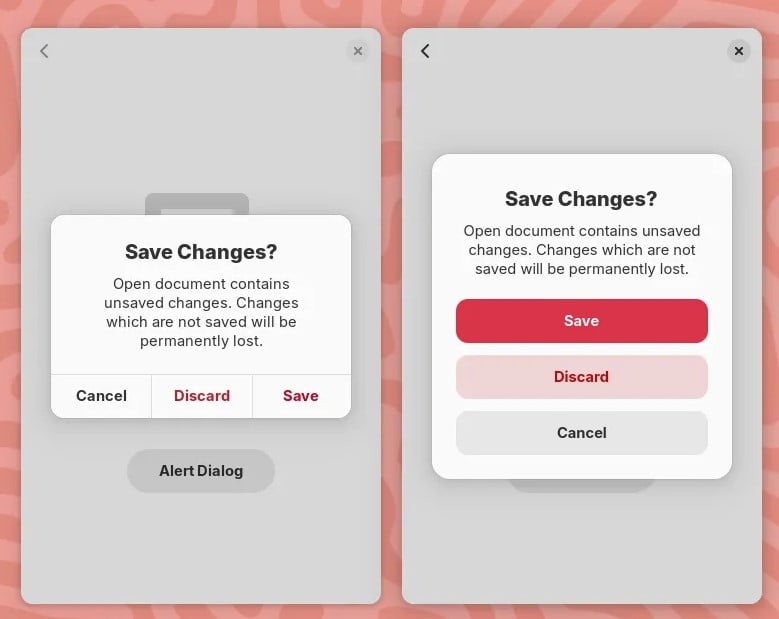
New GNOME dialog on the right:

Apple's dialog:
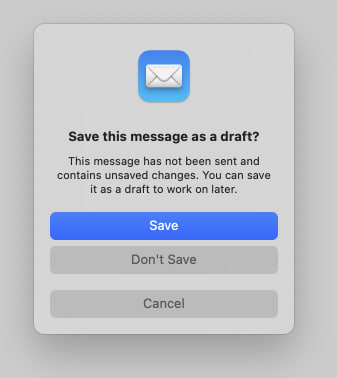
They say GNOME isn't a copy of macOS but with time it has been getting really close. I don't think this is a bad thing however they should just admit it and then put some real effort into cloning macOS instead of the crap they're making right now.

Here's the thing: Apple's design you'll find that they carefully included an extra margin between the "Don't Save" and "Cancel" buttons. This avoid accidental clicks on the wrong button so that people don't lose their work when they just want to click "Cancel".

So much for the GNOME, vision and their expert usability team :P

0
submitted 2 years ago* (last edited 2 years ago) by TCB13@lemmy.world to c/selfhosted@lemmy.world
 

The Banana Pi BPI-M7 single board computer is equipped with up to 32GB RAM and 128GB eMMC flash, and features an M.2 2280 socket for one NVMe SSD, three display interfaces (HDMI, USB-C, MIPI DSI), two camera connectors, dual 2.5GbE, WiFi 6 and Bluetooth 5.2, a few USB ports, and a 40-pin GPIO header for expansion.


Yet another win for Systemd.

view more: next ›