Andromxda

joined 2 years ago
MODERATOR OF
[–] Andromxda@lemmy.dbzer0.com 1 points 9 months ago* (last edited 9 months ago) (1 children)

Would use it for piracy, not if you need good privacy. It's good enough to avoid a complaint letter from your ISP when torrenting, but can you be sure that they don't sell your data to advertisers? I don't know. Will they respond to a law enforcement subpoena? Probably.

[–] Andromxda@lemmy.dbzer0.com 1 points 9 months ago

Outlook.

Thankfully Thunderbird, although most folks here just use the Roundcube web client.

With a giant signature that includes an embedded image.

They are auto-generated and enabled for everyone. Typical corporate bullshit I guess.

Also the image is a 2400px image that has been resized using width and height attributes.

It's a portrait (that thankfully has been downsized and compressed so much, that it's barely recognizable (thank goodness, because it's a horrific photo)), as well as a photo of my physical signature. Oh god do I hate emails and email signatures. And fuck my company for wanting emails to look "authentic" and including this stupid ass signature.
[–] Andromxda@lemmy.dbzer0.com 11 points 9 months ago (4 children)

This is beautiful. I'ma send this to my coworkers.

[–] Andromxda@lemmy.dbzer0.com 1 points 10 months ago

That rate limiting can easily be bypassed by an attacker. In order to be effective, the rate limit needs to be enforced by tamper-resistant hardware, i.e. a secure element. Here are some of the requirements for a secure element: https://developer.android.com/privacy-and-security/keystore#StrongBoxKeyMint

An implementation of StrongBox KeyMint must contain the following:

Its own CPU
Secure storage
A true random-number generator
Additional mechanisms to resist package tampering and unauthorized sideloading of apps
A secure timer
A reboot notification pin (or equivalent), like general-purpose input/output (GPIO)

For details, I recommend reading:

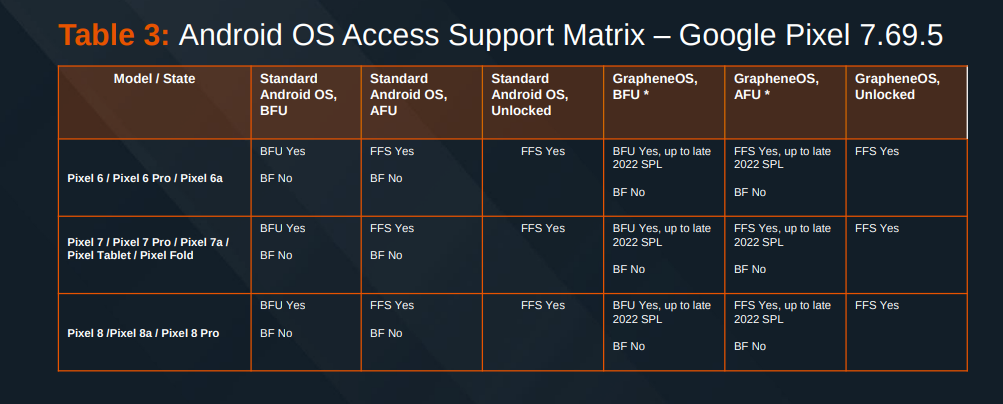
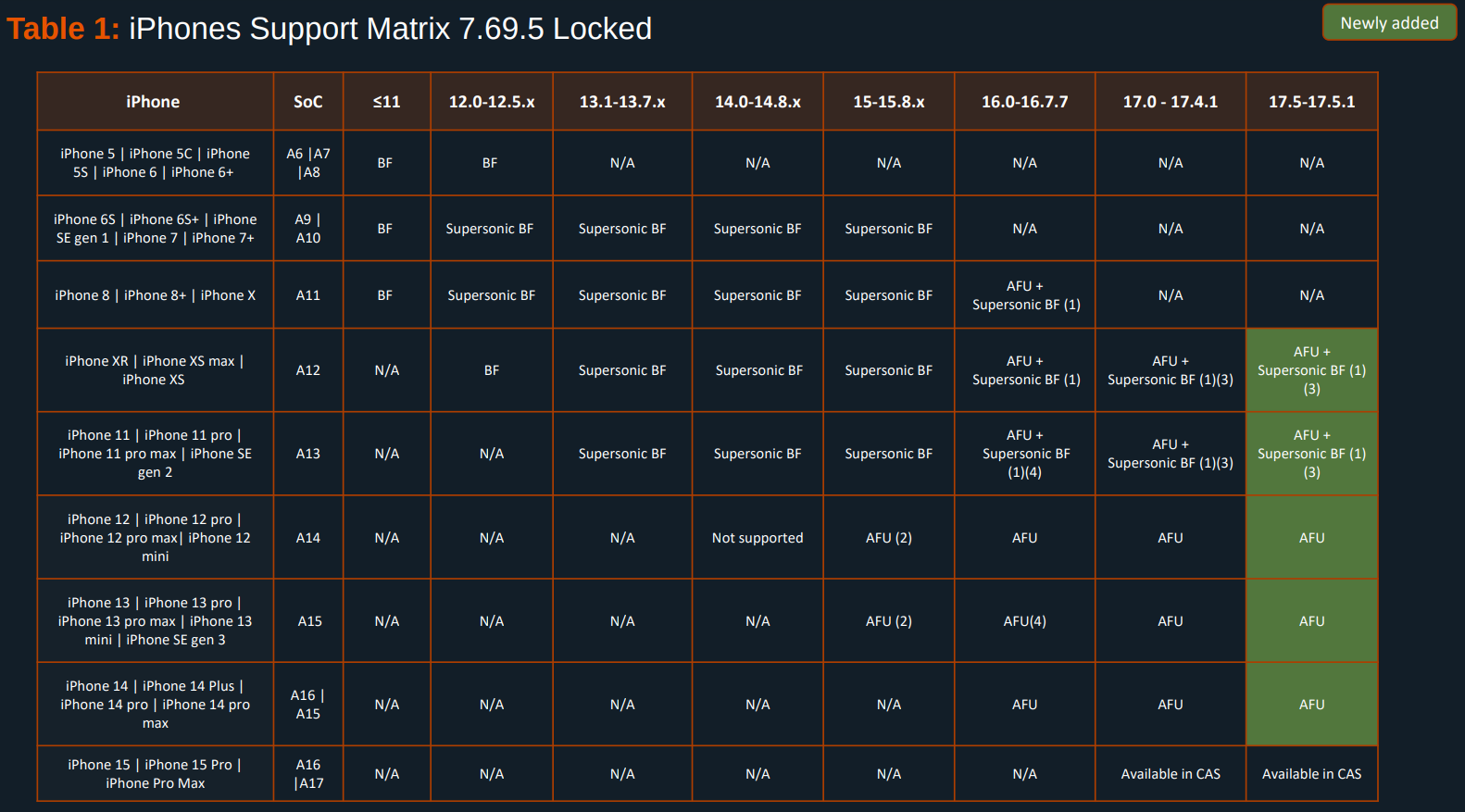
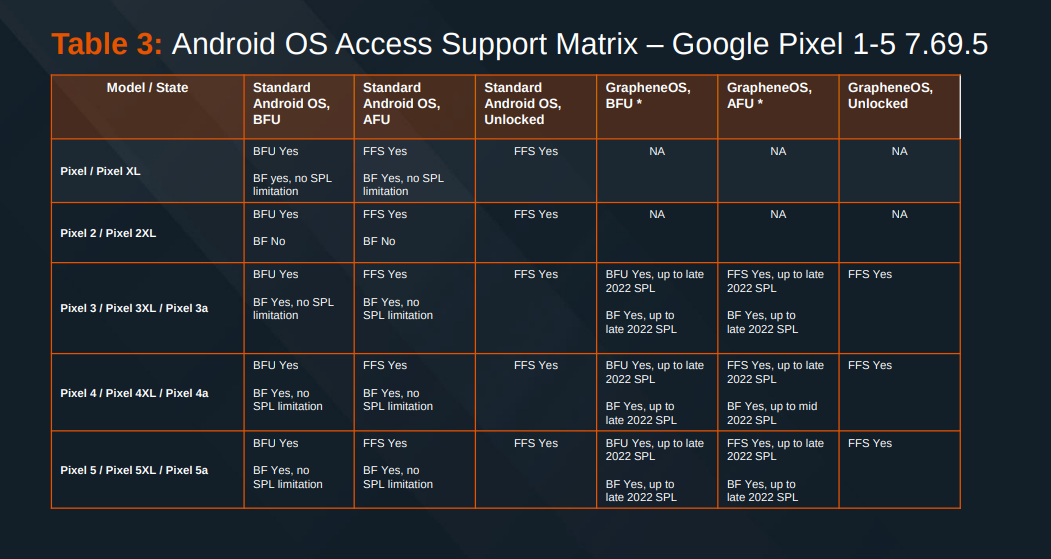
Only devices with a proper implementation of a secure element (Titan M2, i.e. Pixel 6 or later, or the Apple SEP, i.e. iPhone 12 or later) are actually resistant to brute-force attacks by forensic data extraction tools, such as Cellebrite or GrayKey. GrapheneOS has obtained some internal documents from multiple forensics companies. They published the Cellebrite docs at https://discuss.grapheneos.org/d/14344-cellebrite-premium-july-2024-documentation

Specifically, I recommend looking at this chart:

It clearly shows that data cannot be extracted from iPhones with the SEP, unless the device is in the AFU state, meaning that the encryption keys are kept in memory.

Those are the charts for Pixels:

[–] Andromxda@lemmy.dbzer0.com 2 points 10 months ago
[–] Andromxda@lemmy.dbzer0.com 1 points 10 months ago* (last edited 10 months ago)

Sandboxed Google Play is one of the key features of GrapheneOS. So far no other OS has allowed users to enjoy the full functionality of Android Auto, the Pixel LPA for managing eSIMs, and the Google Mobile Services suite (not talking about the other Pixel OS stuff) with the only exception being GPay, without full sandboxing, and without granting excessive privileges (SGP is unprivileged, the eUICC LPA obviously requires higher privileges for managing eSIMs, but it's fully sandboxed and can't communicate with Play services, or access the internet)

[–] Andromxda@lemmy.dbzer0.com 1 points 10 months ago

GrapheneOS has criticized Fairphone from a security perspective for a long time, long before any partnerships with OEMs were ever made. GrapheneOS chose to partner with this specific company (which they don't want to broadly disclose yet) because they have shown, that they actually care about security, and are willing to invest time and effort to meet the GrapheneOS device requirements, not the other way around.

[–] Andromxda@lemmy.dbzer0.com 2 points 10 months ago* (last edited 10 months ago)

the team refuses to use reverse-engineered hardware interfaces

Small correction: Current and future GrapheneOS releases for Pixels are produced by reverse-engineering Pixel OS releases. adevtool was developed together with the developer of ProtonAOSP back then, to automate extracing several components from the stock Pixel OS.

[–] Andromxda@lemmy.dbzer0.com 1 points 10 months ago

Fairphone is very far from meeting GrapheneOS' requirements: https://grapheneos.org/faq#future-devices

They also openly supported harassment of GrapheneOS developers in the past.

A lot of their marketing is very misleading, or completely false. They're not the moral and ethical company they claim to be.

[–] Andromxda@lemmy.dbzer0.com 1 points 10 months ago* (last edited 10 months ago)

Snapdragons finally somewhat caught up to Google's Tensors and the Titan M with the Qualcomm SPU and by implementing the ARM MTE

[–] Andromxda@lemmy.dbzer0.com 2 points 10 months ago (1 children)

What makes you think so? This (admittedly pretty vague) response indicates quite the opposite: https://grapheneos.social/@GrapheneOS/115118480213473033

[–] Andromxda@lemmy.dbzer0.com 1 points 10 months ago

It (unfortunately) isn't required. Most current Android devices on the market have serious security issues (most notably, full disk encryption can easily be bypassed due to a lack of effective unlock attempt rate limiting) due to their lack of a secure element.


Not surprised

506
Usual capitalist hypocrisy (lemmy.dbzer0.com)
submitted 1 year ago* (last edited 1 year ago) by Andromxda@lemmy.dbzer0.com to c/leftymemes@lemmy.dbzer0.com
 
view more: next ›