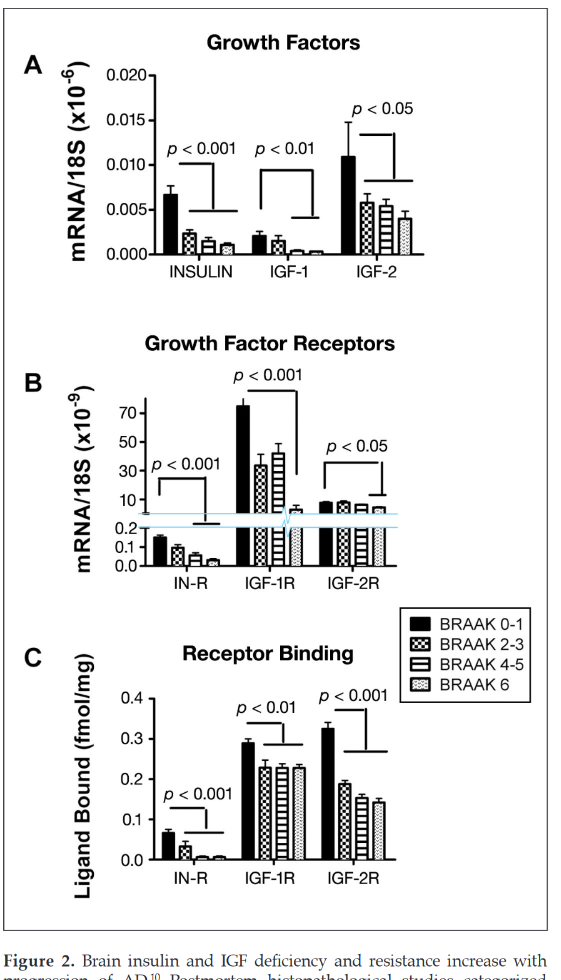
Alzheimer's disease (AD) has characteristic histopathological, molecular, and biochemical abnormalities, including cell loss; abundant neurofibrillary tangles; dystrophic neurites; amyloid precursor protein, amyloid-β (APP-Aβ) deposits; increased activation of prodeath genes and signaling pathways; impaired energy metabolism; mitochondrial dysfunction; chronic oxidative stress; and DNA damage. Gaining a better understanding of AD pathogenesis will require a framework that mechanistically interlinks all these phenomena. Currently, there is a rapid growth in the literature pointing toward insulin deficiency and insulin resistance as mediators of AD-type neurodegeneration, but this surge of new information is riddled with conflicting and unresolved concepts regarding the potential contributions of type 2 diabetes mellitus (T2DM), metabolic syndrome, and obesity to AD pathogenesis. Herein, we review the evidence that (1) T2DM causes brain insulin resistance, oxidative stress, and cognitive impairment, but its aggregate effects fall far short of mimicking AD; (2) extensive disturbances in brain insulin and insulin-like growth factor (IGF) signaling mechanisms represent early and progressive abnormalities and could account for the majority of molecular, biochemical, and histopathological lesions in AD; (3) experimental brain diabetes produced by intracerebral administration of streptozotocin shares many features with AD, including cognitive impairment and disturbances in acetylcholine homeostasis; and (4) experimental brain diabetes is treatable with insulin sensitizer agents, i.e., drugs currently used to treat T2DM. We conclude that the term “type 3 diabetes” accurately reflects the fact that AD represents a form of diabetes that selectively involves the brain and has molecular and biochemical features that overlap with both type 1 diabetes mellitus and T2DM.
Full Paper - https://doi.org/10.1177/193229680800200619