By Aaron Whitlock, Carnagie Summit Industry Reporter
DETROIT. A Midwest startup working with a major beverage recycler has unveiled a prototype electric vehicle whose exterior panels and interior components are made largely from recycled Mountain Dew plastic bottles.
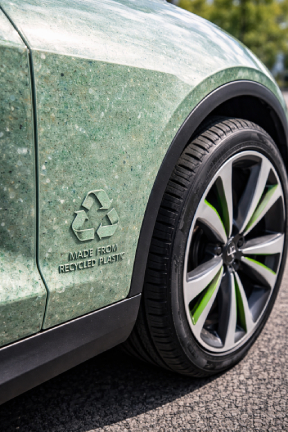
The company, Verdant Motive Systems, says the project began as a materials efficiency study before evolving into a full vehicle prototype. Engineers estimate that roughly 18,000 discarded bottles were processed, cleaned, and reformulated into a reinforced polymer used throughout the car’s body shell, dashboard housing, and wheel well liners.
According to internal testing documents shared with Midston Daily Press, the recycled plastic composite meets current federal safety standards for low speed impact and heat resistance. The material also weighs about 20 percent less than traditional automotive plastics, improving range efficiency for electric vehicles.
Verdant Motive partnered with a regional bottling cooperative to secure a consistent feedstock of post consumer plastics. The bottles were shredded, chemically stabilized, and blended with a binding resin to increase rigidity and reduce odor retention. One engineer confirmed that early test panels “smelled faintly citrusy,” an issue the team says has since been resolved.
Industry analysts note that automakers have quietly explored beverage plastics for years, but branding concerns and supply inconsistencies slowed adoption. This project marks one of the first attempts to publicly tie a recognizable consumer product to vehicle manufacturing.
A spokesperson for the recycling cooperative said the collaboration demonstrates how single use plastics can move beyond clothing fibers and packaging fillers. “Cars last longer than bottles,” she said. “That alone changes the math.”
The prototype vehicle, nicknamed the Verde One, is not slated for commercial release. However, Verdant Motive executives confirmed discussions with larger manufacturers about licensing the material process for use in interior trim and non structural exterior parts.
In a brief technical appendix, engineers note the plastic performed best when molded in the same shade of green as the original bottles. When asked why, one researcher replied that pigment density may play a role, then paused before adding, “Or we just tested that color the most.”
The company plans to publish a full materials study later this year as automakers face increasing pressure to reduce plastic waste without sacrificing durability.