1
wildlife photography
3228 readers
3 users here now
Welcome to our Wildlife Photography Community!
c/WildlifePhotography is community dedicated to all wildlife photographers and enthusiasts who have an unwavering appreciation for the mesmerizing art of capturing nature's wonders. Whether you're a seasoned pro or just starting your photography journey, this community offers a supportive and inspiring space to connect, learn, and share your work.
Feel free to showcase your breathtaking wildlife photographs and share the stories behind them. From stunning landscapes to up-close encounters, every image has the power to captivate and ignite conversations. Inspire others with your unique perspective, receive valuable feedback, and engage in meaningful discussions about the beauty and significance of wildlife.
We encourage you to credit the original creator when sharing photos that aren't your own. Respecting the work of others fosters a culture of integrity and appreciation within our community, ensuring that every artist receives the recognition they deserve.
If you're seeking help identifying a particular species, please include your location along with the photo.
founded 3 years ago
MODERATORS
2
When I was out walking the dog this morning I heard a buzzing and saw this - occasionally the dragonfly would make an attempt to get away and fly a few metres but the hornet was hanging on tight and stinging it.
Taken from my phone, Pixel 8 Pro with GrapheneOS and the pixel camera app


4
5
1
Scarlet Flycatcher in Encontro das Águas State Park, Mato Grosso, Brazil (2024)
(upload.wikimedia.org)

6

7
1
Koppie foam grasshopper nymph, Walter Sisulu National Botanical Garden, Roodepoort, South Africa (2018)
(upload.wikimedia.org)
Dictyophorus spumans, also known as the koppie foam grasshopper, is a species of grasshopper in the family Pyrgomorphidae, indigenous to southern Africa. The name "foam grasshopper" derives from the insect's ability to produce a toxic foam from its thoracic glands, using a combination of hemolymph with air from the grasshopper's spiracles. Adult males are typically 4.5 to 5 cm (1.8 to 2.0 in) long and females typically 5 to 7 cm (2.0 to 2.8 in), but can grow up to a length of 8 cm (3.1 in).
Photographer: Charles J. Sharp

8
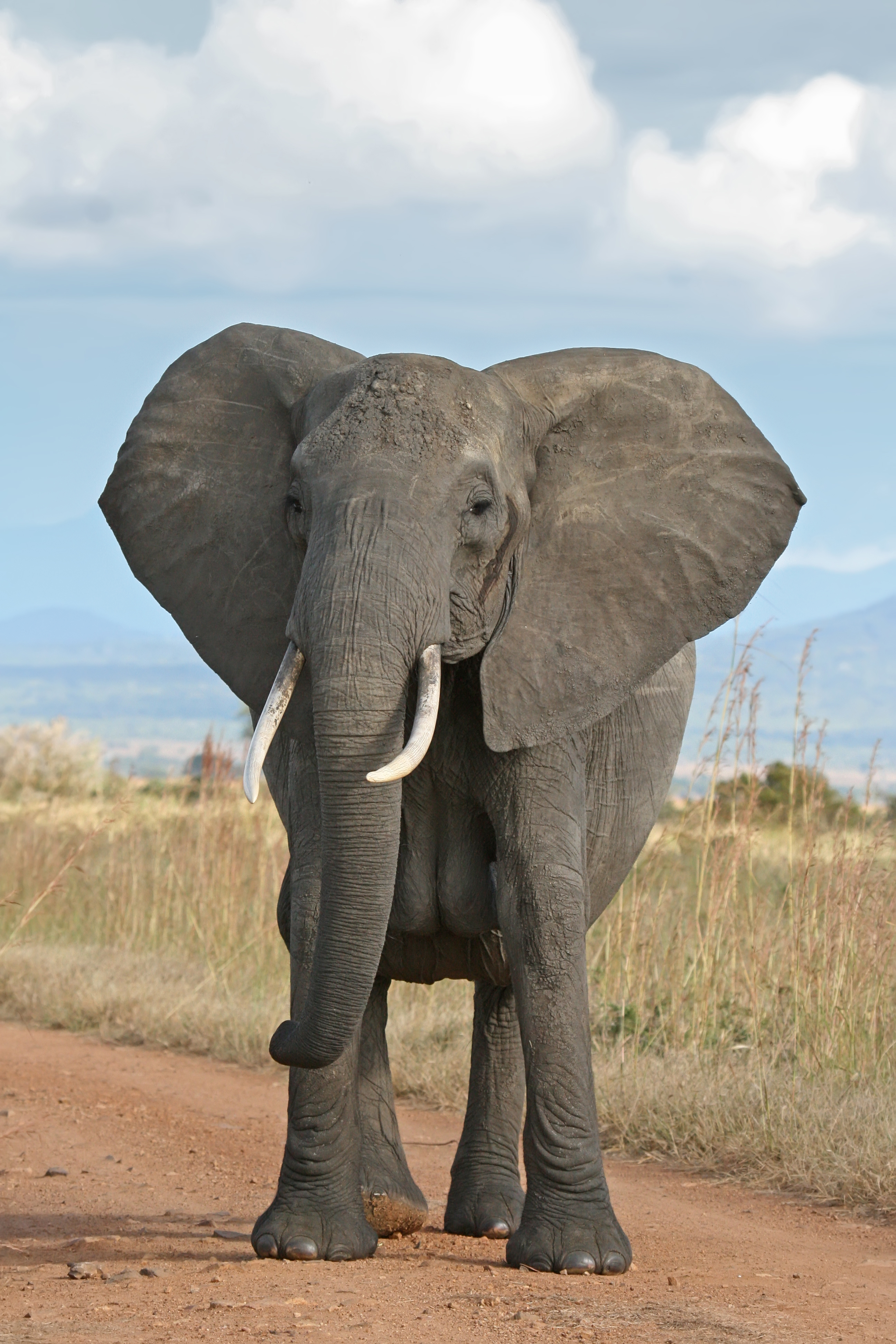
Elephants are the largest existing land animals and the only surviving members of the family Elephantidae. Three living species are recognised: the African bush elephant, the African forest elephant, and the Asian elephant. Elephants have long, flexible trunks, long tusks, large ear flaps, pillar-like legs, and grey skin. They are herbivorous, and stay near water when it is accessible. Females (cows) tend to live in family groups, which can consist of one female with her calves or several related females with offspring. After reaching adulthood, males (bulls) live separately, either alone or with other males. Elephants communicate by touch, sight, smell, and sound. Threats to their populations include poaching for their ivory tusks, habitat destruction, and conflicts with local people. Elephants are iconic in human culture and have been featured in art, folklore, religion, literature, and popular culture.
Photographer: Muhammad Mahdi Karim
9

10
1
Rufa Red Knot in breeding plumage in the surf of the Delaware Bay, Cumberland County, New Jersey, United States (2017)
(upload.wikimedia.org)
The red knot (Calidris canutus) is a medium-sized shorebird in the sandpiper family, Scolopacidae. It breeds across the high Arctic of Canada, Greenland, Europe and Russia, and undertakes some of the longest migrations of any landbird. Six subspecies are recognised, wintering on coasts from western Africa to Australia, New Zealand and South America. It feeds on arthropods and larvae on its breeding grounds and mainly on molluscs and other marine invertebrates during migration and winter. The red knot is a relatively large sandpiper with short dark legs and a thin dark bill. In winter it is mostly pale grey, while breeding adults develop distinctive reddish-cinnamon underparts; the exact plumage varies between subspecies. Although widespread, some populations have declined because of habitat loss, climate change and reduced food availability.
Photographer: Chuck Homler

11
This 5 centimetres (2.0 in)-long nudibranch can be found in the Western Pacific Ocean and feeds, like many other nudibranchs, on sponges.
Photographer: Diego Delso

12
The parti-coloured bat (Vespertilio murinus), also known as the rearmouse, is a species in the vesper bat family, Vespertilionidae. It is found across temperate Eurasia, from western and southern Europe through the Caucasus, Iran, Mongolia, northern China, Korea, Afghanistan and northern Pakistan. It measures 4.8–6.4 cm (1.9–2.5 in) in body length, weighs 11–24 grams (0.39–0.85 oz), and has a 26–33 cm (10–13 in) wingspan. Much of the parti-coloured bat's behaviour remains poorly understood because the species is relatively rare. It hunts insects such as mosquitoes, caddis flies and moths using ultrasonic calls, often over water and forests and around street lights. Females form maternity roosts and usually bear twins, while the species migrates long distances and hibernates alone through winter. Its distinctive twittering call is especially noticeable during the autumn mating season.
Photographer: Charles J. Sharp

13
1
Giant otter eating a fish caught from the river, Mato Grosso, Brazil (2024)
(upload.wikimedia.org)

14
1
Red-necked grebe breeding adult in breeding plumage, Grønjordssøen, Amager Common, Copenhagen, Denmark (2024)
(upload.wikimedia.org)
The red-necked grebe (Podiceps grisegena) is a species of water bird in the grebe family, Podicipedidae, found across the temperate regions of the northern hemisphere. It breeds on shallow freshwater lakes, marshes and ponds, and winters mainly along sheltered coasts and other large bodies of water. In breeding plumage, adults have a black cap, pale grey face and throat, and a rusty-red neck, while winter birds are duller grey. The species is a strong swimmer and diver, feeding on fish, aquatic insects and other invertebrates. Red-necked grebes build floating nests among emergent vegetation, and newly hatched chicks often ride on their parents' backs. It is classified as a least-concern species by the International Union for Conservation of Nature.
Photographer: Charles J. Sharp


16
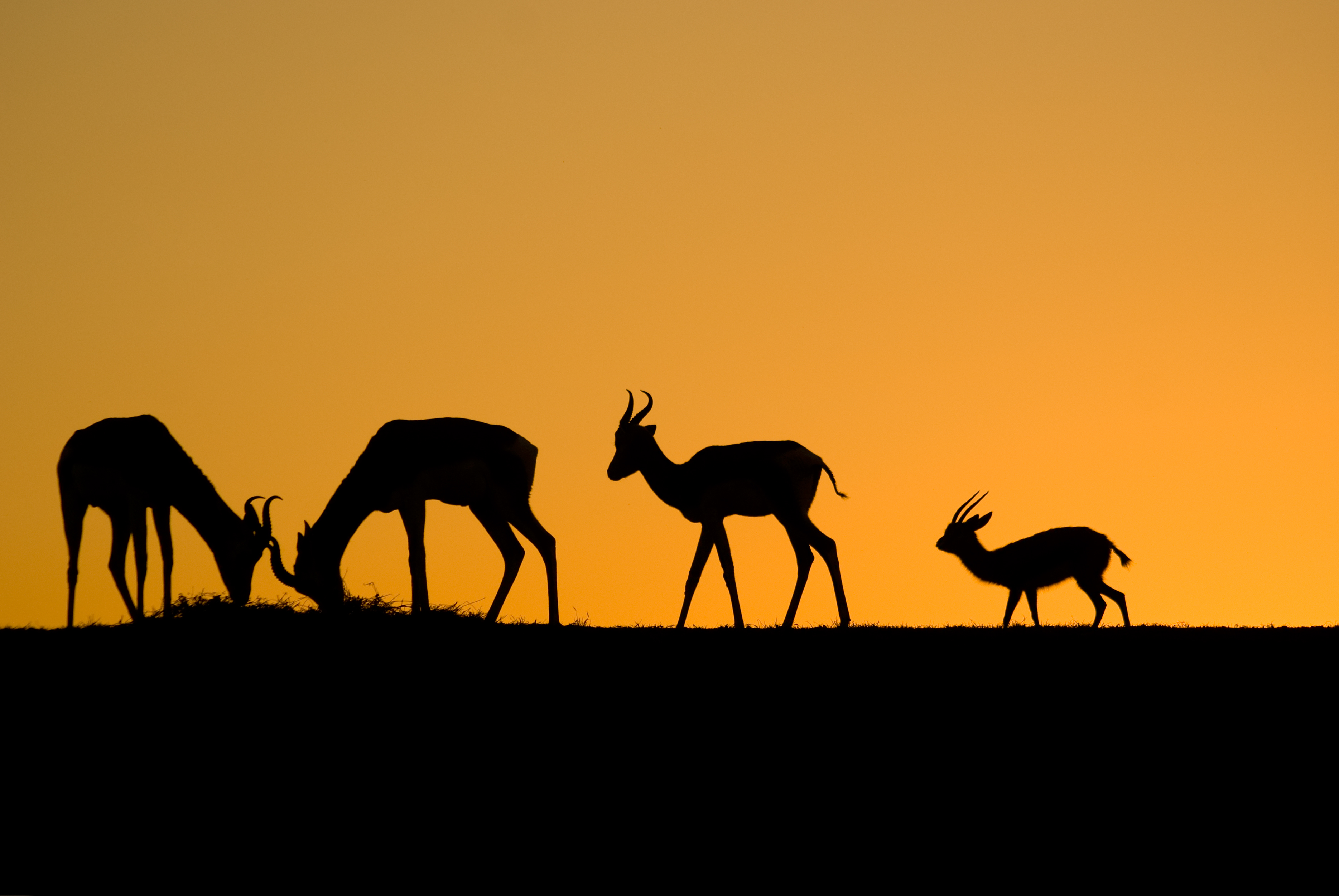
As the sun fades away you get to see a real beauty, you get to see some gazelles, you can't actually see any details but their silhouettes glazing within the sun rays. Pure epic wonder in such view, you can feel the beauty through the sunset's colors reflected on the gazelles.
Photographer: Anass Errihani
17
1
Cape fur seal was photographed hauling out on the Hippolyte Rocks off the east coast of Tasmania, Australia (2011)
(upload.wikimedia.org)
Arctocephalus pusillus, the Cape fur seal, is a species in the family Otariidae, the eared seals. The species is found along the coasts of southern Africa and southeastern Australia and is the largest of the fur seals, with adult males growing up to 2.3 metres (7.5 ft) in length and females somewhat smaller. Males are dark grey to brown with a darker mane, while females are lighter in colour and pups are born black. The species breeds in large colonies on rocky islands, reefs and coastal outcrops, where females give birth to a single pup. Cape fur seals feed mainly on fish, squid and other marine animals, and are preyed upon mainly by great white sharks and orcas. It is classified as a least-concern species by the International Union for Conservation of Nature.
Photographer: JJ Harrison

18

19
The Eurasian chaffinch (Fringilla coelebs) is a species of bird in the family Fringillidae, the finches. It is found across Europe and temperate Asia, with introduced populations elsewhere. The adult male has a blue-grey head, rust-red underparts, and contrasting white wing bars and tail markings; the female is much duller, being mainly grey-brown. The species breeds in wooded areas, where the female builds a cup-shaped nest in a tree or bush and lays around four to five eggs. The Eurasian chaffinch mainly eats seeds outside the breeding season, and feeds its young on invertebrates such as caterpillars. It has two or three different song types, with some regional song dialects, and is classified as a least-concern species by the International Union for Conservation of Nature.
Photographer: Caroline Legg

20
1
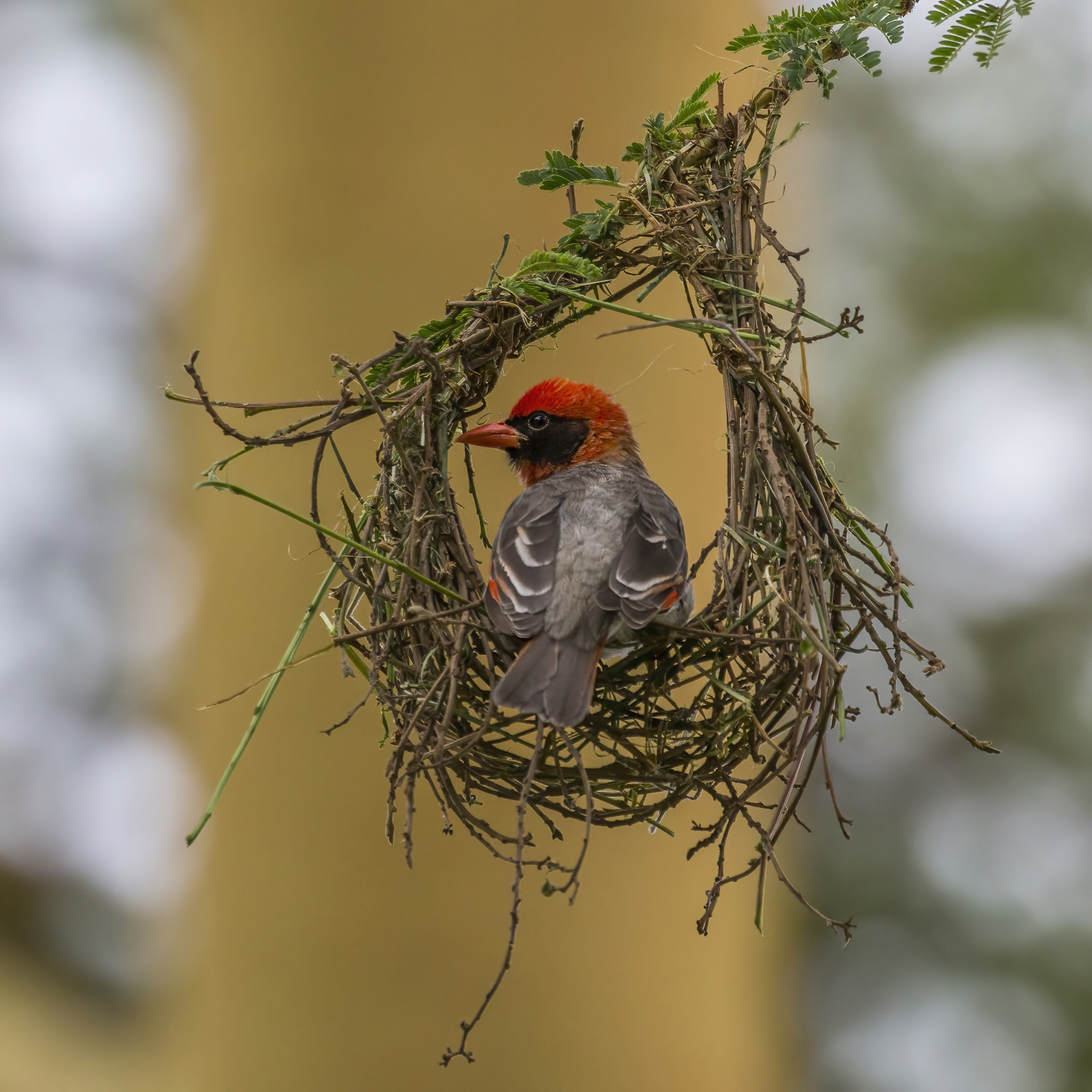
Male red-headed weaver building nest in the Soysambu Conservancy, Kenya (2016)
(upload.wikimedia.org)
21
Graphium colonna, the black swordtail or mamba swordtail, is a species in the family Papilionidae, the swallowtail butterflies. It is found widely across sub-Saharan Africa, from West Africa to eastern and southern Africa. The butterfly is predominantly black with green markings and the characteristic "tail" on the hindwing. The species breeds throughout the warmer months, and its caterpillars feed on plants in the genera Artabotrys, Uvaria and Annona. Graphium colonna belongs to the clade antheus of the genus Graphium and was first described by Christopher Ward in 1873.
Photographer: Charles J. Sharp

22

23
The American woodcock (Scolopax minor) is a small shorebird in the sandpiper family, Scolopacidae. It is found mainly in the eastern half of North America, where it is the most common sandpiper, although unlike most other species it lives primarily in upland woods, thickets, and brushy wetlands. Its plumage is a mottled mix of brown, gray and black that provides effective camouflage against leaves and soil. The American woodcock has a plump body, short legs, large eyes set high on the head, and a long prehensile bill used to probe moist soil for earthworms and other invertebrates. Males are known for their spring courtship displays, giving a buzzy peent call before spiraling into the air. The species is considered of least concern globally, but its population has declined because of habitat loss and forest maturation.
Photographer: Rhododendrites

24
She gave me a beautiful show! Please consider these free for use. They'd make great art references.


25
The moor frog (Rana arvalis) is a reddish-brown, yellow, grey or olive frog in the family Ranidae, found in Europe and Asia. Usually 5.5 to 6.0 centimetres (2.2 to 2.4 in) long, it has horizontal pupils, partly webbed feet and, in males, nuptial pads and paired vocal sacs. The species inhabits varied wetlands, meadows, forests, steppes, bogs and farmland, from lowlands to high elevations, and tolerates acidic breeding pools. It feeds opportunistically on small invertebrates, with prey size broadly matching frog size. Breeding follows hibernation; males form choruses and may turn bright blue for a few days during mating. Although listed as a least-concern species, it is threatened in some areas by habitat loss, drainage, pollution, acidification and fragmentation.
Photographer: Charles J. Sharp

view more: next ›