SpacePics
960 readers
1 users here now
A community dedicated to sharing high quality images of space and the cosmos
Rules:
Include some context in the title (such as the name of the astronomical object or location where it was photographed)

Only images, pictures, collages, albums, and gifs are allowed. Please link images from high quality sources ([Imgur](imgur.com), [NASA](https://apod.nasa.gov/apod/archivepix.html), [ESA](https://www.esa.int/ESA_Multimedia/Images), [Flickr](Flickr.com), [500px ](500px.com), etc.) Videos, interactive images/websites, memes, and articles are not allowed

Only submit images related to space. This may include pictures of space, artwork of space, photoshopped images of space, simulations, artist’s depictions, satellite images of Earth, or other related images

Be civil to one another
founded 2 years ago
MODERATORS
1
This month will play host to a number of great celestial events, including a blue moon (the second of two full moons in a calendar month), which will also be the closest supermoon of the month, the Perseid meteor shower (arguably the best meteor shower of the year), and quite a few conjunctions of the moon and the planets of the solar system.
August 1: Full moon. This is the first of two full moons this month.
August 3: Moon near Saturn in the morning sky
August 8: Moon near Jupiter in the morning sky
August 9: Moon near the Pleiades in the morning sky. (These are some of the easiest groupings of stars to see and is a how many stars you can discern is a great test for how dark your skies are)
August 13: Perseid meteor shower peaks. This shower lasts from July 14 to September 1, but you can expect roughly 50-75 swift, bright meteors per hour. Best viewing will be after midnight and, with the waning moon, the viewing conditions should be excellent this year.
August 16: New Moon. New moons are always excellent times for observation or astrophotography, since you don't have to worry about the moon washing out the sky.
August 18: Moon near Mercury in the evening sky
August 19: Moon near Mars in the evening sky
August 30: Moon at perigee (closest to earth)
August 31: Blue Moon. This is the second full moon of August and will be the closest Supermoon of 2023, so let's hope for good conditions
As always, I recommend downloading a free sky map from SkyMaps or your site of choice to find celestial objects that are easily seen with the naked eye, or whatever viewing equipment you may have. Also, I highly recommend an app such as Stellarium to help you find the objects of the night sky, plan your observations and to learn more about all the beautiful celestial objects.
Happy observing and if you have any events that I missed, or any that you're particularly excited for (Perseids for me), let us know.
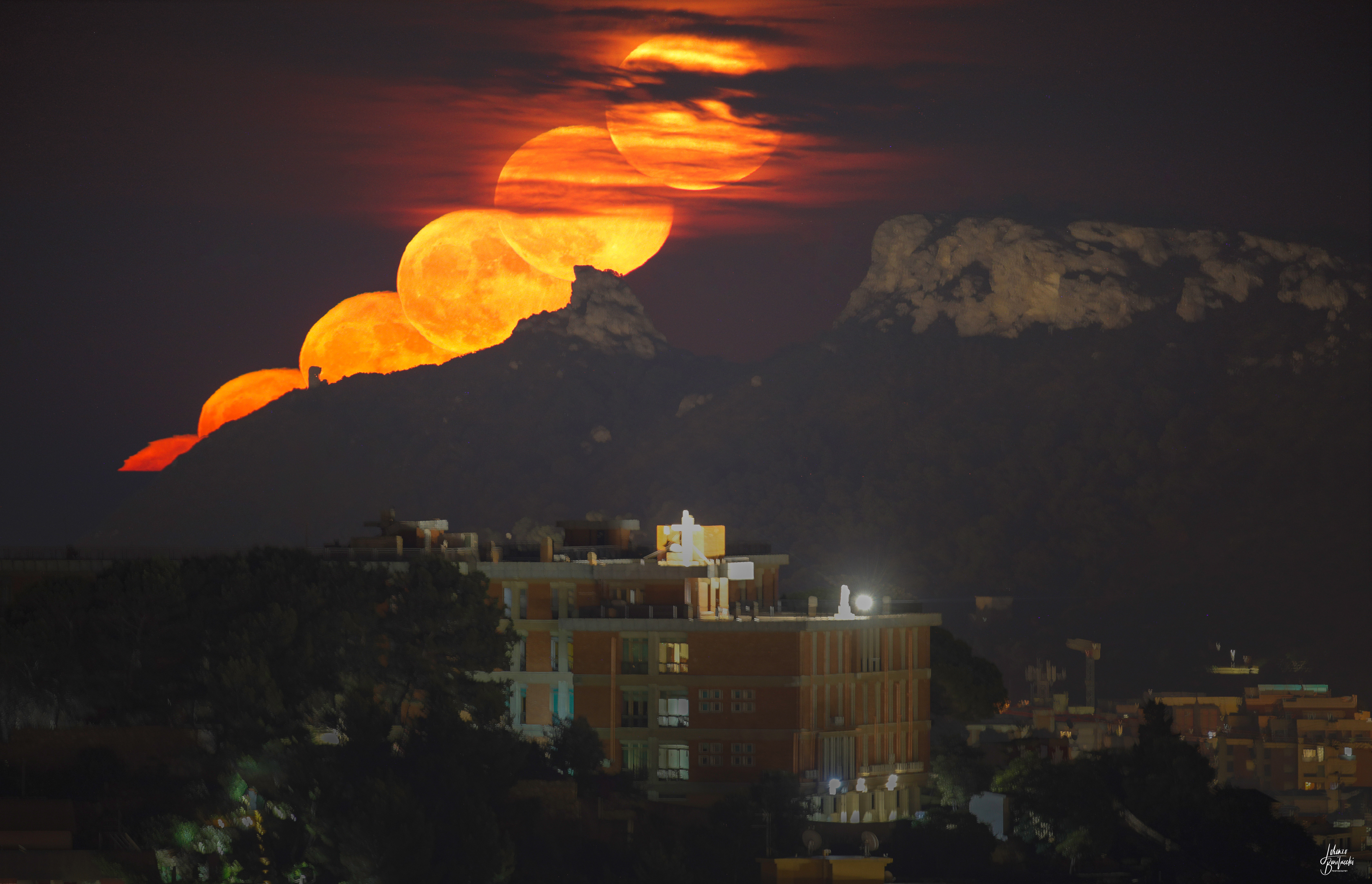
Photo Credit to Lorenzo Busilacchi
2
3
cross-posted from: https://piefed.world/c/photos/p/1048912/a-fiery-cloud-at-sunset
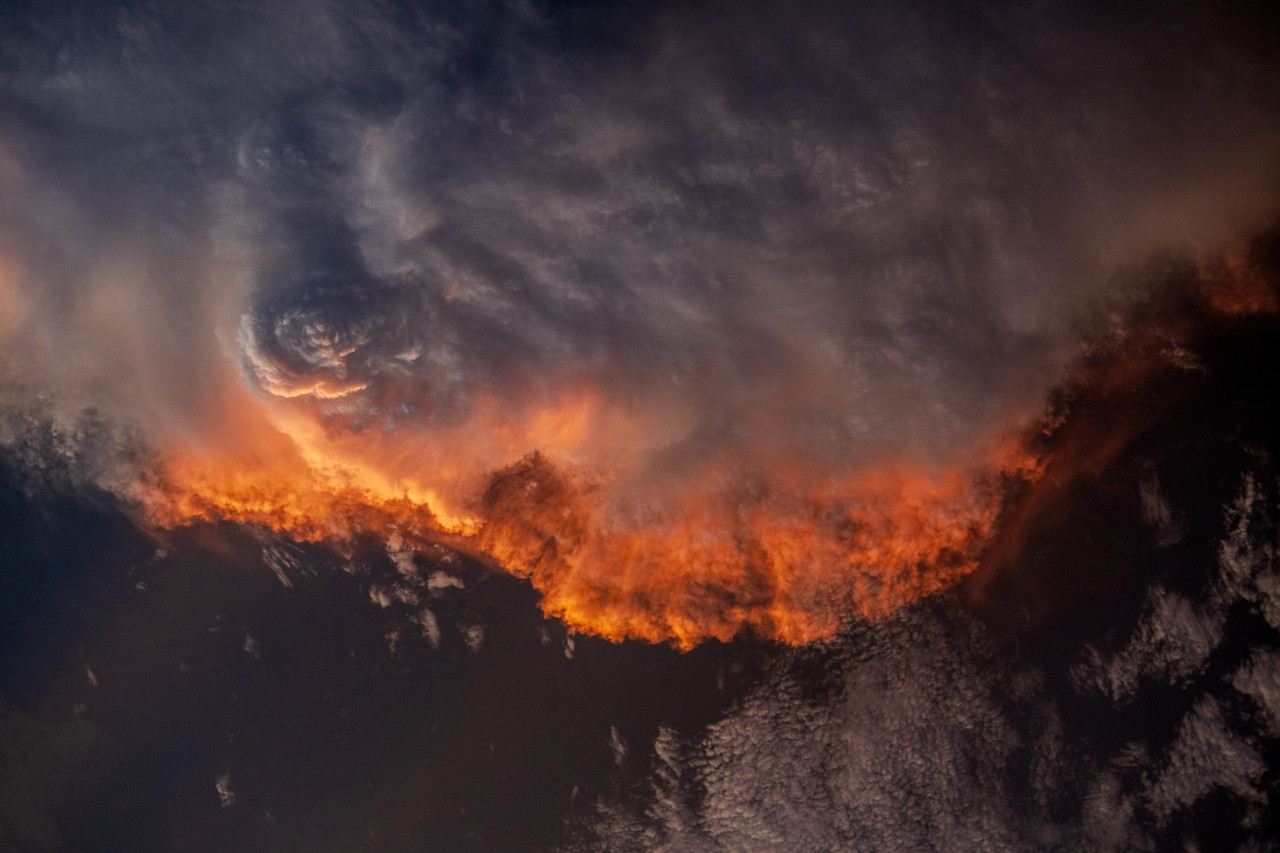
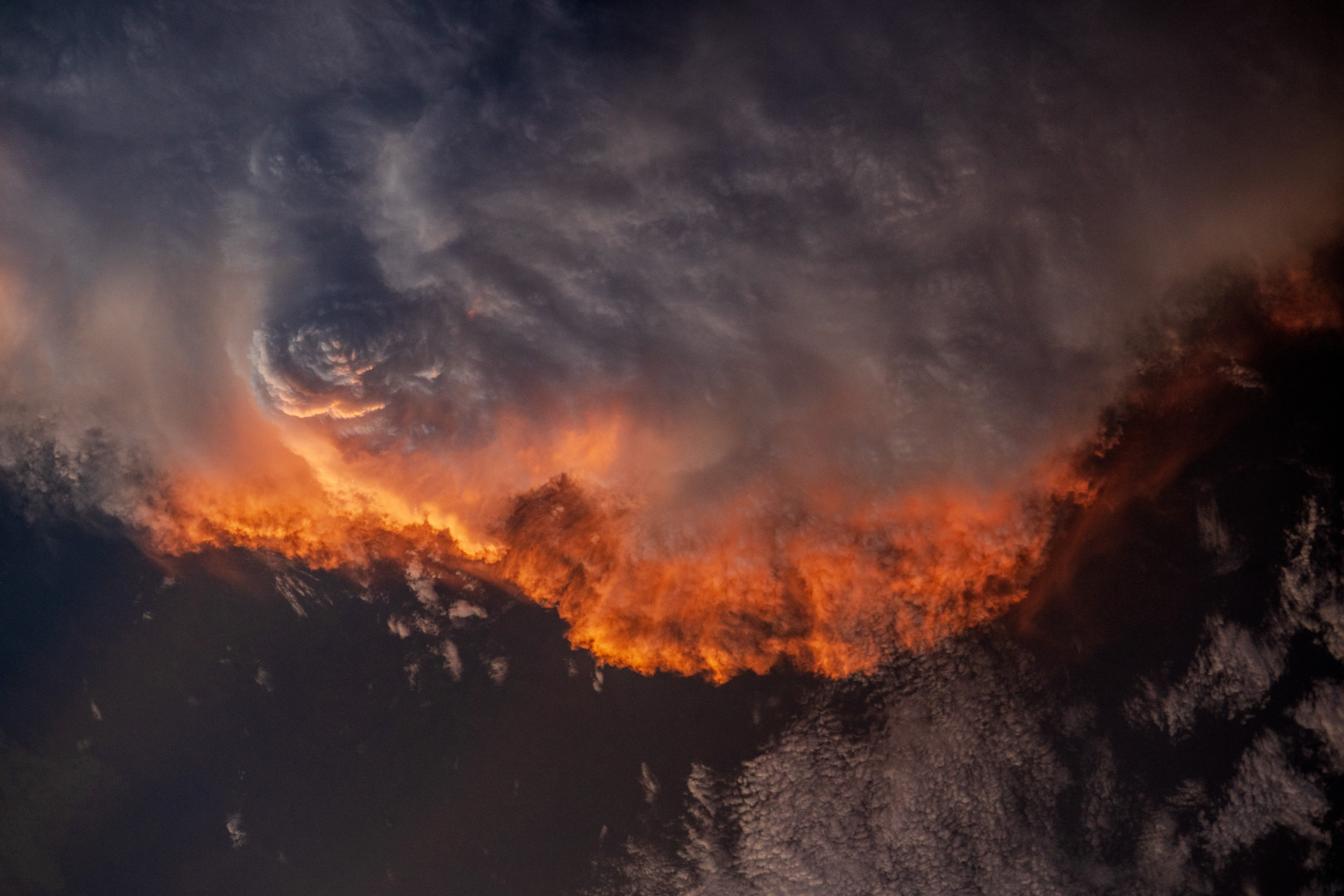
Day 062, orbit 0963 — Did you know we get 16 sunrises and sunsets every day as we orbit Earth? They come and go quickly, but the colours are so intense! This dramatic, billowing cloud, captured at sunset, stood out with its incredible shades of orange. Nature is definitely an artist.
Source: ESA.
4
cross-posted, via Photos Community.
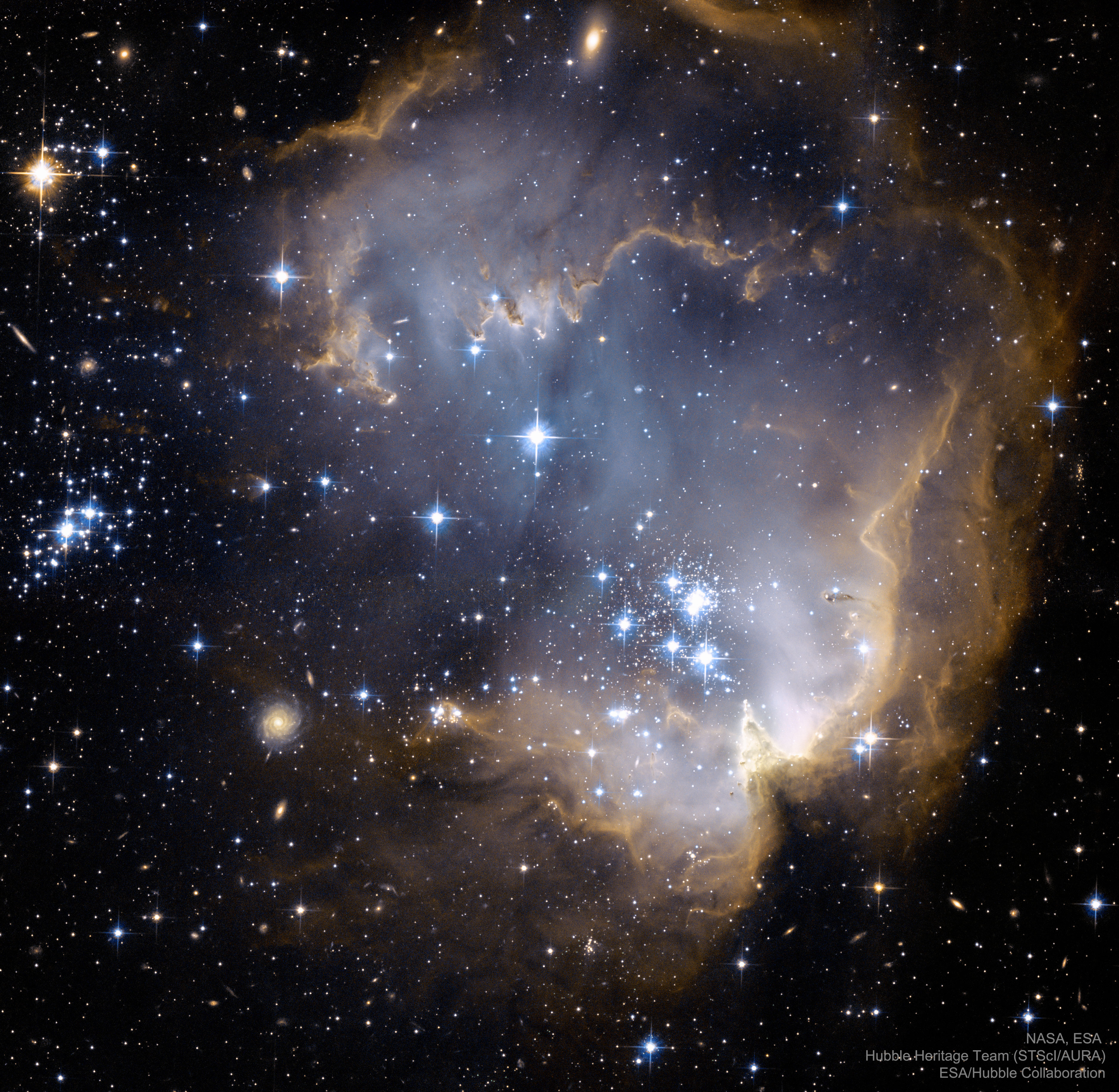
Near the outskirts of the Small Magellanic Cloud, a satellite galaxy some 200 thousand light-years distant, lies 5 million year young star cluster NGC 602. Surrounded by natal gas and dust, NGC 602 is featured in this stunning Hubble image of the region. Fantastic ridges and swept back shapes strongly suggest that energetic radiation and shock waves from NGC 602's massive young stars have eroded the dusty material and triggered a progression of star formation moving away from the cluster's center. At the estimated distance of the Small Magellanic Cloud, the featured picture spans about 200 light-years, but a tantalizing assortment of background galaxies are also visible in this sharp multi-colored view. The background galaxies are hundreds of millions of light-years or more beyond NGC 602. NASA.
5
6
cross-posted from: https://lemmy.world/post/45115923
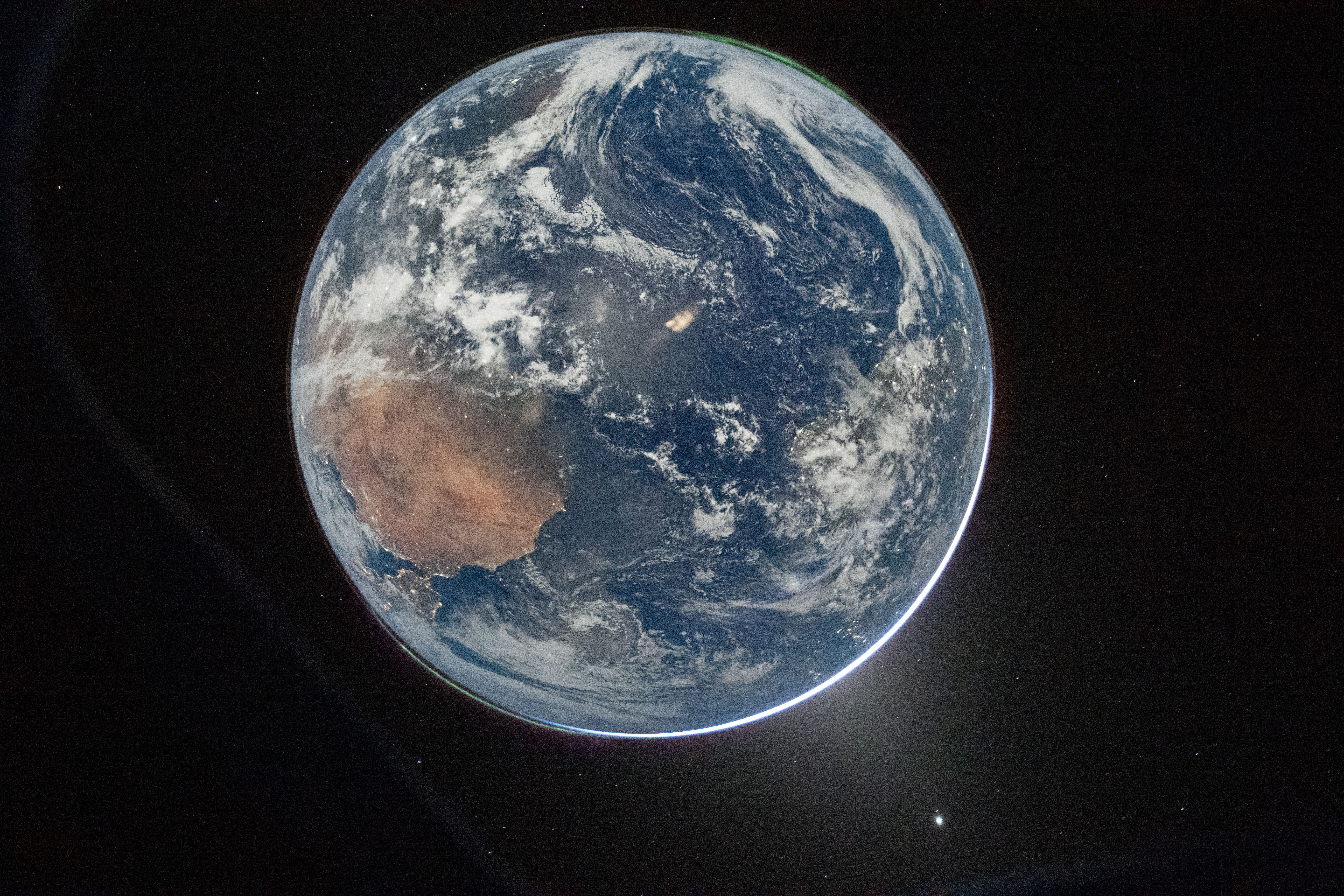
This image of home just came down from the Artemis II crew.
Taken after their translunar injection burn, there are aurorae at top right and lower left, and zodiacal light at lower right.
Credit: NASA/Reid Wiseman
// That's home. That's us.
---
Alternative references with a better quality mentioned in comments by @baguette@piefed.social:
- https://images.nasa.gov/details/art002e000192;
- https://images-assets.nasa.gov/image/art002e000192/art002e000192~orig.jpg [5568 x 3712]

7
IRAS 04302: Butterfly Disk Planet Formation
Image Credit: NASA, ESA, CSA, Webb; Processing: M. Villenave et al.
Explanation: This butterfly can hatch planets. The nebula fanning out from the star IRAS 04302+2247 may look like the wings of a butterfly, while the vertical brown stripe down the center may look like the butterfly's body -- but together they indicate an active planet-forming system. The featured picture was captured recently in infrared light by the Webb Space Telescope. Pictured, the vertical disk is thick with the gas and dust from which planets form. The disk shades visible and (most) infrared light from the central star, allowing a good view of the surrounding dust that reflects out light. In the next few million years, the dust disk will likely fragment into rings through the gravity of newly hatched planets. And a billion years from now, the remaining gas and dust will likely dissipate, leaving mainly the planets -- like in our Solar System. https://apod.nasa.gov/apod/ap250908.html

8
The Spinning Pulsar of the Crab Nebula
Image Credit: NASA: X-ray: Chandra (CXC), Optical: Hubble (STScI), Infrared: Spitzer (JPL-Caltech)
Explanation: At the core of the Crab Nebula lies a city-sized, magnetized neutron star spinning 30 times a second. Known as the Crab Pulsar, it is the bright spot in the center of the gaseous swirl at the nebula's core. About twelve light-years across, the spectacular picture frames the glowing gas, cavities and swirling filaments near the Crab Nebula's center. The featured picture combines visible light from the Hubble Space Telescope in purple, X-ray light from the Chandra X-ray Observatory in blue, and infrared light from the Spitzer Space Telescope in red. Like a cosmic dynamo, the Crab pulsar powers the emission from the nebula, driving a shock wave through surrounding material and accelerating the spiraling electrons. With more mass than the Sun and the density of an atomic nucleus,the spinning pulsar is the collapsed core of a massive star that exploded. The outer parts of the Crab Nebula are the expanding remnants of the star's component gases. The supernova explosion was witnessed on planet Earth in [the year 1054] https://apod.nasa.gov/apod/fap/ap250808.html

9
What lies in the heart of Orion? Trapezium: four bright stars, that can be found near the center of this sharp cosmic portrait. Gathered within a region about 1.5 light-years in radius, these stars dominate the core of the dense Orion Nebula Star Cluster. Ultraviolet ionizing radiation from the Trapezium stars, mostly from the brightest star Theta-1 Orionis C powers the complex star forming region's entire visible glow. About three million years old, the Orion Nebula Cluster was even more compact in its younger years and a dynamical study indicates that runaway stellar collisions at an earlier age may have formed a black hole with more than 100 times the mass of the Sun. The presence of a black hole within the cluster could explain the observed high velocities of the Trapezium stars. The Orion Nebula's distance of some 1,500 light-years make it one of the closest candidate black holes to Earth.
https://apod.nasa.gov/apod/ap250813.html
Image Credit: Data: Hubble Legacy Archive, Processing: Robert Gendler

10
Supernova 2025rbs in NGC 7331
Image Credit: Ben Godson (University of Warwick)
Explanation: A long time ago in a galaxy 50 million light-years away, a star exploded. Light from that supernova was first detected by telescopes on planet Earth on July 14th though, and the extragalactic transient is now known to astronomers as supernova 2025rbs. Presently the brightest supernova in planet Earth's sky, 2025rbs is a Type Ia supernova, likely caused by the thermonuclear detonation of a white dwarf star that accreted material from a companion in a binary star system. Type Ia supernovae are used as standard candles to establish the distance scale of the universe. The host galaxy of 2025rbs is NGC 7331. Itself a bright spiral galaxy in the northern constellation Pegasus, NGC 7331 is often touted as an analog to our own Milky Way.

11
The beautiful Trifid Nebula is a cosmic study in contrasts. Also known as M20, it lies about 5,000 light-years away toward the nebula rich constellation Sagittarius. A star forming region in the plane of our galaxy, the Trifid does illustrate three different types of astronomical nebulae; red emission nebulae dominated by light from hydrogen atoms, blue reflection nebulae produced by dust reflecting starlight, and dark nebulae where dense dust clouds appear in silhouette. But, the red emission region roughly separated into three parts by obscuring dust lanes is what lends the Trifid its popular name. Pillars and jets sculpted by newborn stars, above and right of the emission nebula's center, appear in famous Hubble Space Telescope close-up images of the region. The Trifid Nebula is about 40 light-years across. Too faint to be seen by the unaided eye, in this deep telescopic view it almost covers the area of a full moon on planet Earth's sky.

12





13
14
15
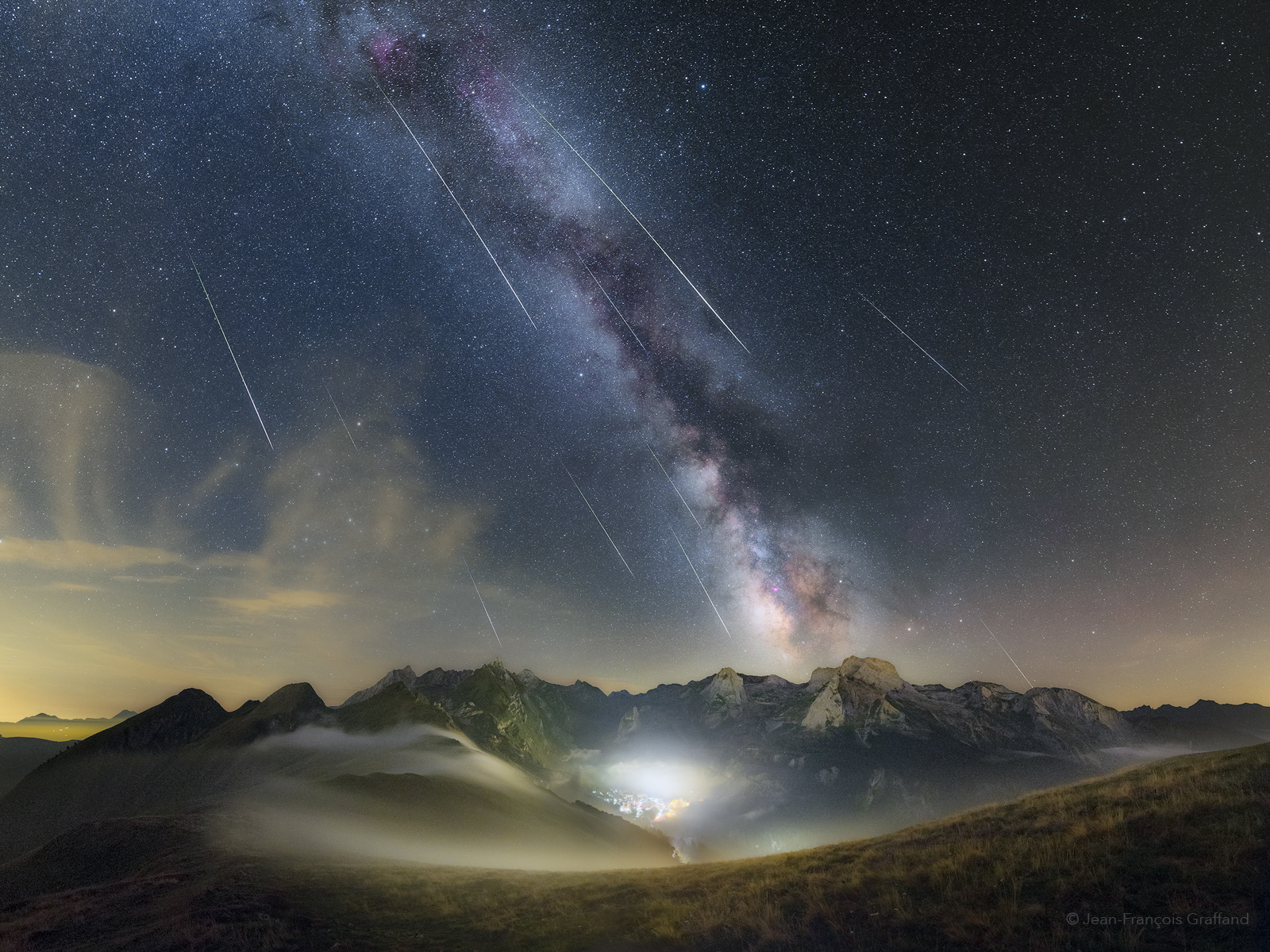
This mountain and night skyscape stretches across the French Pyrenees National Park on August 12 2017, near the peak of the annual Perseid meteor shower. The multi-exposure panoramic view was composed from the Col d'Aubisque, a mountain pass, about an hour before the bright gibbous moon rose. Centered is a misty valley and lights from the region's Gourette ski station toward the south. Taken over the following hour, frames capturing some of the night's long bright perseid meteors were aligned against the backdrop of stars and Milky Way.
16
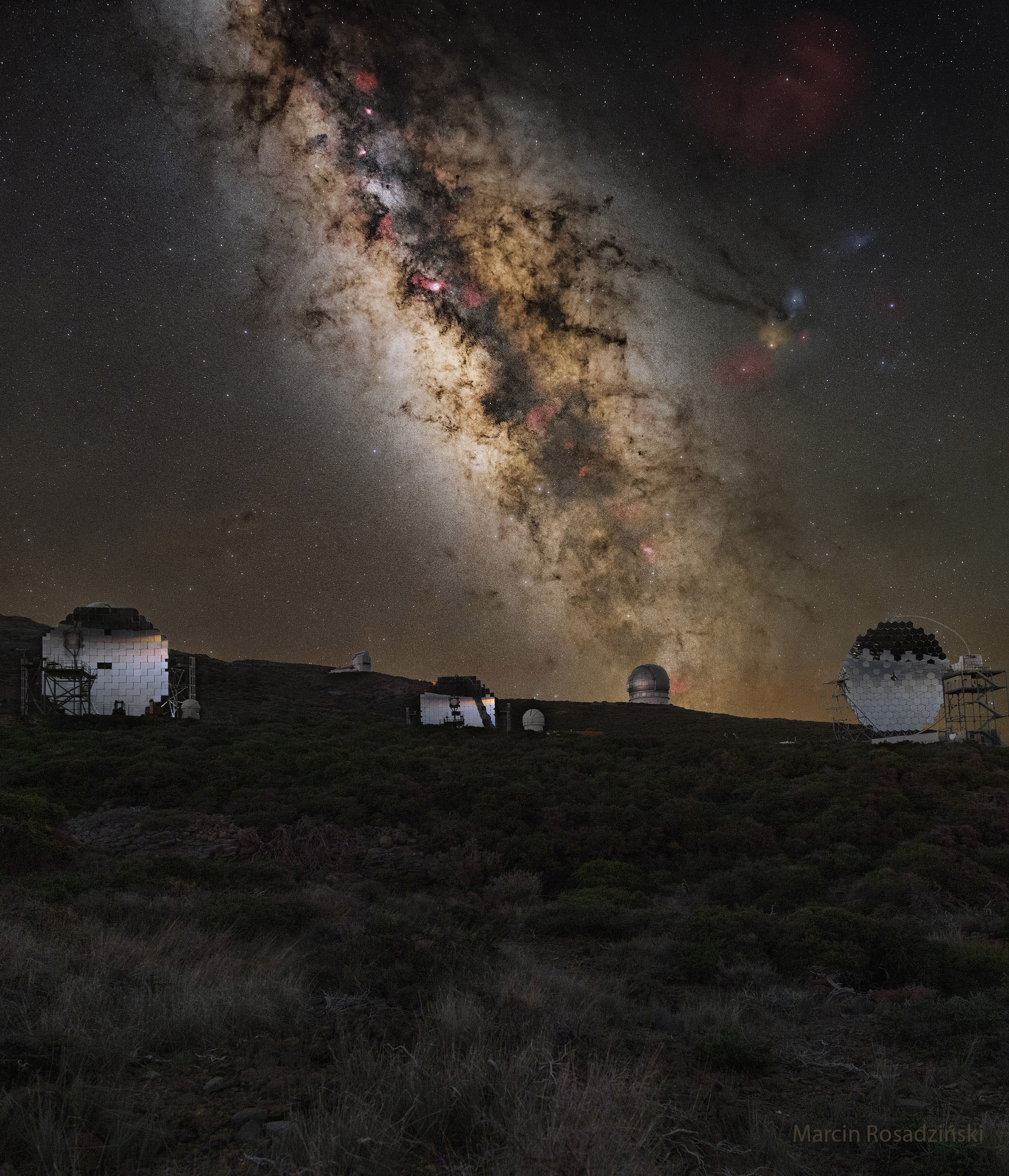
What's happening in the night sky? To help find out, telescopes all over the globe will be pointing into deep space. Investigations will include trying to understand the early universe, finding and tracking Earth-menacing asteroids, searching for planets that might contain extra-terrestrial life, and monitoring stars to help better understand our Sun. The featured composite includes foreground and background images taken in April from a mountaintop on La Palma island in the Canary Islands of Spain. Pictured, several telescopes from the Roque de los Muchachos Observatory are shown in front of a dark night sky. Telescopes in the foreground include, left to right, Magic 1, Galileo, Magic 2, Gran Telescopio Canarias, and LST. Sky highlights in the background include the central band of our Milky Way Galaxy, the constellations of Sagittarius, Ophiuchus and Scorpius, the red-glowing Eagle and Lagoon Nebulas, and the stars Alrami and Antares. Due to observatories like this, humanity has understood more about our night sky in the past 100 years than ever before in all of human history.
17
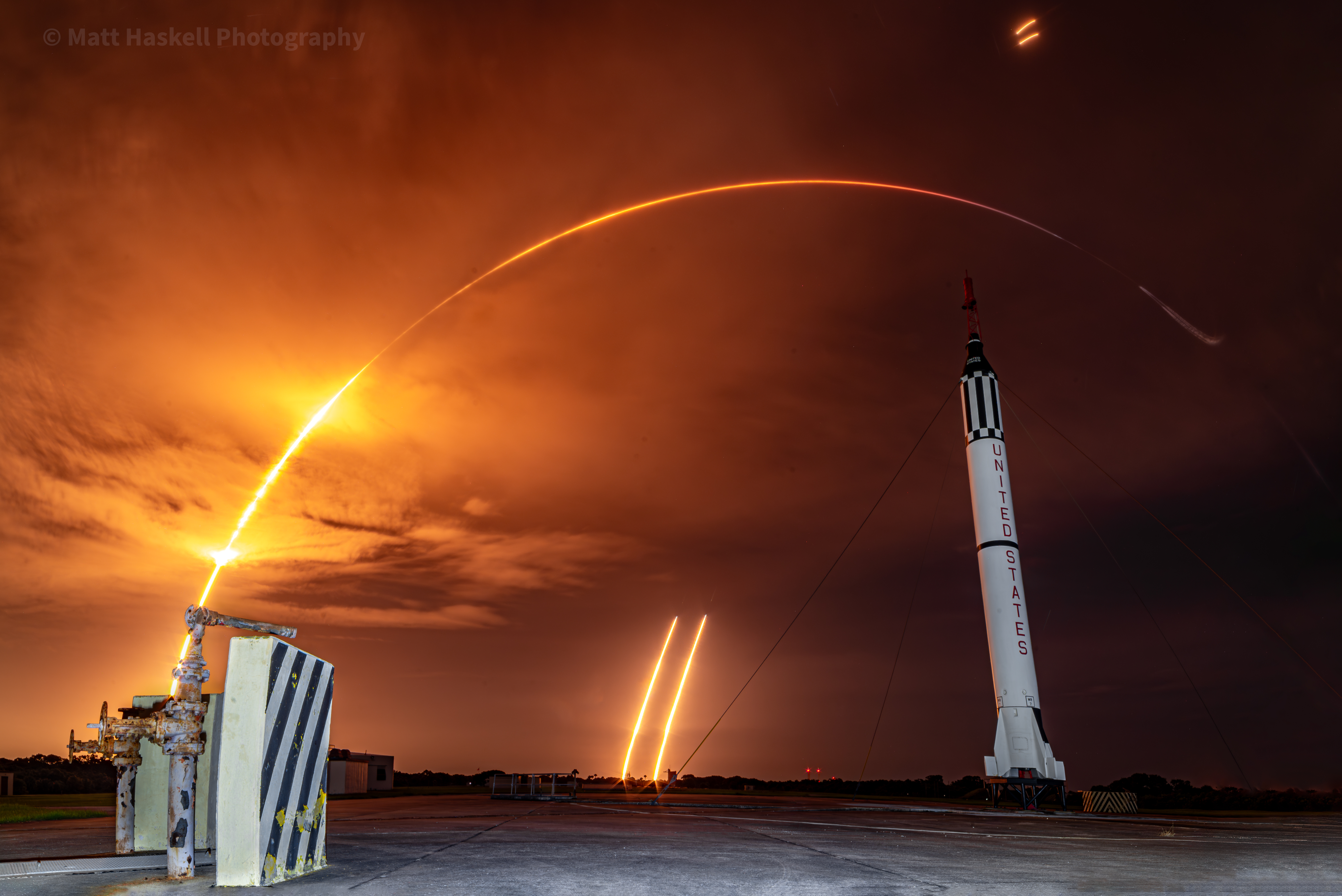
In a photo from the early hours of July 29 (UTC), a Redstone rocket and Mercury capsule are on display at Cape Canaveral Launch Complex 5. Beyond the Redstone, the 8 minute long exposure has captured the arcing launch streak of a SpaceX Falcon Heavy rocket. The Falcon's heavy communications satellite payload, at a record setting 9 metric tons, is bound for geosynchronous orbit some 22,000 miles above planet Earth. The historic launch of a Redstone rocket carried astronaut Alan Shepard on a suborbital spaceflight in May 1961 to an altitude of about 116 miles. Near the top of the frame, this Falcon rocket's two reusable side boosters separate and execute brief entry burns. They returned to land side by side at Canaveral's Landing Zone 1 and 2 in the distance.
18
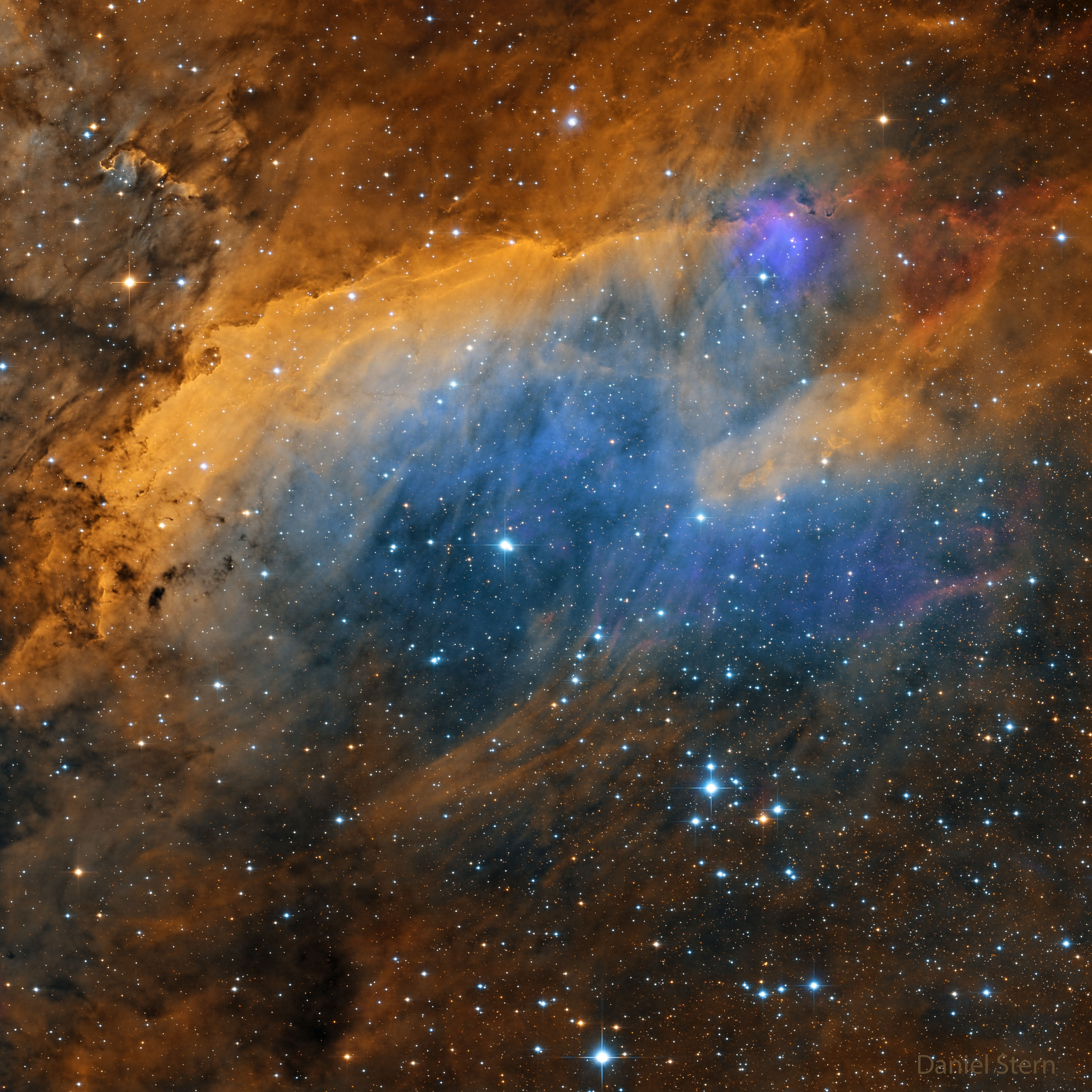
South of Antares, in the tail of the nebula-rich constellation Scorpius, lies emission nebula IC 4628. Nearby hot, massive stars, millions of years young, irradiate the nebula with invisible ultraviolet light, stripping electrons from atoms. The electrons eventually recombine with the atoms to produce the visible nebular glow, dominated by the red emission of hydrogen. At an estimated distance of 6,000 light-years, the region shown is about 250 light-years across, spanning over three full moons on the sky. The nebula is also cataloged as Gum 56 for Australian astronomer Colin Stanley Gum, but seafood-loving deep sky-enthusiasts might know this cosmic cloud as the Prawn Nebula. The graceful color image is a new astronomical composition taken over several nights in April from Rio Hurtado, Chile.
19
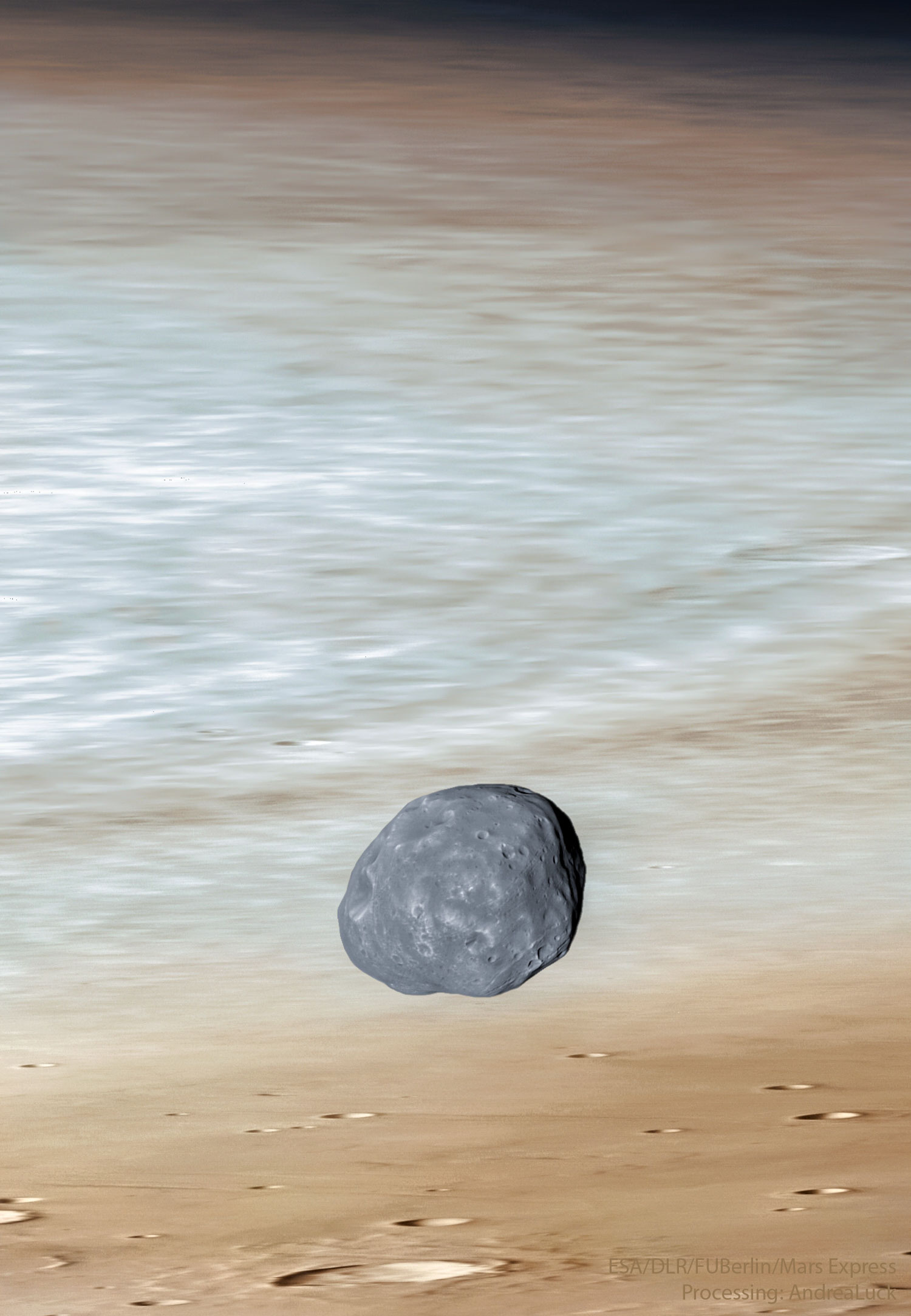
Why is Phobos so dark? Phobos, the largest and innermost of the two Martian moons, is the darkest moon in the entire Solar System. Its unusual orbit and color indicate that it may be a captured asteroid composed of a mixture of ice and dark rock. The featured assigned-color picture of Phobos near the edge of Mars was captured in late 2021 by ESA's robot spacecraft Mars Express, currently orbiting Mars. Phobos is a heavily cratered and barren moon, with its largest crater located on the far side. From images like this, Phobos has been determined to be covered by perhaps a meter of loose dust. Phobos orbits so close to Mars that from some places it would appear to rise and set twice a day, while from other places it would not be visible at all. Phobos' orbit around Mars is continually decaying -- it will likely break up with pieces crashing to the Martian surface in about 50 million years.
20
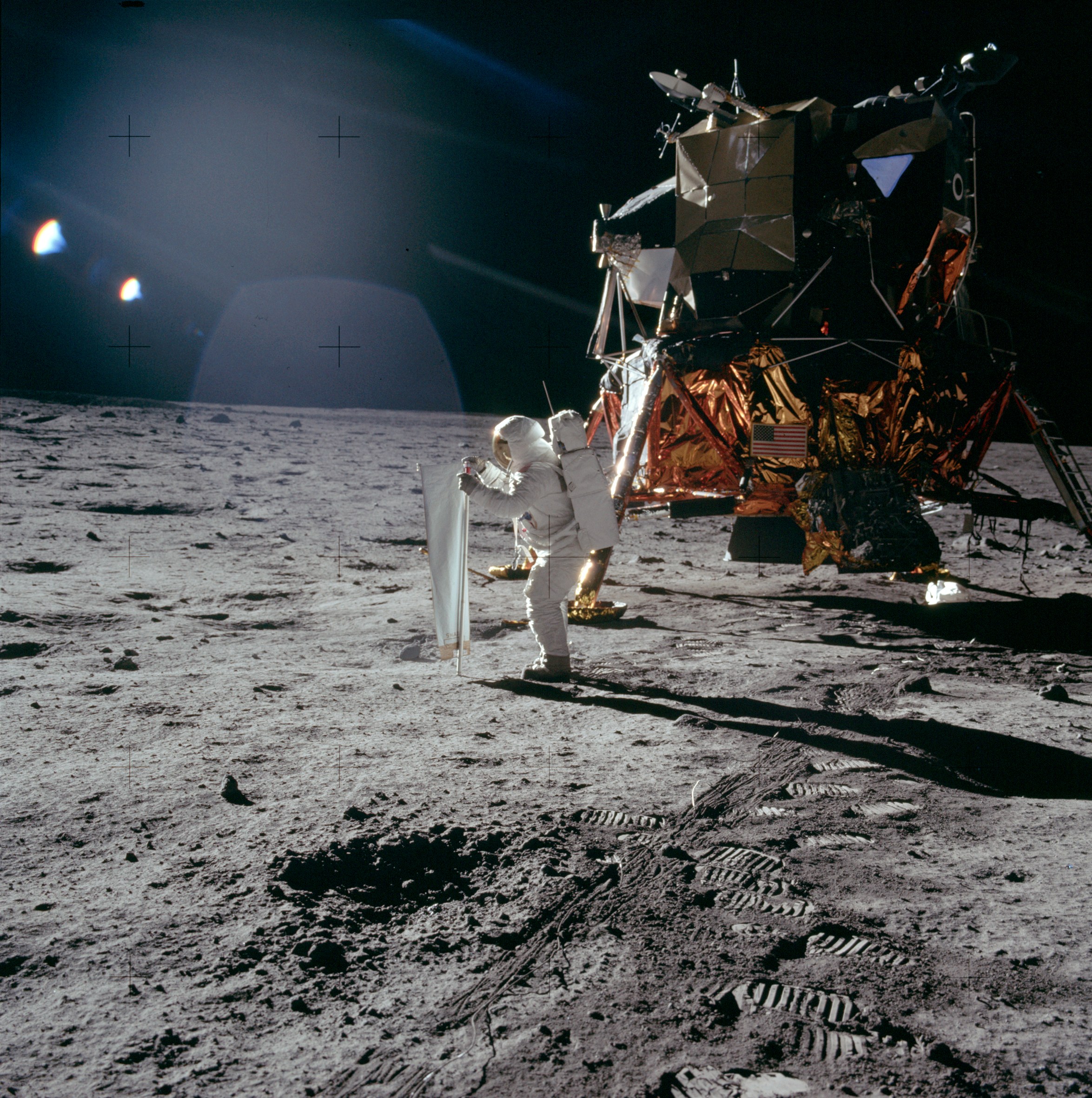
Bright sunlight glints as long dark shadows mark this image of the surface of the Moon. It was taken fifty-four years ago, July 20, 1969, by Apollo 11 astronaut Neil Armstrong, the first to walk on the lunar surface. Pictured is the mission's lunar module, the Eagle, and spacesuited lunar module pilot Buzz Aldrin. Aldrin is unfurling a long sheet of foil also known as the Solar Wind Composition Experiment. Exposed facing the Sun, the foil trapped particles streaming outward in the solar wind, catching a sample of material from the Sun itself. Along with moon rocks and lunar soil samples, the solar wind collector was returned for analysis in earthbound laboratories.
21
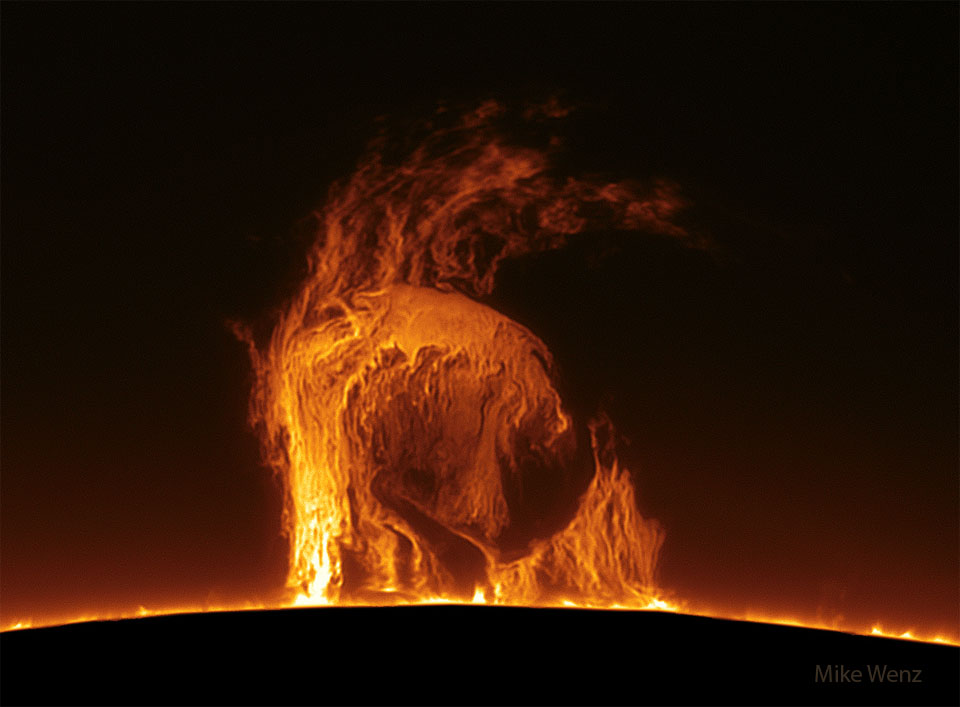
The monsters that live on the Sun are not like us. They are larger than the Earth and made of gas hotter than in any teapot. They have no eyes, but at times, many tentacles. They float. Usually, they slowly change shape and just fade back onto the Sun over about a month. Sometimes, though, they suddenly explode and unleash energetic particles into the Solar System that can attack the Earth. Pictured is a huge solar prominence imaged almost two weeks ago in the light of hydrogen. Captured by a small telescope in Gilbert, Arizona, USA, the monsteresque plume of gas was held aloft by the ever-present but ever-changing magnetic field near the surface of the Sun. Our active Sun continues to show an unusually high number of prominences, filaments, sunspots, and large active regions as solar maximum approaches in 2025.
22
The protostar within dark cloud L1527 is a mere 100,000 years old, still embedded in the cloud of gas and dust that feeds its growth. In this NIRCam image from the James Webb Space Telescope, the dark band at the neck of the infrared nebula is a thick disk that surrounds the young stellar object. Viewed nearly edge-on and a little larger than our Solar System, the disk ultimately supplies material to the protostar while hiding it from Webb's direct infrared view. The nebula itself is seen in stunning detail though. Illuminated by infrared light from the protostar, the hourglass-shaped nebula's cavities are created as material ejected in the star-forming process plows through the surrounding medium. As the protostar gains mass it will eventually become a full-fledged star, collapsing and igniting nuclear fusion in its core. A likely analog to our own Sun and Solar System in their early infancy, the protostar within dark cloud L1527 lies some 460 light-years distant in the Taurus star-forming region. Webb's NIRCam image spans about 0.3 light-years.
Source: NASA

23
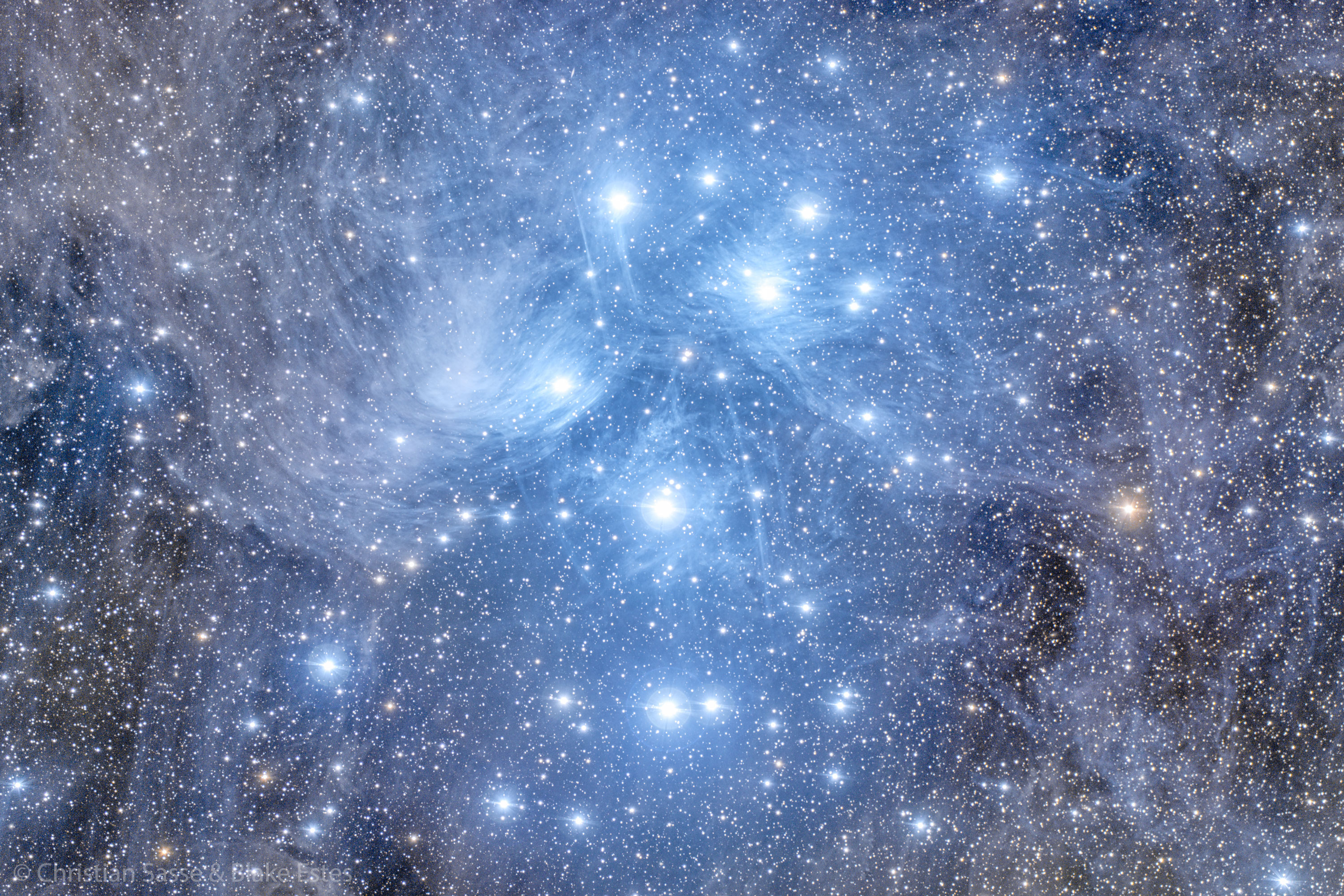
Have you ever seen the Pleiades star cluster? Even if you have, you probably have never seen it as large and clear as this. Perhaps the most famous star cluster on the sky, the bright stars of the Pleiades can be seen with the unaided eye even from the depths of a light-polluted city. With a long exposure from a dark location, though, the dust cloud surrounding the Pleiades star cluster becomes very evident. The featured 11-hour exposure, taken from the Siding Spring Observatory in Australia, covers a sky area several times the size of the full moon. Also known as the Seven Sisters and M45, the Pleiades lies about 400 light years away toward the constellation of the Bull (Taurus). A common legend with a modern twist is that one of the brighter stars faded since the cluster was named, leaving only six of the sister stars visible to the unaided eye. The actual number of Pleiades stars visible, however, may be more or less than seven, depending on the darkness of the surrounding sky and the clarity of the observer's eyesight.
Source: NASA
24
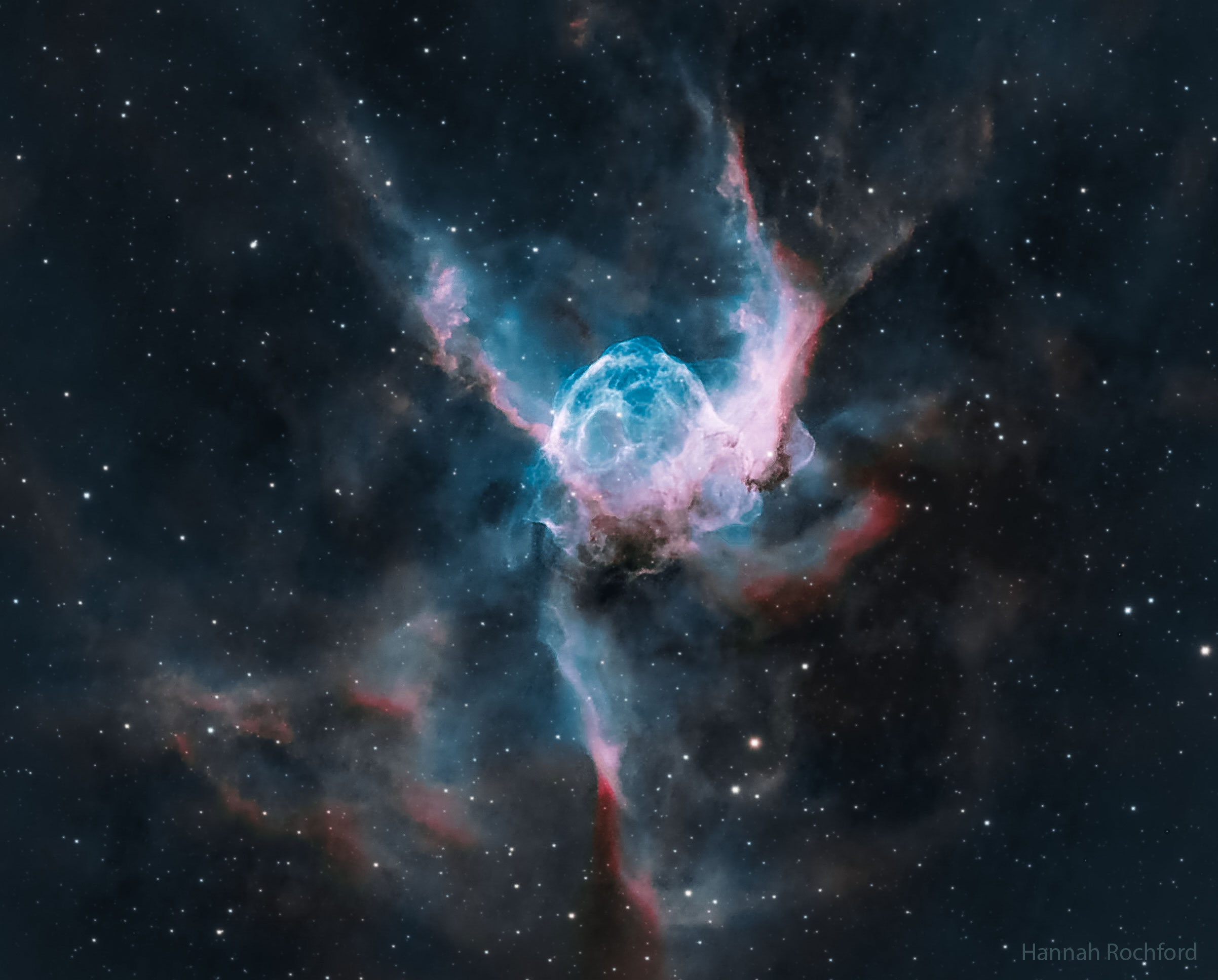
Thor not only has his own day (Thursday), but a helmet in the heavens. Popularly called Thor's Helmet, NGC 2359 is a hat-shaped cosmic cloud with wing-like appendages. Heroically sized even for a Norse god, Thor's Helmet is about 30 light-years across. In fact, the cosmic head-covering is more like an interstellar bubble, blown with a fast wind from the bright, massive star near the bubble's center. Known as a Wolf-Rayet star, the central star is an extremely hot giant thought to be in a brief, pre-supernova stage of evolution. NGC 2359 is located about 15,000 light-years away toward the constellation of the Great Overdog. This remarkably sharp image is a mixed cocktail of data from narrowband filters, capturing not only natural looking stars but details of the nebula's filamentary structures. The star in the center of Thor's Helmet is expected to explode in a spectacular supernova sometime within the next few thousand years.
Source: NASA
25
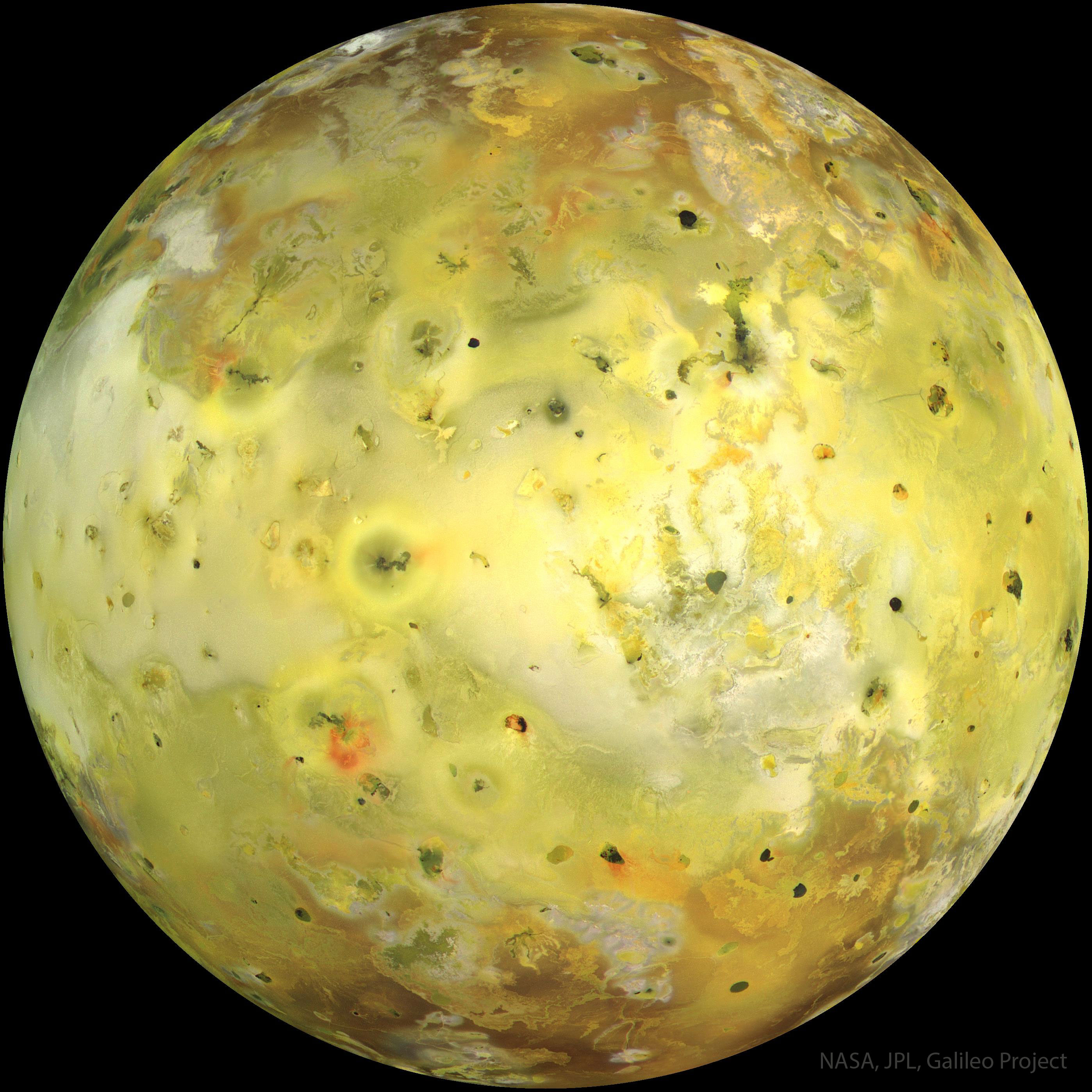
The strangest moon in the Solar System is bright yellow. The featured picture, an attempt to show how Io would appear in the "true colors" perceptible to the average human eye, was taken in 1999 July by the Galileo spacecraft that orbited Jupiter from 1995 to 2003. Io's colors derive from sulfur and molten silicate rock. The unusual surface of Io is kept very young by its system of active volcanoes. The intense tidal gravity of Jupiter stretches Io and damps wobbles caused by Jupiter's other Galilean moons. The resulting friction greatly heats Io's interior, causing molten rock to explode through the surface. Io's volcanoes are so active that they are effectively turning the whole moon inside out. Some of Io's volcanic lava is so hot it glows in the dark.
Source: NASA
view more: next ›