Microscopy

471 readers
1 users here now

Anything related to things that are too small to see them with the eye, and the tools used to observe them.

This space is quite general in scope - microscopes, microbiology, small component electronics, questions about buying optical components, etc.

founded 3 years ago
MODERATORS
1


This is it next to a rotifer.

I'm almost done with a microbes /w music video and I just cannot find any leads on this fella. I'm not so versed in microscopy though. I found this guy in a stream. I got a good amount of soil and moss in the sample. There also happens to be an invasive snail population in that stream called a mud snail.

I could try to upload a video somewhere of it if any of y'all think that would help.

2


Peertube.wtf is down again. You'll have to slum it with the YouTube link. I'll post the peertube like once it is back up.

3


Sadly peertube.wtf is down for me again. So we are back to slumming it with the youtube link. I'll upload this to peertube as soon as I have access.

4


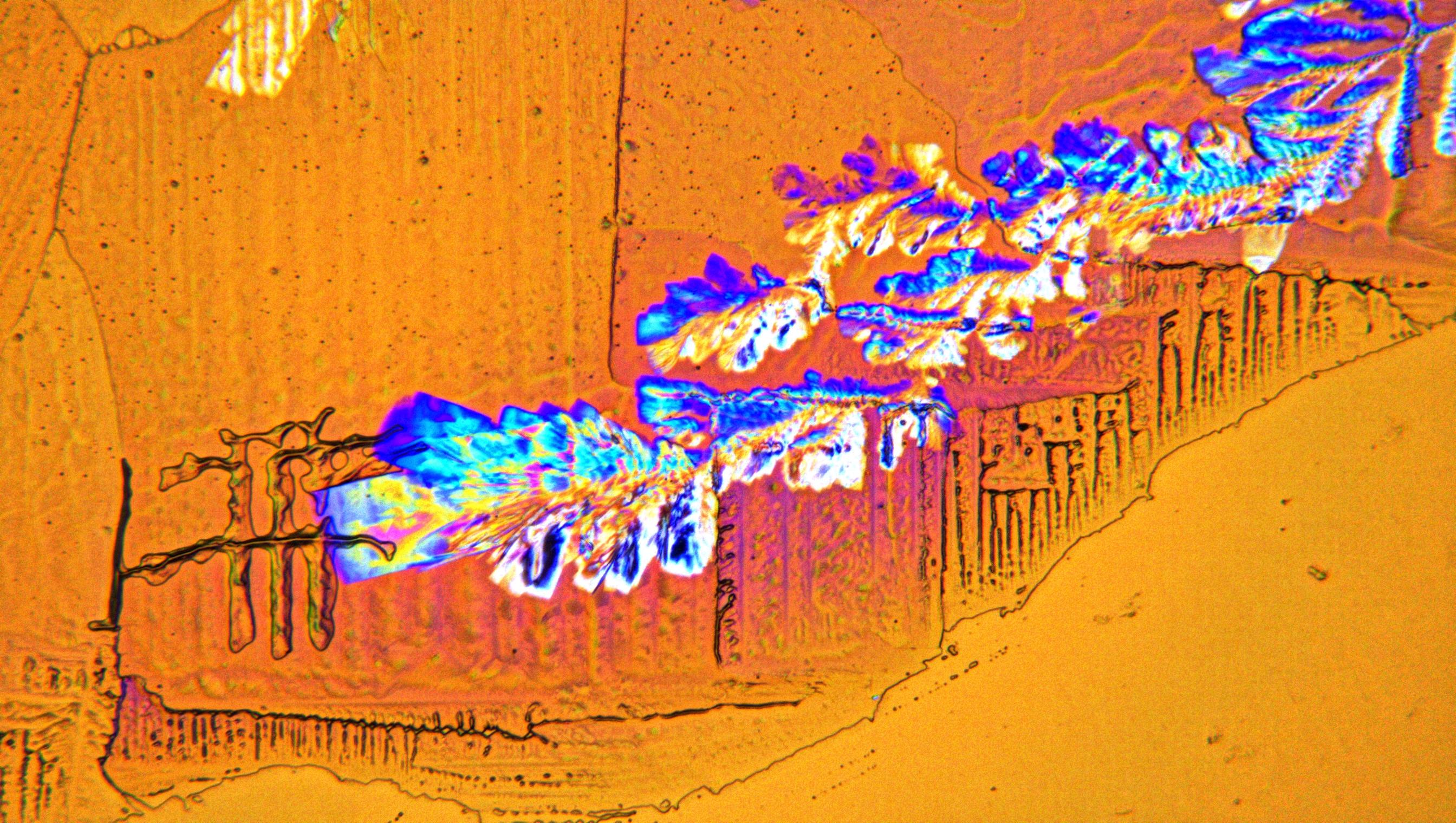
@microscopy I do microscopy for fun, and mainly to make art-like images. My microscope is adapted in many ways, like with Polarization and multiple light units.

5
 
 
6
 
 
7
 
 
8
 
 
9
1
submitted 3 months ago* (last edited 3 months ago) by pebbles@sh.itjust.works to c/microscopy@mander.xyz


Please ignore, I accidentally posted twice.

YouTube link: https://youtu.be/r8-jg8hvcQg

Note: I am not knowledgeable enough on ciliate behavior to be confident that these ciliates are in fact "having a good time". The ciliates in blue are likely following some sort of gradient, my guess is oxygen. Therefore there is likely a range of comfortably within the ciliates in blue.___

10


YouTube link: https://youtu.be/r8-jg8hvcQg

Note: I am not knowledgeable enough on ciliate behavior to be confident that these ciliates are in fact "having a good time". The ciliates in blue are likely following some sort of gradient, my guess is oxygen. Therefore there is likely a range of comfortably within the ciliates in blue.

11


Unfortunately the peertube instance I upload to is down, so you'll have to slum it with the YouTube link today.

I'll upload this to peertube.wtf once I can log in again.

EDIT: Peertube link is out now: https://peertube.wtf/w/jrR7ffgcv3t12btgsgy9W7

12


My green water culture is challenging to study with the microscope but still a lot of fun.

13
 
 
14
 
 
15


Definitely have a long way to go to get better at my microscopy!

16
 
 
17
 
 
18
 
 
19
 
 
20


YouTube link: https://youtu.be/pFGtao5JGBE

I uploaded this to YouTube ages ago. Then life hit me like a ton of bricks, and I didn't even have the time or energy to upload this to peer tube and Lemmy. I'm back now though! And I have another video I'll post right after this.

21
1
submitted 8 months ago* (last edited 8 months ago) by magpie@mander.xyz to c/microscopy@mander.xyz


I'm having some trouble finding a whole lot of info on this model, finding some stuff but is older so I get it. I've wanted an extra scope for a while now, something used that I can pack around to other people's houses when I take my friends out mushroom hunting and what not. Seller says everything is in working condition, looks like it was refurbished or serviced recently as there's a tag from optics company, not sure. For $150CAD I don't think its a bad deal but wondering what others think. Right now I am working with a swift 380T, I'll miss the phototube but I might actually be able to get a darkfield filter to work on this.

Edit: I haven't purchased this yet, I'm hoping to do that tomorrow. It is a bit out of the way for me, about a 1.5hr drive so I guess that factors into the price

Edit 2: Bought the microscope and its really nice for what it is. The best part is my overpriced little darkfield filter (that didn't work for my swift) works great in this scope. So weird to not have a dark spot in the middle.

22
1
submitted 9 months ago* (last edited 9 months ago) by KTJ_microbes@mander.xyz to c/microscopy@mander.xyz


I took this photo (and the sample) in the Adriatic Sea (Mljet, Croatia) on June 10th this year. The dinoflagellates I can identify to the genus. They are Tripos - correct me if I am wrong.

But I am not that good with animals. What is this thing on the left-hand side?

23


Excerpt from video description:

LumaField make industrial X-Ray tomography machines AKA CAT Scanners, and I had an opportunity to drop by their office and put some artifacts into their scanners to look at their internals. Since their scanners boast resolutions in microns I wanted to given them something really challenging - the fiber matrix of heat shield tiles.

24
 
 
25
1
submitted 10 months ago* (last edited 10 months ago) by Sal@mander.xyz to c/microscopy@mander.xyz


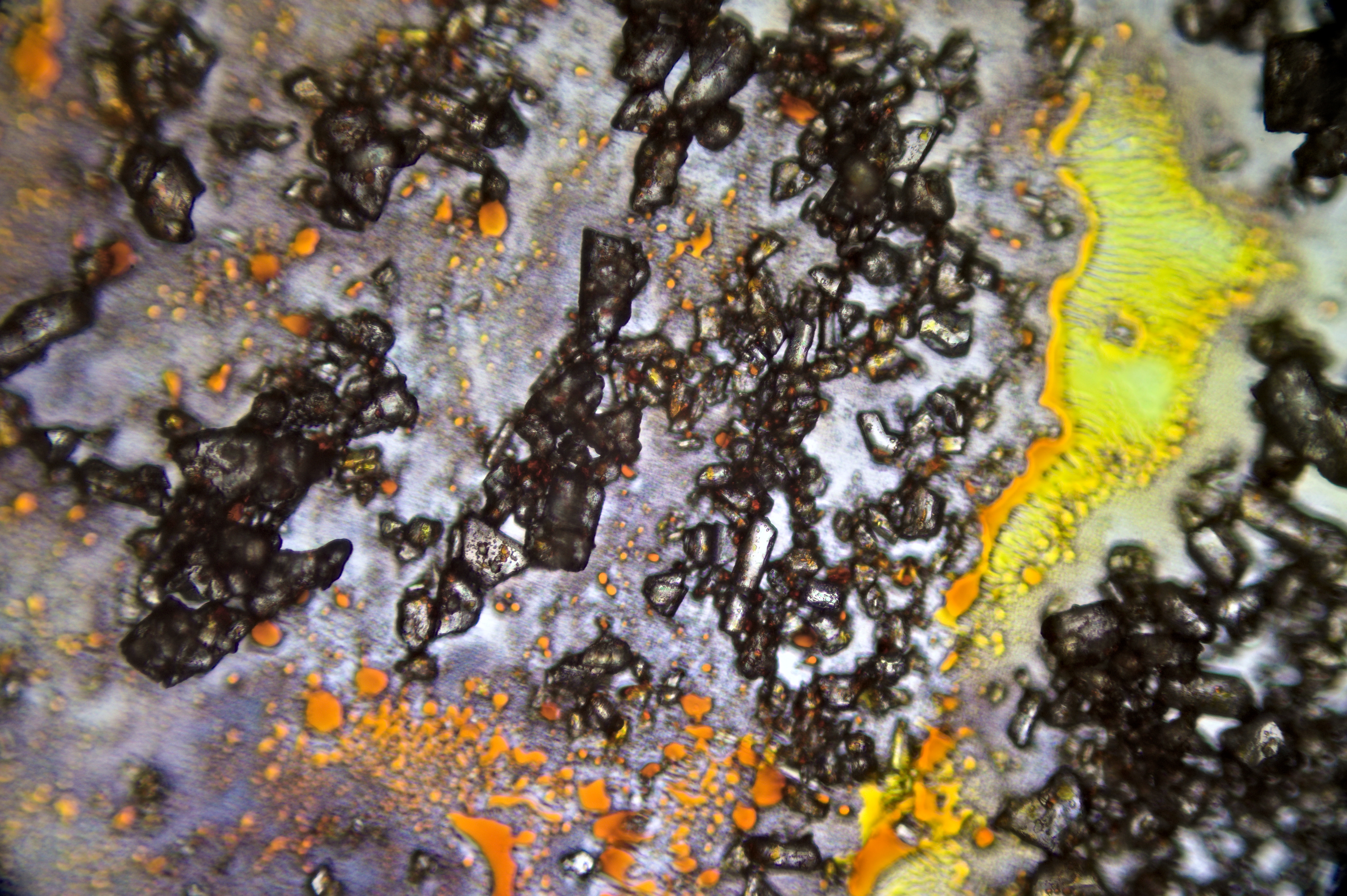
This weekend I did some experiments with turmeric powder. Here are some images of the results, and the description of how to create these microscopic chemical landscapes is given below.

Turmeric powder is a fantastic material to play with. The powder has a high concentration of colored and fluorescent curcuminoids and volatile turmerone oils.

When you use a polar solvent to extract these compounds, what you get is a kind of fluorescent oily resin called a turmeric 'oleoresin'.

The curcuminoids are yellow at acidic and neutral pH, but they become bright red at high pH due to keto-enol tautomerization. There is a lot of cool things you can do with the curcuminoids in terms of photo/electrochemistry.

I have been playing with very simple chemistry under the microscope, and I have noticed that you can create some cool-looking micro-landscapes. During this process you can also see different types of physico-chemical processes happening in real time.

Procedure to do this:

  • Place a few grams of turmeric powder into a glass container
  • Add enough isopropanol to cover the material, and a bit more
  • Mix
  • Wait for the solids to settle
  • Collect a bit of the isopropanol liquid from the top and place on a glass coverslip
  • Wait for the isopropanol to evaporate.

At this time, you can see under the microscope that golden oil droplets have been deposited, and that the surroundings are also yellow. The drops are oleoresins, which consist of curcuminoids suspended in turmerones and other oily compounds. Thin curcuminoid films might also be forming in between these droplets.

  • Add a sprinkle of baking soda crystals (sodium bicarbonate) on top of the coverslip. You can blow on the coverslip if you accidentally add too much.

  • Add a small drop of water, and wait a bit.

At this time you can see that the crystals are dissolving under the microscope, but the colors are not changing. The water and oils are not mixing, and so you get this film of alkaline water surrounding the oil droplets, but nothing is yet really changing.

  • After waiting a few minutes, add a drop of isopropanol.

Now the isopropanol will re-dissolve the oleoresin and mix with the alkaline water. The carbonate ions are now able to react with the curcuminoids, and when they do, they go into the ketone form and instantly turn red. Under the microscope you can see quite dramatic movements of yellow and rad streaking as well as turbulent movements of the baking soda crystals.

  • Wait some time for the liquids to evaporate again

  • You will end up with a landscape that combines yellow resins, red resins, sodium bicarbonate crystals, and several different patterns.


You can vary the parameters - the amount of sodium bicarbonate, the position and size of the drops, you can pre-mix the water and isopropanol, etc. Small changes can drastically affect the resulting landscape.

view more: next ›