Longevity

541 readers
1 users here now

A sub about trying to live forever - or die trying.

founded 4 years ago
MODERATORS
1


IF some effective longevity therapy is developed, the poors will never get it. It won't be for sale at any price, to anyone. It will be handed out by whomever controls it to buy political power and loyalty. Also, its existence will not be made public until years after it happens, to give enough time for those who control it to consolidate power. The first signs will be that Bezos, or whoever, still looks surprisingly good for an 80-year-old, in fact he looks more like 50. Has cosmetic surgery gotten that good?

Told you you wouldn't like it.

2


Aubrey de Grey, the lead author of the damage repair method, will be speaking at the Precision Medicine World Conference 2026.

His topic will be combining longevity interventions already validated in animal trials with personalized optimization.

3


Andrew Steele @statto@mas.to, a known longevity author and campaigner, in his new video proposes 3 steps for being healthy longer.

Firsts are pretty obvious:

  1. eat healthy
  2. exercise regularly

The last is non-obvious, but IMO much more powerful: 3) support organisations that are putting longevity into public awareness in trustworthy way

We are currently limited by interventions that we (humankind) know. These have severe limitations, eg. healthy lifestyle can extent life by maybe 10 years if you are pretty serious about it and maybe have a bit of genetic and environmental luck.

For staying healthy and vital for longer we need new medical technology, interventions. These are not going to develop themselves, but need scientists. And scientists needs support for their work. So organisations spreading awareness and public desire for new, robust longevity interventions have a high leverage.

Andrew recently co-founded such organization called The Longevity Iniatitive. I invite you to look its website and also follow it on various channels (not yet in Fediverse, to my best knowledge 😕).

4


cross-posted from: https://lemmy.world/post/39990070

Hair trade offer

5


cross-posted from: https://lemmy.ca/post/56618527

The lighter side.

6


cross-posted from: https://reddthat.com/post/55465882

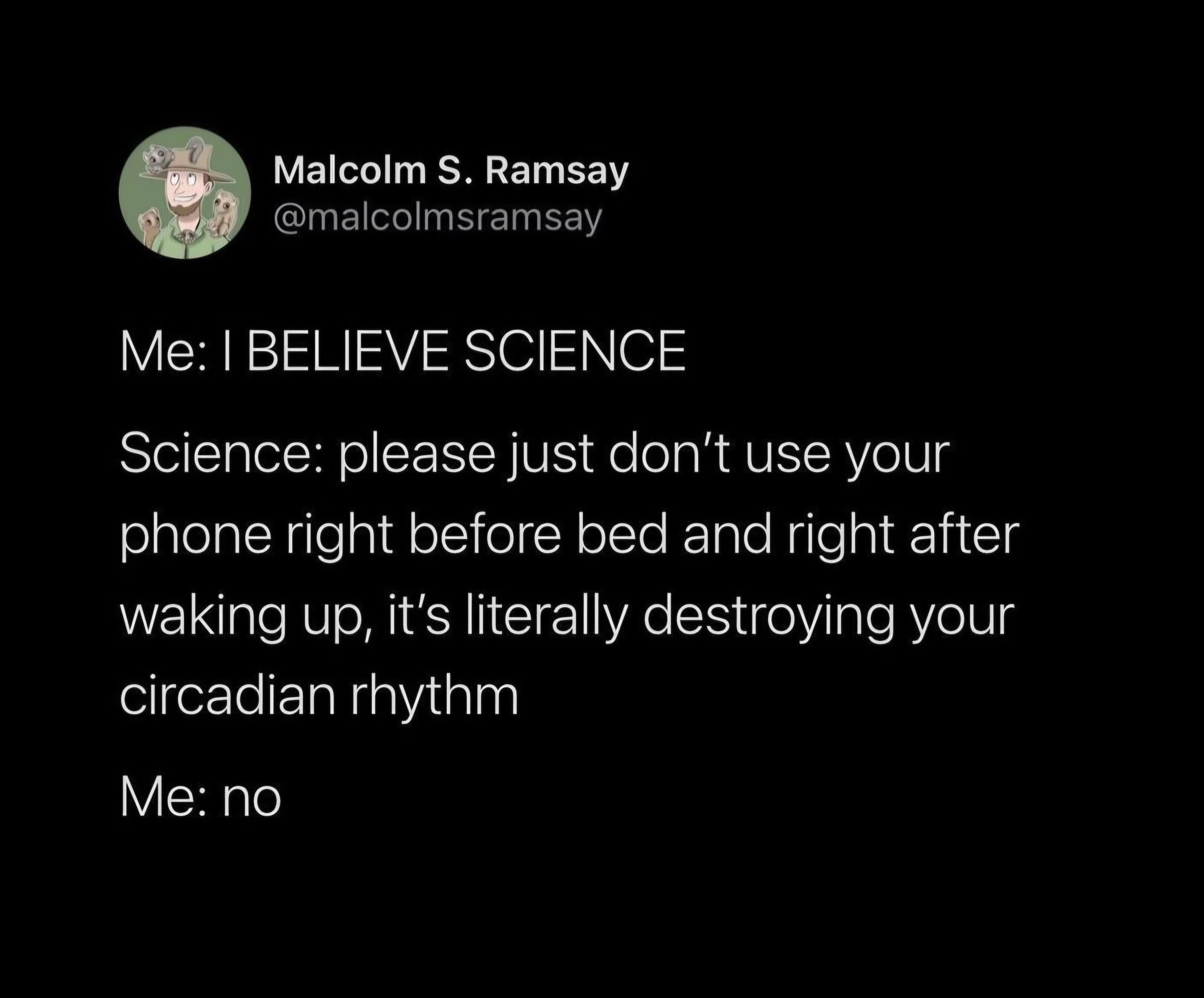
Shut up science!!

7


I invite you to !cryonics@lemmy.world - the community for the "plan B", especially for those who themselves, or their close ones, will not make it to the LEV, Longevity Escape Velocity.

8
9


In a recent interview with Wired, Nobel laureate Venkatraman Ramakrishnan discusses his book Why We Die, in which he argues that death is not genetically programmed but rather a consequence of evolution favoring reproduction over longevity. Here are some of the most thought-provoking excerpts:

WIRED: Professor Ramakrishnan, the crucial question in your book is why we die. But exactly what is death?

Venki Ramakrishnan: By death, we mean the irreversible loss of the ability to function as a coherent individual. It is the result of the failure of a critical system or apparatus, for example, heart, brain, lung, or kidney failure. In this sense there is an apparent paradox: When our organism, as a whole, is alive, millions of cells within us are constantly dying, and we do not even realize it. On the other hand, at the time of death, most of the cells in our bodies are still alive, and entire organs are still functioning and can be donated to people in need of transplantation. But at that point the body has lost the ability to function as a whole. In this sense, it is therefore important to distinguish between cell death and death of the individual.

Speaking of death and aging, you say in your most recent book that you "wanted to offer an objective look at our current understanding of the two phenomena." What was the biggest surprise or most deeply held belief that you had to reconsider while writing and researching this work?

There have been several surprises, actually. One is that death, contrary to what one might think, is not programmed by our genes. Evolution does not care how long we live, but merely selects the ability to pass on our genes, a process known as "fitness" in evolutionary biology. Thus, the traits that are selected are those that help us survive childhood and reproduce. And it is these traits, later in life, that cause aging and decline. Another curious finding was the fact that aging is not simply due to wear and tear on cells. Wear and tear happens constantly in all living things, yet different species have very different lifespans. Instead, lifespan is the result of a balance between the expenditure of resources needed to keep the organism functioning and repairing it and those needed to make it grow, mature, and keep it healthy until it reproduces and nurtures offspring.

Do you think there is an aspect of the biology of aging that is still deeply misunderstood by the general public?

Certainly the indefinite extension of life. Although in principle there are no laws or constraints that prevent us from living much longer than we do currently, great longevity or "eternal youth" are still far off, and very significant obstacles to increasing our maximum life expectancy remain. We must also beware of the pseudoscience -- and business -- around the concepts of "anti-aging" or the "reversal of aging." These are often baseless concepts, unsupported by hard evidence, even though they may use language that sounds scientific. Unfortunately, we are all afraid of growing old and dying, so we are very sensitive to any claim that promises to help us avoid it. [...]

What do you think are the social and ethical implications of our desire to live longer?

Ever since we became aware of our mortality, we have desired to defeat aging and death. However, our individual desires may conflict with what is best for society. A society in which fertility rates are very low and lifespans are very high will be a stagnant society, with very slow generational turnover, and probably much less dynamic and creative. The Nobel Prize-winning South American novelist Mario Vargas Llosa, who recently passed away, expressed it best: "Old age on the one hand terrifies us, but when we feel anxious, it is important to remember how terrible it would be to live forever. If eternity were guaranteed, all the incentives and illusions of life would vanish. This thought can help us live old age in a better way."

10
11
12
13
14
15


Abstract

While observational studies and small pilot trials suggest that vitamin D, omega-3 and exercise may slow biological aging, larger clinical trials testing these treatments individually or in combination are lacking. Here, we report the results of a post hoc analysis among 777 participants of the DO-HEALTH trial on the effect of vitamin D (2,000 IU per day) and/or omega-3 (1 g per day) and/or a home exercise program on four next-generation DNA methylation (DNAm) measures of biological aging (PhenoAge, GrimAge, GrimAge2 and DunedinPACE) over 3 years. Omega-3 alone slowed the DNAm clocks PhenoAge, GrimAge2 and DunedinPACE, and all three treatments had additive benefits on PhenoAge. Overall, from baseline to year 3, standardized effects ranged from 0.16 to 0.32 units (2.9–3.8 months). In summary, our trial indicates a small protective effect of omega-3 treatment on slowing biological aging over 3 years across several clocks, with an additive protective effect of omega-3, vitamin D and exercise based on PhenoAge.

16
17
18
19


Exploring the Latest Supplements, Vitamins, and Medications in Sinclair's Longevity Regimen

20


Maybe, maybe not. More research is needed.

21


Through metabolic screening, we identified uridine as a potential regulator to rejuvenate aged HSPCs.

22


Here we examined whether IL-11, a pro-inflammatory cytokine of the IL-6 family, has a negative effect on age-associated disease and lifespan.

23


Researchers publishing in Aging have found a molecule linking exercise to the inhibition of cellular senescence, one of the hallmarks of aging.

24


The researchers investigated whether NAD precusors, including nicotinamide and NR, along with the well-known compound rapamycin could rescue mitophagy, and they found positive results for all of these compounds.

25


TAC promoted tissue rejuvenation, including new neuron formation, and alleviated multiple aging hallmarks in aged mice, revealing the regenerative potential of adult tissues through physiological TERT activation.

view more: next ›