Homebrewing

265 readers
1 users here now

Ham radio homebrewing. Build your own radios, antennas, and accessories.

Share plans and ideas. Help each other debug and fix things that don't quite work yet.

founded 3 years ago
MODERATORS
1
1
submitted 4 months ago* (last edited 4 months ago) by waveform@lemmy.radio to c/homebrew@lemmy.radio


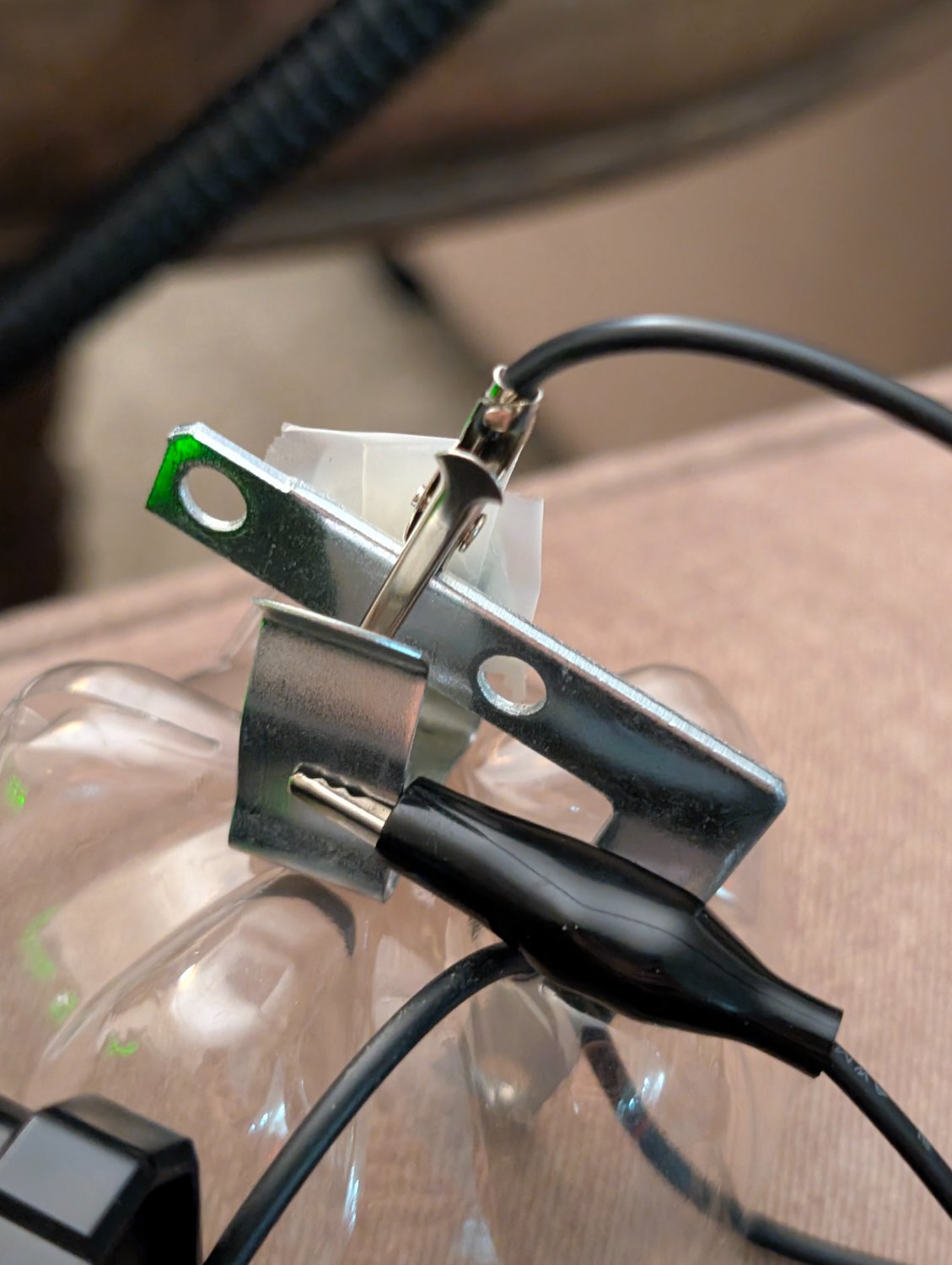
I'm learning cw, and while it would probably be better for me in the long run to buy a proper CW key I like build things.

If I had to give it a rating i'd give it a 3/10. It's very stiff and hard to move. I have to reposition the alligator clamps every 30 or so taps making a conversation on CW almost impossible. But where it gains points is it's super simple to repair, parts are everywhere, because it's made out of scrap metal, and it only costed me a $1.50 for the coke bottle as the base.
2
1
submitted 7 months ago* (last edited 7 months ago) by cm0002@toast.ooo to c/homebrew@lemmy.radio


The magnetic loop antenna is a familiar sight in radio amateur circles as a means to pack a high performance HF antenna into a small space. It takes the form of a large single-turn coil made into a tuned circuit with a variable capacitor, and it provides the benefits of good directionality and narrow bandwidth at the cost of some scary RF voltages and the need for constant retuning. As [VK3YE] shows us though, magnetic loops are not limited to HF — he’s made a compact VHF magnetic loop using a tin can.

3


I made and tested a couple of capacity hats for my loaded whip antenna to see how they'd do in the real world. Could you use one instead of paying Elecraft for their 40m coil? Maybe. Could you get on 30m and 40m with your KH1 whip? Might be a stretch... https://youtu.be/uYH9yit8jEo

4


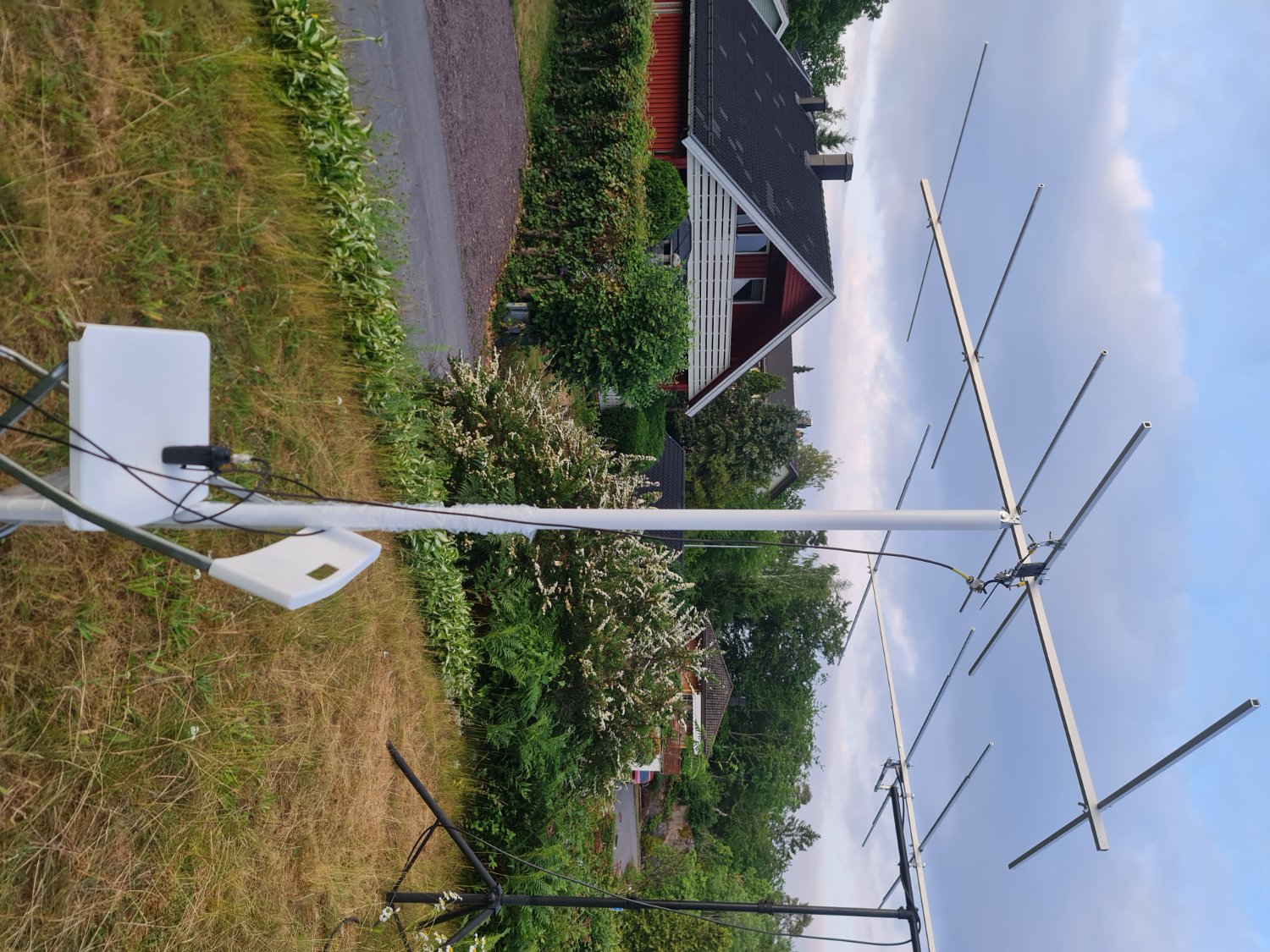
I've been apprehensive about building my own yagi antennas before. It seemed so complicated. But then I started tinkering with antenna modelling software and decided it couldn't be that difficult. So I started building.

Life was so much easier when I realised that with a gamma match I did not have to split or isolate the elements from the boom.

On the pic is my 6m5el and my 2m5el yagis. 6m is a lot of fun this summer. There's a 10m/20m moxon spider beam coming up next.

5
1
submitted 3 years ago* (last edited 3 years ago) by ham_bitious@lemmy.radio to c/homebrew@lemmy.radio


Diz W8DIZ has retired from running kitsandparts.com, and KU4QO had taken over.

Good news if you need toroids and other small parts. And the 5watter is a great radio if you need a kit.

6


An interesting proposal about how to improve APRS data transmission over LoRa: https://aprs434.github.io/

Ricardo CD2RXU is developing firmware https://twitter.com/richonguzman/status/1671034373230010369

Original project was from Austrian amateurs: https://www.lora-aprs.info/

7


End-fed half wave (EFHW) is a simple to build and easy to deploy multi-band antenna, very convenient for field stations. It is a perfect antenna for field day-type stations, and for quick and simple setups, like during POTA activations. Leon, NT8B explains how the antenna works, how to build one, and how to use it.

8


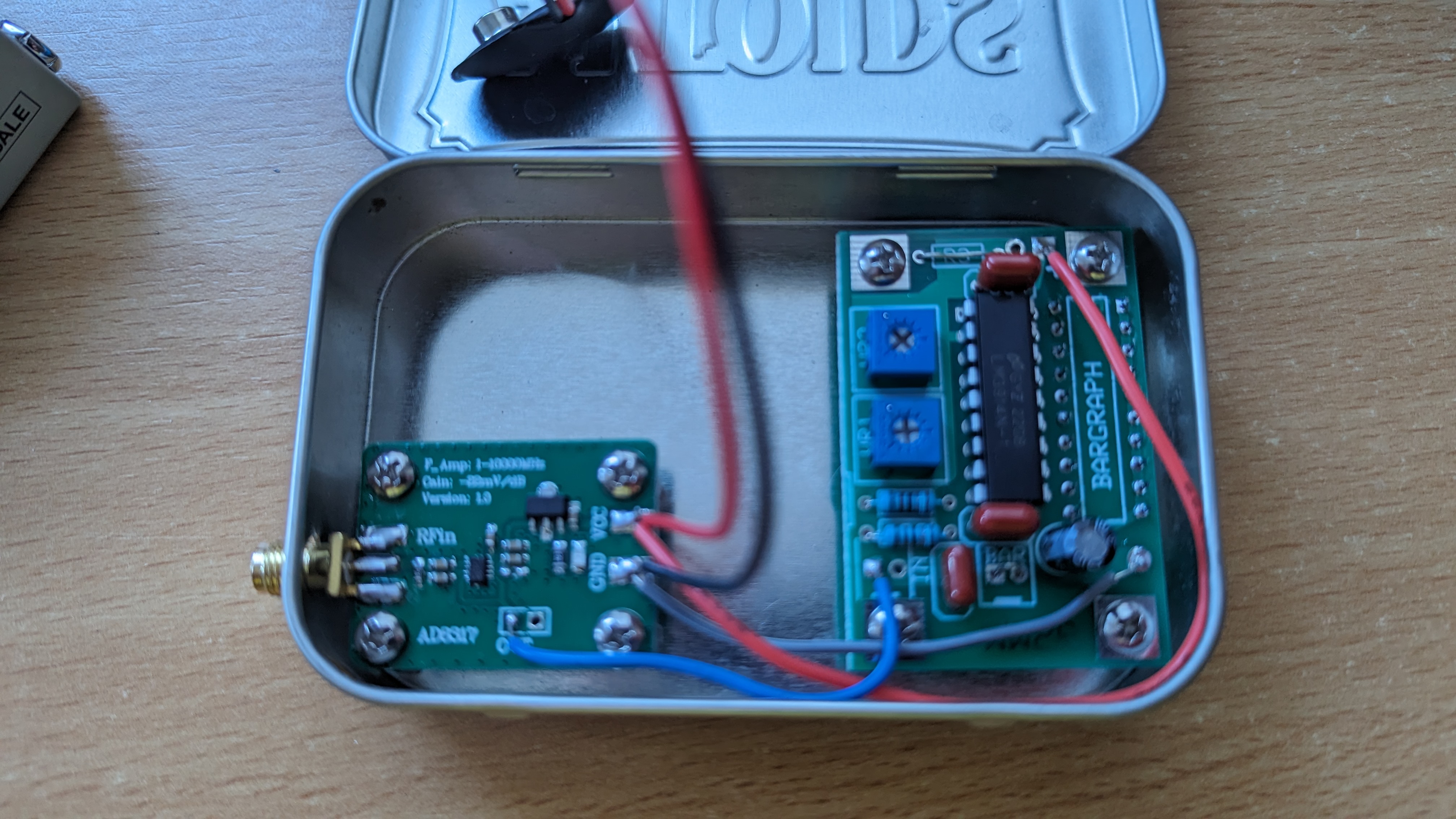
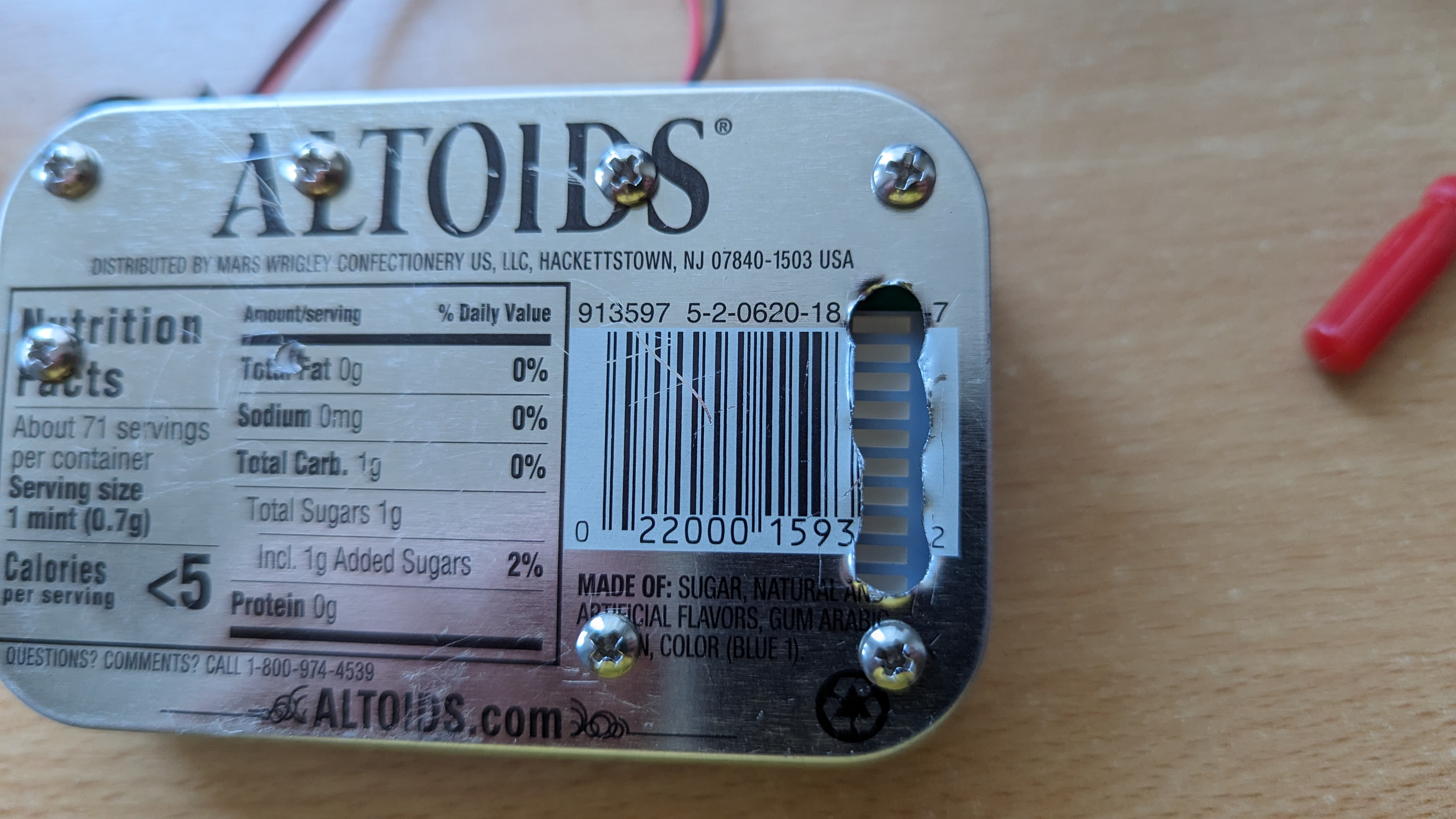
I was inspired to copy W1GHZ's power meter from April QST (pg 52). Seemed like it would be nice to know if my 10GHz rig (or any of them!) was putting out power. Got some bargraph boards from him, the rest of the parts from the internet, and finally built it today.

I had a bit of trouble cutting a square hole with only a hand drill, but I can see the bars. (If anyone likes designing and printing cases, let me know!)

Turns out I don't have any 9v batteries, so testing will have to wait until I go to the store. I don't expect to have any problems though, since the bargraph circuit is pretty simple, and the AD8317 board had everyone on it already.

9
10


Anyone working on anything fun or interesting?

11


For some reason (probably price!) the pixie is considered a good beginners kit. I would disagree. It is small and simple to the point of being practically useless. Get a Forty 9er instead. For a few bucks more you will have a decent radio when you're done.

But since it is popular, I made a few videos trying to explain how it works: https://www.youtube.com/playlist?list=PLxpKweJs4V-1uTGK2TqhsQXCAd6eJtPhp

I think the way the designer was able to use a single transistor as both a mixer and power amplifier is pretty clever. Maybe some day I'll think of something that neat :D