European Space Agency

1659 readers
1 users here now

The European Space Agency community

founded 3 years ago
MODERATORS
1
2
3
4


Article textAndrew Parsonson

4–5 minutes

JOHANNESBURG — The European Space Agency is moving ahead with plans to examine the feasibility of repurposing Lunar Link, a communications system developed for NASA’s now-paused Gateway space station, as a dedicated lunar communications asset.

ESA issued an invitation to tender July 27 for studies examining the feasibility of the proposed Lunar Link repurposing mission. The agency plans to award up to two parallel firm-fixed-price contracts, each worth up to 3 million euros ($3.4 million).

The call follows a decision by ESA member states at the agency’s 347th Council meeting on June 16 and 17 to assess whether Lunar Link could be repurposed as a standalone communications satellite in cislunar space following NASA’s decision in March to pause the deployment of Gateway. The studies will examine whether the system could complement and serve as a precursor to the agency’s Moonlight program, a planned constellation that will provide communications and navigation services for lunar missions.

Instead of developing a bespoke platform for the mission, the studies will prioritize the use of an existing satellite platform that is already qualified or requires minimal modification to host the Lunar Link hardware. Contractors will also examine whether the spacecraft could carry one or more “payloads of opportunity” as a secondary objective.

ESA describes the planned work as fast-track Phase A/B1 studies lasting no more than 12 months. During Phase A, contractors will examine potential lunar orbits and spacecraft configurations before a Preliminary Concept Review about four months after kickoff. Subject to ESA approval, contractors will then move into Phase B1, refining the selected concept ahead of an Intermediate System Requirements Review and a final presentation around 11 months later.

Thales Alenia Space France (TAS-FR), which developed Lunar Link, will serve as a mandatory subcontractor, with ESA recommending that at least 750,000 euros of each contract be reserved for its work. ESA awarded that firm a 296 million euro contract in 2021 to develop both Lunar Link and Lunar View, a combined communications and refueling contribution to Gateway. The agency has not given a breakdown of how much of that contract was allocated to each element.

The flight hardware for Lunar Link is already at an advanced stage of development. A Thales Alenia Space spokesperson told SpaceNews that the complete payload, including all flight equipment, has now been integrated and has successfully completed functional and environmental testing. A final antenna deployment test is still to come.

Thales expects qualification of Lunar Link to be completed by the end of the year, with the first part of its Qualification and Acceptance Review scheduled to begin in the third quarter and the process expected to be completed before the end of the year.

In addition to examining how Lunar Link could be repurposed, contractors will be required to outline development schedules and cost estimates for subsequent phases. While the call does not provide a deadline for awarding a follow-on contract, it requires the proposed development schedule to support a launch in the fourth quarter of 2029.

Although Lunar Link now has a clear path toward potential reuse before the end of the decade, the future of ESA’s other major Gateway contributions is less clear.

Speaking during a press conference following the agency’s 347th Council meeting in June, Daniel Neuenschwander, ESA’s director of human and robotic exploration, said work on the Lunar I-Hab habitation module would continue until its critical design review, after which ESA will assess options for repurposing it. For Lunar View, the agency plans to slow the pace of development while retaining key technologies needed for future deep-space exploration, including refueling.

5
6


Anoche en #NOCTURNAL en #ElFaro de la Ser, con Laura Piñero estuve hablando de la inmensidad de la noche. ¿Cuántas estrellas hay en el cielo? ¿Cuántas en la Vía Láctea? Nos acompañaron grandes científicas, como Caroline Herschel y Francesca Figueras. Y el telescopio #GAIA de la @esa
Aquí el podcast: https://cadenaser.com/audio/1785272993248

7
8


Article textJeff Foust

4–5 minutes

The Deep Space Network complex near Madrid, Spain, escaped major damage from a wildfire there July 24. Credit: X @NASASpox

WASHINGTON — Key ground stations in Spain operated by NASA and the European Space Agency have avoided serious damage from major wildfires in the country.

NASA announced July 24 it had evacuated the Madrid Deep Space Communications Complex, or MDSCC, one of three main ground stations for the Deep Space Network, located in Robledo de Chavela, about 65 kilometers west of Madrid. The evacuation was prompted by a major wildfire in the region.

“All personnel were safely evacuated. The wildfire has passed through the MDSCC. Any potential damage will be assessed when it is safe to do so,” the agency said in a statement.

In a social media post July 25, NASA press secretary Bethany Stevens said the MDSCC site avoided major damage from the fire.

“On July 25, an initial onsite inspection by the NASA Madrid Deep Space Communications Complex (MDSCC) emergency response team found wildfire damage primarily to pavement and surrounding vegetation, with no significant structural damage observed to antennas or buildings,” she wrote.

She added more tests and inspections are planned as conditions permit. “The situation remains dynamic, and comprehensive assessments will proceed as conditions stabilize and access improves.”

MDSCC is one of three sites in the DSN, alongside those in Goldstone, California, and near Canberra, Australia. It hosts a 70-meter antenna and five 34-meter antennas used for communicating with NASA spacecraft throughout the solar system.

According to NASA’s Deep Space Network Now website, which provides real-time visualization of DSN activities, none of the antennas at the Madrid site have been actively communicating with spacecraft since at least July 24. The Canberra and Goldstone sites remain active.

NASA uses a “follow the sun” approach to management of the DSN, where management of the entire DSN shifts among the three sites. Stevens said Canberra and Goldstone have taken over control of the DSN, “ensuring continuity of operations and uninterrupted spacecraft communications.”

It’s not clear how long MDSCC will be out of service or how that will affect spacecraft operations. The DSN was already suffering from a capacity crunch due to increasing demand for spacecraft communications, exacerbated by damage to the 70-meter antenna at Goldstone that has taken it out of service until 2028 for repairs and upgrades.

In addition to the DSN site, ESA operates a ground station near Cerberos, Spain, 77 kilometers west of Madrid, also affected by the wildfires. It hosts a 35-meter antenna ESA uses for communications with its deep-space missions.

It, too, appears to have survived the wildfires without serious damage. “Based on the information currently available, the station appears to have remained unharmed,” ESA said in a July 25 statement. All of the station’s personnel are safe and accounted for.

“ESA does not have physical access to the station and is therefore unable to conduct an on-site inspection,” the agency added. “Any assessment of the site’s condition will be carried out as soon as access can be safely restored.”

The wildfires near Madrid are among dozens in Spain and France that have flared up in recent days, linked to unseasonably high temperatures and dry conditions. As of late July 25, nearly 300,000 people in the two countries had been evacuated because of the fires.

9
10


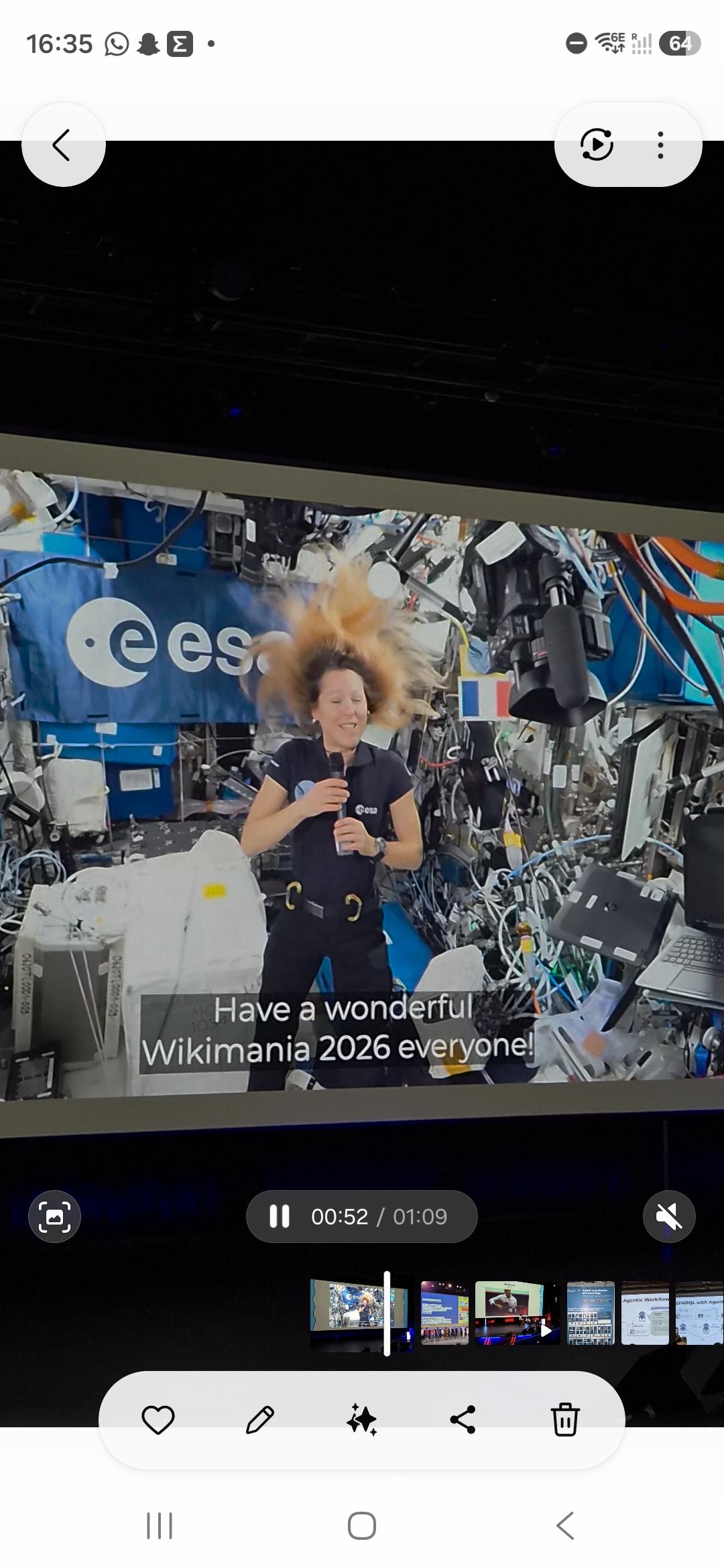
@NASA might be the first to do a wiki edit from space, but @esa is next level:
#Wikimania #Wikimania2026 #Wikimedia #MediaWiki #ESA #NASA
11
12
13


Article textJarosław Adamowski

4–5 minutes

WARSAW, Poland — Poland will host the first European Space Agency (ESA) center located in an eastern flank member state, one that will be focused on civil security and resilience.

Polish Prime Minister Donald Tusk and ESA’s director general Josef Aschbacher announced the new facility during a press conference July 13 in the country’s capital. Headquartered in Paris, ESA operates facilities in Belgium, Germany, Italy, the Netherlands, Spain and the United Kingdom. They did not share when the facility will open.

“Poland is becoming … one of the European leaders in the broadly understood field of space activity. This covers the development of science, technology and also business and security,” Tusk said. “Here in Poland, this space center will be, among others, responsible for dual-use research and activities”.

The development comes as Poland is boosting its expenditure on space-related programs, and local industry players such as Creotech Instruments, Eycore and SatRev are investing in developing their capacities and securing a growing number of foreign clients.

The Polish government increased its ESA contribution by a factor of ten, the Prime Minister’s Office said in a statement, having committed 51 million euros in the 2023-2025 period and 550 million euros in 2026-2028. Poland’s Finance Minister Andrzej Domański, who also participated in the conference, announced that the nation aims to double its expenditure on the space sector in the coming years.

For the 2026–2028 period, Poland’s financial contribution to ESA’s budget will increase to 731 million euros ($833 million). Within that contribution, the Polish government will double its allocation for optional programs, including the development of satellite data-based services and robotics, to 550 million euros, according to the office’s statement.

The Polish government will also establish a new state-run fund worth more than 500 million zloty ($132 million) to invest in prospective space companies, Domański said.

“I have no doubt that … the space industry will become another engine of the Polish economy in the coming decades,” he said.

In a press statement, ESA said that preparations are underway to initiate numerous pre-operational activities from 2027, laying the groundwork for the facility’s gradual development and future operations.

“The new ESA Centre will mark a new chapter for ESA and a major step for Poland which has rapidly become one of the driving forces in Europe’s space sector,” ESA Director General Josef Aschbacher said in the agency’s statement. “As Europe continues to strengthen its resilience in an increasingly challenging environment, the Centre will help build the capabilities we need to protect our interests, support our citizens and act with confidence.”

14
15
16
17


Article textEmma Gatti

5–6 minutes

MILAN — Arianespace has signed a Memorandum of Understanding with French in-orbit servicing company Infinite Orbits to explore future collaboration on multiple direct-to-GEO rideshare launch services, the companies announced July 7.

Arianespace first mentioned the possibility of rideshare services to geostationary orbit in 2019. But amid growing concerns over potential bottlenecks in the rideshare market after 2028, the European launch provider is now revisiting the possibility of GEO rideshare services for commercial customers in more concrete terms.

While Ariane 6 and Vega C have flown rideshare missions, Europe does not currently offer an established direct-to-LEO or direct-to-GEO rideshare service. That need would be exacerbated if SpaceX reduced, suspended or ended its rideshare programs.

“The challenges facing the space sector, and geostationary orbit in particular, demand responses equal to their strategic importance” Adel Haddoud, chief executive of Infinite Orbits, said in a press release.

“Without reliable and responsive launch capabilities French and European space sovereignty will remain an ambition on paper,” Haddoud added.

“This partnership with Infinite Orbits reflects our commitment to supporting Europe’s most innovative players and preparing the future of launch services,” said David Cavaillolès, chief executive of Arianespace.

Depending on demand, the opportunities could materialize either as full Ariane 64 rideshare launches or as piggyback opportunities around larger satellites, David Iranzo Greus, Arianespace’s vice president of strategy, marketing and advanced studies, told SpaceNews.

For now, the offer is focused on geostationary transfer orbit and direct-to-GEO rideshare. However, Arianespace confirmed it is also receiving requests for possible rideshare opportunities to LEO.

“If these discussions move forward and there is a strong demand, LEO opportunities could materialize in the future,” an Arianespace spokesperson told SpaceNews via email. A louder demand signal

The push for a dedicated European rideshare for small satellites has been picking up steam across the continent’s space industry.

“Europe needs a European rideshare program that consists of at least annual heavy lift to [sun-synchronous orbit] with smaller launchers flying to more specific orbital locations,” Robert Sproles, CEO of the German launch services provider Exolaunch, said by email.

It makes sense to have “a true European rideshare program we can control,” Valentin Benoit, chief executive for French launch integrator RIDE! Space, said in an interview. “We want to offer continuity of access to space to European smallsats so that we don’t depend on the U.S. and the decision of SpaceX.”

Like American small satellite developers, European companies have relied extensively on SpaceX Falcon 9 Transporter and Bandwagon flights. The dedicated rideshare missions currently send into orbit around 80% of small satellites worldwide and about 25% of European payloads, said Sophie Pâques, RIDE! public affairs and launch strategy lead.

At the SmallSat Europe conference in May, some speakers called on European government agencies to subsidize dedicated rideshares on Ariane 6, Vega C or small European launch vehicles being developed.

“Launch is strategic, like other elements of infrastructure be that airports or rail systems, and needs to be supported in the same way,” said Nik Smith, Slingshot Aerospace international business unit executive vice president and general manager. “Don’t expect the commercial market to sustain it, because it won’t.”

If government agencies subsidized the flights and European satellite operators were willing “to pay a little bit more to fly on the European vehicle, then it will work well,” said Jeanne Allarie, Exolaunch’s chief investor relations officer.

Oier Rodriguez, PLD Space sales engineer, suggested a competition.

“We’re not so much for subsidies, but we would welcome being able to compete for those contracts,” Rodriguez said.

18
19
1
(mstdn.social)


@esa

🎂 Please join us in wishing a very happy birthday to @esa.int
astronaut Sophie Adenot, currently on board the International
Space Station for the #εpsilon mission.
🔗 https://www.esa.int/epsilon
🎞️ https://flickr.com/photos/soph/_astro/

📷 ESA/NASA – H. Arase Vargas

20
21


Article textEmma Gatti

3–4 minutes

MILAN — The European Space Agency will rely on external lunar topographic data during the design phase of its Argonaut lunar lander, and possibly for its first mission, while working toward developing its own lunar mapping capability for later missions.

Argonaut, first proposed at ESA’s Ministerial Council in Paris in 2022 and confirmed at the latest ministerial meeting in 2025, is a cargo lander designed to support NASA’s Artemis program while providing Europe with independent access to the lunar surface.

Several spacefaring countries with lunar ambitions have invested over the past two decades in high-resolution topographic mapping, which is essential for identifying safe landing areas and potential sites for future lunar infrastructure.

Europe, however, does not have sovereign lunar topographic data to support Argonaut. That means ESA will need to rely on existing mission data, including data that can be procured from other providers, at least for the early phases of the program.

“We currently rely in the design phase on mission data which are already available, which can also be procured,” ESA director of human and robotic exploration Daniel Neuenschwander said during a June 17 briefing after ESA’s 347th Council meeting.

Albeit not confirmed, the three most likely nations that can provide lunar maps to Europe are the United States, India or China. NASA’s Lunar Reconnaissance Orbiter, launched in 2009, has provided global lunar topographic maps at about 100 meters per pixel, with targeted imaging down to about 0.5 meters/pixel. India’s Chandrayaan-2 Orbiter High Resolution Camera, launched in 2019, can image selected areas at about 0.25 meters/pixel, making it one of the highest-resolution lunar mapping instruments currently in operation. China, from Chang’e-1 onwards, has also built up a substantial lunar mapping capability to support future landing and exploration activities.

The cost of purchasing topographic data from third parties has not been disclosed.

“We have put lunar mapping as a key objective for future smaller lunar missions, which we are developing right now,” Neuenschwander added. “They are still competing among themselves, but two of them will focus on lunar data mapping of the south pole in particular to give us this database, which is absolutely key [to land on the moon].”

Argonaut is designed to deliver up to 1,500 kilograms of cargo to the lunar surface. Mission 1 is currently targeting a landing at the lunar south pole in 2030, with follow-on missions expected every two to three years.

22
23


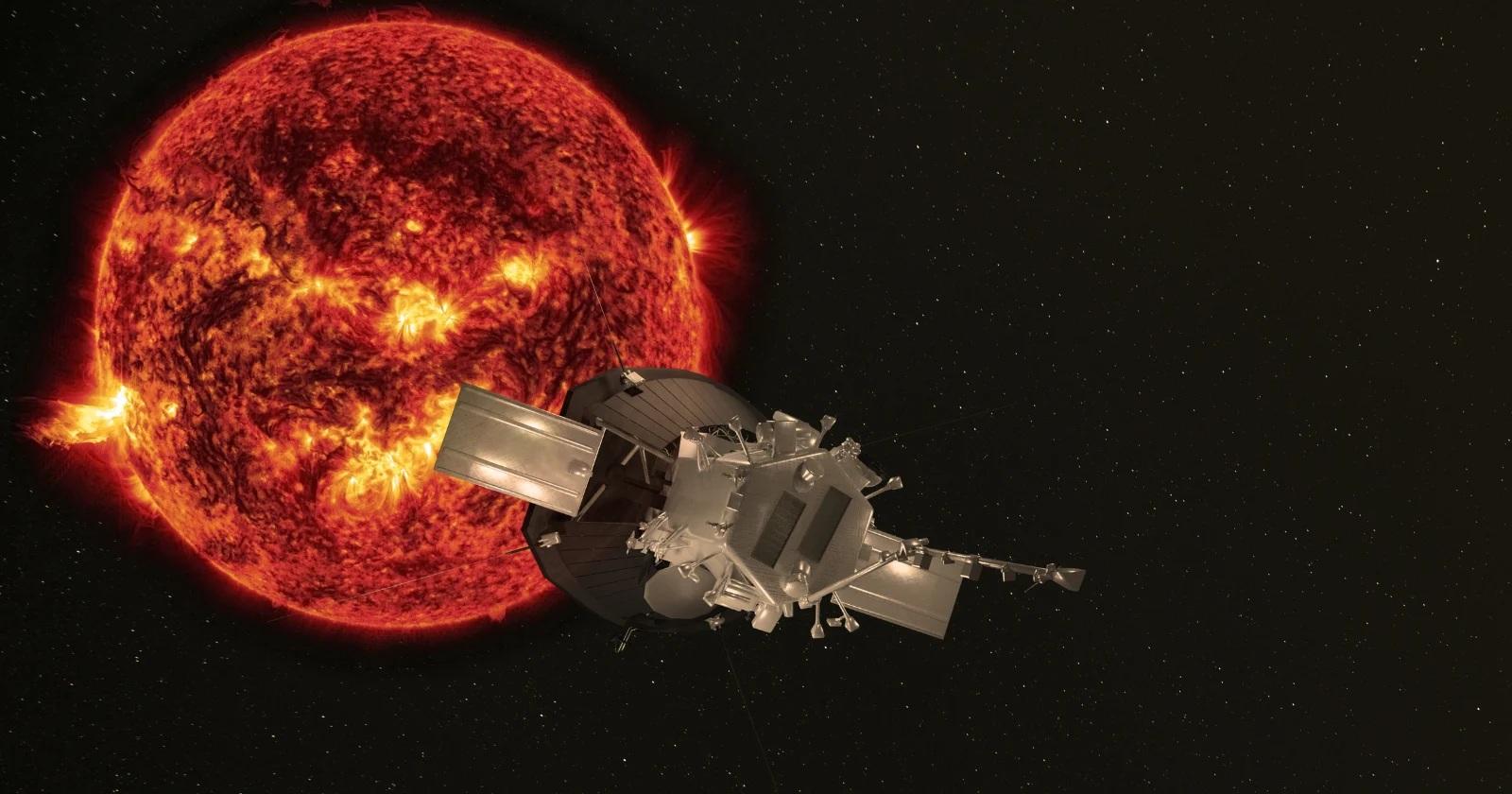
NASA's Parker Solar Probe Flew In And Out Of The Solar Corona And Found A Source Of High-Energy Particles That No Existing Model Had Predicted
(When NASA's Parker Solar Probe passed through the solar corona during perihelion encounters at the heliospheric current sheet, its instruments recorded energetic protons at energies far above what existing models of particle acceleration at that location could account for.)
--
https://spacedaily.com/n-nasas-parker-solar-probe-flew-in-and-out-of-the-solar-corona-and-found-a-source-of-high-energy-particles-that-no-existing-model-had-predicted/ <-- shared technical article
--
https://doi.org/10.3847/2041-8213/ae3ca1 <-- shared paper
--
https://www.space.com/high-energy-particles-source-space-weather <-- shared technical article
--
https://youtu.be/Woo4yZby4BU <-- shared space weather overview effects video, #AIslop notwithstanding 🙃 🫠 😉
--
“… A team… at the Southwest Research Institute… and… the University of Maryland’s Institute for Research in Electronics and Applied Physics has published an analysis of those measurements [link above]…, identifying magnetic reconnection at the heliospheric current sheet as the mechanism responsible. The proton energies detected were, in the study’s framing, approximately a thousand times greater than the available magnetic energy per particle that models of this process had predicted.
The finding matters for two reasons: it identifies a source of energetic particles close to the Sun that was not anticipated, and it raises questions about how far the existing understanding of reconnection-driven particle acceleration extends…
The Parker measurements suggest that picture needs revision. The magnetic island merging mechanism [the authors] identif[ied] can evidently produce proton populations at energies that challenge the boundary between what reconnection does and what shock acceleration does. Whether this source can explain a significant fraction of observed near-Earth energetic particle events, or whether it contributes mainly at energies and scales that remain confined close to the Sun, is a question the paper does not yet resolve…
Solar Orbiter, the European Space Agency mission operating in coordination with Parker, offers complementary measurements at somewhat greater distances. Comparing what the two spacecraft measure of the same particle populations as they propagate outward from the Sun will help establish which features originate close to the source and which are modified by the intervening solar wind. The energetic particle observations that puzzled researchers in the pre-Parker era now have a candidate mechanism. Whether that mechanism accounts for a large or small fraction of what actually reaches Earth remains the open question…”
#sun #solar #solarsystem #heliosphere #Parker #SolarOrbiter #spacecraft #research #monitoring #instrumentatin #spaceweather #solarflare #coronalmassejection #CME #NASA #ESA #magnetism #geomagnetism #proton #energy #particleacceleration #measurement #solarwind #risk #hazard #impacts #corona #perihelion #model #modeling
@nasa @esa
24
25
view more: next ›