Animals

229 readers
3 users here now

Anything and everything about non-human animals.

Rules:

  1. Posts should be relevant to non-human animals, including articles (news or just interesting facts), pictures (OC only but the animals need not be your pets), or text posts.
  2. Keep things civil. Don't insult other users or their pets. Do not post content that promotes animal abuse (this does not include content, like news, that portrays abuse in a negative light).
  3. Follow site-wide rules

founded 2 years ago
MODERATORS
1


From Soumitra Biswas

Rufous-bellied Niltava 💙💛

One of the most stunning flycatchers of the Himalayan foothills. This Rufous-bellied Niltava briefly appeared in the middle levels of the forest in Latpanchar, giving just enough time for a few frames before disappearing back into the foliage.

Like most niltavas, the contrast between the sexes is striking. The male glows in brilliant blue with a rich orange belly, while the female is much subtler in warm brown tones with a pale throat and a small blue crescent on the neck.

Usually found in the middle and upper layers of broadleaf and mixed hill forests, they often move quietly with mixed-species feeding flocks, occasionally darting out after insects before returning to cover. Their series of high, metallic whistles often echo through the forest long before the bird is actually seen.

Sony A7V + Sigma 500mm f/5.6

Latpanchar, Darjeeling, West Bengal

March 2026

Image of female from Wikipedia:

2


cross-posted from: https://lemmy.zip/post/62804540

3


From Tamarack Wildlife Center

Prepared for a Porcupette!

An infant North American Porcupine is in care after rescuers found it orphaned on a roadway in Oil City, PA. Having successfully raised and released another orphaned porcupine in 2024, the team at Tamarack has a solid treatment plan to care for this unique patient.

Young porcupines are called porcupettes, and we estimate that this porcupette was only a few days old when it was rescued. Thankfully, its examination showed it was uninjured, despite being found on the road and weighing just under a pound.

As you can imagine, caring for a rodent with 30,000 barbed quills comes with some unique challenges. Fortunately, porcupines do not throw their quills, as old tales suggest. Instead, quills are loosely attached and act as a detachable defense mechanism. To prevent quills from accidentally detaching during care, our rehabilitators wear vinyl gloves and aprons that do not snag the quills. At birth, porcupines do have all of their quills, but they are soft to protect the mother. The quills harden and sharpen within a few hours after birth.

This porcupette enjoys a species-specific formula every few hours. Since admission, it has put on weight and remains in stable condition.

Porcupines give birth to a single baby roughly every other year, and young porcupettes will stay with their mothers until they are 5 months old. We look forward to sharing updates as this porcupette's journey in care continues.

4


From African Pangolin Working Group

When working in conservation, support and partnerships are essential and the foundation of greater success. APWG is grateful for the amazing commitment of our Let's Live partner, who continue to support our team and pangolins.

While we work on the ground in South Africa, our team is also up at all hours supporting pangolin rescues across Africa. So much happens behind the scenes: days and nights advising first-time pangolin carers on how to improvise in bad situations, often across language barriers, and countless calls to anyone who can help; relying on strangers to do the right thing and building relationships through a shared commitment to saving pangolins.

Then there's the on-the-ground mobilising: urgent care package deliveries into remote areas, volunteer drivers and pilots moving pangolins by land and air, collaboration with local organisations and law enforcement for the paperwork that keeps everyone protected, and good samaritans stepping in with emergency supplies while fully stocked care packages cross the continent. What reads as a "simple list" can mean several days of nearly 24/7 communication to save even one pangolin.

When a kind citizen in a remote part of Guinea recently rescued a tiny black-bellied pangolin pup, after seeing her mother killed by a hunter, our team was by her virtual side from the start, guiding her on stabilising the pup with what she had, while networking to move her to a better-equipped facility. Volunteers to collect her, fuel cover, flights, a fully stocked hand-rearing care package rushed from South Africa... When we asked our Let's Live partners to help, they didn't hesitate and covered the full rescue cost. A press of a button that may seem simple, but was incredibly impactful for one little pangolin and the team fighting for her. Thank you for your continued kindness and unwavering commitment to pangolins, and for the strength you bring to this partnership for our scaled friends.

5


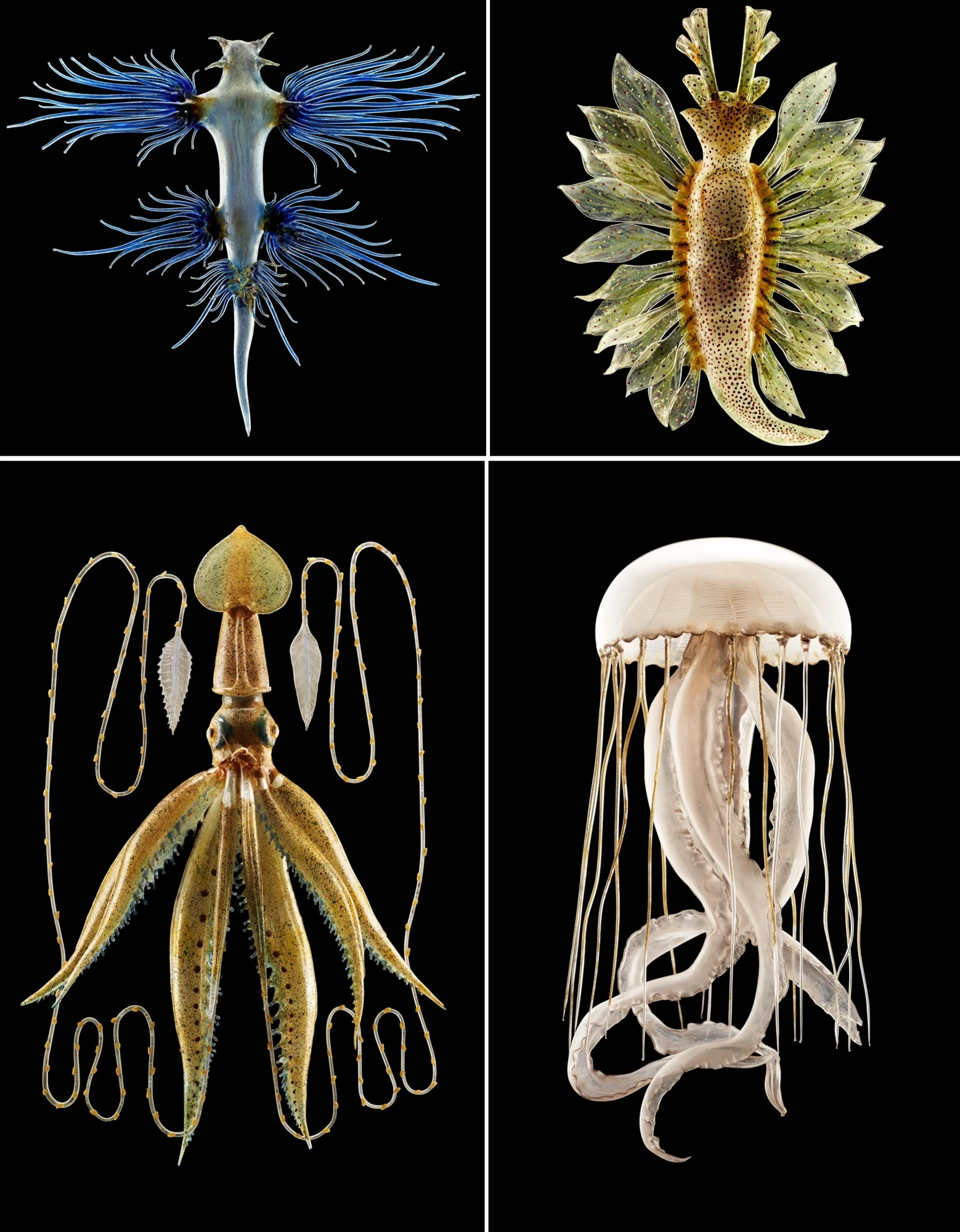
These specimens are some of thousands of meticulously detailed marine invertebrate models fashioned between 1863 and 1890 by a father-son glassworking duo, for the primary purpose of research and education. Collectively, their work depicts more than 700 different species—including various anemones, squids, and sea stars—found in waters around the globe.

Clockwise, from upper-left:

  • Blue Sea Dragon slug ( Glaucus atlanticus )
  • Spotted-Sacoglossan nudibranch ( Caliphylla mediterranea )
  • Compass Jellyfish ( Chrysaora hysoscella )
  • Long-Armed squid ( Chiroteuthis veranyi )

The models’ destinations were also far-flung. From their glassworking studio in Dresden, Germany, Leopold Blaschka and his son, Rudolf, shipped their fragile pieces to museums and academic institutions in locales as diverse as Australia, India, Japan, and the United States (where Cornell University now holds what’s likely the world’s largest collection, at more than 570 pieces).

As an artist (who never worked in blown-glass), I find myself frequently amazed by the precision and detail possible in that medium. oO

More info & examples:
https://www.guidomocafico.com/work/leopold-rudolf-blaschka/blaschka-i/
https://www.sciencefriday.com/articles/a-tale-of-two-glassworkers-and-their-marine-marvels/

6


From Pocono Wildlife Rehab

Meet Dipper and Mabel

These two leucistic fawns were found in Greentown in the middle of the road, shivering cold and completely wet from the rain.

A leucistic fawn is a baby deer that has a genetic condition called leucism, which causes a partial loss of pigmentation in the skin, hair and sometimes eyes. Their light or white coat stands out against natural surroundings and they are much easier for predators to spot, even when lying still. Their primary defense(invisibility) is essentially taken away

So while all fawns face high predation risk, a leucistic fawn is at a significant disadvantage from the start. It's not that they are weaker ,it's that they are more visible in a world where being unseen is everything. They are both being treated for hypothermia and Jessica is working non- stop on stabilization. A Dipper also has some mobility concerns which will be addressed once they are both stable.

Wow, Pocono is the next nearest rehab to me, and they are always tempting me to defect with cases like this!

7


From Aark Wildlife

We thought this fox would never walk again, but thanks to hydrotherapy he's getting movement back to his leg!

This male fox, patient 26-1074, was found by students of Delaware Valley University on the side of the road after being hit by a car. His face was bleeding and he was completely unresponsive. After quickly rushing him to Aark, he was immediately started on supportive care. Our X-rays showed a fractured pelvis and on his initial exam, he showed little to no response in his left leg.

Due to the severity of the fracture and his condition, we weren't sure if he would ever walk again.

After a few days of supportive care he showed significant improvements and so we consulted one of our partner veterinarians to see if there was anything we could do. After that meeting, we started the fox on hydrotherapy.

We built a custom frame in-house and use a harness to hold him up in the water (which still needs some adjustments for a perfect fit). He gets 10-15 minutes of hydrotherapy every day to get him moving which has helped him regain movement in his left leg!

This fox will be with us for a while yet while he heals from his injuries and learns to walk again, but we are feeling confident in his strength and ability to heal and be released.

8


From DuPage Wildlife Conservation Center

Patient of the Week

Have you ever heard of a rat king? Maybe don't look it up, the photos can be a bit disturbing. It's when a group of rats get their tails intertwined together and become one large mass, unable to pull apart. Sometimes there is material that is making the entanglement worse like hair, garbage, or sticky residues. Now, how about a squirrel king?

I'm not sure what the rescuer of this ball of fur thought, but good for her for managing to contain this understandably agitated group of six juvenile eastern gray squirrels. Thankfully, all the squirrels were alive and in relatively good condition! They were quickly sedated for detangling and assessment. Watch the process in a video in the comments. While they may not look alive in the video and photos, all six are alive and well, just sedated for this delicate procedure.

While unbraiding their tails, some plastic and hay was discovered in the mix. We didn't find any in this case, but squirrels can get sap on their fur that can contribute to this. Unfortunately, their tails were cold and swollen in spots, which will lead to partial amputations for these babies. But a better alternative than staying stuck together!

Two days after intake, the squirrels had surgery to remove the tips of their tails that were permanently damaged from the entanglement. They all lost about half of their tail, but it won't prevent them from eventual release. There are many partial-tailed squirrels doing just fine in the wild (one is a regular visitor in our preserve)!

So far in life, these squirrels have had to do everything together. Den together. Eat together. Go to the hospital together. Even have surgery together! I'm sure as they get older, they will be happy to explore what the natural world has to offer and make their own way.

Plastic, straw, and fur were mixed up in the tangle of tails.

Making progress- halfway there! I can't imagine trying to do this without sedation!

Once they are separated, each gets a shot to reverse the sedation, medications, and fluids before getting set up in the hospital. Surgery in a couple days will be needed to address their damaged tails.

This was found tangled in with their tails.

One early riser, but still out of it. Can't imagine what is going on in that little head.

This group of siblings is five males and one female. They look pretty cute all lined up.

A couple days later, the squirrels had surgery. Two groups of three each at a time makes for a quicker procedure.

The tips of their tails were snipped off where there was permanent damage, then sutured and bandaged.

Post-surgery, these cuties were still feeling sleepy. We will be able to tell this litter from the others!

Their tails should heal quickly, as long as they stay clean and calm. Maybe wishful thinking for a group of juvenile squirrels?

9
 
 
10


First of all, these are just random pics I gathered from the 'Net. Please let me know if any particular photog-creator needs to be cited / edited in.

(right-click as needed)

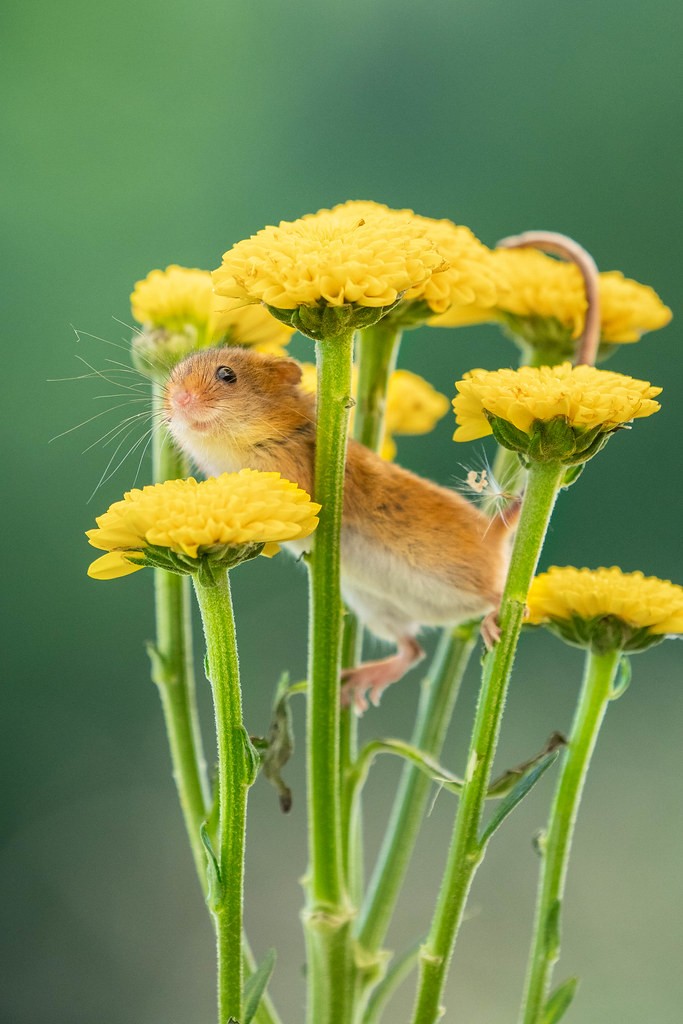
Evidently there are two species of Harvest Mice, and far as I know, this is a mix of both. https://en.wikipedia.org/wiki/Harvest_mous


From what I understand, these little cuties are typically so successful because of their teeny-tiny weight, which is not enough to be a problem for these types of flowers.


Indeed, their lightweight is typically perfect for thriving amongst such flowers.


And OF COURSE, they can certainly strike a pose. :D


Even two (or sometimes more) are possible!


Still... one must also eat. One must eat!


Or just take a little nap...


Some of these photos are credit to Dean Mason, so all good things to that excellent photog. See here: https://www.boredpanda.com/cute-harvest-mouses-dean-mason-photography/

For those who can't see the pics (maybe in the UK), put this Imgur link through an archive / backup:

https://imgur.com/gallery/small-collection-of-harvest-mice-flowers-living-best-lives-with-notes-r3GmMyV

11
12


cross-posted from: https://lemmy.world/post/45077014

Author: Antonio J. Osuna-Mascaró, Alice M. I. Auersperg

Source

CC BY-SA 4.0

13


Trying to remember (sorry, but only getting less than 6-hrs. sleep for a long time now, thanks to next door neighbor's roosters anywhere from 50-Ft. or more to 30-Ft. or more from all available beds & couches, all mornings long & nearly 10-hrs. a day) all the recent animals suddenly appearing to me, live in Ag. & unincorporated area. Sorry, for no attached PICs, but I do not own a cellphone or carry a camera with me. Maybe that the reason the wild, Indigenous (are Coyotes indigenous to our area) wildlife is so trusting & ?Interested? of me; so close, it is crazy at times.

1st. The most memorial interactions with Possums, was many years ago, when I caught the greatest Being I have ever known (I know, I have posted I do not do this much any more, but it is just so true)/a dog carrying a wild, indigenous & adult (biggest i have ever seen) possum around in his mouth, early afternoon, when I got mad & looked at the dying adult, found a whole litter (or whatever the term is) of baby possums. I got them to the closest (30-minutes away by truck I drove/edge of natural wildlife park) wildlife rescuer, they took them all. The mother ended-up dying & the babies all survived & when old enough put into the natural wildlife park.

Sadly this just before neighborhood trees decreased drastically (after built back-up to not enough, but more, after hurricane), while our properties being one of few of the entire Ag. & unincorporated area, not just our neighborhood-Ave. that actually increased the amount of trees. One next door neighbor took down a ton of trees, just a couple or more years ago, having to move-out 9-sepearte Bee hives. The father even was talking to me about amazing it was, had a professional do it (though for previous owners never a problem). We cannot get bees to live in our trees tired, though do eat & etc. from them. No doubt this effects Possums & rumors wild, ?indigenous? pack of coyotes are hanging out at night (the dog I care for, barks like crazy outside to use restroom, at night). Raptors population fell-off, even though increase in the local, natural, national & wildlife park's birds over recent years (not a good sign).

2nd. About 2-weeks or more ago, I was walking the dogs (I care for) past our property gate & fence, just after it connecting to the gate the fence is covered with 'Morning Glory' (hope it is Indigenous to our area), iI turned around, fo some reason & caught a wild, indigenous & adult Possum walking past the inside of the gate. They are extremely rare to see, especially, since this is just born 12pm).

3rd. About a week or more ago, I was turning around, to dump food scrapes that the worms cannot compost underneath the mangoes trees, when my flash light fell upon a wild & indigenous adult Screech Owl sitting, maybe 5-ft. or less from me & on the tumbling 'Wizard Jr.' composter & just looking right at me/through the flash light for a long time (the whole family for years has been friendly with me, started when I started walking my hunting cat outside & they had yet felt safe & sent out members follow him/us around as we walked around the outside of the house & under all the trees). The whole family & I become comfortable with each other, silent makes then suddenly surprising many times, so much so becoming less shocking.

4th. This past Sunday, I was walking around again, to do the dumping of the food scrapes the worms cannot eat, & saw a wild & indigenous & adult & full-healthy rabbit, I assume either eating the grass or drinking out of the on ground bird-bath, because it was in grass & before the bird-bath. I love seeing wild & indigenous wildlife, so using my flashlight I was following it, while I walk a lot farther & back, it just hung-out in that general area. Though I was worried about letting the dogs I care for out, so I went out with them, but no longer could find the rabbit. Depending upon the year, we do see a lot of rabbits,

&

5th. Just today, around 10am something I was maintaining (trying get it spread & fill-in holes in it) the previously mention 'Morning Glory', with the super well behaved dogs (I care about) were sitting & quietly for treats (only feet away), when a wild, ?Indigenous? (believe it is, most are here), adult & large Hummingbird flew up at my eye level (I am about 6' tall) from the other side of The 'Morning Glory' vine (mere inches from my face), froze for secs./hovering, as they do, turned around & disappeared. We see a lot of Hummingbirds, but talk about once in life-time experience, at least for this household.

14


15
 
 
16
 
 
17
 
 
18


cross-posted from: https://lemmy.ml/post/38629752

19
20
 
 
21
22
23
24
 
 
25
view more: next ›