1
Anarchism
97 readers
3 users here now
Community about anarchists and philosophy.
Post content that is thoughtful and relevant to social liberation from an anarchist, autonomous, antifascist perspective.
-
Be respectful
-
Don’t be a nazi
-
Argue about the point and not the person
This is not the place to debate the merits of anarchism itself.
I also don't care that you hate me just because I didn't fucking vote for Biden, Harris, or Trump. :)
Deal with it. I'm not going anywhere.
founded 1 year ago
MODERATORS
2
cross-posted from: https://hexbear.net/post/6934582
Came across this article because I was believing the Proudhon story, and trying to refresh my memory. But here I find it credibly disputed so I consider myself debunked.
Here is full text only in hopes it will be read, not because it is a reactionary site. Please have some love for comrades at Freedom News.
The circled A at 60 part one: Birth of a symbol
part 1: full text + images
The circled A at 60 part one: Birth of a symbol
Art & Anarchy, Aug 23rd
This story was first published 5 April 2024 [editor]
We can thoroughly search all the archives, going back in time as far as possible and across all continents; however, reality is stubborn, and one fact remains unyielding: prior to April 1964, an A in a circle had never symbolised anarchy or anarchism. No poster, no graffiti, nor any trace whatsoever. This absence of evidence, however, does not conceal any mystery; rather, it simply reflects the straightforward fact that the circled A couldn’t exist before being conceived, which happened precisely in April 1964.
As of April 2024, sixty years have passed since the circled A was publicly presented as a proposed symbol of anarchism. While documents attesting to its origin will endure for a long time, the opportunity to provide first-hand testimony is rapidly diminishing. Therefore, I see no reason to delay any longer the compilation and dissemination of this information, although Marianne Enckell and Amedeo Bertolo covered the essential aspects in an article from 2002, which will be included as the third installment in this series.
The importance of specifying the origin of the A in a circle lies not so much in clarifying exactly where and by whom it was conceived, but rather in delimiting its meaning, as this explains its extraordinary dissemination. Nor is it about claiming for a clearly unwarranted paternity, because although the circled A was indeed introduced and proposed in April 1964, it only gained significance as a symbol through the collective efforts of thousands of anarchists worldwide, who adopted and incorporated it into various media, including walls, flags, banners, publications, and even tattoos. Consequently, the circled A has arguably become the most widespread political symbol in the world, epitomizing anarchism with unparalleled clarity.
The symbol is undeniably the result of extensive collective work, but before becoming a symbol, the process of its creation was also collective. Although a specific person [the author, Tomás Ibáñez. Ed.] initiated the proposal, that is, the idea of creating a simple and easy-to-draw symbol that, devoid of ties to any specific anarchist group or organization, could increase the visibility of anarchism through its presence in all graphic expressions of the anarchist movement, the acceptance of this proposal within the group of young libertarians in Paris was the outcome of extensive discussions and, thus, collective endeavour. The pursuit of the most suitable design and the final selection were likewise communal activities. And although one single person was responsible for drawing it on a stencil, both the production of the carefully mimeographed bulletin in a companion’s flat and its distribution continued to be collective activities.
Furthermore, the intent behind recounting the circumstances which surround its genesis is twofold: to debunk fanciful tales circulating about its origins, and to reaffirm the concept of anarchism embodied by the circled A. From its inception, the aim was for the symbol to be owned by no one so it could belong to all. And indeed, the will to design a symbol that did not refer to any existing anarchist organisation, acronym, or collective was decisive in ensuring its place within the broader anarchist sphere. Its independence from any ownership meant it could be claimed by anyone who resonated with its ethos.
Moreover, the circled A’s proposal aimed not to homogenize the diverse spectrum of anarchism but to celebrate its plurality while providing a shared reference point. It was necessary to ensure that what was common to all anarchist sensibilities could manifest itself without invocation of any centralising principle. We had to accept the dispersal of anarchist forms of organisation, but at the same time introduce a principle of confluence that would bring all these forms together. The circled A avoids any temptation to integrate anarchism under a single formula, ensuring that its diversity is reflected in the undifferentiated use of an icon that belongs equally to each of its streams and modalities.
Like the definition of archipelagos, which are described as a collection of islands united by what separates them_,_ the circled A aimed to transform what separates the different streams of anarchism into a link between them, without erasing their specificity. The idea was to encourage a confederation of singularities united by a family resemblance and a common ground beneath the multiplicity of sensibilities and struggles. This recalls Gilles Deleuze’s beautiful phrase defining anarchy as “that strange singularity which can only be said of the multiple”.
Additionally, the symbol’s resonance with local grassroots initiatives and spontaneity eschews the principle of representation since a circled A does not represent anarchism and cannot claim to do so. Unlike an official stamp, it does not authenticate anything because no one has the legitimacy to authorise its use. The fact that anyone can use this icon freely means that it escapes any principle of representation and refers only to the responsibility of the user. This perhaps explains why the form of this symbol has diversified considerably, especially thanks to the punk movement, expressing individual creativity without ever losing its powerful association with anarchism.
One last consideration to place the origin of the circled A. Its creation happened in the context of intense militant activity in the 1960s to encourage the convergence of different sectors of anarchism. Thus, at the end of 1963, the Comité de Liaison des Jeunes Anarchistes (CLJA) and the Liaison des Étudiants Anarchistes (LEA) were created simultaneously in Paris. The CLJA did not claim to be a new anarchist organisation but simply a meeting point between members of different organisations, while the LEA brought together anarchist students belonging to various collectives. Transcending borders, this effort to bring together different fragments of anarchism culminated in a major European Meeting of Young Anarchists held in Paris in April 1966, with a very active presence of young libertarians from Milan, who adopted the circled A and widely spread it in Italy, bringing it out of the shadows where it had been kept by the lack of enthusiasm it had aroused, and thus projecting it onto the international scene.
Here is a translation of the original April 1964 text:
… parallel to their work of non-formalist self-education, they aim to spread as widely as possible the fundamental ideas of anarchism.
The dissemination of issues related to libertarian emancipation requires the involvement of all individuals, the involvement of all individuals who advocate for an anarchist society as the sole path toward the complete realization of humanity.
Regardless of the different currents (philosophical nuances) or the different groups and organizations (practical nuances), no activist should object to any effort that contributes to the wider dissemination of propaganda, thereby enhancing its effectiveness and demonstrating the unity of Anarchism amidst its diverse conceptions and expressions.
Why do we propose this symbol that we PROPOSE TO THE ENTIRE ANARCHIST MOVEMENT and why this one in particular?
It stems from two primary motivations. Firstly, it aims to streamline and expedite the creation of wall inscriptions and posters. Secondly, it aims to enhance the visibility of the anarchist movement within society by incorporating a common element shared across all anarchist expressions in the public sphere.
Specifically, our objective was to minimize the time required to create wall inscriptions by avoiding the need to write a lengthy signature beneath our slogans. Additionally, we want to choice a symbol broad enough to be embraced and used by all anarchists.
We believe the proposed symbol best fulfils these criteria. By consistently pairing it with the term “anarchist,” it will trigger associations with anarchism in people’s minds (akin to the phenomenon of the Celtic cross linked with the Jeune Nation organization).
Moreover, this symbol serves a dual purpose for anarchist enhancement: firstly, by accelerating and facilitating the creation of anarchist messaging, and secondly, by appearing in graphic representations of the various anarchist groups, tendencies, and organizations.
By adopting the letter “A” (which bears no resemblance to JJLL), we aim to demonstrate our commitment to reciprocal solidarity and to pave the way for the widespread adoption of this efficient and practical approach.
Young Libertarians Paris Group~ Tomás Ibáñez
The circled A at 60 part 2: True and false
part 2: full text + images
The circled A at 60: True and false
Art & Anarchy, Apr 12th
Read part 1 of this series here.
Despite well-documented evidence of its origin, numerous fanciful speculations persist, including within anarchist circles and many libertarian historiographies that explore the symbol’s origin. It’s essential to clarify that we are concerned with the history of an anarchist symbol rather than a specific design. While representations of the letter A enclosed within a circle have certainly existed for centuries, they held no connection to anarchism.
Here are a few true and false statements about the circled A.
→ The circled A has always part of anarchism: False
The connection between the circled A symbol and anarchism is so deeply ingrained that for a significant period, it was believed they were inherently linked and had ancient origins. The lack of information surrounding its inception fostered a sense of mystery, perpetuating this misconception.
→ The circled A did not appear until April 1964: True
It developed gradually as a symbol of anarchism, becoming widespread only from the 1970s onwards, starting in Italy.
→ The circled A was intended to evoke “order without power”, following Proudhon’s well known sentence: False
This assertion suggests that the “A” of anarchy, symbolizing the absence of power, is enclosed within the “O” of order. However, this interpretation was never conceived by the young libertarians who sought to establish a symbol for anarchy. There is no connection between the circled A and Proudhon’s concept, nor with the notion of order, as evidenced by the diverse evolution of the circled A, particularly when it was revitalized by the punk movement, transcending the confines of a closed circle.
→ The seal of the Federal Council of the International Workers Association of Spain depicted a circle A from 1870 onwards: False
This seal, featuring a combination of a square and a plumb line, bears a closer resemblance to freemasonry than anarchism. At the time, the Spanish section of the IWA, despite being heavily influenced by Bakunin, did not explicitly identify as anarchist. Therefore, the seal did not intend to symbolize anarchism.
→ The circled A already appeared on the helmet of a militiaman during the Spanish Revolution: False
Despite efforts to discern a circled A on the helmet, it’s challenging to interpret the depicted lines as forming the symbol. Even if a militiaman had indeed drawn a circled A on his helmet, it wouldn’t represent a symbol of anarchism, as the circled A was entirely absent from the Spanish Revolution.
→ The circled A appeared in the Bulletin of the Alliance Ouvrière Anarchiste (Anarchist Workers Alliance) as early as 1957: False
What was featured in the bulletin of this small French-speaking anarchist organization was the acronym of AOA, with the letter “O” (for Ouvrière) enclosed within the letter “A” (for Alliance) and a second letter “A” (for Anarchist) inserted within the letter “O.” This contrasts sharply with the circled A which could only symbolize anarchy when detached from any specific organization. It wasn’t until June 1968, four years after its inception, that the circled A was utilized in the AOA bulletin.
~ Tomás Ibáñez
The circled A at 60 part three: The true story
Part 3: full text + images
The circled A at 60 part three: The true story
Features, Aug 28th
Pic: An anarchist gathering in Sudan in 2022, prior to the outbreak of civil war
The circled A is a symbol so widespread, so widely recognised and disseminated that it has come to be taken as a traditional symbol of anarchism, seeming to have existed forever. Some rumours trace its origin back to the Spanish Revolution: young anarchists are more accustomed to seeing a circled A than the clearly discernible target painted on a militiaman’s helmet as seen in a photo with Durruti. Some believe it refers to Proudhon, encapsulating his idea of Anarchy in Order. In fact, it is a recent phenomenon in libertarian iconography: the circled A was invented in Paris in 1964 and reinvented in Milan in 1966. Two dates, two birthplaces? Let’s take a closer look.


It was in April 1964, on the cover of the Jeunes Libertaires bulletin, that the Groupe JL de Paris drew the symbol it was proposing “to the whole anarchist movement” across the different currents, groups, and organisations_._
“It stems from two primary motivations. Firstly, it aims to streamline and expedite the creation of wall inscriptions and posters, and secondly, to enhance the visibility of the anarchist movement within society by incorporating a common element shared across all anarchist expressions in the public sphere. Specifically, our objective was to minimise the time required for creating wall inscriptions by avoiding the need for lengthy signatures beneath our slogans while also selecting a symbol broad enough to be embraced and utilised by all anarchists. We believe the proposed symbol best fulfils these criteria. By consistently pairing it with the term “anarchist,” it will trigger associations with anarchism in people’s minds”.
The 1964 JL proposal had no success, except for some graffiti in the corridors of the Paris metro – let’s not forget that at that time, leaflets and newspapers were printed either on stencils (a fragile medium) or in conventional letterpress, so a lead plate showing an A in a circle would have been necessary. In December of the same year, the circled A appeared in the title of an article by Tomás [Ibañez] in the newspaper Action Libertaire. The Jeunes Libertaires network, which in the early sixties included several groups throughout France, had weakened: regional bulletins no longer appeared, and the Paris bulletin was inactive from 1965 to 1967. However, several “JL” would later be at the forefront of the May ’68 movement. End of the first chapter.
The proposed symbol is a capital A inscribed in a circle; Tomás Ibañez (pictured) is the initiator, and René Darras is the designer. Where did the idea come from? From the simplicity of the design, from the already widespread anti-nuclear sign of the CND (Campaign for Nuclear Disarmament), or from other inspirations?
The Alliance Ouvrière Anarchiste (Anarchists Workers Alliance) claims to have used it in its correspondence from the late 1950s, thus marking its initials AOA, but it did not appear in its bulletin L’Anarchie until June 1968.
It wasn’t until 1966 that the circled A symbol was used experimentally, and then, in 1968, it was used regularly by the Gioventù libertaria of Milan, which maintained fraternal relations with the young Parisians. These two groups formed the European Liaison Committee of Young Anarchists (CLJA). It was then that the public life of the symbol began.
The first time we saw it was in Milan, where it was used as the usual signature on leaflets and posters of young anarchists, sometimes in association with the anti-nuclear symbol and the apple of the Dutch Provos. It spread throughout Italy and then worldwide, but hardly any circled A was seen during the Paris May of 1968, with the first traces appearing only in 1972-73. During those years, the popularity of the circled A exploded and was appropriated and imitated by young anarchists worldwide. It was so successful that if its inventor had patented it, he’d be a billionaire today…
Why this rapid and striking success? Basically, it was due to the same reasons for which the JL proposed the symbol: firstly, it’s extremely easy to draw, as simple as a cross or a star, simpler than the swastika or the sickle and hammer. Secondly, a new, young movement, in full development, had learned to write on walls and was seeking a recognisable symbol.
That is how the circled A came to be adopted, without any organisation or group ever thinking to decree its use and in the absence of any other international graphic symbol for anarchists (who sometimes used outdated symbols, like the torch in Italy).
So that’s the true story of the circled A, made of conscious will and spontaneity: a typically libertarian cocktail. Any other story is merely legend.
~ Amedeo Bertolo, Marianne Enckell
This story was first published in April 2023 [editor].
The documentation used in this series of texts is deposited at CSL-Archivio Pinelli (Milan) and CIRA (Lausanne). A first version of this article was published in 2001 in Bollettino Archivio Pinelli (via Rovetta 27, 20 170 Milano). This version appeared in 2002 in the CIRA bulletin no.58.

3
4
5
6
7
8
May have been written today. The more things change, the more things stay the same!

9
1
Antiracist Skinheads and the Birth of Anti-Racist Action: An Interview With Mic Crenshaw
(organizingmythoughts.org)
10
11
Over 5,000 people attended the mass memorial meeting called by the Anti-Militarist League for Berg, Hanson, and Caron, the three anarchists killed in the Lexington Avenue explosion. Over 800 policemen monitored the meeting, while Berkman, Abbott, Edelsohn, Elizabeth Gurley Flynn, Carlo Tresca, David Sullivan and Charles Plunkett all spoke for their dead comrades.

12
13
1
1886 excerpt from the Cleveland Gazette, an African American newspaper, suggesting Statue of Liberty torch not be lit until the United States became a free nation for real
(lemmy.dbzer0.com)
Interesting little excerpt from The Cleveland Gazette, an African American newspaper dated November 27, 1886.
Shortly after the dedication of the Statue of Liberty, The Cleveland Gazette suggested that the statue's torch not be lit until the United States became a free nation "in reality":
"Liberty enlightening the world," indeed! The expression makes us sick. This government is a howling farce. It can not or rather does not protect its citizens within its own borders. Shove the Bartholdi statue, torch and all, into the ocean until the "liberty" of this country is such as to make it possible for an inoffensive and industrious colored man to earn a respectable living for himself and family, without being ku-kluxed, perhaps murdered, his daughter and wife outraged, and his property destroyed. The idea of the "liberty" of this country "enlightening the world," or even Patagonia, is ridiculous in the extreme.

14
15
1
Rudolf Rocker (1873 - 1958) Johann Rudolf Rocker was an anarchist theorist, historian, and activist, known for critical anarchist texts such as "Anarcho-Syndicalism:...
(stahmaxffcqankienulh.supabase.co)
cross-posted from: https://lemmy.ml/post/27702702
cross-posted from: https://lemmy.world/post/27372186
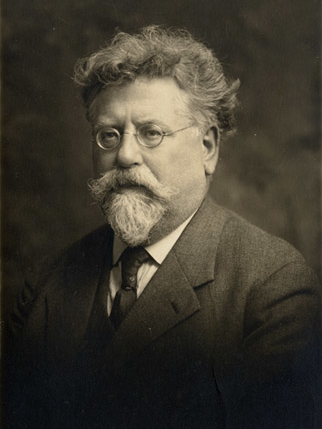
Rudolf Rocker (1873 - 1958)
Tue Mar 25, 1873
Image: **


Johann Rudolf Rocker, born on this day in 1873, was an anarchist theorist, historian, and activist, known for critical anarchist texts such as "Anarcho-Syndicalism: Theory and Practice" (1938) and "Pioneers of American Freedom" (1949).
Though often described as an anarcho-syndicalist, Rocker was a self-professed anarchist without adjectives, believing that anarchist schools of thought represented "only different methods of economy" and that the first objective for anarchists was "to secure the personal and social freedom of men".
Rocker was involved in helping organize a number of labor strikes and represented the federation at the International Anarchist Congress in Amsterdam in 1907. Rocker was well-read in his lifetime - his readers included figures Thomas Mann, Albert Einstein, Herbert Read, and Bertrand Russell.
"Anarchism is no patent solution for all human problems, no Utopia of a perfect social order, as it has so often been called, since on principle it rejects all absolute schemes and concepts."
- Rudolf Rocker
- Date: 1873-03-25
- Learn More: en.wikipedia.org, libcom.org, theanarchistlibrary.org.
- Tags: #Birthdays, #Anarchism.
- Source: www.apeoplescalendar.org
16
17
18
19
1
Five Questions for Cultivating Solidarity When Responding to Political Repression — Community Justice Exchange
(www.communityjusticeexchange.org)