Solarpunk

9013 readers
30 users here now

The space to discuss Solarpunk itself and Solarpunk related stuff that doesn't fit elsewhere.

What is Solarpunk?

Join our chat: Movim or XMPP client.

founded 4 years ago
MODERATORS
1


I'm always looking for things to add to my RSS reader! I loved the Hundred Rabbits site that was posted here recently and thought others might have some nice submissions.

I recently found Sunshine and Seedlings which is substack, alas, but has some great content.

I'm also a fan of Low-tech Magazine.

2


Solarpunk is a movement in speculative fiction, art, fashion, and activism that seeks to answer and embody the question “what does a sustainable civilization look like, and how can we get there?”

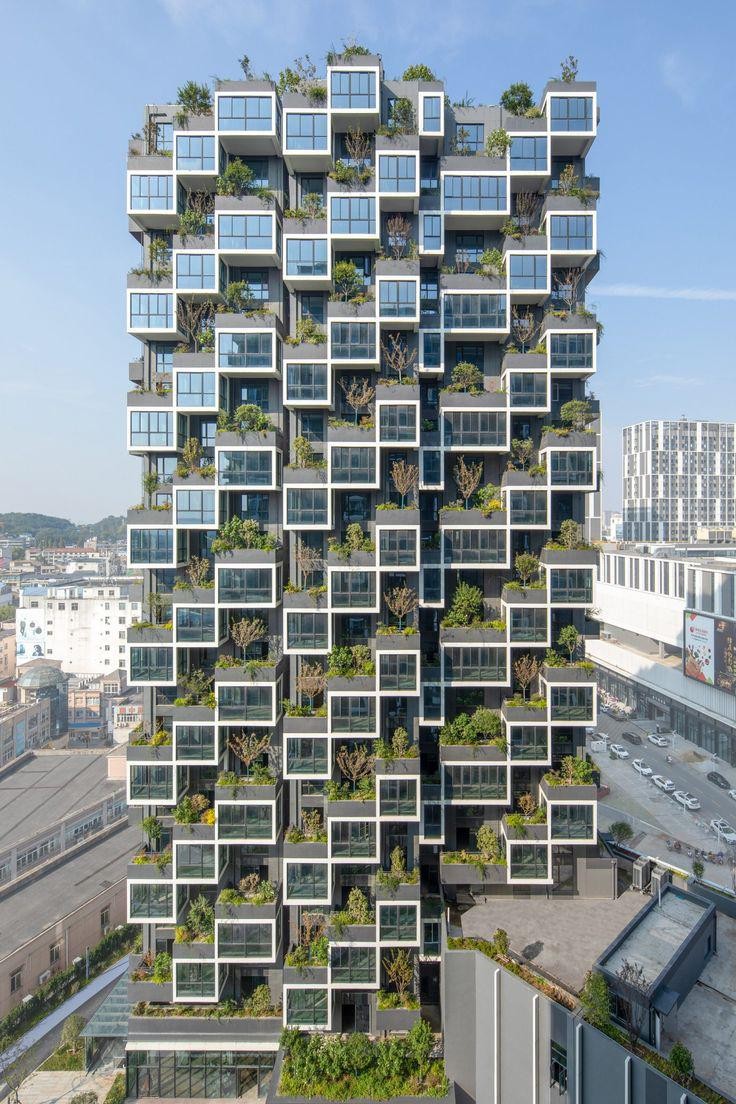
The aesthetics of solarpunk merge the practical with the beautiful, the well-designed with the green and lush, the bright and colorful with the earthy and solid.

Solarpunk can be utopian, just optimistic, or concerned with the struggles en route to a better world ,  but never dystopian. As our world roils with calamity, we need solutions, not only warnings.

Solutions to thrive without fossil fuels, to equitably manage real scarcity and share in abundance instead of supporting false scarcity and false abundance, to be kinder to each other and to the planet we share.

Solarpunk is at once a vision of the future, a thoughtful provocation, a way of living and a set of achievable proposals to get there.

  • We are solarpunks because optimism has been taken away from us and we are trying to take it back.
  • We are solarpunks because the only other options are denial or despair.
  • At its core, Solarpunk is a vision of a future that embodies the best of what humanity can achieve: a post-scarcity, post-hierarchy, post-capitalistic world where humanity sees itself as part of nature and clean energy replaces fossil fuels.
  • The “punk” in Solarpunk is about rebellion, counterculture, post-capitalism, decolonialism and enthusiasm. It is about going in a different direction than the mainstream, which is increasingly going in a scary direction.
  • Solarpunk is a movement as much as it is a genre: it is not just about the stories, it is also about how we can get there.
  • Solarpunk embraces a diversity of tactics: there is no single right way to do solarpunk. Instead, diverse communities from around the world adopt the name and the ideas, and build little nests of self-sustaining revolution.
  • Solarpunk provides a valuable new perspective, a paradigm and a vocabulary through which to describe one possible future. Instead of embracing retrofuturism, solarpunk looks completely to the future. Not an alternative future, but a possible future.
  • Our futurism is not nihilistic like cyberpunk and it avoids steampunk’s potentially quasi-reactionary tendencies: it is about ingenuity, generativity, independence, and community.
  • Solarpunk emphasizes environmental sustainability and social justice.
  • Solarpunk is about finding ways to make life more wonderful for us right now, and also for the generations that follow us.
  • Our future must involve repurposing and creating new things from what we already have. Imagine “smart cities” being junked in favor of smart citizenry.
  • Solarpunk recognizes the historical influence politics and science fiction have had on each other.
  • Solarpunk recognizes science fiction as not just entertainment but as a form of activism.
  • Solarpunk wants to counter the scenarios of a dying earth, an insuperable gap between rich and poor, and a society controlled by corporations. Not in hundreds of years, but within reach.
  • Solarpunk is about youth maker culture, local solutions, local energy grids, ways of creating autonomous functioning systems. It is about loving the world.
  • Solarpunk culture includes all cultures, religions, abilities, sexes, genders and sexual identities.
  • Solarpunk is the idea of humanity achieving a social evolution that embraces not just mere tolerance, but a more expansive compassion and acceptance.
  • The visual aesthetics of Solarpunk are open and evolving. As it stands, it is a mash-up of the following:
    • 1800s age-of-sail/frontier living (but with more bicycles)
    • Creative reuse of existing infrastructure (sometimes post-apocalyptic, sometimes present-weird)
    • Appropriate technology
    • Art Nouveau
    • Hayao Miyazaki
    • Jugaad-style innovation from the non-Western world
    • High-tech backends with simple, elegant outputs
  • Solarpunk is set in a future built according to principles of New Urbanism or New Pedestrianism and environmental sustainability.
  • Solarpunk envisions a built environment creatively adapted for solar gain, amongst other things, using different technologies. The objective is to promote self sufficiency and living within natural limits.
  • In Solarpunk we’ve pulled back just in time to stop the slow destruction of our planet. We’ve learned to use science wisely, for the betterment of our life conditions as part of our planet. We’re no longer overlords. We’re caretakers. We’re gardeners.
  • Solarpunk:
    • is diverse
    • has room for spirituality and science to coexist
    • is beautiful
    • can happen. Now!
3
4


It's in German but they collected many different solutions for how people who don't have their own house where they can install solar panels permanently still can participate by installing them on their balcony instead.

5


In the aftermath of the floods, many NSW homes were significantly damaged and still lay in the path of future floods. In response, the NSW government introduced a buyback scheme for eligible homes in flood-prone areas.

Part of this program involved demolishing homes, with the materials discarded in landfill or used for low-value recycling, such as woodchipping and burning. Yet the homes contained valuable materials, such as hardwood timbers.

Losing these homes was traumatic for the local community and an unnecessary loss of valuable resources. So the NSW Reconstruction Authority, Living Lab Northern Rivers, and the University of Technology Sydney (UTS) explored how to recover a material that is extremely difficult to source today—old-growth timber.

link to report https://llnr.cdn.prismic.io/llnr/aigBHQeQX7-eXCXA_LLNR_CircularTimberResearchReport_DIGITAL.pdf

6
7
8


cross-posted from: https://thelemmy.club/post/50578156

FULL ARTICLE: Wood is a well-known insulator: it does not let current or heat flow through easily. But when wet, it can conduct electricity because of water and the dissolved minerals and salt it contains. And now, researchers report a simple chemical route to change the microscopic structure of wood and boost the electricity it produces when wet.

The amount of electricity is still small, but enough to run LED lights or a calculator. Using larger pieces of wood or connecting multiple smaller devices could produce enough power for a laptop, said Yuanyuan Li, a professor in the Department of Fiber and Polymer Technology at KTH Royal Institute of Technology in Sweden.

“If we wanted to power a laptop, we would need about one square meter of wood about one centimeter thick, and about two liters of water,” she said in a press release.

The concept is called hydrovoltaic energy. “A big issue with hydrovoltaic energy harvesting from organic materials is the extremely low power output [with] which it is difficult to power practical devices,” says Jonas Garemark, a doctoral student and co-author of the work published in Advanced Functional Materials. “In our work, we can reach microwatts per square centimeter, which provides useful power outputs.”

Natural wood contains long, empty channels called lumen that conduct water. These channels can be micrometers to millimeters wide. There has been a lot of research on nanoengineering wood to change its chemical makeup and nanostructure, which impart unique properties such as elasticity, pliability and transparency. But, says Garemark, “no one has so far attempted to utilize the empty spaces within natural wood.”

The KTH researchers decided to fill these voids with even smaller porous structures. The thought was that this would speed up the flow of water through the structure and increase the effective surface area between water and wood.

Making the efficient wood-based generator involved a one-step chemical treatment. The researchers immersed a piece of balsa wood in a water-sodium hydroxide solution for 48 hours at –6°C. This causes the cell walls in wood to partly break apart, causing a dense jumble of tiny cellulose fibers to collect in the lumen.

The dense network of fibers creates many smaller pores, which boosts water uptake and surface area charge, just as the researchers predicted. Their measurements showed that the modified wood produced 10 times more electricity than natural wood when soaked in pure water.

Until now, researchers have most commonly used materials such as graphene, carbon black or porous metal oxides for hydrovoltaic energy harvesting, Garemark says. All these require a lot of energy to prepare.

The new wood-based generator is a low-cost, sustainable alternative for low-power devices. “This material is made completely from wood, and the preparation requires only one single step following green chemistry principles,” he says. Plus, this is just the beginning for hydrovoltaic energy harvesting from wood. “This is a relatively new topic and there are many exciting possibilities that has not been explored yet.”

Source: Jonas Garemark et al. Advancing Hydrovoltaic Energy Harvesting from Wood through Cell Wall Nanoengineering. Advanced Functional Materials, 2022.

9
10


The two main issues I see are:

  • In any kind of anarchist system, the need for financial capital is replaced by a need for social capital. It’s easy to tell people “jUsT go TaLk To YoUr NeIgHbOrS” and hard for many people to do. There should be room in society still for people who don’t feel like talking

  • Locally grown and unprocessed foods with unpredictable taste and texture

If you see any more problems or solutions then you can comment them below

EDIT: I tried to delete this post but I don’t really know how. I deleted it but it still shows up. Sry for the bad post

EDIT 2: I guess I will undelete if it’s going to show up on the feed either way

11
12
OGLIASTRA SOLARPUNK (apsmiranda.org)
submitted 2 weeks ago* (last edited 2 weeks ago) by Yankuam@discorsi.apsmiranda.it to c/solarpunk@slrpnk.net


#Ogliastra SolarPunk

A week of shared life with a neighborhood AI, solarpunk political imagination and a small independent publishing house. On the sea of Arbatax, in Ogliastra.

20 – 27 July 2026

August 31 – September 6, 2026

Arbatax, Sardinia

#What it is

It is a seven-day creative holiday inside a community house by the sea. Ten people, one editorial figure of reference, Francesco Verso, Italian voice of solarpunk science fiction, awarded twice with the Urania Prize and founder of Future Fiction, and UI-R1, a neighborhood artificial intelligence written in Rust, trained on the memory of a Turin neighborhood, that comes with us to Sardinia and learns from what we do together.

It is a week in which writing, ecological practices and political imagination meet under the same roof, and become publishable materials.

#What we offer

  • Five mornings of work with Francesco Verso on solarpunk as practice, worldbuilding, independent publishing, science fiction from the Global South
  • Daily cohabitation with UI-R1, a neighborhood AI as a commons: we use it to write, we feed it with the voices of the week, we take part in a Narrative Rave where its memory becomes collective
  • A full day in Gairo Vecchia, ghost village, to write inside the ruins Two workshops on real solarpunk practices: renewable energy communities in Sardinia and mutualism as practiced economy.
  • Shared kitchen, common pantry, meals as the center of the day Free afternoons by the sea. A final pact of action, written and signed, that each person brings home
  • A digital anthology curated by Francesco Verso with the texts produced during the week

#UI-R1, our technological guest

UI-R1 is an artificial intelligence built by Miranda APS as shared cultural infrastructure of a Turin neighborhood. It is not ChatGPT. It runs on a local machine, it is written in Rust, and it works like an accent, not like a mirror.

During the week UI-R1 will be physically present in the house. People will use it to write, will let it listen to the stories collected in Gairo Vecchio, will take part in an evening Narrative Rave in which its memory is publicly activated. After the week, the Sardinian corpus will become part of it, the first dialogue between a Turin neighborhood AI and another territory.

#Who it is for

For those who write, fiction, essay, political materials, and need a week to think alongside others.

For those who work in the third sector, in activism, in education and want to understand what to do with AI in their own contexts. For those who are curious about solarpunk science fiction and are not content with the off-the-shelf version.

For those who accept to cook in turns, sleep in a dormitory, and do politics at the table too.

#Rhythm of the week

Monday arrivals and opening circle. Tuesday to Saturday morning work sessions 9–13, free afternoons. Thursday full day in Gairo Vecchio. Friday evening Narrative Rave. Saturday evening collective dinner and pact of action. Sunday departures.

#Essential logistics

Seven days, six nights at the Foresteria di Miranda in Arbatax, ten beds in shared dormitory.

Self-managed kitchen.

Participation fee 500 €, including lodging, food, materials, internal mobility.

Does not include travel to Sardinia. Does not include the membership card (compulsory, costs 12 euros)

#How to get to Arbatax

Arbatax is in Ogliastra, on the eastern coast of Sardinia.

Ferries

Civitavecchia – Arbatax Civitavecchia – Olbia Livorno – Olbia Genova – Olbia Genova – Porto Torres Civitavecchia – Porto Torres Civitavecchia – Cagliari Airports

Cagliari Airport Olbia Airport Once the activation of the week is confirmed, we open a channel between registered people to coordinate shared travel and internal transfers.

#How to enter

In two steps.

Free pre-registration. No financial commitment at this stage. Deadline: 1 July 2026. (https://apsmiranda.org/regalini/events/ogliastra-solarpunk/)

Activation and payment. If we collect at least six pre-registrations by the deadline, the week happens. We will then contact you to finalize registration and the 500 € payment. If we do not reach the minimum number, the week is cancelled and no one pays anything.

Ten places overall, in order of pre-registration.

For further information and requests: info@apsmiranda.it

#Who we are

Miranda APS is a cultural association based in Turin working at the intersection of community AI, solarpunk philosophy, participatory narrative and civic culture.

The Paper Lab is its editorial and production infrastructure.

Francesco Verso is a writer, editor of Future Fiction, one of the most authoritative voices of Italian and international solarpunk.

What comes out of the week A digital anthology curated by Francesco Verso.

Political-narrative prototypes produced by the participants.

A collective pact of action.

One documented evening of Narrative Rave.

A network that, if we tend to it, can meet again.-

12
13


For Ukraine, this experience is more relevant than it may first appear. The word “cooperative” still carries negative associations because Soviet and post-Soviet practices often distorted the concept. But genuine cooperatives are not bureaucratic relics. They are democratic, member-owned organizations created so people can meet common needs under fairer conditions than the market often provides.

In energy, this means that a community can jointly invest in a solar plant, a biogas facility, a battery system, a local heating solution or backup power for critical infrastructure. The benefits do not disappear upward. They remain in the community: more reliable energy, local income, jobs, taxes, lower costs and a stronger sense of control over essential infrastructure.

14
15


Solarpunk Futures is the latest Playing with the Sun activity designed to create the conditions for both creative learning and a brief form of “Scenius” to occur. It invites participants to build something that represents what they wish to see in a sustainable city of the future. The model city is powered by a working solar-powered microgrid designed to be modular and extensible, so educators and tinkerers can shape things however they wish. While playing with it they develop both a sense for how sustainable energy works and the characteristics of energy networks. Like all Playing with the Sun activities this one is open source. Detailed building instructions are available on the Playing with the Sun website, so other educators and researchers can make it themselves and adapt it to suit their needs.

16
17
18


For the first time ever, solar is set to generate more electricity than coal in the power market managed by the Electric Reliability Council of Texas. Nobody is building new coal power plants in the state, but developers are adding more solar there than anywhere else in the country. As a result of those diverging trajectories, the federal government expects ERCOT will receive 78 billion kilowatt-hours from solar in 2026, and just 60 from coal.

This trend does have seasonal variations. Last year, solar output beat coal on a monthly basis from March through August, and this year it is expected to do so from March through December, per the US Energy Information Administration at the Department of Energy.

19
20


The twice-weekly radio show on Chikaya FM, a community radio station, is sponsored by the International Fund for Animal Welfare (IFAW), which works with the DNPW to promote human-wildlife coexistence across three Zambian farming districts – Lundazi, Lumezi and Chipangali — home to around half a million people. In theory, the TFCA links Kasungu with Zambia’s Lukusuzi and Luambe National Parks, but to reach the Zambian parks, elephants and other wild animals must cross farmland and roads and navigate past schools and homesteads.

21
22
 
 
23


Have u read her books? I am right now & im absolutely amazed, so i contacted her agent: i wanna interview her for my small SF blog:

https://sfss.space/

If u love her & have good questions to ask her, please answer in the comments.

24


It's worth starting at the beginning, but to save folks time I jumped ahead to the 11 min mark, where he starts building toward his point.

If you're really impatient, jump to the 12 minute mark, where he really starts cooking.

25
1
What is bird ? (networkencyclopedia.com)


As I was going through this link, l got curious about this "bird".

Could you please make it ELI5 ??

I believe this is suited for the solarpunk instance in general.

view more: next ›