Sorry no answers from us either. However, we also started researching this today and are very interested.
this post was submitted on 21 Sep 2025
1 points (100.0% liked)
Vegan
1849 readers
1 users here now
A place for solarpunks working toward a world without speciesism
Rules
- This is not a place to debate veganism
- There is no place for (carnist) trolls
- No unsolicited promotion of commercial products
- No speciesism
- No promotion of violence in any way
founded 3 years ago
MODERATORS
Do you have any inborn issue with the enzyme for converting ALA to DHA and EPA? If not, then just eat a healthy diet and don't worry about it. Stress will kill you much faster than any minor nutrient deficiency.
I would not go with oil capsules if you want to increase ALA intake. You never know if the oil is still fresh, or if it was produced with an oxidised batch already.
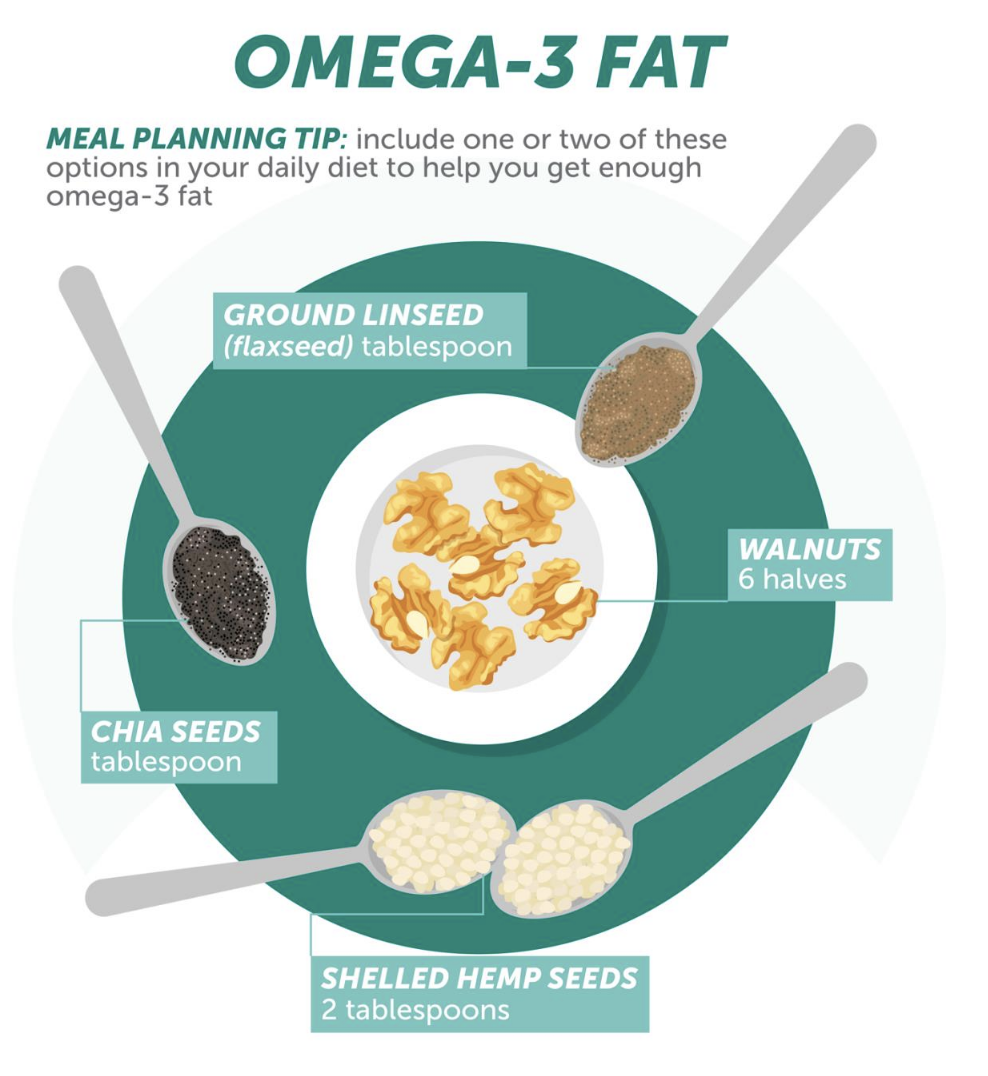
If you eat oatmeal, grind up a tablespoon of flax seed and add it. Always grind fresh, or keep a small batch in your fridge for a week. The oils oxidize pretty quickly once the seed is broken. This will give a good baseline of ALA and flax is generally good for your digestion.
Other than that, I would get some DHA+EPA in a 2:1 ratio (or even more EPA) and supplement that as recommended.
I grind mine and keep it in the freezer.
There are some supplements containing DHA but little to no EPA. These are a very bad choice, because EPA is essential and the body can't convert DHA to it.
Conversely, there are almost no supplements with only EPA but no DHA (that's probably because EPA is more expensive/rare than DHA). If there were such supplements, these would be a semi-good choice, since the body can convert EPA to DHA, albeit only to a limited degree.
Since most supplements tend to be DHA-heavy, aim for supplements with EPA and DHA about equal. Whenever they only tell you the total Omega 3 content, not broken down into EPA and DHA, assume a preponderance of the cheaper DHA or even ALA, and thus avoid it.
Price-wise, offers are hard to compare, since most make up their own "daily dose sizes" etc. Thus, I highly recommend making a spreadsheet like the one I recently did here for offers in Germany. Making this spreadsheet hardly takes more work than doing the comparison in another way, and you can then share it here to save other vegans who live in the same market area the same work. A sensible column layout for the spreadsheet is like the one in the example:
Name (with hyperlink) | Price per package | Number of capsules | DHA per capsule | EPA per capsule | (DHA+EPA) per capsule | EPA per € | (DHA+EPA) per €,
with the last three columns being calculated from those before.
Only partially related but, I've been trying out the handful of seaweed derived cooking oils and been pretty satisfied. At least in terms of the cooking itself anyway... I can only hope they're actually useful for your health.
Of note, for anyone else reading along: Pretty much all Omega 3 fatty acids get destroyed when cooked.
Oh wait update question to this! I often see it recommended to eat small oily fish to get DHA, but almost all the small oily fish people eat are tinned. Don't those get heated in the tinning process?
Excellent question. I don't know; I would suspect cooking to lower contents but they might have been very high beforehand, so relevant amounts remain. However, a quick search has lead me to this document where they have actually found measurements to increase after cooking: https://hal.science/hal-03215360/document Ctrl+F "regarding cooking"
211 Regarding cooking methods, grilled fish had higher FA [fatty acid] contents, especially
212 EPA+DHA and MUFA, than steamed fish, as well as than T_0 fish (all in dry weight). A higher
213 FA content measured after grilling might be related (i) to changes in the fillet texture that
214 might improve FA extraction from tissue, as high heating is commonly used by the industry
215 for fish oil extraction (Adeoti & Hawboldt, 2014); or (ii) to FA exchanges with the
216 subcutaneous fat beneath the skin (fillets were cooked with the skin), favoured by the
217 increasing temperature.
So this matter is complex.
Whoaa, who'd have guessed! The whole topic of fish/algae oils in general seems not to have any real sure facts yet. Either way, probably can't go wrong by eating them anyway, hopefully?
EDIT: "eating them" aka the algaes, I mean, lol. This is a vegan comm afterall!
Oh yeah 100% important!! I should've been more specific, cooking just as in like "it tastes good and you can put it in your food".
I looked into omega oils a few months ago and if there was an ideal ratio between omega-6 and omega-3 (there's a good range to be in, but so far no ideal ratio has been discovered. Best recommendation is to just not worry about omega-6 since you'll naturally get a lot in your diet anyway).
Overall my conclusion was that only omega-3 should be prioritized, and an effective way to supplement it was taking a handful of walnuts a day, since it's important to injest a source that isn't oxidized (omega-3 can be prone to it in liquid/pure oil form if not stored properly or combined with antioxidants)
In walnut form, the oils tend to be protected (especially if kept in the freezer), it didn't take an ungodly amount to make a difference in human's omega fatty acid profile, and I didn't have to research individual brands of supplement to find a good one that wasn't oxidized.
I do not have a super-deep knowledge of nutrition but FWIW I take the vegan omega-3 supplements from Source Naturals, my yearly lipid panel comes back looking fine. I do not know if I need them and suspect that I do not, but I prefer to have the safety net there.